PlayStation 5 Risks Being Sony's Biggest Failure
Over 95 million consoles sold, yet PlayStation 5 risks being a huge failure for Sony


At the end of July, Sony published data regarding the first quarter of fiscal year 2026, covering the period between April and June, and announced that revenue was 937.1 billion yen (approximately 5.8 billion dollars) and operating profit (what remains after deducting daily operational costs like rent, salaries, and various expenses) was 202 billion yen (around 1.26 billion dollars), marking a +37%.
According to the quarterly report:
-
Video game sales remained essentially unchanged, with 66 million games sold and a digital download rate of 82%.
-
Sony sold 1.6 million PlayStation 5s, bringing the total since launch to 95.3 million units.
Looking at these numbers, Sony executives were quite positive about the company's future, so much so that revenue forecasts for the entire fiscal year were increased by 3% and operating profit expectations by 10%.
And to demonstrate the optimistic atmosphere within PlayStation's corridors, Sony declared that it does not fear the current crises related to geopolitical instability and memory scarcity; on the contrary, it emphasized that it has secured the necessary amount of memory to meet the entire sales volume projected for fiscal year 2026.
In short, a string of data that only confirms Sony's excellent health and PlayStation's dominance in the current console generation, especially since Microsoft has officially increased Xbox prices, some by as much as +50%, effectively sinking its race in the current gen, if there ever was one.
Indeed, with the new quarterly results, Sony brings home 95.3 million units sold against Xbox Series X and S's 35 million. Numbers that are also destined to grow for PlayStation, considering that the arrival of GTA VI will lead to another jump in console sales.
Yet, despite all the numbers telling us of a Sony that breaks record after record and sees profits increase non-stop, among analysts and commentators in the video game industry, the idea that PlayStation 5 could be one of the worst failures for the Sony brand and represent its swan song is growing stronger.
It's an opinion that tries to go beyond the numbers and looks more at the overall concept: what PlayStation wants to be in the future and, above all, how the company is preparing to face this imminent future of profound structural changes in the industry.
And the conclusion, from whatever angle one looks at it, be it strategic, economic, or fan relations, is that Sony is experiencing a moment of strong well-being destined, if not to run out, to experience a sharp slowdown.
Exclusives are boring, and innovation is also lacking
One of the main criticisms leveled at Sony in recent years is that PlayStation 5 has experienced and is still experiencing a deep creative crisis. This has overshadowed the wave of exclusives that arrived on PS4, which were essentially the basis of the console's boom, to make way for a wave of remakes and remastered titles (in many cases, even of titles that didn't need them), instead of creating new IPs.
To give an idea:
-
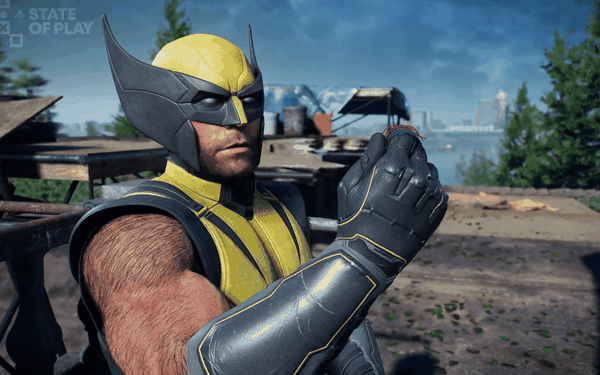
PlayStation 5 (6 years after launch - full maturity): offers us products like Saros and Wolverine, plus some 3rd party titles like Phantom Blade Zero, Resident Evil 9, and Marvel Tōkon: Fighting Souls.
-
PlayStation 4 (6 years after launch): saw the arrival of titles of the caliber of Death Stranding, Sekiro, Resident Evil 2 remake, Devil May Cry 5, Days Gone, Kingdom Hearts 3, and Star Wars Jedi: Fallen Order.
In short, a substantial difference not only in the renown and quantity of titles, but also in their ability to express the power and capability of the console from various points of view. Especially when we compare these PS4 titles with the console's launch titles like Watch Dogs, Killzone, Black Flag: the evolution in development was remarkable.
On the contrary, the titles arriving on PlayStation 5 today fail to provide that sense of technical evolution expected at the console's full maturity. Furthermore, staying on the topic of exclusives, PlayStation 5 has not yet delivered titles capable of defining the generation and identifying with the console.
-
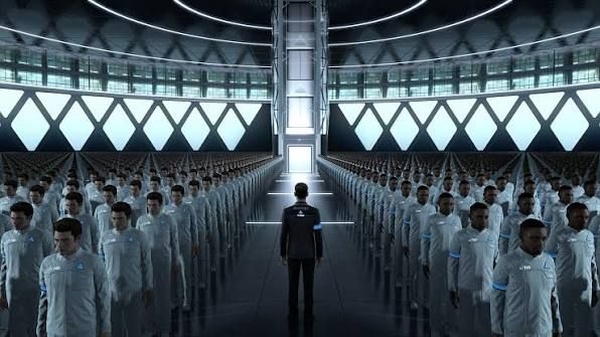
If we think of PS4: we think of Horizon, Death Stranding, Ghost of Tsushima, Bloodborne, Days Gone, Detroit: Become Human, and many other titles diverse in both mechanics and storytelling.
-
If we look at PS5: we have Returnal, Saros, Wolverine, and then a whole list of franchises that either met a bad end (like Concord or Rise of the Ronin), or that originated on PlayStation and then moved away from it (like Stellar Blade).
Perhaps there will be Intergalactic from Naughty Dog, which is expected to be released in 2027, but in general, the comparison with the last generation is merciless.
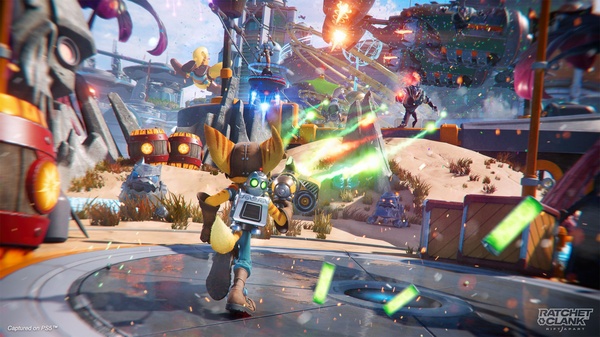
All this fuss about exclusives becomes even more disheartening when we consider that at the launch of PlayStation 5, Sony presented interesting titles like Returnal, Ratchet & Clank, and Sackboy, which not only showcased the console's technical capabilities but also demonstrated the company's interest in highlighting all its franchises, regardless of their cinematic style, target audience, or production level.
Yet, time has disproven this vision, showing us a strategy made up of many remakes and remastered titles and a creative void that has led to the disappearance of new IPs to add to the PlayStation catalog.
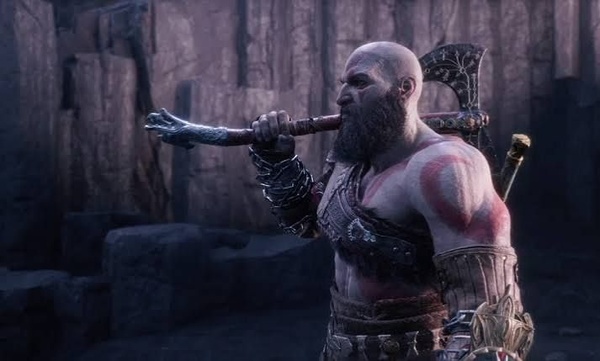
And as if that weren't enough, the exclusive experiences that have arrived on PlayStation 5 are nothing more than sequels to already acclaimed titles that have brought no technical or gameplay innovation, other than the obvious improvement in game engine management and some totally interchangeable characters. The consequence is that although God of War Ragnarök, Ghost of Yōtei, Spider-Man 2, and Horizon Forbidden West and others are excellent games, they ended up selling less than their predecessors.
Too long to see a new game
This happens because "reheated soup" works when a sequel comes out after 3 or 4 years; but in the current state of the industry, where a sequel takes 6, 7, or even 8 years, the player has every right to expect something innovative.
This lengthening of development times can then be attributed to Sony's strategic choice to focus on large cinematic experiences, which, however, have led to a flattening of the language of the proposed titles. They all look to Hollywood and present the same structure: third-person action with an over-the-shoulder camera and productions that are now comparable to those of cinema. All this stuff costs hundreds of millions of dollars and takes years and years of development, leading to software houses now making 1 game per generation and having to be sure that the created title delivers results, and so they make yet another sequel.
A strategy, that of cinematic experiences, that Sony has not even kept stable in recent years. In fact, in the face of the first economic cracks that these blockbusters showed, Sony, instead of recalibrating or aiming for diversification, opted for a drastic change of course that has a name and a surname: Jim Ryan, who in 2022 announced the development of 12 live service games by 2025.
A choice aimed at riding the wave of various Fortnite and Genshin Impact, which seemed to promise infinite and easy revenues, and in pursuing it, Sony made a kind of grab-bag approach without a real corporate strategy:
-
Bungie was bought for 3.6 billion dollars, not only for the capabilities shown with Destiny, but also as "supervisors and consultants" for all internal GAAS within PlayStation Studios.
-
More money was then thrown to acquire Haven Studios, which is working on the not-at-all-anticipated Fairgame$, or Firewalk Studios, acquired without even a real product in development.
-
Further proof of the absence of a strategy is the acquisition of Neon Koi to push into the mobile market; a market that Sony has never really considered.
And while money was being thrown left and right, the wings of those who had made the PlayStation brand great until then were clipped:
-
Naughty Dog was forced to work on The Last Of Us Online, which fortunately was later canceled.
-
Bend Studio (which released Days Gone in 2019) was asked to work on another live service, a genre far removed from the software house's capabilities, which was also canceled.
-
Bluepoint Games, which has repeatedly demonstrated its capabilities with remakes (like Shadow of the Colossus and Demon’s Souls) and could have represented a perfect opportunity for Sony to revive some past sagas, was instead put on a live service related to God of War; also canceled and the studio closed.
-
And earlier we talked about a lack of creativity: too bad that Japan Studio, behind Ico, Shadow of the Colossus, Gravity Rush, Dark Cloud, and many other historical Sony titles, were closed.
-
The same fate for PixelOpus, Neon Koi, and London Studio (a studio focused on experiences for other PlayStation ecosystem peripherals like EyeToy and VR, which gave birth to franchises like the never-forgotten SingStar and The Getaway, one of the best GTA-likes ever created).
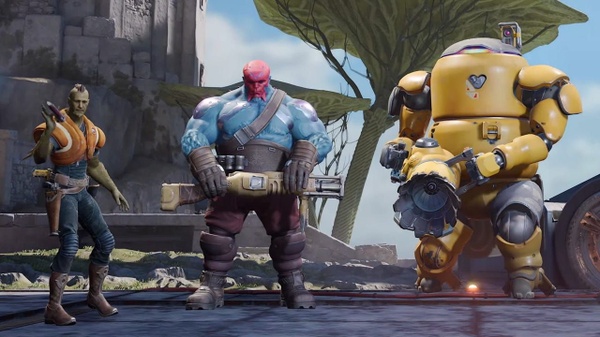
And in the end, almost all of these much-pursued 12 live service games were canceled. Those that made it to market weren't huge successes (like Concord and Marathon), with the sole exception of Helldivers 2, which was developed by an external studio, Arrowhead.
The symbol of this failure is clearly the aforementioned Concord: it took almost 8 years to develop, arrived very late on the market, and was launched at 40 euros despite the lukewarm reaction from critics and the public to the launch trailer. The result, as you all know, is that the game was pulled from the market after just two weeks.
PlayStation is now an American company
Many of the problems discussed so far have their foundations in the progressive process of Americanization that Sony has undergone in recent years.
Since its inception, PlayStation has been a Japanese icon, with the PS1, PS2, and PS3 generations shaped by the Japanese way of doing things: with a strong focus on the product, much experimentation, space and respect for auteur games, and a great propensity for risk.
When in 2016 Sony decided to move its headquarters from Tokyo to San Mateo, California, the relocation was not only physical but also cultural. Historical Japanese executives gave way to Western figures like Andrew House, John Kodera, and Jim Ryan. All managers who lacked the Japanese cultural impetus, but rather had a more Western business vision, more focused on profit.
And this paradigm shift led to a continuous race for quarterly results, which clearly weighed on that typical Japanese creativity, which was no longer considered an added value for PlayStation, but a risk management metric. Similarly, while PlayStation previously looked at the player, since 2016 it has obsessively looked at the accounts, embracing a corporate vision typical of a multinational that must try to make everything that comes out of meetings and offices profitable.
And this has contributed to the flattening we talked about earlier, because a game is no longer measured by the cultural impact it can have on the medium, but by immediate profit and product scalability.
The biggest issue is that while PS4 experienced these problems only in its last two years of life, PlayStation 5 seems to have been born fully incorporating this quarterly and immediate profit vision, without any project regarding the brand's future viability.
-
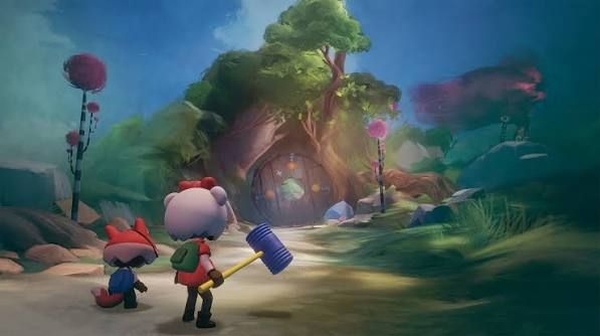
PlayStation 4 offered an ecosystem capable of speaking to everyone: proposing titles like Sackboy, Knack, or Tearaway that appealed to a younger audience, as well as more adult products like The Last of Us, Spider-Man, and Horizon, without forgetting those experiences not strictly gaming-related but with enormous creative potential like Dreams, Concrete Genie, or the line of party games like Knowledge is Power that brightened up so many evenings at home. In short, a console suitable for everyone.
-
PlayStation 5, on the other hand, has decided to speak only to that adult market segment already fond of PlayStation franchises; a market segment that has grown up with PlayStation but today has less and less time to play, buys fewer titles, and falls out of love with the medium more easily because it has different tastes and expectations.
A strategy that is already showing its first cracks with the decline in sales of various sequels, but which seems destined to have even worse effects given that it does not take into account certain market transformations, including the preferences of new generations of gamers.
Following various reports like those from Boston Consulting Group and Newzoo, we know that younger players mostly play online experiences where they already have a stable community and have invested years of experience. Sony, however, seems to have no strategy to attract these players.
You don't attract teenagers because in recent years you've packaged cinematic experiences that don't represent an alternative to various Roblox and Fortnite (titles that, by the way, can be played comfortably on smartphones or PCs). Consequently, a 15/16-year-old will hardly buy a PS6 for over 1000 euros when they can continue playing on their smartphone.
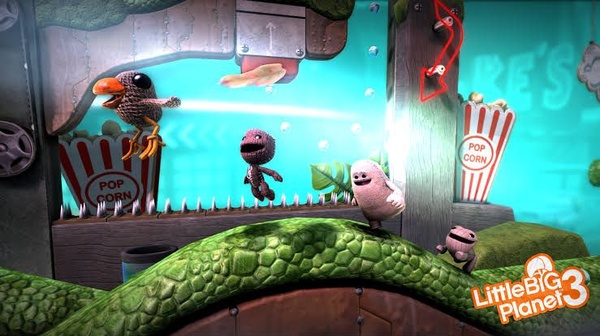
And Sony also seems to have missed the train to attract future players, those children who may not play yet, but will in the future. By abandoning those franchises that appealed to a very young audience like Knack, LittleBigPlanet, Sackboy, or Tearaway, Sony has lost the opportunity to leverage multimedia to build loyalty among children. It has lost all the potential of "cute" merchandise, cartoons, YouTube videos, movies, and shared experiences with parents that serve as an entry point for those who don't yet have a controller in their hands but could start to familiarize themselves with your ecosystem.
And to dot the i's, the multimedia that Sony is currently creating seems to be an end in itself. Products like The Last of Us TV series, the Uncharted movie, or the future God of War TV series, speak to an audience that already knows the original work, that looks for cameos or (in the case of God of War) already knows Kratos's entire story. I mean, imagine how confusing it is for someone who has never played the Greek trilogy to watch the TV series that starts with Norse Kratos.
Perhaps it's time to wake up
I'm concluding by emphasizing that this kind of dissing towards PlayStation is the result of a series of personal observations from someone who grew up with Sony products, is fond of them, and tries to look at the company's state beyond a simple quarterly balance sheet.
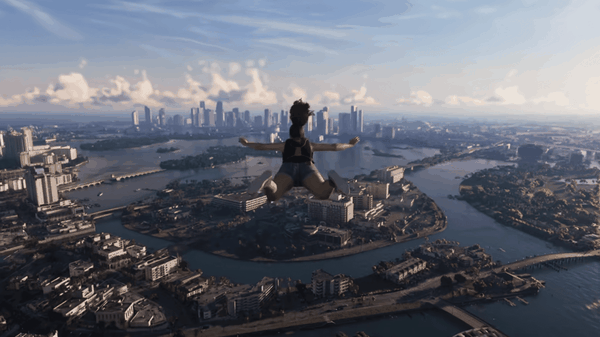
PlayStation is currently still the queen of the generation and the numbers are entirely on its side, and are destined to grow with the release of GTA VI. However, the impression is that PlayStation 5 has achieved this market dominance certainly due to its own merits, but also due to a combination of external factors: such as Microsoft's self-sabotage and the consequent absence of a true competitor, but also the legacy of PlayStation 4 which, strong with 120 million units sold, brought many fans to the new generation.
The problem for Sony is that between franchises that now release a title every 6/7 years (and which make the public fall out of love) and a series of choices decidedly not for players (such as no longer having physical games and a console that will exceed 1000 euros), many players might decide not to switch to PS6 or choose to dedicate themselves to other hobbies.
In short, everything seems to indicate that PS6 could represent a harsh cold shower for Sony, all thanks to PlayStation 5: a console that has sold more than 95 million units to date.
Similar articles