How important is connection in cloud gaming?
Having internet isn't enough, you need a quality connection!
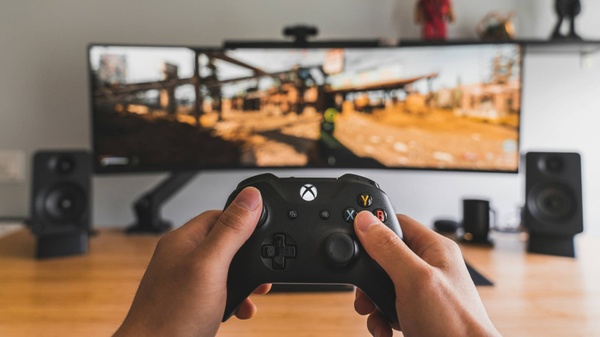


In recent years, cloud gaming has become one of the most discussed topics in the video game industry. The idea of being able to play without dedicated hardware, running titles on remote servers and receiving the image via streaming, promises to profoundly change how games are distributed and used.
In this model, however, the gaming experience directly depends on the quality of the network. Unlike consoles or traditional PCs, where much of the processing happens locally, in cloud gaming every command must travel across the internet before producing a result on the screen. This is why the connection becomes one of the most relevant elements of the entire system.
What is cloud gaming?
Cloud gaming is a video game distribution model that moves game processing away from the user's device. In this system, the title is not executed locally on a console or PC: the graphic processing and calculations necessary for the game to function occur on remote servers located in dedicated infrastructures.
The user receives an interactive video stream generated by those servers on their device. The commands sent via controller or keyboard are transmitted to the remote machine running the game, while the result of the processing returns as a streaming image.
This architecture makes it possible to play even on devices with limited hardware capabilities. The graphic and physical processing of the video game is managed within the data centers that host the service's infrastructure.
At the same time, the model introduces a direct dependence on the network. Every player action must be sent to the servers, and the visual response must return to the device as quickly as possible.
»» Discover the best offers for a stable connection and take cloud gaming to the next level
Why connection is fundamental in cloud gaming
In cloud gaming, the network becomes an integral part of the gaming experience. The functioning of the entire system depends on the connection's ability to transmit data quickly and continuously between the user and the servers running the title.
When playing on a local platform, communication between input and result occurs within the same device. In cloud gaming, however, every action must travel across the network before producing a visible effect on the screen. This step inevitably introduces an additional layer of complexity.
The quality of the connection directly affects the responsiveness of commands and the stability of the video streaming that displays the game's images. If the connection is not sufficiently stable or fast, the experience can be compromised by delays in command response or problems with image reproduction.
This is why cloud gaming represents one of the cases where the internet connection becomes a central element of the gaming system, the channel through which the game itself is executed and transmitted. In a context where connection stability is fundamental, choosing an operator like Tiscali can help improve the gaming experience, especially considering the numerous active offers.
Latency, stability, and streaming quality
Among the factors that most influence the cloud gaming experience is connection latency. This parameter indicates the time it takes for a signal to travel across the network between the user's device and the remote server. In an interactive context like video games, even relatively small variations can affect the perception of commands.
When latency increases, the time separating the player's action from the on-screen response tends to lengthen. In titles that require precision and speed, this phenomenon can make the experience less fluid and less controllable.
Another decisive element is connection stability. Cloud gaming relies on continuous streaming of images generated by the server: if data transmission experiences interruptions or fluctuations, the quality of the video stream can degrade or show visual artifacts.
The connection must therefore guarantee an adequate speed and also continuity in data transfer. The gaming experience depends on the network's ability to sustain a constant exchange between the user's device and the remote infrastructure running the title.
»» Switch to a more performant network and improve your online experience
Cloud gaming and the future of video game distribution
Cloud gaming represents one of the most evident attempts to redefine how video games are distributed and used. The idea of being able to access a title without having to run it locally opens up scenarios that change the relationship between hardware and software.
In this model, the device used for gaming takes on a different role than in the past. Computing power is no longer concentrated in the user's machine but is moved within the infrastructures that manage the service.
This transformation introduces new opportunities but also makes it clear how much the gaming experience depends on the network's characteristics. The connectivity infrastructure becomes an essential component of the entire system because it is the link that allows for the continuous exchange of data between the player and the remote server.
Cloud gaming thus clearly shows how the evolution of video games is increasingly linked to the development of digital networks. In this context, connection quality becomes one of the conditions that determine whether this model can truly establish itself as a widespread way of accessing video games.
»» Discover the offers available on Tiscali
Similar articles