It: Welcome to Derry Fails to Avoid Ruining the Good Work of Its Prequel Films
The HBO series Welcome to Derry lacks the ideas and funding to replicate the success of its prequel films, and its insistence on trying almost ruins their legacy.


In the now extensive case studies of joint Warner Bros. & HBO attempts to expand cinematic franchises into television — thus making them “cross-media” — there are stories of critical and public success (The Penguin, Watchmen), decent but never truly incisive and soon forgotten series (Dune: Sisterhood), and spectacular failures. It: Welcome to Derry (from October 27 on Sky and NOW) falls into the latter category, and it's not simple to explain why, considering that reviewers worldwide were only provided with five of the eight episodes that make up the first season, and furthermore, with a very long list of plot twists under embargo.
What can be said, then, is what the series wants to be and why it is nothing more than the palest imitation of that ambition. Set in the last year of the Kennedy era, in the midst of an America full of smiles and Cold War paranoia and racism far from being overcome, Welcome to Derry takes us back in time in search of a difficult balance between giving the audience of the last cinematic duology content similar to the two successful films and finding a mystery worth tuning in for each week for a new episode.
Gallery



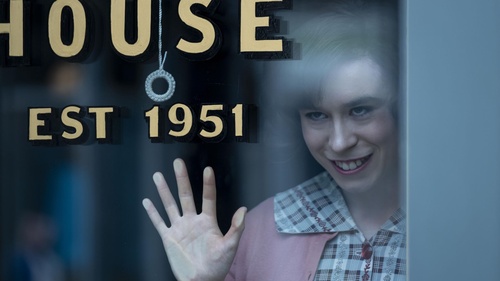

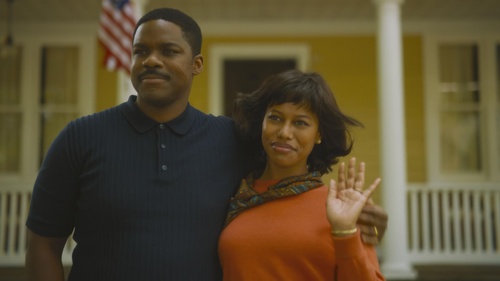
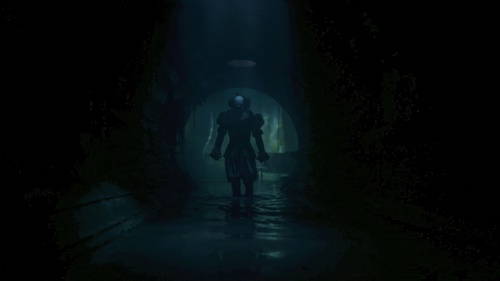
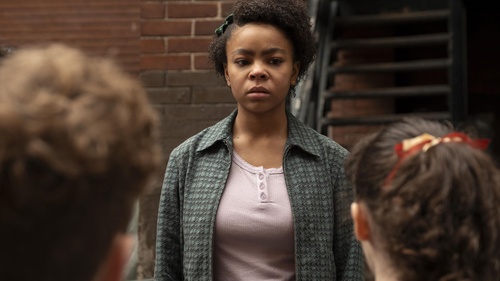

It: Welcome to Derry's Ambitions Far Exceed Its Production Limitations
In the hope that artistic continuity would ensure qualitative and narrative continuity, HBO entrusted the director of the two films, Andy Muschietti, and his sister Barbara, here in the role of producer. This is already a first problem, because it highlights the limit with which the series struggles from the very first scenes: it has enormous ambitions, given that it looks to cinematic blockbusters or gigantic productions like Stranger Things, but its still considerable budget simply does not allow it to operate at those levels.
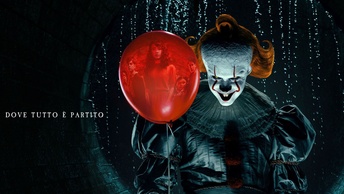
It's a continuous wanting, not being able, and then hedging: for example, there's actor Bill Skarsgård who returns as Pennywise but at the same time isn't there because, unlike King's mythology, here the protagonist clown is more than elusive. Thus, the viewer (of the cinema) accustomed to finding Pennywise at the end of the nightmare transforming from a monster into his most known version to snatch his victim, finds himself with CGI monsters (ugly by nature but also by execution) that act as placeholders for the titular villain of the series.
Welcome to Derry's Pilot is a Flop That Subsequent Episodes Try to Remedy
The series starts in the worst possible way: it had been a long time since such a bad and off-putting pilot episode as the one that opens Welcome to Derry was seen, which spends the subsequent episodes correcting its course, reassuring the viewer, and finding a purpose for its story, so poorly set up from the start. Muschietti's directorial style has abrupt shifts into almost trashy territory due precisely to the television limitations of the production, but also to how the series tries to fit into the It universe by borrowing from all the most successful King stories and even from those who looked to King to then create their own universe.

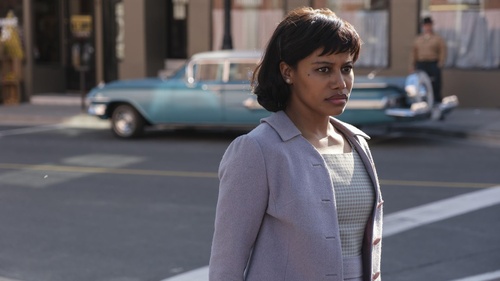
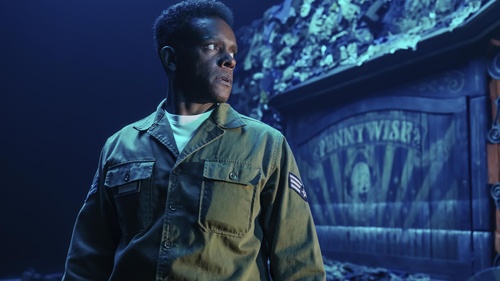
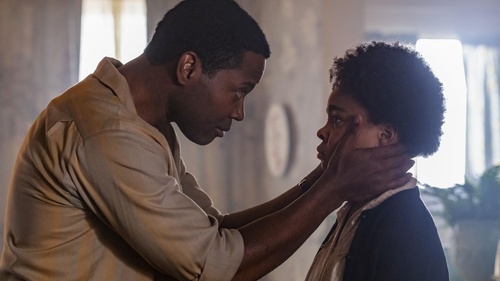
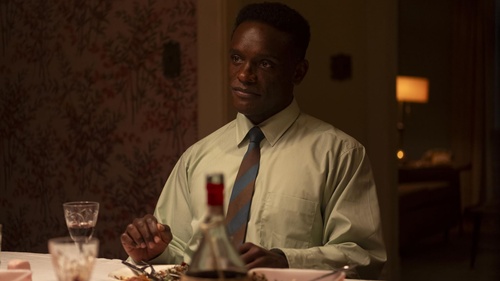
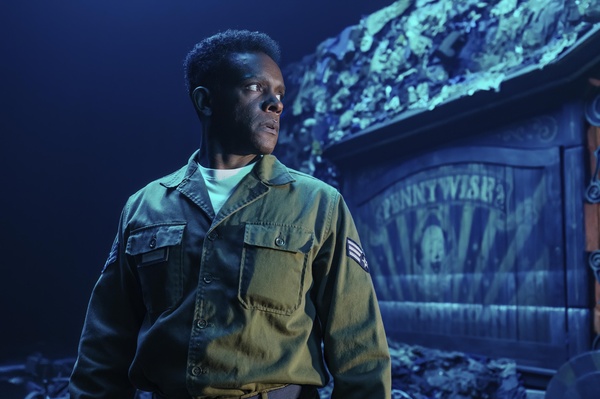
While it's true that in some passages, inevitably, the young protagonists of Welcome to Derry recall those of Stranger Things (who looked to It's Losers Club among their many inspirations), it's also true that this Derry never feels like a real, physical place, with its own (sinister) aura like Hawkins. It moves from a school stereotype with bullies by the locker to a white neighborhood stereotype with racist undertones. Episodes that leave one astonished by how they catch the African-American Hanlon family off guard, who will slowly reveal themselves to be central to the story even to those who are not King readers and do not trace the immediate associations in his literary multiverse upon the appearance of the character of Mike or Private Dick Hallorann.
More Confused Than Mysterious, Welcome to Derry is Unnecessarily Muddled
What's worse, the pilot swings wildly from one register and genre to another. After an intriguing start, the horrific and disgusting element is inserted so clumsily, followed by jump scares brought home with truly ugly CGI, that everything feels out of place. We are in a Kingian story starring a group of kids, but then we end up in a subplot involving a military base where strange experiments are conducted that seems to have nothing to do with it, only to then forcibly reinsert the horror and start all over again.
The problem with Welcome to Derry is that, precisely, we know where it's going to end up, so it has to create a mystery that fits into the story we already know, keeping our attention.
However, the series, rather than mysterious, seems unnecessarily confused, full of bad tonal shifts and unrealistic reactions from the characters, who cannot react as would be expected, otherwise they would prevent the plot from maintaining the mystery it desperately needs.
In other words, Jason Fuchs — co-screenwriter and producer of the second It — is not Stephen King. He is unable to create that atmosphere, to make new characters and forerunners of names from the Kingian universe truly captivate the viewer, or at least to make them break out of stereotypes. Despite being flanked by long-time showrunners like Brad Caleb Kane and Cord Jefferson (who worked on Watchmen), the production team and writing room of Welcome to Derry fail to match the work of a mid-tier series, let alone that of a particularly inspired King.
Welcome to Derry Fails to Avoid Ruining the Good Work Done by the Cinematic Duology
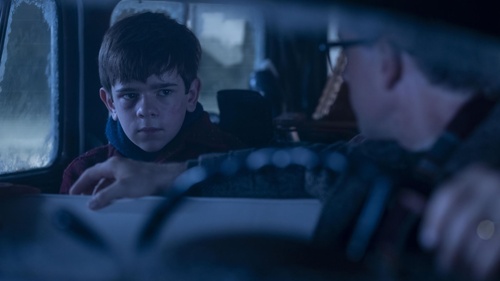
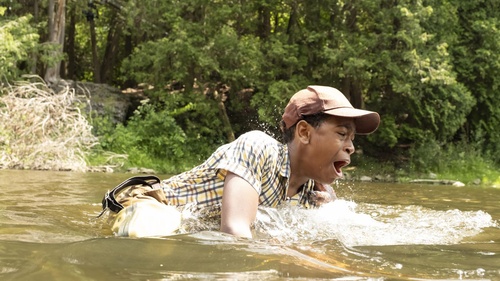
The young protagonists (whose acting ability is very inconsistent) are easily divisible into stereotypical good guys and bad guys who deserve the nightmares Pennywise will subject them to, remaining devoid of King's painful and compelling character development, in which every human (adolescent or adult) is the sum of the mistakes they make and survive, which weigh like traumas and shape their existence.
The error then is even more fundamental: Pennywise has always been the clownish incarnation of that kind of absolute evil, inexpressible, invincible, because it resides within the human soul. One survives the violence and traumas of childhood, but Pennywise is a manifestation of them and, like those memories, cannot be eradicated, fully conquered. It has no origins, no explanations, you cannot reason with it. With each new appearance, with each new exploration of its past iterations, one ends up at least trying to show it, explain it, which invariably tends to weaken it.
The series has some aces up its sleeve, such as the beautiful opening credits sequence, a gem of vintage illustrations that turn into nightmares set to the sinister tune of “A Smile and a Ribbon” by Patience and Prudence. Its slow ascent leaves some hope that the last three episodes, shrouded in the thickest mystery, can find a resolution, tie together all the still very disordered and inconsistent narrative lines, and provide a conclusion to a series that jumps from systemic racism to the dark side of Kennedy-era suburban America to vaguely Freudian youthful nightmares to cheap scares.
If the series is successful, Muschietti intends to go backward in time, returning first to the 1930s and then to the early twentieth century, bringing Pennywise with him. Here, however, for the moment, it misses the mark, which is to not disturb the good work done by the two films, trying to be a non-ruinous addition, even if accessory in nature. Instead, this series (for now) remains a smudge in Pennywise's well-defined makeup, which has some serious clownish slips in the least complimentary sense of the term, but above all seems to desperately try to create a poorly defined photocopy of what has already been seen, superimposed on many other pages of Kingian and recent television mythology, without finding its own reason for being.
Score
Editorial team
It: Welcome to Derry Fails to Avoid Ruining the Good Work of Its Prequel Films
Among Warner Bros.' many attempts to branch out its cinematic stories onto the small screen, Welcome to Derry is among the worst due to the qualitative gap between the original source and its television adaptation. Not only does it struggle enormously to create its own mystery around which to build the story, but it is perpetually hampered by the disparity between its cinematic ambitions and its production capabilities: the work team imported from the film fails to scale down to function in a necessarily more contained space, and furthermore, the acting of many young actors and the visual effects are unnecessarily exaggerated, at times even becoming trashy.
The original sin that condemns this It prequel is its lack of King-level characters and ideas: those presented are a pale, very faint imitation, which also does a tremendous disservice to Pennywise himself, who has to make half-appearances, cameos in his own series, mechanically inserting horror elements into a plot that often aims at other genres. Muschietti's directorial hand is evident, but the cast and narrative strength of the films are missing, so much so that it fails to be even a pale substitute.
Similar articles