Berlin 2 and The Lady with an Ermine, review: the heist loses tension and the franchise shows fatigue
The second season of the Netflix spin-off flattens characters and exposes the limits of The House of Paper franchise.


With the first season of Berlin, the universe of The House of Paper had managed to find a relatively credible direction after the conclusion of the main series. Not because there was a real narrative need to further expand that world, but because the character of Andrés de Fonollosa still possessed enough charm to sustain an autonomous story. Berlin worked thanks to Pedro Alonso's stage presence, his emotional ambiguity, the elegance of the setting, and writing that, while derivative, managed to maintain a certain balance between romanticism and psychological manipulation.
With Berlin and The Lady with an Ermine, however, that balance seems to crack almost immediately. The second season tries to relaunch the spin-off through a new setting, a heist built around one of Leonardo da Vinci's most famous paintings, a narrative structure closer to revenge than to the classic robbery, and the return of a protagonist already extensively explored in the previous chapter. On paper, the operation could have made sense. On screen, however, a much more fragile and surprisingly tension-less series emerges.
- The series changes setting, but doesn't find a new identity
- Too much melodrama, too little tension
- Pedro Alonso remains the true heart of the Netflix spin-off
- The limits of a franchise now close to exhaustion
- Conclusion
Berlin 2 changes setting, but doesn't find a new identity
The transfer of the action from Paris to Seville is the most evident change of the season. The series abandons the elegant and almost romantic aesthetic of the first chapter to immerse itself in a more warm and ambiguous context. The new heist also seems to want to redefine the tone of the spin-off: the theft of The Lady with an Ermine becomes the cover behind which the confrontation with the Duke of Malaga and his wife hides.
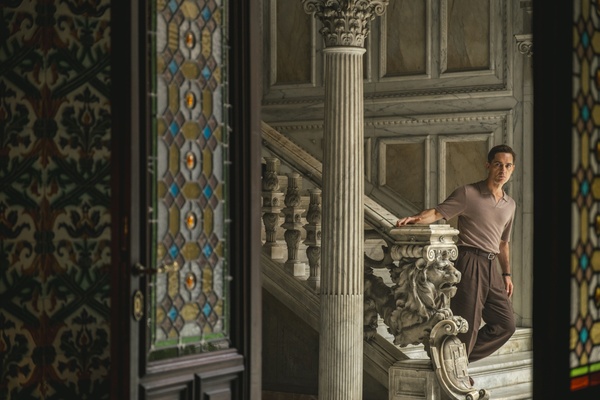
The idea of building the season around blackmail and revenge could have added more darkness to Berlin's character. The problem is that the series doesn't really delve into any of these elements. Leonardo's painting remains primarily an aesthetic symbol, more useful for defining the season's image than for giving it real narrative weight.
The constant feeling is that of a story that continuously introduces potentially interesting ideas without ever managing to fully develop them. The new setting modifies the outline, but doesn't truly transform the heart of the series. After a few episodes, Berlin and The Lady with an Ermine indeed returns to take refuge in the same relational dynamics already seen in the main franchise.
Review of Berlin and The Lady with an Ermine: too much melodrama, too little tension
The main limitation of the second season concerns the management of narrative tension. The House of Paper had transformed the heist mechanism into a constant engine of suspense, building each episode around increasing pressures and conflicts capable of truly altering the balance.
Here, however, the heist progressively loses centrality. The series prefers to shift attention to romantic relationships and internal band dramas, without, however, achieving true emotional depth. Many subplots seem to exist only to occupy narrative space. Some dialogues insist on an exaggerated romanticism that often ends up weighing down the pace rather than enriching it.

The problem is not the melodramatic component itself. The universe created by Álex Pina has always thrived on exaggerated passions and emotionally unstable characters. The difference is that, in this season, those conflicts rarely produce truly incisive consequences. Relationships seem to go nowhere, while plot twists appear increasingly mechanical.
The pace also suffers. The series continues to move quickly, but struggles to build real engagement. Episode after episode, an unusual feeling for a heist drama emerges: fatigue.
Pedro Alonso remains the true heart of the Netflix spin-off
If the season still manages to retain a certain identity, the credit goes almost exclusively to Pedro Alonso. His Berlin continues to be the most interesting character in the entire narrative universe linked to The House of Paper. Alonso maintains that rare ability to make Andrés simultaneously elegant, irritating, melancholic, romantic in his own way, and deeply narcissistic.
Every time he enters the scene, the series suddenly regains personality. Berlin continues to live with credible contradictions. He seeks absolute control over the people around him, but remains a slave to his own emotional obsessions. He speaks of love as a form of spiritual elevation, only to constantly transform it into possession and manipulation.
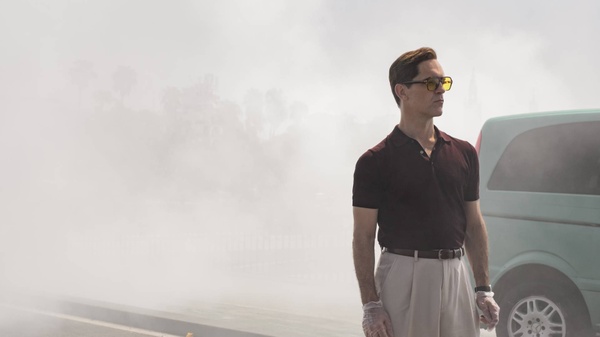
The problem is that around him, the story empties out. The secondary characters, already less incisive than those of the parent series, appear further flattened here. The gang never develops a true collective dynamic. Some characters seem reduced to simple narrative functions, others are defined almost exclusively through romantic relationships that rarely truly evolve.
The first season at least managed to build a group with a certain emotional compactness. In this second chapter, however, that sense of teamwork that made The House of Paper memorable is almost entirely missing.
Berlin 2 confirms the limits of a franchise now close to exhaustion
The real problem with Berlin and The Lady with an Ermine might be the entire state of the franchise. The series now seems trapped in the need to continuously replicate already recognizable formulas: the impossible heist, the romantic criminal, exaggerated melodrama, theatrical dialogues, and internal betrayals.
Everything continues to exist, but with ever less force. Increasingly predictable. Increasingly close to the feeling of "déjà vu."
The aesthetic remains very refined, and some images still retain the typical visual charm of the narrative universe. Behind that surface, however, an increasingly predictable script emerges, incapable of finding truly credible directions. The second season continuously tries to raise the emotional stakes, only to leave very few truly memorable consequences.
And perhaps this is the most disappointing aspect of the series: the absence of a real narrative urgency. Berlin and The Lady with an Ermine often appears as a product built to prolong the franchise's success, rather than to add something significant to the character of Andrés de Fonollosa.
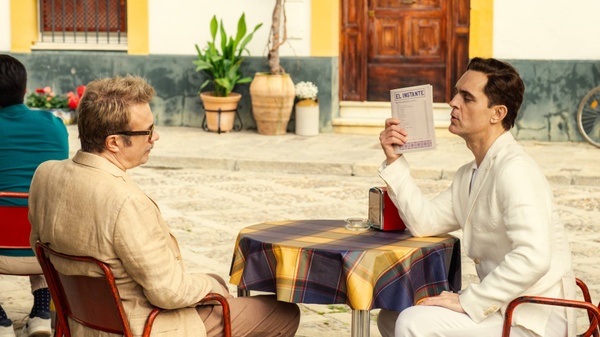
Berlin 2 and The Lady with an Ermine, conclusion of the review
Berlin 2 and The Lady with an Ermine is not a season without qualities. Pedro Alonso continues to carry the series with a magnetic performance. The change of setting introduces some interesting variations, and some moments still manage to keep the viewer's attention alive.
Overall, however, the second chapter of the spin-off appears forced and decidedly less engaging than the first season. The heist loses weight: melodrama takes over, and the secondary characters are almost completely overshadowed by the protagonist's centrality.
After this season, the feeling is that The House of Paper universe has probably exhausted much of its creative drive. Continuing to expand it increasingly risks transforming what once seemed engaging into something simply repetitive.
Score
Editorial team

Berlin 2 and The Lady with an Ermine, review: the heist loses tension and the franchise shows fatigue
Berlin continues to have a magnetic protagonist thanks to Pedro Alonso's performance, but this second season struggles to find a real narrative necessity. The new heist set in Seville introduces interesting ideas, which often remain superficial within a structure increasingly dominated by melodrama and repetitive dynamics. The tension decreases, and The House of Paper franchise now shows clear signs of fatigue.
Similar articles