Wicked nails the second part too, and that was no easy feat: the film review
After a convincing start, Wicked's second part also manages a strong finish: a result that, given the premises, was not a given.
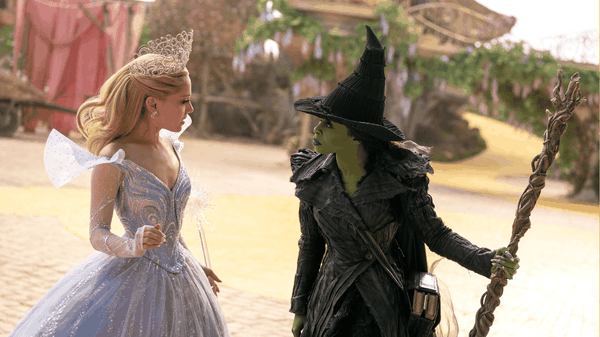


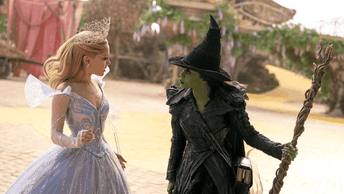
That Wicked For Good did things right, not settling for the automatic success guaranteed by the sequel to a highly successful film, is clear from the very first minutes of the movie. You are hit by a whirlwind of vibrant colors: the tulip fields, the city decorations, the flowers and street performers shine as they practically never did in the first film. While it's true that this part two particularly emphasizes establishing shots and panoramas aimed at allowing its audience to savor the production richness of a high-budget project, it's also true that there was no enhancement of sets or costumes, no increase in funds or additional care between the first and second films. The two films were, in fact, shot together, as a single project.
Wicked learned from the criticism received for the first film
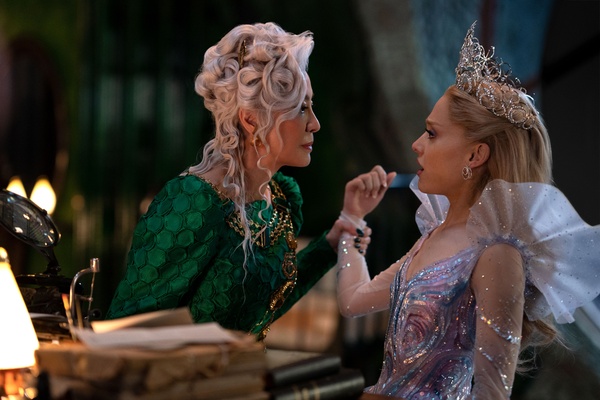
What changed was the approach of Universal and director John M. Chu who, while publicly defending the unfortunate creative choices of the first chapter, heeded feedback from critics and audiences to correct course along the way. Wicked For Good, in short, does not have more sumptuous or richer sets than its predecessor: simply, the studio fixed that ugly mess of the first chapter, which was washed out in colors and brightness by an almost criminal mix of color grading, cinematography, and digital footage.
If nothing else, Wicked for Good proves how brutally these aspects can undermine even the most meticulously crafted sets and monumental backdrops (and vice versa). We can't say it has excellent technical aspects, because much of the problem lies upstream: some scenes remain a bit awkward in this regard, but finally, here and there, we experience the chromatic vibrancy of the magical world of Oz and of a blockbuster that also wants to seduce with its visual richness.
Conversely, what was highly ambitious but poorly executed in the first film (also due to certain unfortunate directorial choices) here turns out to be almost more effective because it's on a smaller scale but well done. Here and there, we finally find a Chu who demonstrates all his experience in the musical film and dance sector, with almost hinted dance passages well managed and even a funny scuffle between the two protagonists shot with all the stylistic elements of action cinema. There is no longer a number like the library dance in part one, which, however, was almost counterproductive in its minimal use of the undeniable effort put into orchestrating and executing it.
Wicked for Good does less than its predecessor, but often better
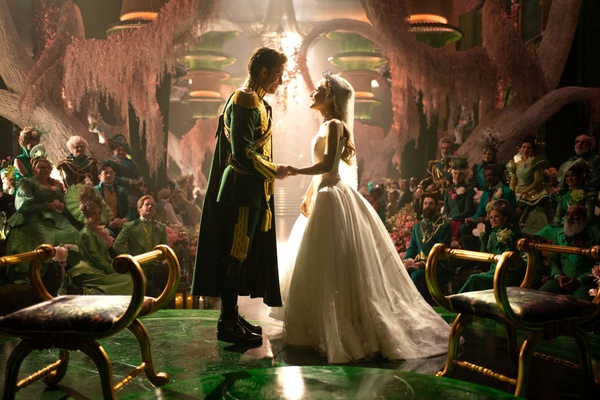
Wicked for Good, in short, does less than its predecessor but better: partly because its objective is less burdensome, being asked to somehow land an operation already underway and whose crucial passages are all behind it. Partly because, shrewdly, it spent the months between the first and second chapters fixing everything that could be improved. Technically, it's even a better film, and from a narrative point of view, it doesn't even suffer too much from its many limitations, starting from the fact that here we find Dorothy and the entire intertwining of the "official" story, which wedges itself halfway through this film and to which one must constantly return by force of circumstance.
If anything, Chu misses the great opportunity to choose a lean and impactful ending, lingering too long in search of a worthy finale, despite having backed himself into a corner right at the beginning of the first film. Wicked, in fact, opened with the celebration of the Wicked Witch's death and an inhabitant of Oz asking Glinda if it was true that she knew her, developing as a very long flashback that narrated the unofficial story of their friendship. The natural conclusion would be the end of this memory of Glinda, but the film has at least a couple of more effective endings much earlier, which it ignores, losing sparkle and verve in its second half. Even when it decides to conclude, it then intersperses the ending with other considerations, which transform a clear, definitive point into an ellipsis. The final result suffers a bit, but considering that we are talking about a diluted and somewhat watered-down version of a product that already originally suffers from a drop in pace in its second half, Wicked is a truly well-conducted landing of a story.
Wicked has the courage to let its protagonists grow up
Compensating for a less brilliant musical part and this lingering ending is the true strength of the story, which is the continuous rewriting and evolving of the two protagonists beyond their roles as good and evil, blurring into each other along with their respective color palettes. Therefore, great credit must be given to the film's screenplay for having the courage to leave behind the adolescent version of the protagonists, fully focusing on their complexity as adult women, without fear of seeing them changed. What is impressive in this sense, for example, is the long sequence that more than suggests Elphaba's (Cynthia Erivo) "adult" romantic involvement and a series of painful passages and realizations that never excessively darken the story, but make it more significant and multifaceted for the adult audience in the theater, carrying through the premise from which the entire story originates.
At this point, Ariana Grande and Cynthia Erivo perfectly inhabit the characters and, freed from certain initial rigidities, give an excellent all-around performance, which overcomes certain acting limitations not only with their extraordinary vocal abilities but with a charisma derived from their star status that suits both roles well. An additional point in favor of the film for the Italian audience (mostly unable to experience the original on Broadway) will then be the discovery of the well-conceived plot twists hidden in this second part, which Wicked for Good obviously inherits from its source but stages optimally, exploiting them to the fullest. Some minor imperfections remain here and there, but a cast that was mostly functional in the first part returns here in a more than convincing way, also because there is more room for everyone to shine or perhaps, even better, to be enriched with shades of gray and complexity.
Score
Editorial team
Wicked nails the second part too, and that was no easy feat: the film review
Wicked for Good is not superior to its predecessor, which still benefits from the original musical's strongest songs and the inherent lightness of such carefree story beginnings. However, it is much more successful on a technical level and, all things considered, perhaps more surprising in how it managed to correct course, overcome previous shortcomings, and deliver a film whose premises were not the simplest and which promised more dull moments than it actually has. Those who loved the first film will be enthusiastic, and, as a whole, fans of the original musical can be more than satisfied with how it has been brought to the big screen.
Similar articles
The Relic: First Guardian – Review of the game that combines soulslike and RPG
Order of the Sinking Star Review: A Huge Puzzle Game That Risks Being Too Much
The Blood of Dawnwalker, the review of the action RPG that promises freedom and fresh blood!