The Social – The Price of Truth: The Review
Sorkin takes a difficult subject and transforms it into a tense journalistic thriller, with the flavor of great American investigative films


The Social – The Price of Truth starts from a premise that on paper could easily turn into a long explanation of algorithms, data analysis, disinformation, and platform responsibility. Aaron Sorkin instead chooses another path and transforms a difficult topic into a legal thriller with a strong journalistic feel, built around the revelations of former Facebook employee Frances Haugen and the work of the Wall Street Journal. The result is surprising, especially in how it manages to evoke the scent of the pages of a cult screenplay like that of All the President's Men, Alan J. Pakula's sublime 1976 film.
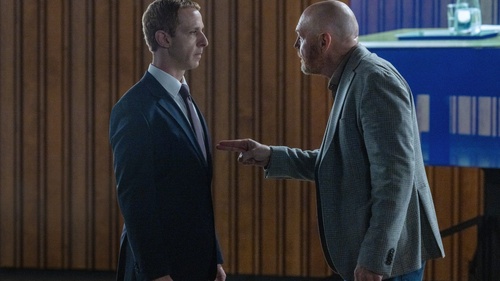
Unlike Fincher's notable The Social Network, here we look at what Facebook has become and the consequences of decisions made within a technological machine that, like a brain blender, is capable of influencing millions of people. Documents, testimonies, verifications, and interrogations become the tools through which Sorkin progressively builds palpable tension.
Gallery

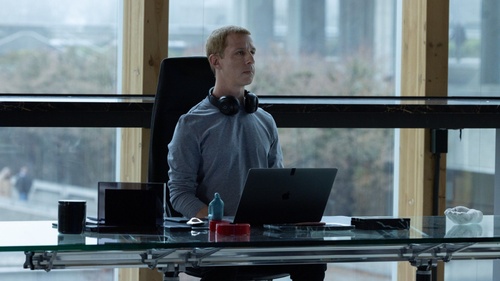


A power that no longer needs to show itself
The decisive shift is linked to the change in algorithms and the weight attributed to engagement. The more a publication arouses anger, fear, or indignation, the greater the chance it will be pushed in front of users. From this, a mechanism takes shape capable of fueling polarization, radicalization, disinformation, even pushing weak minds to commit heinous acts: like publicly and unreasonably insulting a police officer or assaulting the Capitol.
The narrative finds its most disturbing dimension when it broadens its gaze to Instagram and the effects of social media on young people. The problem no longer concerns only politics: it enters into relationships, into the image people have of themselves, and into how a generation builds its relationship with reality. The pandemic is the first moment when the problem explodes in front of everyone, amidst false information and content capable of fueling fears and uncontrolled beliefs. Then comes January 6, 2021. By that point, what seemed confined to the social media screen has already produced concrete consequences, even transforming disinformation into something impossible to ignore.
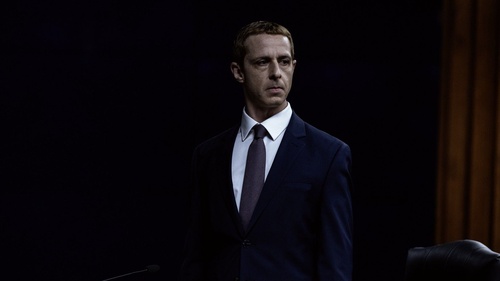
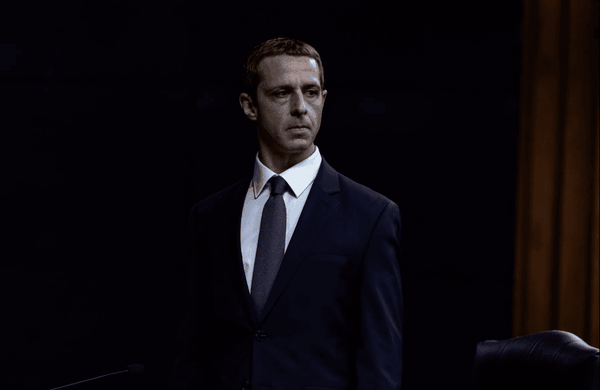
And it is here that Zuckerberg takes on a particularly sinister dimension. Jeremy Strong portrays him with an almost inhuman coldness through movements, voice, and gaze that convey the image of a digital satrap. A sinister individual seemingly incapable of being affected by the consequences of his decisions, unsatisfied despite his companies representing a trillion-dollar fortune. The narrative thus shines a spotlight on a power willing to chew up and spit out the minds of entire generations just to protect its economic model.
When journalism becomes the last bulwark
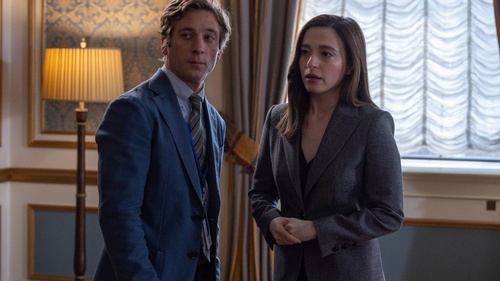
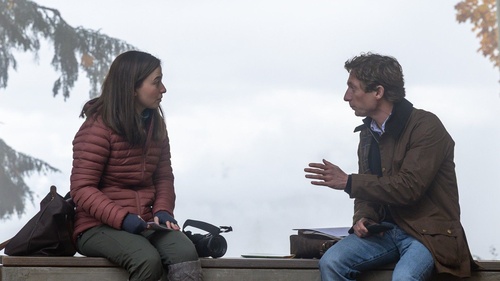
Mikey Madison is the human heart of the story. Her Frances Haugen is not transformed into a flawless martyr, but into a woman forced to choose how much she is willing to lose to make a damn uncomfortable truth public. Jeremy Allen White works equally well as the journalist who must transform a mountain of documents into something understandable and verifiable. His perseverance breaks through one wall of silence after another, one firewall after another, a pen that would not have looked out of place alongside Bob Woodward and Carl Bernstein. Just as happens in All the President's Men, which tells how the pair of journalists broke the Watergate scandal, bringing Richard Nixon down at the beginning of his second presidential term.
Sorkin foregoes any virtuosity and approaches the story with a dry direction that does not deny moments of light irony, letting the dialogues and investigative work build the tension. The reconstructions of real events inevitably require some more verbose passages, but they serve to give weight to what emerges little by little. The comparison with The Social Network remains inevitable, especially due to Zuckerberg's presence, but this film seeks another grammar: less cinematic seduction, more attention to what happens behind the doors of what would become the Meta corporate conglomerate. Because the real theme of The Social ends up being journalism itself. In a world where an algorithm decides what deserves attention, someone must stop, check sources, connect facts, and understand what lies behind thousands of documents.
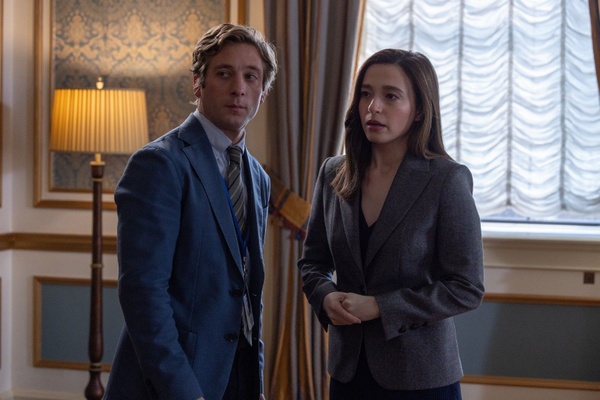
Sorkin's merit is above all to show Zuckerberg's social media no longer as technological mass communication platforms but as a fierce, ruthless machine capable of producing devastating consequences far beyond the screen. The film does not need to become a manifesto: it merely shows the mechanism and lets its consequences speak for themselves. When the credits roll, it is precisely that feeling that lingers, something that belongs to the present and for this reason continues to arouse deep unease about that immense power.
Score
Editorial team

The Social – The Price of Truth: The Review
Sorkin looks inside Facebook without turning the investigation into a technology lesson. The result is a film that finds its best weapon in journalism and in Zuckerberg the cold and horrifying face of a power (im)possible to contain.
Similar articles