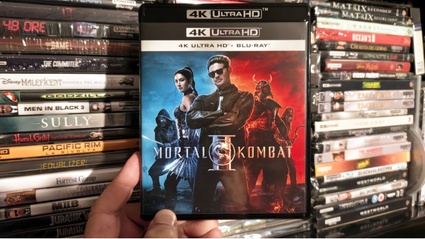
Mortal Kombat II proves it learned from its predecessor's mistakes
Without overdoing it, but putting in just enough effort for a film whose intent is light entertainment for fans of the video game saga, Mortal Kombat II keeps its modest promises and premises.
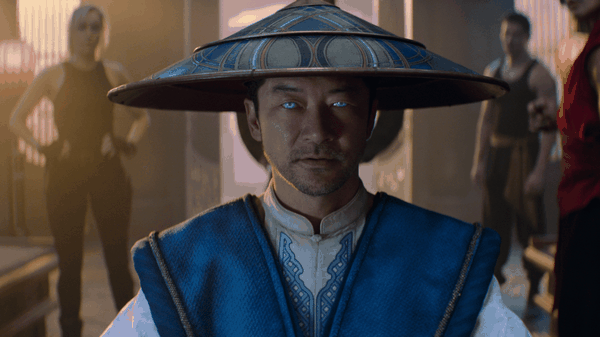


The second Mortal Kombat doesn't hit all that hard, but it certainly puts in more effort and verve than the film that preceded it, confirming itself as a video game franchise that aims to give fans of the saga two hours of fun in the cinema, full of nostalgia from the old consoles that inhabited our living rooms. Mission accomplished fully and without too much difficulty, provided you fully adhere to the spirit of the video game and the years in which it was made. Despite the film's irony about the cinematic past of Karl Urban's Johnny Cage, creating a kind of fake trailer for a bad action movie he starred in within the film's universe, Mortal Kombat II itself closely resembles those late nineties or early millennium films highly focused on their action part and forgetful of almost everything else, including the need to build a faint semblance of a plot and characterization that goes beyond a simple character selection menu for fighting, each with their own formulaic catchphrase.
It's one of the lessons it seems to have learned from the first film: the need to build a real plot that deepens and complicates the sparse martial arts tournament with which Shao Kahn is trying to take over Earth after colonizing Kitana's home planet, killing her father in a fierce duel. Not that the film goes much beyond the tournament itself, whose rules are also quite vague, or rather poorly explained. In the second part of the film, both sides begin to break the few well-postulated rules, cheating more or less blatantly and fighting even between official duels.
However, at this point in the story, director Simon McQuoid (who also directed the previous title) has already done enough to make us readily accept certain plot inconsistencies that the film tends to fall into quite frequently. After all, not much was asked of Mortal Kombat: to bring video game characters back to life, characterized by recurring phrases, a given style of clothing and combat, and sparse biographical information about them, focusing on the clashes between characters.
Mortal Kombat II is better than its predecessor (and that wasn't a given)
The first film made the mistake of focusing on marginal characters and not giving fans what they wanted, which was the chance to find themselves in that game menu and gradually scroll through the boxes of all the protagonists. This time, however, there is a clearer focus on a more precise adherence to the video game saga, concentrating on the character of Johnny Cage, played by a Karl Urban who doesn't seem to have fully shed the skin of his character in The Boys. It is with the same somewhat cynical and vulgar irony that he embodies the charismatic protagonist and the braggart of the film, a declining actor who supports himself by signing autographs at fan conventions. A former martial arts champion whose only gift is to “be extraordinarily beautiful” who is chosen by the gods as Earth's champion to fight in the tenth tournament against Shao Kahn's warriors: the one whose outcome will decide the fate of the planet.
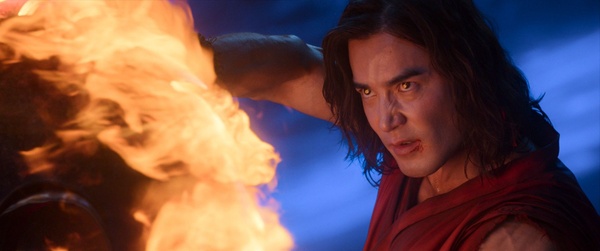
It's a somewhat brutal but inevitable observation, given that it's the first thought one has from Urban's first scene to the end of the film: having a real, capable, and above all charismatic actor makes all the difference in the world in a project carried out, shall we say, not by first-rate professionals (neither in front of nor behind the camera). Without even overdoing it, Urban takes center stage and earns every single dollar it cost the production to have him in the cast. Of course, one could object that films like this are the ideal opportunity to test unknown actors who “come cheap,” but perhaps hide talents yet to be discovered. We will give Mortal Kombat II the benefit of the doubt, the need to somehow carry forward the plot of the previous film (which both they and we would gladly pretend never existed) and the difficulty, which is indeed objective, of amalgamating a cast that can face not only the acting challenge, but also that posed by hand-to-hand combat and related stunts.
In Mortal Kombat, the fights work better than the plot, and that's fine
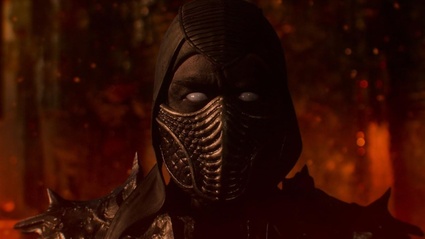
The fights are precisely the most successful part of a film that tries in every way to make as many happen as possible, even outside the rigid confines of the tournament, veering from a comical and playful register to a rather dramatic one not without bloody implications, with severed fingers, torn chests, and decapitated fighters. For a film with magical artifacts, a necromancer, and the aforementioned poor adherence to any rules, the death of its protagonists is not a problem, but rather transforms into a way to alternate them between the bench and one of the sets that recreate the environments where the duels of the first games took place (including the dungeon with spikes emerging from the floor), if not to leave the door open for a possible third chapter.
Certainly, if a new film arrives, it might be time to invent something more than the pairing of Karl Urban and John Lawson's Australian arrogance as Kano, because some characters remain as deep as their 2D effigies in the first video games. Even accepting that it's a film whose goal is to speak only to those who already know the story and feel nostalgic for it (because it offers too little in terms of entertainment to attract anyone else to the cinema), the second Mortal Kombat lacks the ability to make its protagonists (whether good, bad, or undecided in between) more than flesh-and-blood re-enactments of old pixel aggregates, little more than glorified cosplayers, who are required to have resemblance, ****tailoring in their outfits, and modest acting skills to best interpret their character. Unfortunately, many members of this cast cannot do more than that. The positive aspect is that this time Jeremy Slater's screenplay does not force them to randomly spout their anathema during the action, but integrates the more playful aspect of the characters (the one that risks very quickly turning into something ridiculous) in a more cinematic way into the flow of the story.
Score
Editorial team
Mortal Kombat II proves it learned from its predecessor's mistakes
Mortal Kombat II has neither the technical means nor the artistic talents to truly surprise us and do something unexpected. However, it at least manages to confirm its audience's minimal expectations of creating something fun by fully exploiting the over-the-top attitude and 90s atmosphere of the saga's early chapters, also pursued on the musical front. The visual effects are decent, the duels are fun to watch, even if the plot is really trivial. It was asked to do better than its predecessor and it succeeded: it wasn't such an ambitious goal, but neither was it a foregone conclusion.
Similar articles