More than a biopic, Michael is an emotional and truly apologetic musical fairy tale
Michael Jackson is so ready to defend his protagonist, without even exposing the accusations against him, that more than a biopic, it feels like an apologetic fairy tale.
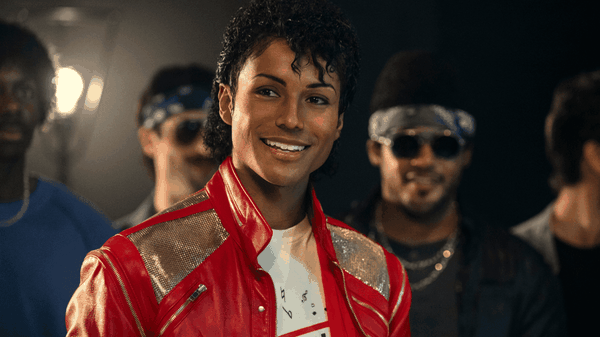


Does a biographical film necessarily have to be true to reality and accurate in its reconstruction of the character's life to be a good film? No, as operations like The Social Network and I, Tonya have taught us. Two biographical films that bend the initial story so much to the message they want to convey that they become controversial from a historical point of view, because they present as true a distortion that borders on deception, on lies. A cinematically sublime deception, however.
Michael has nothing to say that isn't an excuse for the characters in his story
The problem with Michael, therefore, isn't even in the half-truths it whispers or in the facts and people it omits (due to artistic choices, legal issues, or a very troubled production of the film itself) but in the message it conveys which, in essence, doesn't exist. Michael presents itself from the very first scene as a messianic figure, a musical prophet who is immediately believed by his family and industry insiders. Not even Paul Atreides in Dune reaches such a level of predestination: little Michael, frontman of the Jackson 5, is already presented to us as a pure, epochal rather than generational talent. We intuit his contours, because they are never explained or made explicit to us: he holds the stage well, has an impressive maturity for a child, dances and sings beautifully. From here to being called by someone like Quincy Jones "a talent that has no benchmark before or after" is quite a leap, but we must take the history of music and its records as given. This is because the film immediately fails to tell us anything more than what we already know: MJ was the undefeated King of Pop, agreed, but why and how?
Gallery
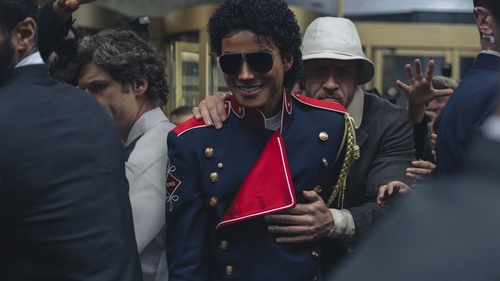
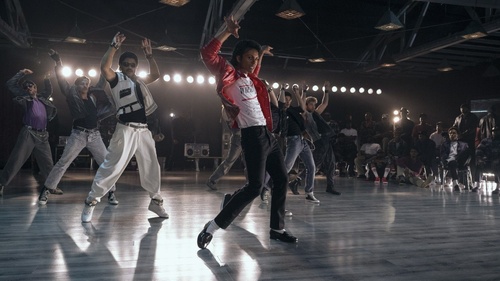
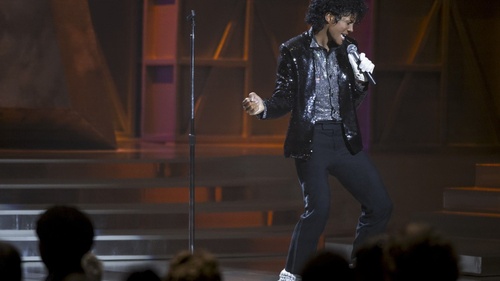
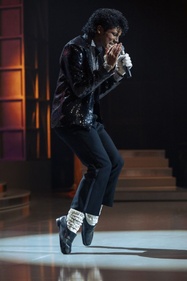
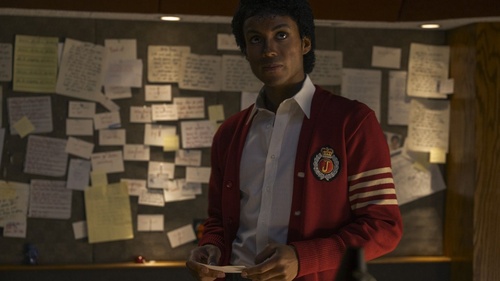
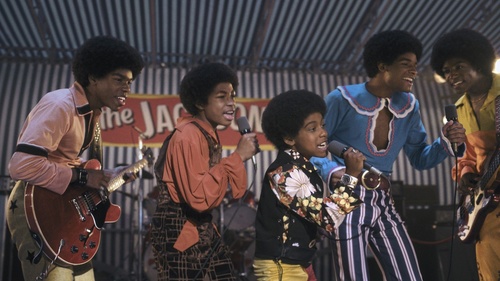
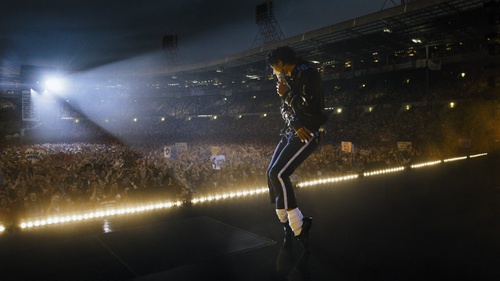
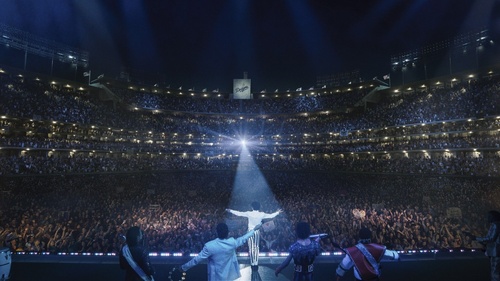
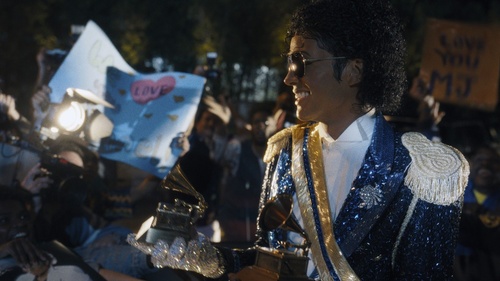
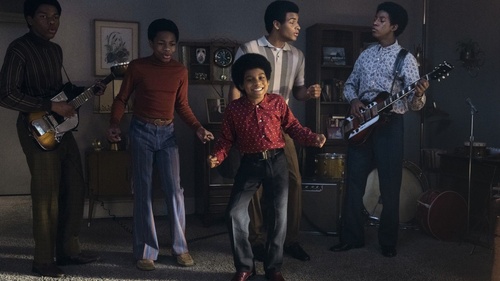
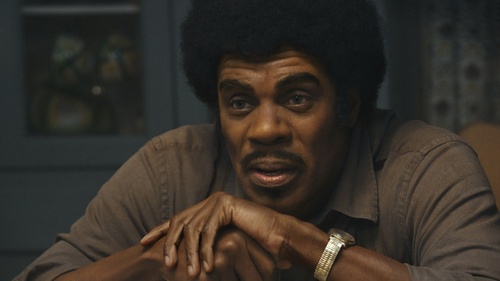
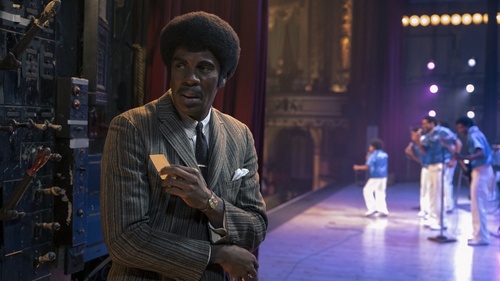
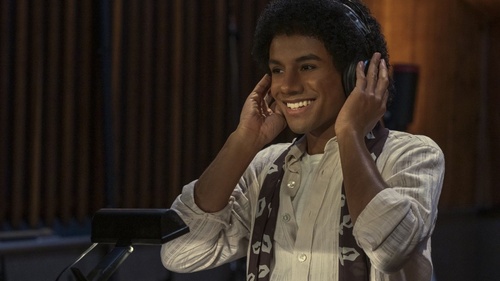
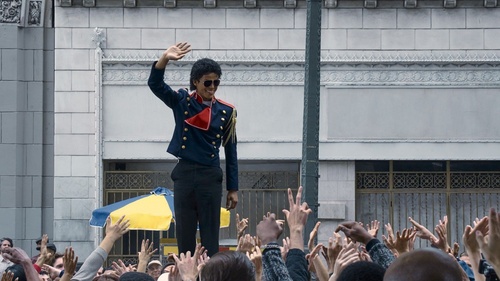
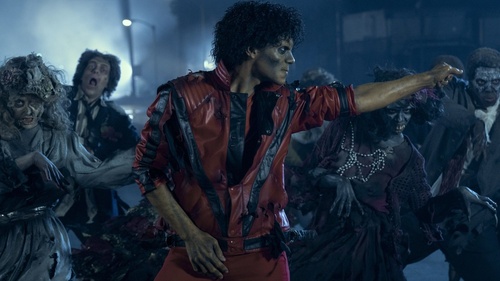
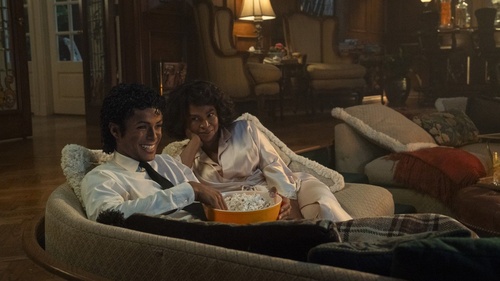
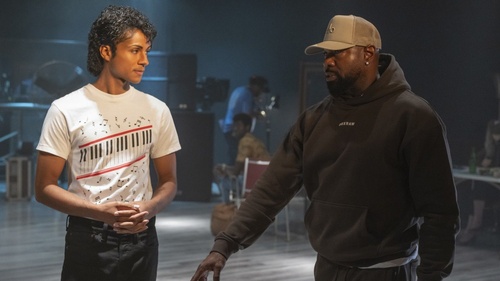
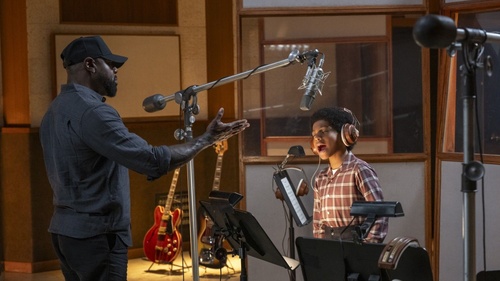
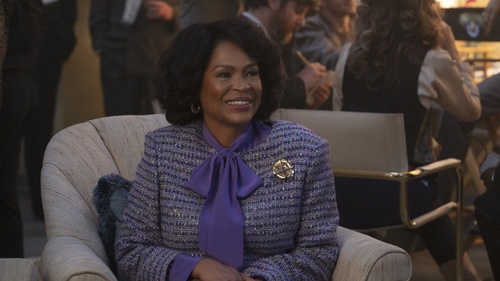

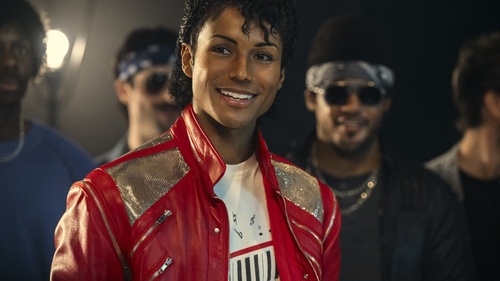
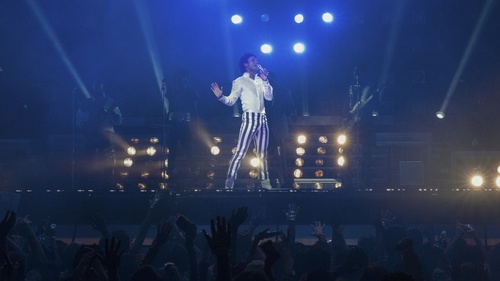
The how, in part, is reduced to an archetypal conflict with a parent who gives the always excellent Colman Domingo the thankless role of being the domineering, physically and psychologically violent father, who serves as a foil for the film to absolve everyone else, starting with the protagonist. I was reminded of another biographical title, the apology of an African-American father with the same ambitions: King Richard, which earned Will Smith an (undeserved) Oscar on the famous awards night when Will Smith jeopardized his decade-long career with a slap. That film was in turn a manipulative operation by the Williams family itself to rewrite their myth, contextualizing and mitigating the despotism of its patriarch. At least in excusing the protagonist's behavior, it told the roots of his obsession with social and financial success. Michael Jackson's father, on the other hand, is immediately despotic and tyrannical, but it is never explained where this need to make his children famous in the music world comes from.
Michael lacks conflict, friction
The film instead chooses to portray little Michael (Juliano Krue Valdi) as his helpless victim, without the ability to rebel, molded by his father's ambitions. When he grows up, however, this victimhood remains, but is inexplicably portrayed in a positive light. After years of beatings and threats, Jackson places a manager and a trusted driver between himself and his father as shields to avoid confronting him directly, but the film frames this choice as something thoughtful and wise rather than an escape. Thus, adult Michael's sensitivity and occasional eccentricity serve as a loophole to hint at many critical issues regarding his public and private persona. Of course, there are the surgeries, the attempts to lighten his skin tone, even a hesitant hint at his prolonged childhood that makes him uncomfortable with explicit topics and the expectations of adult life, but none of this is problematized and therefore, fundamentally, it is never a problem.
This Michael is not an African-American star who managed to bring black music to the white charts, who dreams of having a button nose and white skin because he grew up with the myth of Elvis. He is not a boy so wrapped up in the family microcosm and the (predominantly white) show business world that he only has that frame of reference. Or any other explanation one might give for Jackson's behavior, here reduced to: he loved the features of the (white) Peter Pan from his favorite illustrated book. The racial issue – which we intuit as enormous in his professional history – is dismissed with a joke from his producer arguing with MTV to broadcast the Thriller video.
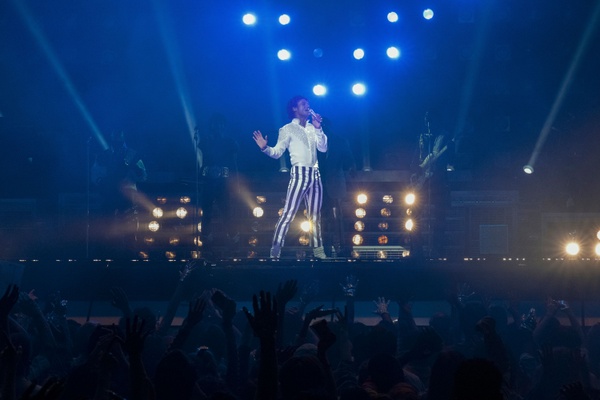
There's no friction, no struggle, no explanation whatsoever of how he was perceived by his own community and by the global public. Since Antoine Fuqua is not Baz Luhrmann, there's also no ability to convey that "kidnapping" of fans, the delirium that Elvis and the Beatles unleashed. It's unclear what kind of audience Jackson speaks to, once again because he's decontextualized from his own context, from his demographic, from his own family. We're talking about a film that erases entire chapters of his life, in which his sister Janet Jackson doesn't even appear, so much so that one wonders how the already announced sequel will address the epochal artistic partnership between the two. Janet Jackson, who has not commented on the film, but demanded to be kept out of the operation: at least a strong hint of what she thinks about it.
The music and Jaafar Jackson are the only two elements that work in Michael
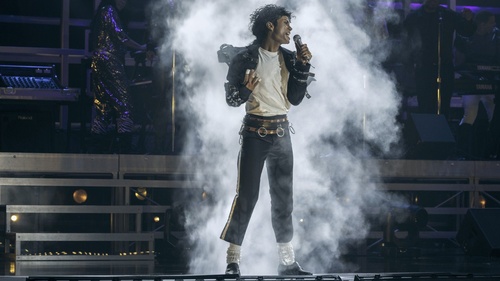
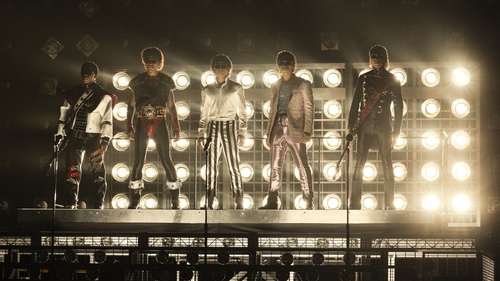
In the spectrum ranging from cynicism to realism, it's hard to say where the assumption that the true reason for this film's existence is to exploit the commercial value of MJ's timeless hits, which demonstrate their power even in the film, lies. Not only have their sounds and visual imagery not aged a day, but it is precisely the freshness of the King of Pop's music that carries the film, which in just over two hours includes thirteen tracks (a musical's pace). In the end, as it approaches Michael's more controversial years, the narrative disappears in favor of the stage performance. The musical part is strong with a Jaafar Jackson who, by genetics (he is Michael's nephew), by predisposition, by hard work, and by a certain naivety that comes with being in your first role in front of the camera, is emotional and very credible, without falling into an obsession for absolute mimesis. The film, however, lives off the strength of Jackson's hits (especially from his solo career) completely failing to explain their genesis or effectiveness. With only one exception, the artist's creative process is never explained, how these songs were born, what experiences they hold within them, whether MJ was good at composing, writing lyrics, or anything else. If not factually, it would suffice to do so in a cinematically satisfying way. Instead, there is only one montage where the creative process becomes cinema, with the use of editing and certain juxtapositions to synthesize the story of inspiration and idea.
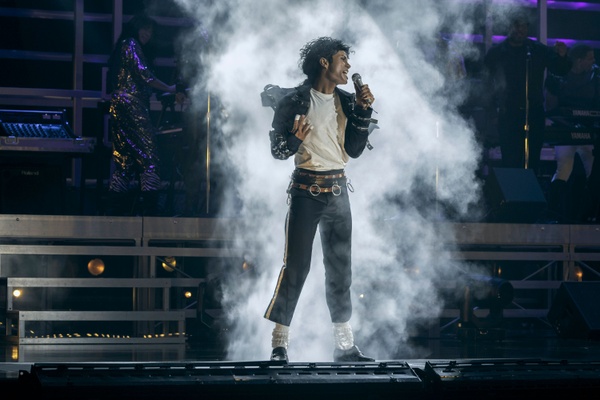
Focusing on the music could be the ideal way out for a film that, for so many reasons, can do nothing but absolve its protagonist of faults that are sometimes not even named. There is, for example, this almost sinister insistence on portraying his affinity with children, especially sick ones, which would make sense if the film also made even a minimal reference to the accusations of pedophilia that marked the second part of his career and celebrity life. Instead, there are these continuous allusions to his lack of sexual maturation, his androgynous and delicate sensitivity, his love for play and animals that fall as if into a void, reinforcing the impression of hearing the story of a victim, though it's unclear of what, apart from paternal cruelty.
In Michael, there is almost only ascent, triumph
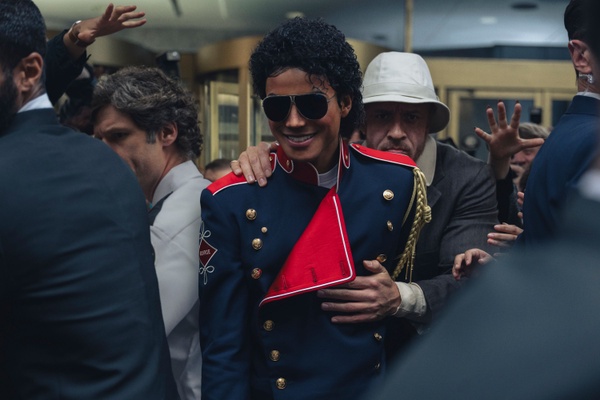
It is a film that leans towards the artistic and human perfection of its subject, so unbalanced towards the ascent that the "fall" of the proverbial parabola of great artists, besides obviously not being linked to the protagonist's responsibility, has a dramatic quality that is only so in words, given how quickly it is overcome and dismissed. I am referring to the dramatic accident on the set of the Pepsi commercial, which should indeed be dramatic: it leaves Michael permanently maimed, in pain and injured. This is the moment when the film should address collective and family responsibilities, instead it tells us yet another character trait of its protagonist without contextualizing it (he never took medication, curious: yes, but why?) and rushes to absolve everyone except the father. The mother, until then subservient to her spouse, gives him a little speech and should emerge redeemed, immediately forgiven by her son and by the film (exactly the same scene seen in King Richard).
In this juncture, Fuqua tells us about a young man who suffers horribly in the hospital, emphasizing how there are nevertheless no responsibilities or lasting consequences. It seems like the story of a saint predestined to suffer for the sins of others, transforming them into great music. Even Luhrmann, who had somehow failed to tell the more controversial side of his myth in Elvis, was infinitely more incisive in recounting his human and character weaknesses, without glossing over family responsibilities.
Score
Editorial team
More than a biopic, Michael is an emotional and truly apologetic musical fairy tale
The poster reads "from the producers of Bohemian Rhapsody" and it's not hard to notice the resemblances between two biographical-musical films that flatten the contradictions of their protagonists so much that they scrape away their charisma, their uniqueness, delivering pale figurines that have nothing to do with the power of the original. There is little of cinematic relevance in "Michael" beyond the search for visual resemblance in the protagonist and his stage performances. What emerges powerfully is the music, shining embedded in an artistic operation that is absolutely not on par with the quality of the artistic journey it recounts. Jackson's songs are gems scattered on a fabric that fails to enhance, exalt, or reorder them to make them shine brighter or for the audience to admire hidden facets. It's an apology good for making you want to re-listen to those albums (or discover them for those who didn't live through that era) that tells us nothing about who created them beyond getting ahead of itself and defending him, it's not even clear from what.
Similar articles