Love, in Theory: a romantic comedy about today's youth?
At the center of Luca Lucini's film is young Leone, torn between the girl he's always loved but who ignores him, and a new flame who seems to be her complete opposite. On Netflix.
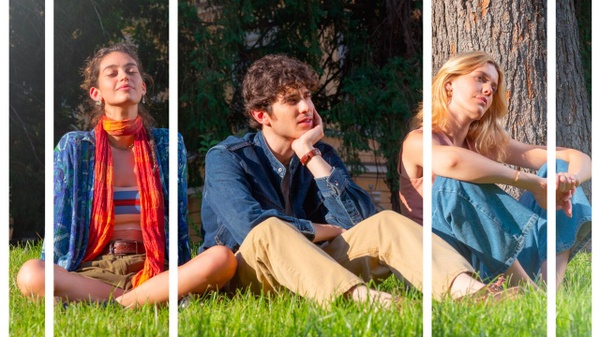


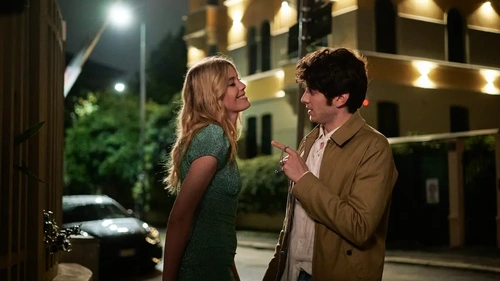
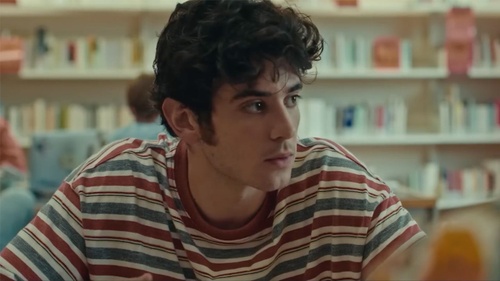
Leone, a brilliant philosophy student with a gentle nature, acts as a "cover boyfriend" for the beautiful Carola, with whom he has always been in love. But she is actually in a secret relationship with Manuel, a ne'er-do-well, and makes her parents believe she is engaged to Leone. When the real couple commits violations in Leone's car, he is unjustly accused of driving under the influence and sentenced to community service.
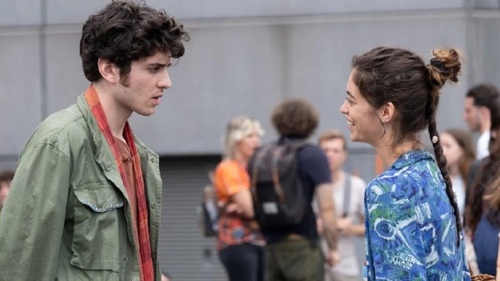
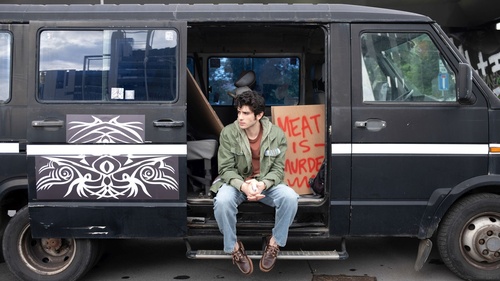
There he meets Flor, an environmental activist and frequent visitor to social centers. The two are seemingly polar opposites, but after initial hostility, something unexpected develops between them, as Love, in Theory can arrive when one least expects it. However, their differences threaten to divide them, and soon the protagonist will have to make a difficult decision.

Love, more in theory than in practice
More than two decades after Three Steps Over Heaven (2004), a hugely successful generational (s)cult, director Luca Lucini returns to investigate youthful sentiment with a work that aims to be a contemporary reflection on love in the twenties of the new millennium, but ends up getting lost in a predictable narrative structure. The theoretical ambition of the title, which from the outset clarifies the operation's aspirations, gives way to an overly reassuring practice, barely supported by a willing Nicolas Maupas.

The intention was to attempt a synthesis, or perhaps highlight a fracture, between the intellectual elaboration of emotions and their actual practical application in the era of Generation Z. The story starts from the classic binomial of opposites attracting, with a boy from "Milano bene" falling in love with a peer with a punk soul, socially and politically engaged. Two young people who have a different vision of life and, why not, of love itself, but whom Cupid has decided to pair more or less forcibly.
Vain attempts
The screenplay errs in throwing the stone and then pulling back the hand, with many ideas that ultimately remain unexpressed. It opts for improbable solutions and extremely ill-timed ones, such as the snobby girl he's always loved suddenly showing feelings for the protagonist just when he has apparently found his soulmate, or even random intersections of a mocking destiny that would risk, at least on paper, hindering the predictable happy ending.
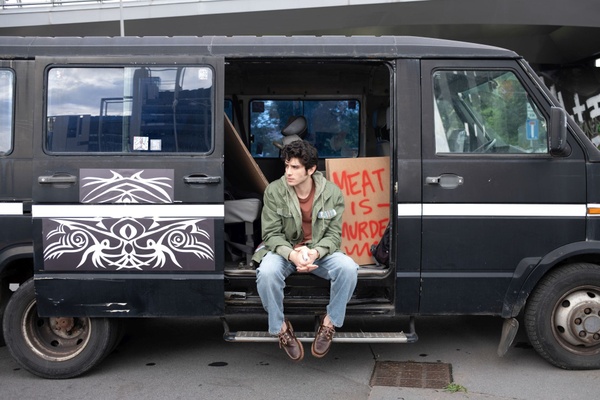
The schema of the good boy experiencing his first times is unrealistic in a contemporary world where youth now appears much more libertine than in the past, almost as if Lucini has remained "behind" in the idea and actual implementation of certain concepts. Here the archetype is re-proposed without a real attempt at critical re-elaboration, amidst existential questions, overly "easy" family dramas, and sudden changes of mind depending on the mood.

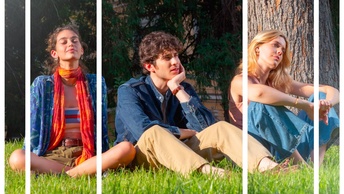
In this story of déjà vu, with unbelievable situations and dialogues, the cast is the most pleasant note: the chemistry between the aforementioned Nicolas Maupas and Martina Gatti is at times palpable, and the rest of the young actors are heterogeneous enough, with close-up and black-and-white segments interspersed throughout the narrative, during which the actors themselves express their ideas on love to the camera. And then we find Francesco Salvi in the role of a sympathetic caricature, a homeless man who becomes a dispenser of wise advice, a sort of improbable spiritual guide for the lost protagonist.
Gallery





Score
Editorial team
Love, in Theory: a romantic comedy about today's youth?
A romantic teen-movie that lacks the courage to confront its own ambitions, limiting itself to a summary of the sentimental and generational genre. But it's hard to recognize today's youth in this love story full of stereotypes, with the clash-meeting between two opposing worlds, from "Milano bene" to the anarchist area, both sketched with a certain superficiality. Love, in Theory thus settles for being an out-of-date update that wants to speak to Gen Z using a polished language and widely codified and outdated dynamics. This is despite a fairly engaged cast and some good ideas here and there, which, however, remain too superficial to be truly effective.
Similar articles