Jack Ryan: Ghost War between intelligence and action without risk
Once again, the franchise returns to draw from an already worn-out imaginary world
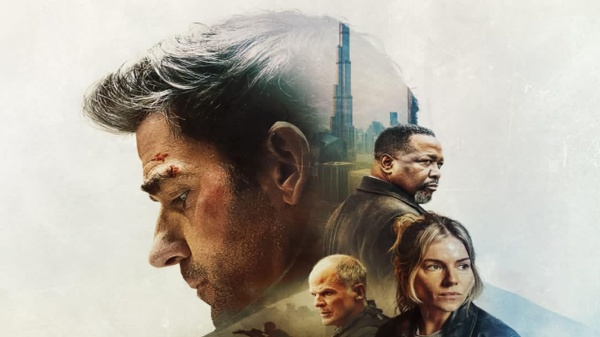


With Jack Ryan: Ghost War, the franchise inspired by the universe created by Tom Clancy attempts a rather delicate transition: to break away from the serial structure that had defined the character's latest incarnations and transform into a more compact, muscular, and inevitably more spectacle-oriented cinematic thriller. The problem is that the film constantly seems torn between two different souls, never quite managing to choose which one to follow through to the end.
On one side, there's the Jack Ryan that works best: that of intelligence, of dirty operations conducted in the shadows, of geopolitical consequences that drag on for decades, and of invisible wars born from the rubble of other wars that have threatened the world, not least the one triggered by the September 11 attacks. And it's precisely there that Ghost War manages to find its most convincing moments. When it slows down, when it makes room for dialogue, for suspicion, for behind-the-scenes maneuvers and international paranoia, the film still manages to remind us why this character has had such a long life in cinema and television. At least for those who can navigate between acronyms and character names.
When the Thriller Becomes a More Conventional Action Film
The problem arises when the action component progressively takes over. Not so much because of a lack of rhythm or spectacle, but because the film slowly abandons that initial political ambiguity to transform into something much more canonical and predictable. The last part, in particular, almost seems to want to become a kind of simplified and noisier Die Hard, where everything is reduced to shootouts, sieges, and characters forced to run from one point to another while the screenplay progressively loses credibility. Frankly, one can no longer stand predictable and filler shootouts, however pyrotechnic; except for one explosive twist in the first part, the rest is damnably predictable.
In fact, the most obvious limitation of Ghost War is the feeling of having seen almost everything before. Once again, the franchise returns to draw from that imaginary world made of dormant secret teams, reactivated clandestine cells, ghost operations that survived governments and wars, global threats ready to collapse international balance. Elements that have always belonged to the narrative DNA of Jack Ryan, but which today inevitably risk appearing more tired and repetitive if not supported by truly solid writing.
Krasinski Co-wrote, Yet...
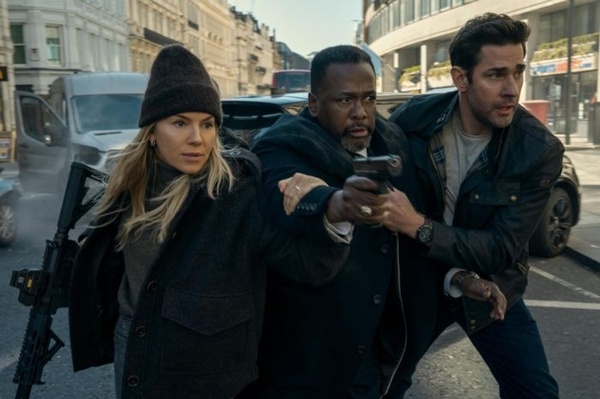
And it is precisely the screenplay that leaves the most doubts. It is quite surprising to think that the project also has the direct involvement of John Krasinski, along with the creative legacy linked to Clancy, because the film often gives the impression of relying more on genre automatisms than on a truly brilliant construction of tension. Some passages work, certain internal dynamics of the intelligence world still manage to keep interest alive, but many narrative twists seem to arrive with an almost disarming predictability.
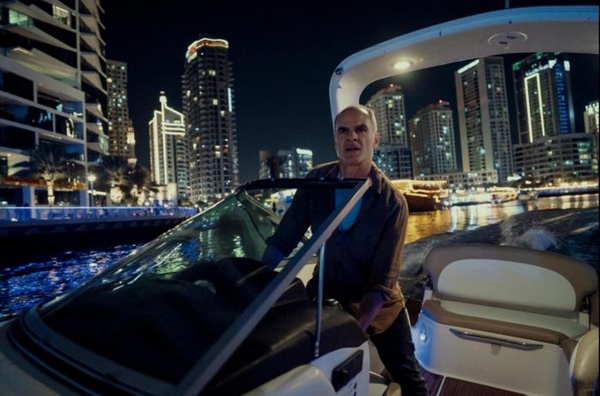
What holds much of the film together is primarily the cast. The trio formed by Wendell Pierce, Krasinski, and Michael Kelly possesses the right chemistry and maintains a pleasant ironic vein, while also giving depth to the sequences more related to political and operational manipulation. These are the moments when Ghost War comes closest to the adult spy thriller it probably wanted to be for its entire duration.
Between Forcing and Little Courage to Reinvent Itself
Sienna Miller's presence, however, is more fragile; her character seems almost entirely built around a worn-out, over-the-top, and self-destructive aesthetic that the film continually emphasizes in a rather artificial way. The idea of a cynical figure marked by her work could have worked, but the final result often conveys a sense of forced construction, as if the character was written more to adhere to a visual stereotype than to have a real identity.
In the end, Jack Ryan: Ghost War leaves above all a very precise feeling: that of a project that seems to exist more as a potential bridge towards a new serial evolution of the franchise than as a true standalone film capable of leaving a strong mark. It's not a disaster, quite the opposite. In its best moments, it still manages to build tension and effectively exploit that climate of global instability that has always belonged to the Jack Ryan universe. But there also remains the feeling that the franchise continues to move within territories that are now too familiar, without truly finding the courage to reinvent itself completely.
Score
Editorial team
Jack Ryan: Ghost War between intelligence and action without risk
Jack Ryan: Ghost War works better when it focuses on intelligence and geopolitical tensions than on pure action. It starts as a decent spy thriller, but in the second half, it slips into more conventional and predictable dynamics. The trio formed by John Krasinski, Wendell Pierce and Michael Kelly is good, but the overall writing is less convincing.
Similar articles