They're Not Just Simple Bears: Bearly Brave Unveils the Dark and Brutal Side of Toys. The Review
Imagine a "Toy Story" directed by Stephen King: we've tried Bearly Brave, the indie title that blends strategic deck-building with a pleasantly unsettling atmosphere. Here's what to expect.
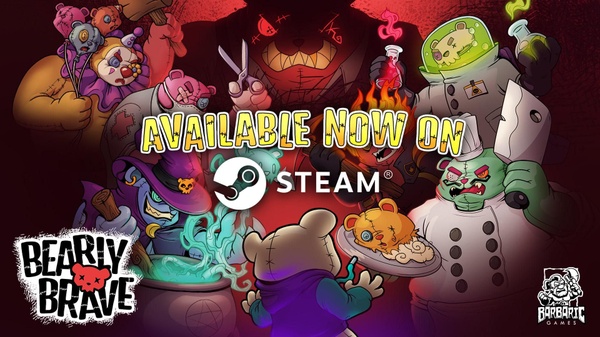


Bearly Brave is a title that surprises with the contrast between its cute aesthetic and ruthless gameplay. Set in a toy store, it tells the story of Toby, a shy bear who finds himself involved in a nocturnal tournament where toys fight to earn a spot on the shelves and the chance to be chosen. Behind the colorful and reassuring facade lies a fierce competition, orchestrated by the cruel Boris, which transforms every clash into a fight for survival.
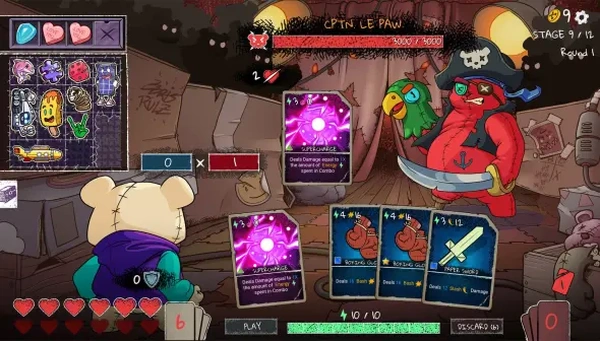
Gameplay and Mechanics: Between Lethal Cards and Fierce Bears
The gameplay is a successful mix of strategic deckbuilding and turn-based roguelike, with runs that are always different thanks to the random generation of enemies – although the variety isn't too extensive – rewards, and card synergies. Variety is one of its strengths: over 110 cards, consumable items, modifying patches, candies to power up various runs with consumable items, and unique encounters ensure considerable longevity.
The shopkeeper Grimble becomes the hub of progression, allowing players to buy, upgrade, remove, or clone cards, offering a level of customization that encourages experimenting with new strategies. The graphic style is refined and original, with hand-drawn teddy bears and vibrant settings that create an unsettling contrast with the brutality of the tournament, while the sound design discreetly accompanies the action, increasing tension in key moments. The difficulty curve is calibrated with modes designed both for newcomers to the genre and for experienced players seeking challenging tests. Playing therefore means unlocking new types of cards, elements useful for multiplying points, etc.
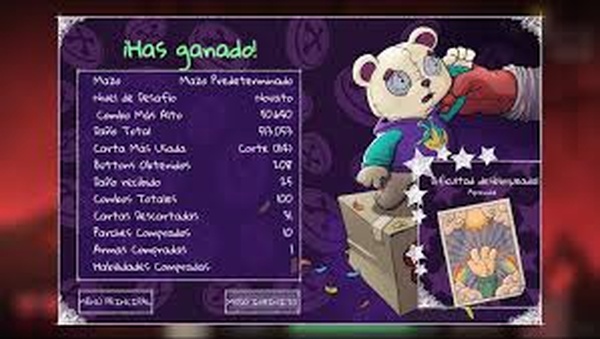
Why the "Cute but Horror" Aesthetic is Conquering Steam
What distinguished this title from the crowd, however, was not so much the elements presented in the game formula, but rather its way of aligning various things, such as the choice of how to stack cards based on suit or card type, in order to increase the final effect. Unfortunately, this (currently) works very poorly.
You die a lot, so much, too much, and you restart with the distinct feeling that you won't get past the very few matches that block your progress, only to start over again. As I often say in these cases, it's always preferable to offer something more substantial to the player, to have a reward or to know that they will be able to face subsequent matches with more elements from previous runs, but unfortunately, this is not the case. It doesn't disappoint, but the logic of card succession or combos isn't explained well, and it's also excessively frustrating; maybe it will change in the future, but for now, it gets boring after a few hours.
Similar articles