Control Resonant changes its skin without ceasing to be Control - Review
Dylan Faden brings the paranormal out of the Oldest House, while the Aberrant transforms combat without erasing the series' identity.


There are places that work because they are vast, and others that work because we can never truly understand how vast they are. The Oldest House belonged to the second category. A brutalist building in the middle of New York, seemingly bounded by walls, elevators, and offices, yet capable of opening, bending, and swallowing entire departments without much concern for geometry or common sense. All it took was entering a corridor, passing through a door, or pressing an elevator button to feel that behind that wall there could be much more space than the building should have contained.
Gallery
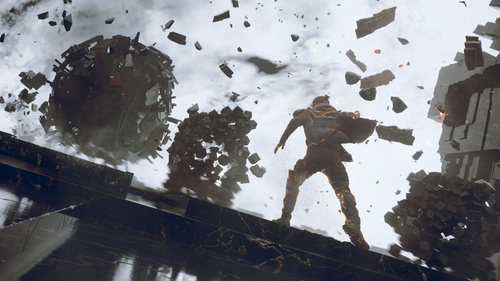
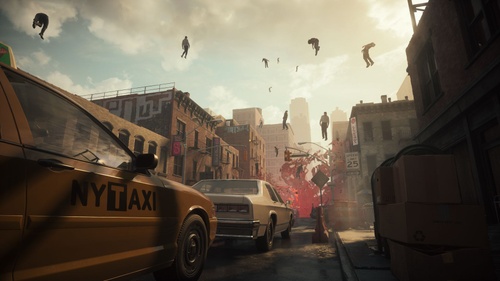

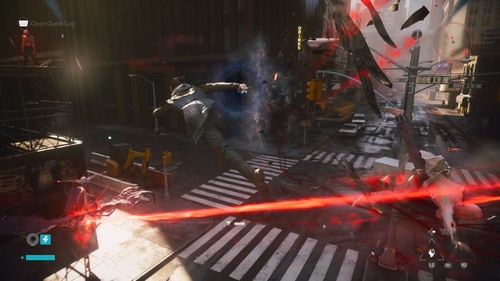
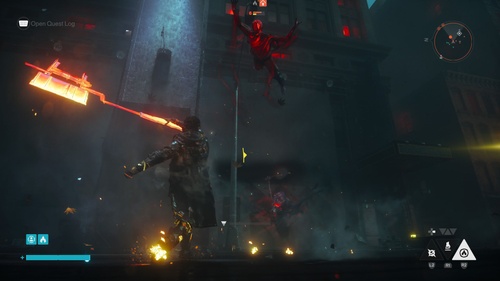
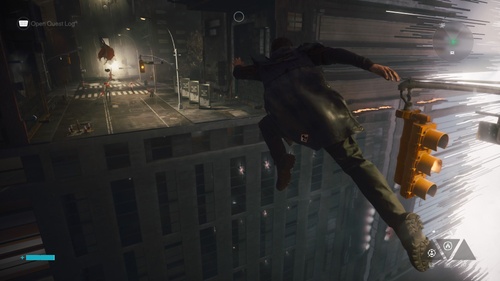
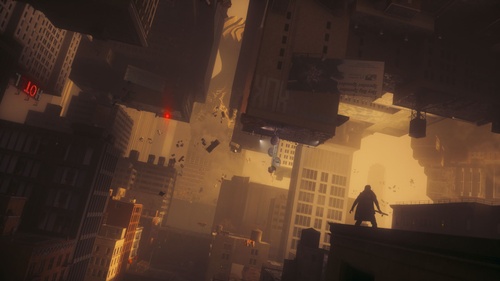
The first Control built much of its identity precisely within that compression. Jesse Faden entered the Federal Bureau of Control headquarters looking for her brother Dylan and progressively became part of that absurd organism, eventually taking over its direction while everything around her continued to change shape. Control Resonant starts from an almost mirrored situation: Dylan is finally out, now Jesse is the one to be found, and the paranormal is no longer confined to the Bureau's offices. This time, Manhattan has to deal with something it doesn't understand.
The choice inevitably changes how Remedy constructs space, but also how the player traverses it. Dylan is more mobile, combat shifts almost entirely to melee, and the city grants a freedom that the Oldest House, by its very nature, could not afford. The risk was losing precisely what made Control so recognizable. The result, at least for much of the experience, is instead more interesting: Resonant expands the language of the first game without always managing to preserve the same intensity.
To understand why this inversion works, one must remember what happened at the end of the first Control. Dylan was not only the brother Jesse had searched for her entire life: he had also become one of the main instruments through which the Hiss, the paranormal presence that propagates through a form of resonance and corrupts people and matter, attempted to extend its influence beyond the Oldest House. After years spent in the hands of the Federal Bureau of Control, the government agency tasked with studying and containing paranormal phenomena, Dylan had gone from being a subject of study to a prisoner, eventually being overwhelmed by a force that had deformed his will and identity. Jesse finally managed to stop him and free him from the Hiss's influence, but not to immediately restore the life that had been taken from him: Dylan fell into a coma, while she definitively accepted the role of Director of the Federal Bureau of Control and remained in the Oldest House to confront what remained of the invasion.
That conclusion closed Jesse's journey without truly resolving her brother's. When Dylan awakens, years have passed, and the world he finds no longer entirely belongs to him. The Bureau remains the organization that took him away as a child and kept him confined for most of his life, Jesse represents practically the only recognizable personal connection, and just when he could finally try to rebuild something, his sister disappears. Resonant starts here: no longer Jesse entering the Oldest House to find Dylan, but Dylan being sent out of that same structure to find Jesse. The symmetry is evident, but it offers Remedy the opportunity to finally tell who Dylan is when no other force is deciding for him.
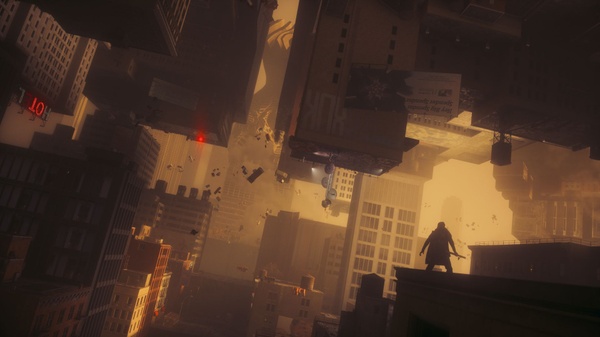
Dylan moves as if he were free, but still speaks like a prisoner
Control Resonant encounters one of its most interesting problems here. Dylan is a much more physical protagonist than Jesse, yet on a character level, he often appears less present. Considering what he has experienced, that distance from the world makes perfect sense, but consistent characterization is not automatically engaging. Jesse arrived at the Oldest House driven by a goal built over years of searching. She was wary of the Bureau, but also curious, reactive, and sufficiently alien to that universe to share the player's surprise at its absurdities. Dylan starts from the opposite position: the paranormal is not something he discovered, it's something that happened to him. The Bureau is not a mystery to understand but the institution that took away much of his life, while the Hiss belongs to his personal experience even before the plot.
When we find him again, this history is palpable. Dylan often observes what happens to him with an almost unnatural detachment, as if the years spent imprisoned, possessed, and finally in a coma had severed the normal relationship between him and the rest of the world. In dialogues, he tends to be dry, unexpansive, and rarely manages to command the scene with the same immediacy as Jesse. The comparison highlights how the protagonist of the first Control was simpler to read and, above all, more charismatic, although it would be wrong to expect the two siblings to have the same character.
The most curious thing is that this Dylan, so restrained in dialogue, becomes almost the opposite when the player takes control of him. The double jump, the dash, and the greater focus on close-quarters combat return an extremely dynamic character, capable of rapidly traversing space and physically engaging in fights. This difference also works well during exploration, because Dylan can utilize rooftops, balconies, walkways, and elevated structures with a naturalness that makes Manhattan more vertical and allows the level design to develop above and below the main path. Levitation plays a more limited role, useful mainly for covering certain distances, while dash and double jump become habitual tools both in movement and in battles.
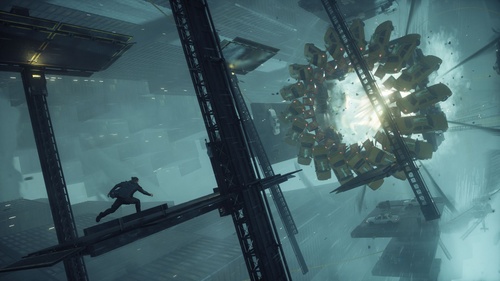
Later, abilities linked to anomalies encountered during the narrative thread dedicated to finding Jesse arrive. One of these allows Dylan to change the surface he can move on, effectively altering the direction of gravity and opening paths built around walls and ceilings. It's a very Remedy idea, spectacular when the scenario manages to accompany it, less convincing when the orientation becomes chaotic and the game seems to complicate space rather than make it interesting. However, it is in human relationships that Dylan most shows what he still lacks. Zoe De Vera, a field agent for the Federal Bureau of Control and Dylan's operational contact during the Manhattan crisis, works precisely because she manages to reduce that distance. She is one of the few people who truly trusted him, and their relationship progressively takes on the value of an anchor to a normalcy that seems almost unknown to him.
Even an apparently small detail like the songs Zoe shares with him helps make this connection credible. In a world occupied by Hiss, Resonants, and impossible anomalies, someone sharing music ends up representing something very mundane, a gesture that doesn't ask Dylan to be a paranormal subject, a former prisoner, or the Director's brother. The protagonist's problem is not that he is poorly written, but that his own story makes him more difficult to approach, forcing Resonant to work much harder than its predecessor to create a bond with the player.
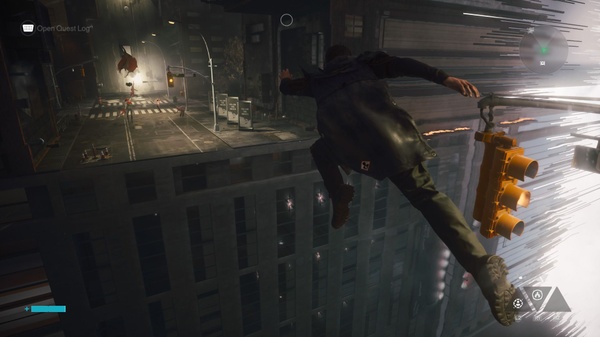
Manhattan is freer, but the Oldest House had something that is missing here
Calling Manhattan an open world risks giving the wrong impression. Control Resonant instead builds a series of zones wide enough to allow for deviations, secondary activities, vertical paths, and a certain freedom in exploration, avoiding the classic oversized expanse to traverse for minutes in search of the next icon. Movement rarely becomes cumbersome even when it's clear that some spaces have been enlarged precisely to give breathing room to the new structure.
The real comparison with the first Control, however, is not about how big Manhattan is, but what it manages to communicate through its spaces. The Oldest House had the ability to tell a story even when seemingly nothing was happening: an abandoned office, an oversized room, or a corridor that suddenly changed inclination contributed to building the feeling of being inside a structure that did not obey the same rules as the outside world. Manhattan offers wider, more vertical, and in some cases truly inspired scenarios, especially when the game leads to the areas where the Resonants hide, individuals once endowed with great power and now deformed by the mysterious force that is bending the city's reality. These encounters give rise to some of the most interesting boss fights and fuel a significant part of Dylan's growth.
The ordinary urban fabric does not always possess the same ability to disquiet. The issue mainly concerns density: the Oldest House transformed almost every environment into part of its narrative, while Manhattan must choose more carefully which places to make truly memorable. The city, however, has well-calibrated dimensions and rarely gives the impression of being artificially inflated. Returning to already visited areas also allows for the recovery of materials, upgrades, and resources necessary for character growth, while some abilities allow access to previously inaccessible zones. Re-exploring an area is thus rewarded, without becoming an obligation around which the entire adventure revolves.
The greater openness brings with it some problems when spaces narrow. The camera doesn't always correctly follow the action with target lock active, and it can happen to find oneself against a wall, with the enemy out of frame or the view forced to chase Dylan instead of accompanying him. In open spaces, the limitation is barely felt, while in alleys and more confined areas, it can concretely interfere with reading the combat.
The Aberrant succeeds in the most difficult task: making you not miss the Service Weapon
If there was one element that seemed complicated to replace, it was the Service Weapon. In the first Control, Jesse's shapeshifting pistol was not just the main weapon, but the focal point around which a combat system of transformations, telekinesis, launches, and continuous movement revolved. Jesse could transition from a fired shot to an object hurled at an enemy without interrupting the flow of action, and Control Resonant takes that same idea of continuity and brings it almost entirely to close quarters.
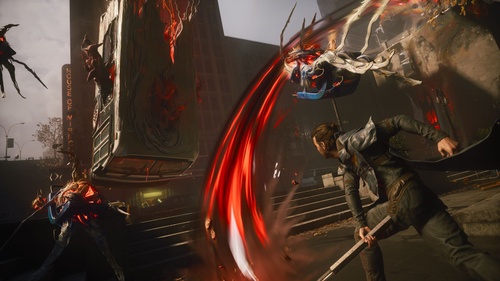
The Aberrant, Dylan's new shapeshifting paranormal weapon, can take on different Forms, each with its own weight, speed, and especially a different way of occupying space. In the configuration we used most, the Scythe allows for a wide arc in front of Dylan, hitting and repelling multiple enemies simultaneously, while Shatter is slow, heavy, and built around the idea of inflicting large amounts of Stagger. The difference is immediately felt and is not limited to two icons with different stats: animations change, the rhythm of attacks, how enemies react, and even when it's best to enter or exit a fight. The Aberrant thus manages to provide a variety that arises first and foremost from the sensations conveyed to the player and only then from the numbers.
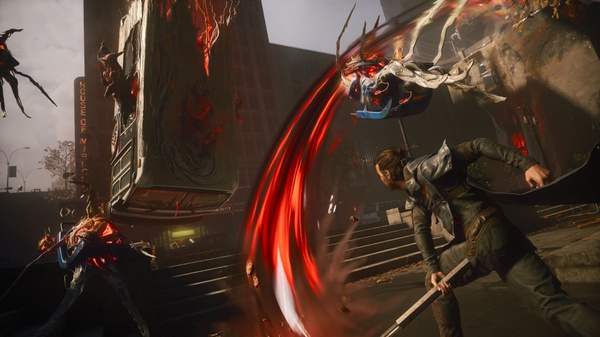
Stagger represents a second threshold, separate from health, which measures how close an opponent is to temporarily losing their ability to react. Some attacks progressively fill it, and once the limit is reached, the enemy becomes vulnerable to an Execution. Performing it activates Dominance, a temporary state that heavily increases melee damage dealt and causes eliminations to release more Health Elements. This results in very aggressive combat, where one seeks the priority target, works on Stagger, and exploits the window opened by the Execution to continue pushing the offensive. When everything works correctly, Resonant maintains that fundamental principle of the first Control that stopping almost always means losing control of the situation.
Difficulty emerges especially when the number of enemies increases. Resonant uses an interesting mechanic to prevent the player from approaching encounters as a simple arena clear: some more important adversaries maintain the presence of minor enemies, who continue to regenerate until the main threat is eliminated. Insisting on smaller targets therefore means consuming resources without resolving anything, and it becomes necessary to understand who is truly sustaining the fight, reach them in the group, and take them down while everything else continues to move. It is precisely in these situations that dash and double jump stop being just navigation tools and become an integral part of combat.
The most difficult moments come when the arena fills up and one must maintain a correct reading of priorities while the camera, effects, and quantity of adversaries increase the pressure. Boss fights against the Resonants, however, work differently and represent one of the most successful aspects of the entire combat system. Remedy avoids simply increasing health and damage: the arenas change, as does the type of pressure exerted on the player and the rhythm at which attacks must be read.
We never felt compelled to completely rebuild our configuration before each encounter. What makes the difference is primarily knowledge of one's repertoire of moves, dodging, and the ability to understand when to strike and when to interrupt a sequence. The game thus allows for the development of a real familiarity with one's configuration, instead of turning every boss into an equipment check before entering the arena.
The RPG component grows especially around how we want to fight
Control Resonant introduces a more articulated progression than its predecessor, but fortunately avoids turning into a continuous accumulation of levels and stats. Completed activities award XP to the individual Zone and, by increasing its level, unlock permanent Upgrades and Talent Points to spend in the Breach, a space separate from ordinary reality where Dylan manages most of his progression. Health and Power, however, follow a different path and increase by recovering specific Upgrade Points through exploration, chests, and activities scattered throughout Manhattan.
The Aberrant also grows according to its own logic. Improving a Form increases the overall Aberrant Strength, which affects base damage and Stagger regardless of the chosen configuration. In this way, upgrading a Form still contributes to the overall growth of the weapon, without turning every investment into an irreversible choice. Talents, on the other hand, are more traditional, and many work through passive bonuses that are less noticeable during action, while those built around a specific mechanic have a greater impact on gameplay.
In our case, it happened with Unstable Anomaly, an ability that allows you to summon an ally to use as an additional source of damage and, if necessary, throw it against opponents, making it explode. The closer it gets to death, the greater the explosion's potential. The summoning quickly entered our offensive cycle, and we continued to upgrade it precisely because it allowed us to maintain pressure while Dylan remained engaged in melee. It is in these moments that the RPG component is most convincing, when an investment directly strengthens something the player is already doing instead of merely adding a percentage that is difficult to perceive.
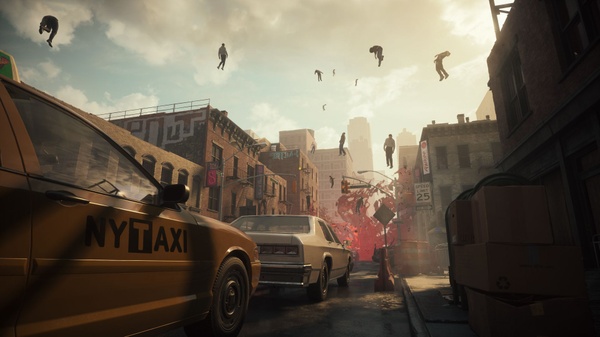
The Abilities obtained by defeating the Resonants also contribute to overall growth, because unlocking one increases the overall effectiveness of the others. The quantity of options, however, did not push us to constantly change configurations: Scythe, Shatter, and Unstable Anomaly built an effective balance, and Resonant also seems to reward those who prefer to precisely know the timings, distances, and combinations of a limited group of tools. The most important result is that the Service Weapon is not missed, which is far from obvious considering how central it was to the identity of the first Control.
Resonant avoids reducing Jesse to the simple objective that sets Dylan on his journey. Her presence runs through a parallel thread of anomalies to explore and fragments to reconstruct, and by completing these missions, Dylan progressively discovers more about what happened to his sister while acquiring new abilities useful for exploration. It's a solution that preserves one of the most interesting aspects of the first Control: the ability to advance knowledge and gameplay together, so that a narrative discovery can also concretely change how the world is traversed.
We don't want to delve too much into the relationship between Hiss and Resonants, because the game builds a significant part of its mystery around this relationship. Suffice it to say that the two presences are not treated as simple variants of the same phenomenon and that this apparent opposition fuels some of the most interesting questions in the story. Documentation continues to play an important role: dossiers, recordings, and materials recovered during main missions and secondary activities accompany the narrative without replacing it, adding details about AWEs, Altered World Events, which are events where the paranormal locally alters the normal rules of reality, about the Bureau, and about what happened in the different areas of Manhattan.
The connections with Alan Wake and the rest of the Remedy Connected Universe remain in the background. There are references to the language built by the first Control and to Altered World Events, but nothing that turns Resonant into a continuous callback to Bright Falls. It's a choice we don't dislike: the shared universe works better when it connects stories without forcing them to live one inside the other.
On PC, the review build starts from very solid foundations
We played Control Resonant on PC in ultrawide 21:9 format at a resolution of 2560x1080, using High preset, native resolution DLAA, and DLSS Frame Generation 2x, with a limit set to 80 frames per second. The build's behavior proved very stable, and we did not encounter crashes, blocking bugs, or particularly evident technical problems. The only uncertainties concerned some more crowded battles, where the quantity of enemies and effects present simultaneously could cause some hesitation in fluidity without actually compromising control of the action.
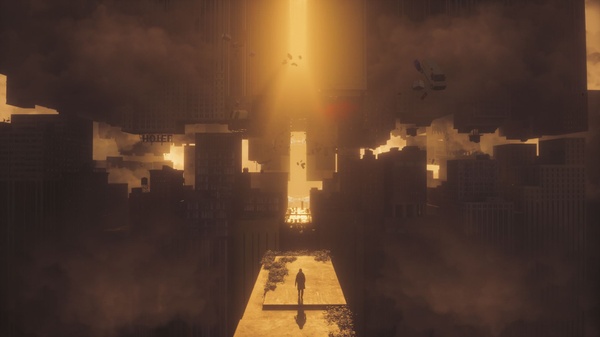
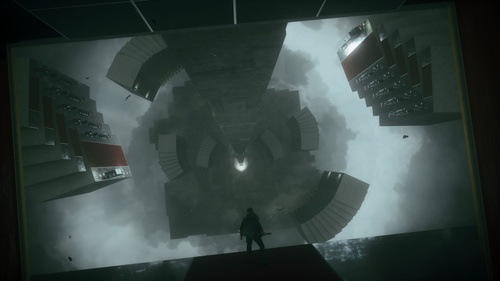
Ultrawide support during gameplay works well and particularly enhances the more open scenarios and the city's verticality, while cinematic sequences revert to 4:3 format, creating a very noticeable contrast with the panoramic view used during gameplay. Artistically, Resonant continues to be immediately recognizable as a Remedy work: Manhattan offers spatial deformations, impossible architectures, and some areas dedicated to the Resonants capable of recapturing that feeling of being in front of something that shouldn't exist. Not everything reaches the same strength as the Oldest House, but when the game truly decides to bend the city to its own rules, it still manages to build images difficult to confuse with those of any other contemporary action game.
It is precisely in this balance that Control Resonant finds much of its identity. It has expanded spaces, changed protagonists, and almost completely rewritten combat without abandoning what makes the series recognizable. Manhattan doesn't always possess the density of the Oldest House, and Dylan struggles to occupy the space Jesse had conquered with greater naturalness, but the Aberrant works, the Resonants deliver some of the best encounters, and the paranormal component still retains that ability to transform an apparently normal environment into something that shouldn't exist. The result doesn't surpass what preceded it in every aspect, but it succeeds in the most delicate operation: changing enough to have its own identity without ceasing to be Control.
Score
Editorial team
Control Resonant changes its skin without ceasing to be Control - Review
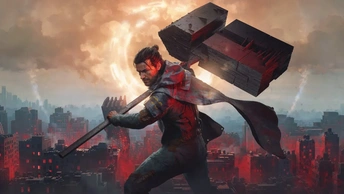
Control Resonant changes a lot without losing what makes the series recognizable. The Aberrant and the new melee combat work well enough not to miss the Service Weapon, while the Resonants deliver some of the most successful battles in the experience. Manhattan offers greater freedom and verticality, though without always reaching the density and strength of the Oldest House. Dylan also remains a less charismatic protagonist than Jesse, but Remedy builds a solid, ambitious sequel around him that is still deeply tied to Control's identity.
Similar articles