The Green Light - Review of a walking simulator disguised as horror
A journey to freedom that drowns in a sea of clichés and cheap jump scares.


The landscape of first-person independent horror, while boasting some virtuous exceptions, is a victim of a rather annoying conceptual prison. Too often, in fact, those who develop this type of game tend to confuse real psychological depth with the systematic abuse of the jump scare. A fundamental principle of terror is ignored: true fear, that visceral tension that creeps up on you and sticks to your skin, is built with patience, atmosphere, and logic. It is not, and should never be, a trivial momentary fright caused by a deafening noise or a polygonal model suddenly thrown into the frame. Yet, the shortcut of cheap horror has now become the norm, perhaps due to the deliberate will to create "streamer-friendly" products, sacrificing immersion on the altar of exaggerated reactions for webcams.
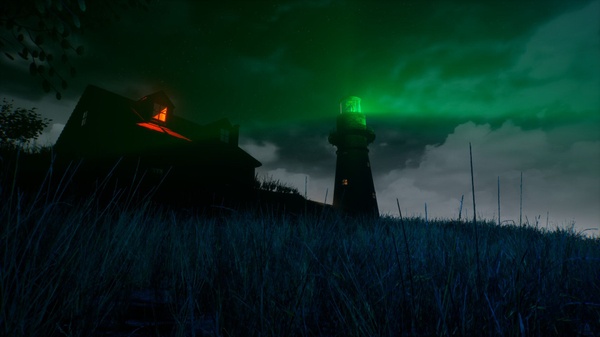
Among the countless works that disastrously fall into this same, trivial error, we also find The Green Light. Developed by independent creator waleedzo, the title puts us in the shoes of Fred, a chronically depressed employee, trapped in an alienating work routine and harassed by an abusive boss. Reaching his breaking point, our alter ego finds himself guided by a mysterious voice on the radio that pushes him to embark on a hallucinatory journey to a distant lighthouse – the enigmatic "green light" of the title – which promises him the longed-for and definitive freedom. The premises for an introspective investigation into the cage of modernity and mental health, in short, would all be there. The problem, as unfortunately often happens, arises as soon as one is called upon to translate these concepts into a finished video game.
Just another Tuesday between inconsistent monsters and sketched puzzles
If the narrative premise, despite its extreme banality, could offer a faint starting point for reflection on work alienation, it is gamepad in hand that The Green Light inexorably crumbles. We are faced with a walking simulator that runs its course in about forty-five minutes, declining exploration in the clumsiest ways possible. The horror is reduced to a hackneyed collection of dark corridors, forced silences, and jump scares that are as predictable as they are ineffective, based on the tired formula of prolonged deep silence followed by BAM, an explosion of loud audio and a sudden creature that wasn't there two seconds before. The most serious structural problem, however, lies in the game's complete apathy towards its horrors: our Fred witnesses paranormal manifestations with the same reactivity as someone experiencing a boring Tuesday afternoon at the office, breaking any ambition for immersion.
Compounding an already compromised clinical picture is a gameplay structure bordering on amateurish. The proposed puzzles are disarmingly simple – on average solvable in a minute – but are made unnecessarily confusing by an interaction system that is often awkward and unresponsive, such as pressing a numeric keypad by staring at it and moving the camera cursor over the buttons we need. If we add to this the unforgivable naivety of placing textual notes that reveal the solution to a puzzle even before we have encountered the problem, it is clear that the game design was sketched out without criteria. The progression is a continuous and annoying stumbling block, being blocked in movements or in the view to endure trivial dialogues aimed only at stretching an already bland broth.
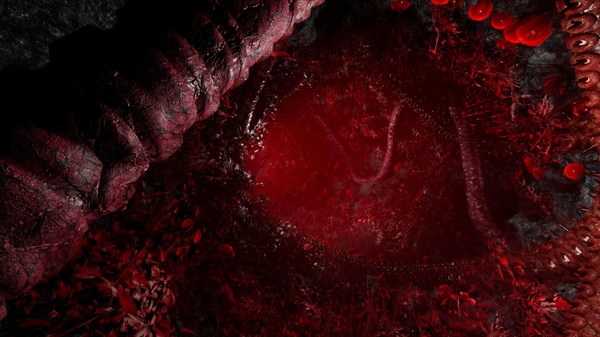
Even thematic coherence is largely absent. The monsters, while trying to flaunt a vaguely unsettling design, seem forcibly inserted without any logical connection to the narrated story. One encounters documents that mention entities never seen and appearances bordering on the unintentionally grotesque – such as a mysterious dark mass intent on throwing plates that vanishes without a trace. Although the original voice acting is unexpectedly well done, everything else condemns The Green Light to oblivion: from a graphic compartment and a blocky level design that scream "2013" from every pore, or even further back, to crude subtitles that betray clear linguistic barriers. A bland escape from everyday life that renounces any psychological depth to drown in clichés.
Score
Editorial team
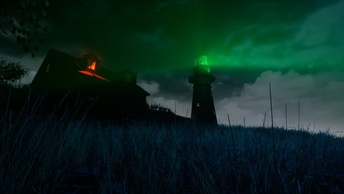
The Green Light - Review of a walking simulator disguised as horror
The Green Light is, unfortunately, the emblem of everything that plagues a certain segment of today's independent horror landscape. We are faced with a bland walking simulator that, in its meager runtime, clumsily attempts to mask a disjointed narrative lacking real bite behind a handful of predictable jump scares and anachronistic gameplay mechanics. Despite an unexpectedly well-done original voice acting, the protagonist's descent into madness culminates in a tedious marathon of obvious puzzles revealed in advance, out-of-context monsters, and irremediably crude level design. I want to be clear: I always appreciate the willingness to embark on a personal project, and I am the first to want to support the works of emerging creators, but being a beginner is not – and should never become – the automatic shield behind which to entrench oneself to let an objectively mediocre product slide. An entirely forgettable experience, which stumbles disastrously over its own, trivial clichés.
Similar articles