The Alters: Last Variable turns time into a sentence, but reduces its variables - Review
The first major expansion for The Alters introduces cryosleep, terraforming, and a stricter management cycle, but the all-scientist cast doesn't achieve the emotional power of the base game.


The Alters was a game built on a seemingly simple question: what would happen if we could live alongside alternative versions of ourselves? Not generic copies, not identity-less clones, but people born from different choices, mistakes, or renunciations. All Jan, yet none truly identical to Jan. That's where 11 bit Studios' survival management game expressed its best part: not in resource gathering or base building, but in the conflict between incompatible life possibilities.
Last Variable picks up with Scientist Jan, the alter who, in the original ending, decided to stay on the planet to study the Oasis, the anomalous zone that the base game deliberately left unresolved. It's a consistent choice narratively, because it takes the most rational version of Jan, the one willing to sacrifice his own safety to better understand the alien world that hosted them during the base game's adventure. However, it's also a risky choice, because it narrows the "human" scope of the experience to a single variant. In about eighteen hours on PC, the expansion proves to be an intelligent and often severe experiment, half-successful at least in our judgment.
The question to ask before proceeding with the reading is this: can a single "version" of Jan produce the same human friction that arose from irreconcilable lives, or is time alone not enough?
Gallery
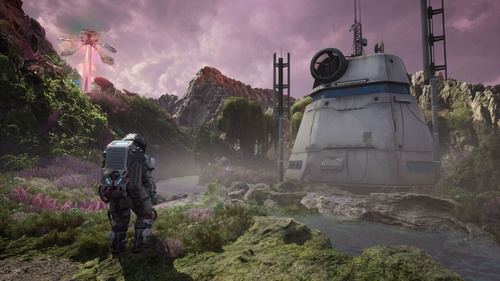
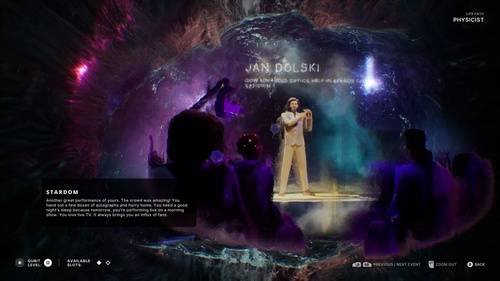
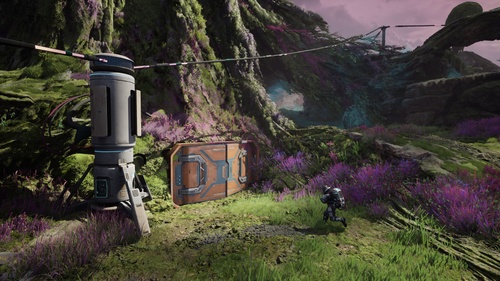
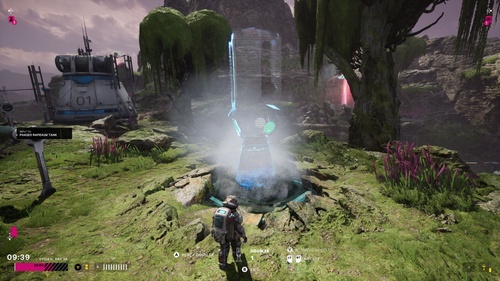
Starting with the small things
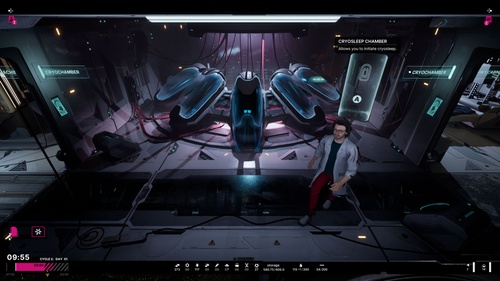
The opening of the additional content is one of the most evocative moments of the entire package. Scientist Jan is awakened by an older version of himself, without immediately understanding what has happened, how much time has passed, and why the planet still seems to hold something unresolved. It works because it doesn't aim for a plot twist, but for a more subtle and imperceptible feeling, as if we are witnessing something wrong, or out of place (a bit like the cat seen by Neo in the first movie, remember?).
The premise remains faithful to The Alters' identity. Science fiction isn't used to build a fireworks display, but to compress a human question (the one from our introduction) within a management system. What remains of Scientist Jan after choosing not to flee? How much of himself is he willing to consume to understand the Oasis? And above all: who truly pays the price for this stubbornness?
The expansion's answer is convincing in the long run, but it "hurts less" than that of the base game. The endings achievable on this trajectory close Scientist Jan's arc without betraying its premises, without leaving, in our opinion, the same emotional scar experienced with the original Jan. The base game confronted Jan with missed lives, contradictory desires, identities that repelled each other because they came from radically different choices. Here the contrast is more cerebral and scientific, more aligned with a unique mental variant. It holds up, but strikes with less power. Which is a shame, especially since we would have liked to see the backgrounds of the variants explored in more depth, like Physicist Jan who perhaps has the most layered story among all those present.
The most important novelty isn't terraforming, even if it's the most visible. It's cryosleep. In Last Variable, it becomes a structural passage of the game cycle: sooner or later you have to enter the Cryosleep Chamber, and doing so without preparation means exposing yourself to heavy penalties or, in the worst cases, game over.
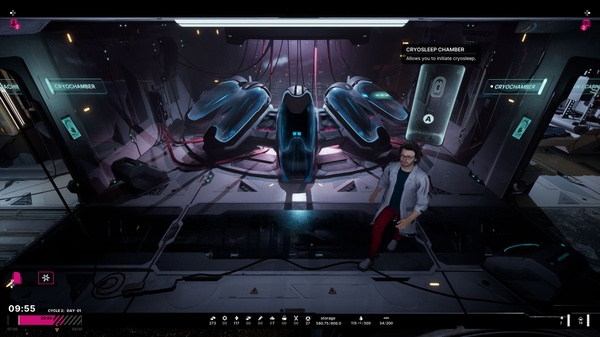
The point is that cryosleep doesn't stop the planet. The developers probably chose this gameplay strategy to intersperse the game phases. The Oasis is subjected to a series of radiations that destroy the planet's surface in a thirteen-year cycle, and staying out, according to Jan's studies, can prove fatal as well as detrimental to the time spent. Alters assigned to Field Labs, the field laboratories buildable on the surface, continue to work while Jan and other clones sleep, but they also continue to age. Each cycle consumes years of their lives, and this simple proportion changes how decisions are read. Sending an alter to the lab is no longer just a productive choice: it's a form of irreversible delegation (an epiphany that distances Jan from the search for truth at all costs).
The tension arises from the fact that you never have enough alters to do everything comfortably. You need to complete research, gather resources, expand the base, maintain morale, and prepare the infrastructure before sleeping. If the group rebels, cryosleep can be blocked. If some structures remain in sterile areas, they risk burning at the end of the cycle if the appropriate terraforming pylons haven't been built.
However, the system loses some of its harshness when you discover that, after assigning an alter to a field lab, it's possible to recreate the same profile inside the shelter. It's an understandable compromise to avoid progression blocks, but it weakens the narrative promise. If the game wants us to feel that someone is consuming their life to allow others to go on, the possibility of replacing them with another instance of the same profile makes the sacrifice less painful precisely due to a lack of empathy developed with the alters.
Terraforming the planet means ... (I can't tell you!)
Terraforming is the most readable mechanic of the expansion, also because it physically changes how the planet appears. Sterile zones can be transformed into fertile areas through specific structures, recognizable on the map, and each intervention opens new sectors and makes previously unobtainable materials accessible.
After each intervention, it's advisable to carefully explore the reclaimed zones, collect available samples and bring them to the SAM (Sample Analysis Module), which analyzes them and provides permanent bonuses related to efficiency, extraction, and radiation resistance. It's one of the systems to develop as soon as possible, because it transforms exploration into a concrete improvement as well as an accessory but necessary gameplay element (explore as much as possible, you'll thank me in the final stages). However, Last Variable never confuses terraforming and safety. Each intervention increases the planet's activity, and with it come progressive consequences: shorter cycles, damaged modules, worsening crew conditions, more aggressive magnetic storms, and we dare not imagine what all this translates to at maximum difficulty. The principle is the classic 11 bit Studios one: every advancement opens a new problem.
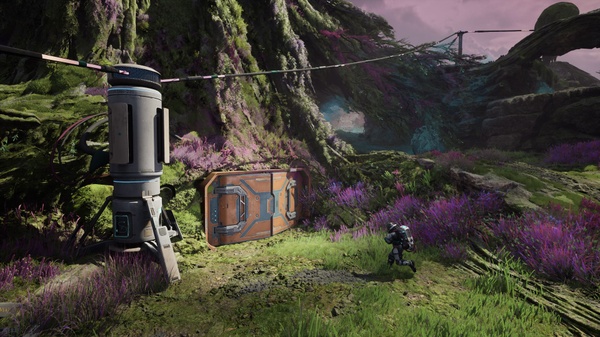
On the production front, the expansion introduces an extraction and transformation economy that represents its most challenging part. Extractors collect raw substances, but these must be connected via pipelines across the planet, taking care, moreover, to pass the liquid material through Phasers, Mixers, or Doublers. The first are used to change the frequency of the extracted material, the second to mix two different ones, and the last are used to duplicate the substance into two different channels. On paper, it seems almost a technical addition (Plumber Simulator!), in practice it forces you to think ahead about where to place structures, how to connect them without wasting space, and in what order to unlock the three extracted resources that are needed to unlock all the research branches present in the game.
It's a successful addition because it shifts the difficulty from pure scarcity to logistics. It's not enough to have a resource: you need to bring it to the right place, transform it correctly, and use it before the next cycle makes everything riskier. In the long run, the system becomes a routine, between nodes to activate, zones to open, and samples to analyze. But in a management game, repetition isn't automatically a flaw: it's just that here its weight is felt more strongly.
The main problem with Last Variable remains the cast. To investigate the Oasis, Scientist Jan creates four specialized alters: Geologist, Biologist, Chemist, and Physicist. Each has their own skills, character, and inclinations, brings specific bonuses to work and research, and represents a different form of rationality applied to the planet's mystery. The point is, it's not enough.
The base game worked because each alter seemed to come from another life, and the conflict arose from different existential choices, not just different opinions. Here, however, the variations remain within a narrower perimeter. They are all scientists, all linked to the same cognitive obsession, all traceable to the same mental matrix. Differences exist, but they never reach the strength of the contrast between truly irreconcilable versions of Jan.
It's an understandable decision narratively, because Last Variable tells the story of Scientist Jan and his stay on the planet. But precisely because of this, the risk of homogeneity becomes more difficult to avoid. The expansion tries to compensate by shifting the conflict to the level of scientific philosophies: everyone believes in their own method, their own field, their own interpretation of the Oasis. The idea has potential, but it requires very precise writing to produce the same emotional friction as the base game. Here it only partially succeeds.
The greatest regret is the feeling that more could have been dared. A narrative line linked to robotics, or advanced artificial intelligence, or more hybrid forms of consciousness could have broadened the discussion. There is also a Janbot, a mechanical replica of Jan, but it remains primarily a presence to talk to, flawed and circumscribed, rather than a true systemic variable. Last Variable had the opportunity to further multiply the concept of identity. Instead, it chooses to restrict it, and pays the price for this decision.
An underground base that changes the setting more than the gameplay
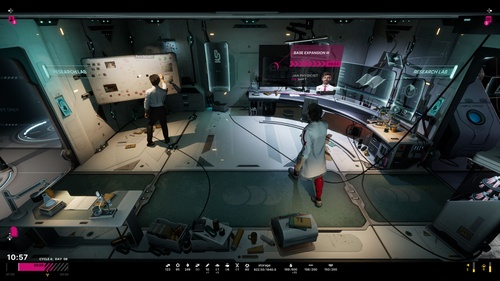
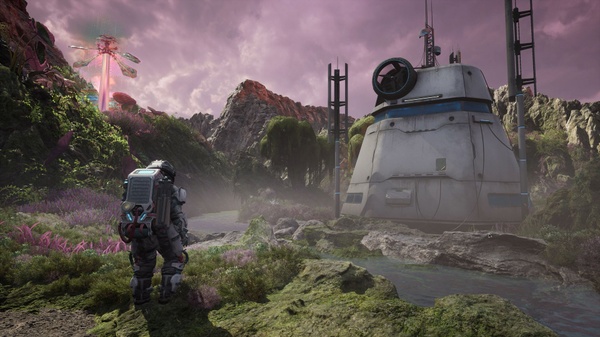
Instead of the mobile base of the original game, there's an underground base. The choice follows the story: Jan is no longer fleeing the sun inside a moving structure, but is digging under a planet he wants to understand. Practically, however, construction remains familiar: modules to research, rooms to place, spaces to optimize, crew needs to satisfy. New requirements related to different types of terrain, like sand and stone, add some planning constraints, but the general feeling is that of a variation of the mobile base, not a reinvention. What's missing most is the sense of journey that accompanied the original progression: here you dig, expand, return to base. Last Variable is more stationary, more focused, more obsessive.
The difficulty, however, remains that of The Alters. Not because the game is artificially punitive, but because it constantly asks you to balance systems that never stop interfering with each other. Research requires specific resources, resources require infrastructure, infrastructure requires time, time requires cryosleep, and cryosleep requires high morale, ready reserves, and protected structures. Neglecting the alters' needs can lead to rebellion, which is not a cosmetic annoyance: it can block cryosleep and with it, survival. Even spaces dedicated to morale recovery, like the Contemplation Room, become central when the group begins to deteriorate under the weight of the cycles.
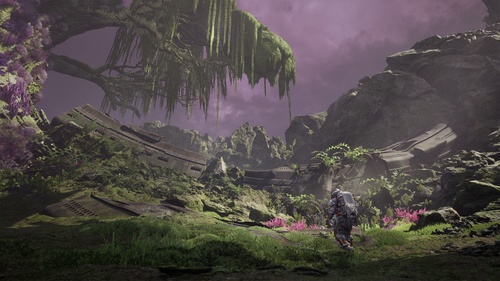
On PC, the technical picture is good, not polished. The expansion retains the visual cleanliness of the base game, with adequate ultrawide monitor support and good readability of spaces, an element that matters a lot in a title where placement and connections make a difference. There are still sporadic frame rate drops, i.e., in image fluidity, and some crashes: nothing that compromises the experience, but enough to prevent speaking of a completely stable version. Artistically, terraforming is the real added value: seeing previously sterile areas reconfigured by the presence of new life communicates the expansion's theme better than anything else. The planet is not a backdrop, but a responsive organism.
Score
Editorial team
The Alters: Last Variable turns time into a sentence, but reduces its variables - Review
Is Last Variable necessary? For those who loved The Alters, yes. Not because it surpasses the base game, but because it continues one of its most promising branches and transforms it into a stricter system. Cryosleep redefines the rhythm of survival, terraforming shapes the planet, and the SAM and production chains add real complexity to management. When the game forces you to prepare each cycle, decide who stays awake, and what research to complete before sleep, the expansion finds a precise voice. However, it's not the right content for those who were lukewarm about the original. Last Variable doesn't simplify The Alters and doesn't try to make it more immediate: it accentuates its managerial, logistical, and punitive components. It's an expansion designed for those who accept entering a complex system, where every choice requires preparation and every mistake can drag on for entire cycles. In about eighteen hours, it offers enough systems, research, and progression to justify its existence. The limit isn't in quantity, but in the quality of human conflict. The four scientists function as roles, not always as wounds: they have distinct characters, but not enough life experience. In a game called The Alters, this difference weighs heavily, because that voice doesn't have the choral power of the base game. It's not a disappointment, but not the leap it could have been either.
Similar articles