The Adventures of Elliot: The Millennium Tales – Review: The best HD-2D action RPG ever?
Team Asano abandons turn-based combat and embraces action: a nostalgic, modern, and almost flawless adventure


In recent years, Square Enix has shown an extraordinary ability to recapture the charm of classic role-playing games without merely relying on nostalgia. Through the work of Team Asano, responsible for beloved productions like Octopath Traveler and Bravely Default, the Japanese company has managed to create a true artistic identity that is now immediately recognized by players worldwide. With The Adventures of Elliot: The Millennium Tales, however, the goal was not simply to create a new HD-2D style JRPG, but to take a decisive step forward and push that formula into completely different territories.
Developed by Square Enix alongside Claytechworks and published directly by the Japanese company, The Adventures of Elliot represents the first major action RPG created using the HD-2D technology we've come to love in recent years. A courageous choice that, at least on paper, could have distorted some of the magic that made productions like Octopath Traveler famous, but which, controller in hand, quickly reveals that the team had a correct and very precise vision.
From the very first hours, the desire to pay homage to great classics of the Super Nintendo and PlayStation eras clearly emerges, recalling works like Secret of Mana and Illusion of Gaia, but above all, some historical chapters of The Legend of Zelda. The feeling that accompanies much of the adventure is that of being in front of a project born from developers who deeply love classic video games, but who perfectly understand the needs of the contemporary audience. The result is a work that manages to be nostalgic without feeling old, modern without sacrificing its retro heart.
And it is precisely this balance that represents the greatest strength of The Adventures of Elliot: The Millennium Tales.
A Story That Spans Centuries
One of the most interesting aspects of the production undoubtedly concerns its narrative component.
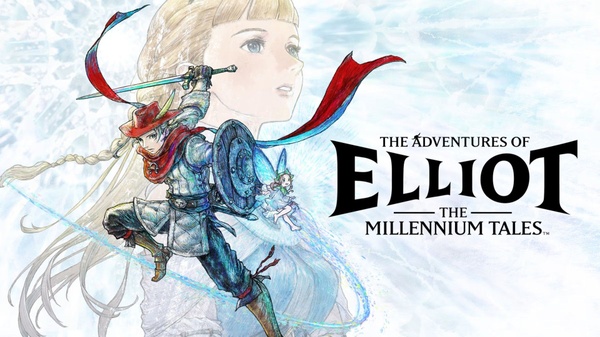
The adventure begins in the Kingdom of Huther, humanity's last bastion on a continent now dominated by dangerous beastly tribes. Thanks to a powerful magical barrier, the kingdom has managed to survive the extinction that struck the rest of the world, living in an apparent state of security. Everything changes when mysterious ruins are discovered beyond the protected borders of the city. Elliot, a young adventurer in the service of the crown, is tasked with investigating these ancient structures along with his faithful companion Faie, a small fairy creature who will accompany him throughout the journey.
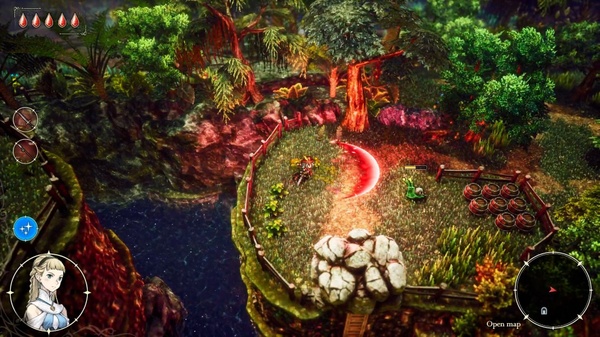
From this moment, a story takes shape that revolves around millennial mysteries, forgotten civilizations, and secrets capable of connecting past, present, and future. Without going into details that would risk spoiling the discovery, I can say that the narrative manages to keep curiosity high for much of the campaign. We are not facing a revolutionary or particularly complex narrative, but the way the team builds the sense of mystery works really well.
Every new area visited adds a piece to the large narrative puzzle, while numerous documents, dialogues, and environmental references contribute to creating a credible world rich in history.
Elliot is a pleasant protagonist to follow. He doesn't try to impose himself as a legendary hero from the outset, but grows progressively with the player. Even more interesting is his relationship with Faie, who represents much more than a simple sidekick. The interactions between the two are often light, fun, and spontaneous, contributing to making the journey extremely enjoyable.
One of the aspects I appreciated most is the pace of the narration. Square Enix seems to have taken heed of some criticisms leveled at more verbose JRPGs in recent years and has built an adventure that effectively alternates dialogues, exploration, and combat. The story proceeds without excessive interruptions and always leaves room for action and plot twists.
The final result is an engaging plot, capable of moving at the right moments and accompanying the player on a journey that constantly keeps alive the desire to discover what lies beyond the next horizon.
Old-School Gameplay
If the narrative manages to capture interest, it is in the gameplay that The Adventures of Elliot finds its strongest identity.
From the very first moments, it is clear how carefully the team studied the great action-RPGs of the past. The adventure's structure is based on exploring vast interconnected areas, dungeons rich in puzzles, abilities to unlock, and paths that progressively open up as new tools are acquired.
The progression strongly recalls classic adventure games of the 90s, but it is reinterpreted through a modern philosophy that makes exploration extremely fluid.
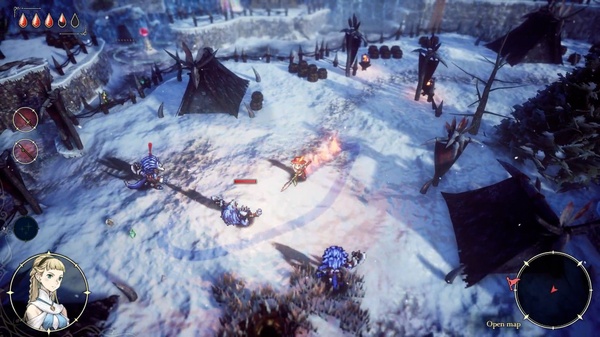
Moving around the game world is very fun and extremely easy.
Each area hides secrets, shortcuts, treasures, optional quests, and small environmental puzzles that constantly reward the player's curiosity. There is almost never the feeling of traversing empty or useless spaces. On the contrary, every deviation seems designed to offer something interesting.
The combat system probably represents the true star of the production.
Completely abandoning the turn-based combat typical of the HD-2D tradition, Elliot introduces real-time battles. The protagonist can use different categories of weapons, each characterized by unique properties, different speeds, and specific combat styles. Between swords, bows, spears, boomerangs, and other offensive tools, the game manages to offer surprising variety.
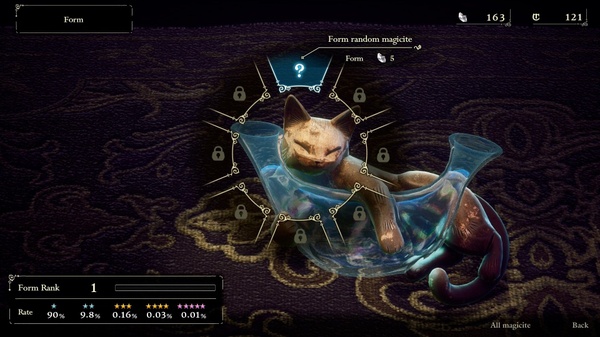
The most interesting aspect, however, concerns customization: through the Magicite system, it is possible to profoundly modify the behavior of weapons, adding elemental effects, statistical bonuses, new offensive properties, or particular tactical advantages. This allows for building extremely diverse configurations and adapting one's style to the most disparate situations. Clashes against enemies require attention, timing, and a good knowledge of one's abilities. Parrying enemy attacks at the right moment, exploiting opponents' weaknesses, and correctly using available abilities becomes fundamental, especially in the advanced stages of the adventure.
Making everything even more interesting is Faie: the small companion doesn't just passively follow Elliot, but can support him in various ways during battles. She can attack enemies, provide tactical assistance, collect items, and contribute to solving various environmental puzzles. Some mechanics are built precisely around the collaboration between the two characters, creating very original and enjoyable situations to tackle.
The dungeons deserve a special mention: each structure has its own visual and gameplay identity, with puzzles that are rarely trivial but extremely simple. We are not facing impossible riddles, but the level of variety is sufficient to avoid the repetitiveness that often afflicts many modern productions.
The overall pace of the adventure is also very appreciable, with the game constantly alternating exploration, combat, narrative progression, and puzzle solving, avoiding dwelling too long on a single activity. This contributes enormously to the feeling of variety that accompanies the entire experience. After dozens and dozens of hours spent in Elliot's world, the predominant feeling is that of having lived an adventure built with enormous attention to detail and with a clear desire to put fun at the center of the experience.
Artistically and Technically Superb
If Octopath Traveler showed the world the potential of HD-2D, The Adventures of Elliot demonstrates how much this technology can still evolve and improve.
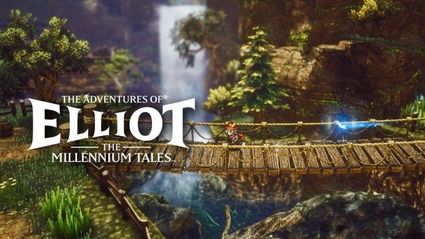
From an artistic point of view, we are probably facing one of the best incarnations ever made of this graphic style.
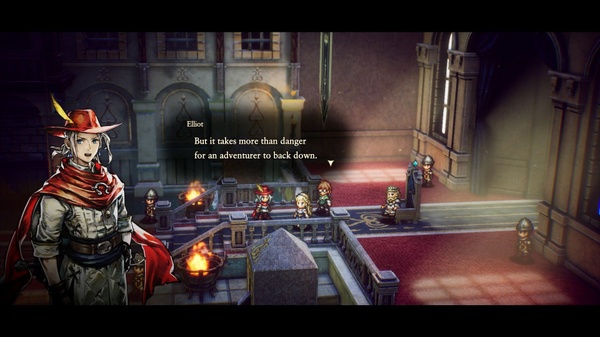
Pixel art characters coexist perfectly with three-dimensional scenarios rich in detail, particle effects, dynamic lighting, and impressive visual depth. Every screen looks like a small animated work of art.
Lush forests, forgotten ruins, castles, caves, and plains manage to convey a well-defined personality and contribute to making the journey constantly fascinating from a visual perspective.
The work done on lighting is particularly impressive: light sources interact with the environment, creating evocative atmospheres that radically change the impact of different locations. Some vistas truly leave you speechless, especially during nighttime phases or in the most spectacular settings.
The animations are also fully convincing, with Elliot responding to commands with great precision, while combat is fluid and legible even in the most chaotic situations. The visual effects related to abilities and Magicite also add spectacle to the clashes without compromising the clarity of the action.
On the technical front, the work done appears extremely solid, with fast loading times and convincing performance even in areas dense with on-screen elements. The sound compartment also deserves praise: the music perfectly accompanies every phase of the adventure, alternating more epic orchestral pieces with intimate and melancholic compositions that manage to enhance the most important narrative moments. The audio effects are well-crafted and contribute to making the game world alive and credible.
Between Wonder and Missed Opportunities
If I had to summarize The Adventures of Elliot: The Millennium Tales in one sentence, I would say it's a game that manages to do many things right, while still leaving some missed opportunities on the table.
Among the aspects that convinced me most is undoubtedly the narration. While the first part of the adventure takes the necessary time to build characters, setting, and mysteries, it is in the second half that the story shifts gears impressively. Plot twists follow one another at an increasingly rapid pace, revelations often manage to surprise, and the ending represents the perfect culmination of an epic, emotional, and memorable journey.
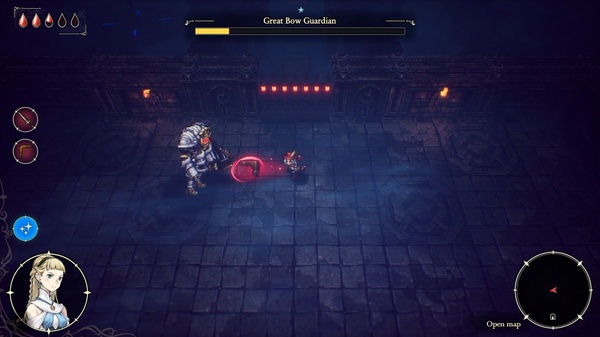
From a technical standpoint, the work done by the team is simply extraordinary. HD-2D technology reaches very high levels here, giving life to scenarios rich in charm, detail, and atmosphere. It is one of those cases where artistic style and gameplay merge perfectly, demonstrating how ideal this aesthetic direction is for productions of this type.
The combat system is also very positive, deep without being complicated, capable of rewarding both a more reasoned and a more aggressive approach. Added to this are some truly excellent boss fights, well-constructed and capable of testing the player's skills without ever being frustrating.
A special mention also goes to the Era mechanic, one of the most interesting ideas of the entire production. The way it is integrated into exploration, progression, and narration adds personality to the adventure and helps differentiate it from many other action-RPGs on the market.
However, not everything reaches the same level of quality. The variety of enemies, for example, tends to show its weaknesses as hours pass, leading to encountering similar creatures or slightly modified versions of the same adversaries too often.
Then there's the issue of inspiration from the great classic historical chapters of The Legend of Zelda. The homage is evident and works very well for much of the adventure, but at times there's a feeling that the game struggles to find its own identity, appearing too derivative in its structures, solutions, and some exploratory dynamics.
Finally, while offering interesting rewards, many side quests and several optional dungeons appear too simple and uncreative compared to the overall quality of the adventure. Nothing that compromises the experience, but certainly elements that would have deserved more attention.
Score
Editorial team
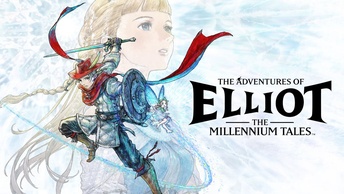
The Adventures of Elliot: The Millennium Tales – Review: The best HD-2D action RPG ever?
The Adventures of Elliot: The Millennium Tales is an adventure that captivates with its old-school gameplay, but above all, with the strength of its story, which becomes increasingly engaging, exploding in a second half full of twists and culminating in a truly epic finale. The wonderful HD-2D presentation, an intelligent combat system, the highly successful Era mechanic, and some memorable boss fights contribute to making the journey consistently rewarding. It's a shame about the limited enemy variety, an approach that is at times too derivative of past classics, and side quests and optional dungeons that are decidedly underwhelming compared to the quality of the main adventure. That said, there's no denying that this is one of the most fascinating and surprising adventures Square Enix has offered in recent years.
Similar articles