Pokémon FireRed and LeafGreen: Returning to Kanto's Soil
Pokémon FireRed and LeafGreen arrive on Nintendo Switch
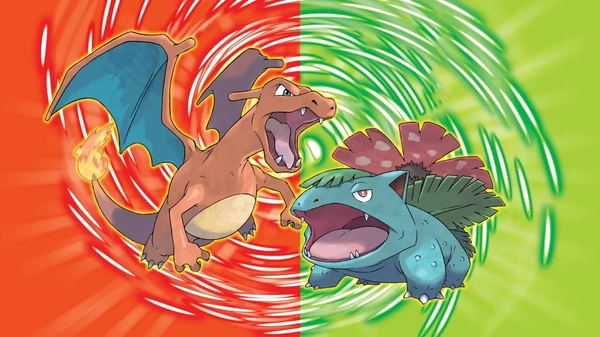


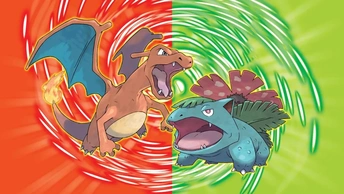
The return of Pokémon FireRed and Pokémon LeafGreen to the eShop on the brand's thirtieth anniversary is an operation marked by a clear contradiction: on one hand, the choice reflects the desire to re-circulate the most complete form of Kanto released on Game Boy Advance in 2004; on the other hand, the technical and commercial packaging on Nintendo Switch portrays an idea of a “classic” put on display without the minimal adaptations one would expect in 2026.
Pokémon FireRed and LeafGreen: A Non-Remake
The communication related to the launch emphasizes this very “completeness” of the remakes compared to the 1996 originals, highlighting the post-League archipelago, breeding mechanics, and refinements derived from the Ruby/Sapphire era; at the same time, today's release on Switch re-proposes the package almost surgically unchanged, with the result of preserving the philological taste of the work but also re-proposing its age in an all too evident way.
The price of €19.99 for each version, positioned in line with a “premium nostalgic” bracket, is the focal point of the discussion: this is not an inclusion in the Nintendo Switch Online catalog, but two standalone purchases, a choice that sparked debate even in the days leading up to the launch and reflects a strategy of economic valorization of the historical anniversary, banking on Kanto's cultural appeal and the remakes' ability to speak to both veterans and new players.
The price of €19.99 for each version, positioned in line with a “premium nostalgic” bracket, is the focal point of the discussion: this is not an inclusion in the Nintendo Switch Online catalog, but two standalone purchases, a choice that sparked debate even in the days leading up to the launch and reflects a strategy of economic valorization of the historical anniversary, banking on Kanto's cultural appeal and the remakes' ability to speak to both veterans and new players.
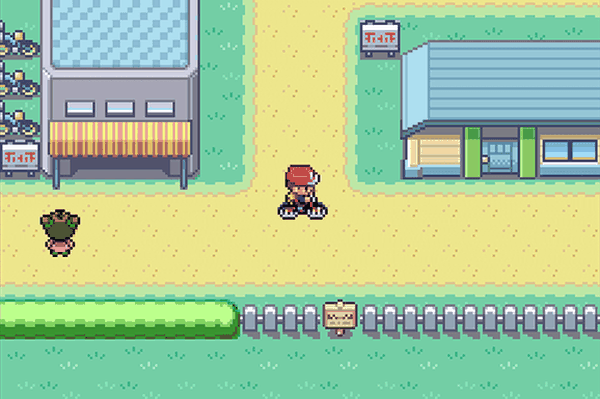
The eShop quickly showed the public's response, with pre-orders high in the charts and media attention that highlighted the “paid” nature outside of the NSO subscription, establishing a distinct positioning compared to other classics re-released via service. The economic argument, in short, is not an accident but a cornerstone of the maneuver, with the commercial value of nostalgia used frontally. From the point of view of game content, FireRed/LeafGreen remain the most orderly and robust reinterpretation of the first generation: the interface is clearer than the original, progression is guided with greater clarity, and the presence of the Sevii Islands gives meaning to an authentic endgame, capable of retaining those who want to “close the circle” beyond the League. The preservation of these characteristics in the Switch edition offers exactly the experience one expects from a philological port: the GBA feeling is intact, the game times are those of then, the team building and the pace of exploration respect those of a slow-paced JRPG, based on backtracking and micro-optimization of the team in relation to the type of Gyms. In this, the choice to publish the remakes – and not the original Game Boy versions – responds to the desire to give new players a “complete” Kanto with post-game and modern mechanics for the era, without having to compromise with the archaic nature of the 1996 editions; it is a coherent, almost curatorial selection, which however stops at the door of 2026 and does not truly cross it.
The knot tightens when it comes to infrastructure and contextual features. The only supported connectivity is local wireless, without online multiplayer: you can trade and battle in proximity, re-proposing the idea of a shared in-person experience, but there is no bridge to remote play which, in 2026, constitutes a basic convention. The paradox is evident: the social dynamics that defined the brand's identity are brought back to the center, reiterating the importance of trading to complete the Pokédex, but the means by which those dynamics can exist in a distributed digital community are not updated. The absence of online makes the proposal more nostalgic than current and delivers to the public an experience that relies on physical sociality and co-presence, a romantic virtue that, however, becomes a limit for those who experience the game as a connected ecosystem. On the linguistic and version front, the eShop offers separate editions, each with a specific language: an apparently minor detail, but one that speaks of packaging that favors the replication of the regional identity of the games and invites the user to select the desired variant. It is a setting that speaks the language of the “interactive museum”: the form is preserved, the public is asked to recognize and respect it, even at the cost of renouncing a modern standardization of the linguistic offer and small comforts that we now take for granted. The result is an overall feeling of a conservative, philological port, which defends the memory of the text more than it tries to reinterpret it.
The knot tightens when it comes to infrastructure and contextual features. The only supported connectivity is local wireless, without online multiplayer: you can trade and battle in proximity, re-proposing the idea of a shared in-person experience, but there is no bridge to remote play which, in 2026, constitutes a basic convention. The paradox is evident: the social dynamics that defined the brand's identity are brought back to the center, reiterating the importance of trading to complete the Pokédex, but the means by which those dynamics can exist in a distributed digital community are not updated. The absence of online makes the proposal more nostalgic than current and delivers to the public an experience that relies on physical sociality and co-presence, a romantic virtue that, however, becomes a limit for those who experience the game as a connected ecosystem. On the linguistic and version front, the eShop offers separate editions, each with a specific language: an apparently minor detail, but one that speaks of packaging that favors the replication of the regional identity of the games and invites the user to select the desired variant. It is a setting that speaks the language of the “interactive museum”: the form is preserved, the public is asked to recognize and respect it, even at the cost of renouncing a modern standardization of the linguistic offer and small comforts that we now take for granted. The result is an overall feeling of a conservative, philological port, which defends the memory of the text more than it tries to reinterpret it.
Is Pokémon FireRed and LeafGreen Worth It Today?
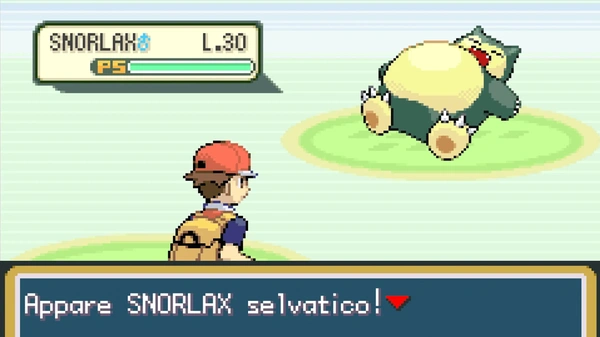
So we come to the theme of anachronism: is it really out of time in 2026 to offer two versions to be purchased separately, without online, at €19.99 each? It depends on the yardstick. If measured against the standard of subscription services that have transformed historical catalogs into living, consultable anywhere, and interconnected libraries, the answer tends to be yes: here we remain outside that paradigm, because there is no inclusion in NSO, no solid integration with a transfer ecosystem like HOME, no possibility to battle and trade remotely, and the unit price for two editions that share a large part of the content amplifies the impression of an assertive monetization of nostalgia. If, on the other hand, it is measured by the criterion of classic care, the operation is coherent: the most complete form of Kanto is selected, it is re-proposed without alterations that distort its rhythm and identity, and it is economically valued in the context of a historical anniversary. However, the idea remains that philological coherence and minimal modern standards are not conflicting categories: it would have taken little – stable online, clear integration with HOME, perhaps some quality-of-life options – to transform a respectful celebration into a truly current re-edition.
This second point, however, would have made sense in the context of a true remastering, not a bland emulation.
Ultimately, FireRed and LeafGreen in 2026 still hold up in terms of design, if accepted for what they are: compact JRPGs, based on the balance of your favorite monsters' attacks, incremental learning, and the charm of a world that has educated entire generations to collect, train, and trade. Their rendition on Switch, however, opens a legitimate question about the notion of “celebratory edition”: to what extent can the past be celebrated by merely re-proposing it? Here, the celebration is respectful and faithful, but it deliberately chooses not to update the context. For some, it will be the most authentic way to return to Kanto; for others, the sign of an avoidable anachronism with a few targeted interventions. In both cases, it remains a return that does not leave indifferent: a memory polished and repositioned, capable of shining in the display case just enough to take us back to an era, but not always ready to dialogue with ours.
This second point, however, would have made sense in the context of a true remastering, not a bland emulation.
Ultimately, FireRed and LeafGreen in 2026 still hold up in terms of design, if accepted for what they are: compact JRPGs, based on the balance of your favorite monsters' attacks, incremental learning, and the charm of a world that has educated entire generations to collect, train, and trade. Their rendition on Switch, however, opens a legitimate question about the notion of “celebratory edition”: to what extent can the past be celebrated by merely re-proposing it? Here, the celebration is respectful and faithful, but it deliberately chooses not to update the context. For some, it will be the most authentic way to return to Kanto; for others, the sign of an avoidable anachronism with a few targeted interventions. In both cases, it remains a return that does not leave indifferent: a memory polished and repositioned, capable of shining in the display case just enough to take us back to an era, but not always ready to dialogue with ours.
6
Score
Editorial team
Pokémon FireRed and LeafGreen: Returning to Kanto's Soil
The world changes, and the way we play with portable monsters has also undergone numerous evolutions. This pair of iconic titles has had its time and hasn't aged particularly well, but if we add to this the cost of a copy (digital only) with zero optimization beyond mere emulation, then frankly, I can't recommend it, except to die-hard fans who constantly want to play it.
Similar articles