Don’t Let It Starve: Review of an All-Italian Indie
Don’t Let It Starve is a bit like Tetris and a bit like CloverPit
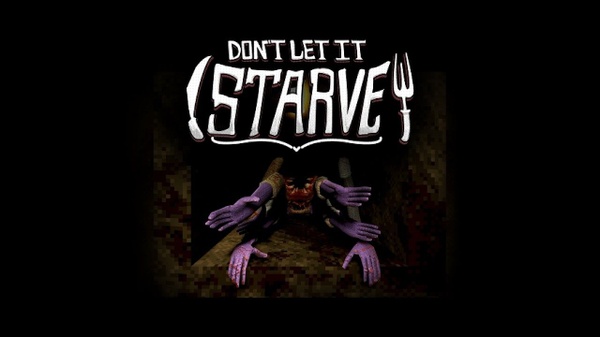


In Don’t Let It Starve, everything revolves around a concept as simple as it is effective: feeding a mysterious creature, preventing it from starving while the world around you becomes increasingly hostile and unpredictable. The gameplay is based on a central loop that combines exploration, gathering, and management, but the way these elements interact distinctly differentiates the experience from other more traditional survival games. The player must gather food, materials, and resources scattered in often limited or slowly expanding environments, then choose whether to use them to survive personally or allocate them entirely to the creature.
The game doesn't always explicitly state its mechanics, leaving room for discovery and experimentation, and progressively building an ambiguous relationship between the player and the entity to keep alive.
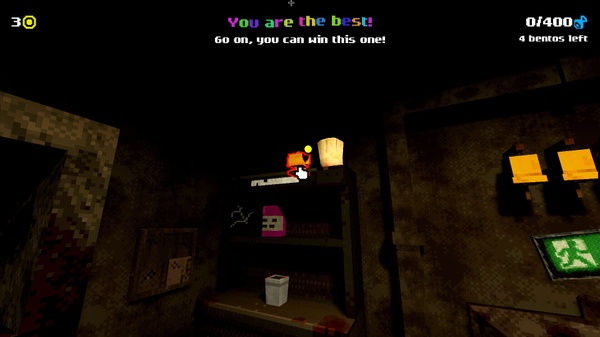
From a systemic point of view, Don’t Let It Starve uses a structure that could be defined as semi-procedural: events, environmental conditions, and resource availability change over time, but without ever losing a certain internal coherence. This contributes to creating a constant feeling of precariousness. There are no moments of true security, and even when you feel like you have control, the game introduces new variables capable of overturning the situation. The day-night cycle, the rarity of resources, and the balance between consumption and conservation fuel a continuous tension, which becomes the true strength of the work.
Don't Call It Cloverpit
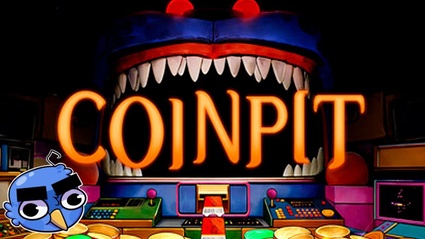
When compared to Cloverpit, an interesting but not immediate parallel emerges. Cloverpit, for its part, focuses on a more visual and almost hallucinatory dimension, with an aesthetic that tends towards the surreal and a strongly stylized graphic setting, often characterized by saturated colors, strong contrasts, and a sense of visual instability that reflects the game design. Don’t Let It Starve, on the other hand, adopts a more sober, almost minimalist approach, with visual elements that prioritize readability and clarity of information, while maintaining an oppressive atmosphere. Where Cloverpit tends to strike the eye with aggressive and disorienting artistic choices, Don’t Let It Starve builds unease through subtraction, letting silence, empty spaces, and resource scarcity generate tension.
The title rewards those who observe, who study patterns, and who manage to build a medium-term strategy, rather than those who merely react immediately.
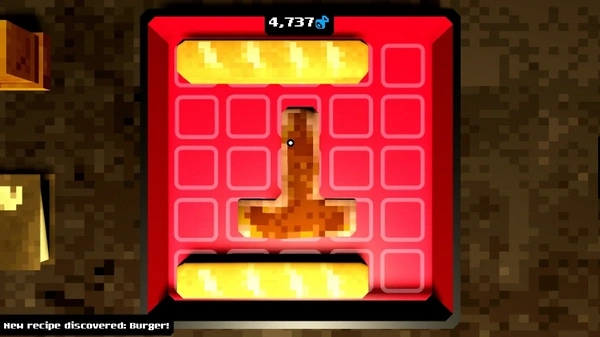
Another distinctive element concerns the relationship with the “pressure system”. In Cloverpit, pressure often derives from the visual intensity and the fast pace of game situations, which push the player to maintain high concentration. In Don’t Let It Starve, however, the pressure is more subtle and psychological: it arises from the awareness that every resource is limited, that every decision could have delayed consequences, and that the system does not easily forgive accumulated errors. This leads to a different kind of engagement, less immediate but more persistent, which remains even outside the game session.
The progression is built in such a way as to avoid a linear growth in player power. Rather than becoming progressively stronger, the player learns to better manage the complexity of the system, to recognize signals, and to optimize their choices. This approach reinforces the sense of vulnerability, keeping the tension alive even in the advanced stages of the experience.
Despite being very derivative from both a mechanical and aesthetic point of view, the result in the short-medium term is an enjoyable and functional indie game. It gets a bit boring in the long run, but that's somewhat the flip side of this type of game.
Score
Editorial team
Don’t Let It Starve: Review of an All-Italian Indie
Don’t Let It Starve is one of those titles that strikes without making a sound: essential in form, but extremely impactful in its sensations. It's not a game for everyone, because it requires patience and attention, but it is precisely in this harshness that it finds its most authentic identity, offering a rare, slow, and persistent engagement.
Similar articles