World War Hulk: The Green Apocalypse Arrives in Panini Pocket Format - Review
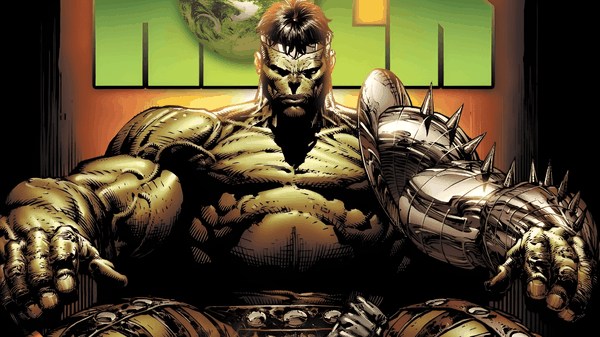


In 2007, the Marvel landscape was still saturated with the ashes of Civil War: deconstructionism had left heroes fragmented and trust in institutions betrayed. Into this scenario came the culmination of a tragedy that began years earlier with the radical resolution of the "Hulk problem." After yet another devastating rampage by the Jade Giant in Las Vegas, the secret cabal of the Illuminati decided that Earth could no longer afford the Banner risk.
During the decisive meeting, Tony Stark, Reed Richards, Stephen Strange, and Black Bolt voted for forced exile, but encountered fierce opposition from Namor the Sub-Mariner: the ruler of Atlantis not only opposed the plan but came to blows with Iron Man, predicting that Hulk would return to exact a just and bloody revenge. Ignoring the warning, the group set a trap for Hulk, sending him into space towards what was supposed to be an uninhabited paradise.
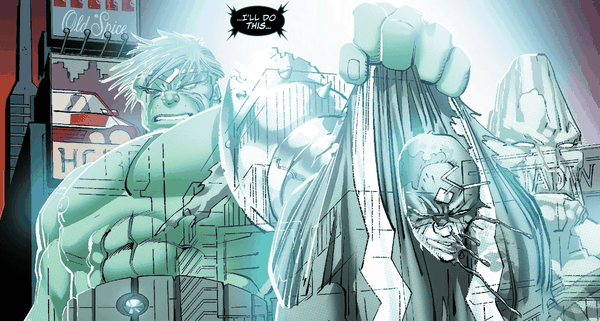
The "sages'" miscalculation led to the Planet Hulk saga, where Bruce Banner was shipwrecked on Sakaar, undertaking an atypical hero's journey from slave to gladiator to king, finding love in Caiera and peace among his Warbound. The destruction of his new homeland due to the explosion of the Illuminati's own shuttle prompted the Green Goliath to return to Earth with a visual ambition comparable to George Miller's cinema: an aesthetic where destruction possesses a "practical" physicality and the narrative rhythm follows an unstoppable momentum like a post-apocalyptic chase movie.
This is not a simple crossover, but a final act that transforms fury into a technical question: can a work based on total collapse maintain an architectural coherence such that it doesn't become a mere exercise in style?
Hulk is unstoppable and will bury you all! (cit.)
Greg Pak's intent is to transform Hulk into the moral judge of an entire superhero community through meticulous Continuity management. The narrative unfolds like a complex RPG where brute force statistics are tested by character choices. The return to Earth is a triumphant march punctuated by epic stages which, for those like me who grew up with the maximalism of the nineties, represented a true glitch in the system. Seeing Hulk humiliate what would later be revealed as a Skrull impostor in the guise of Black Bolt on the Moon, break down Iron Man's defenses, and turn Manhattan into a permanent war zone was a moment of pure aesthetic enjoyment.
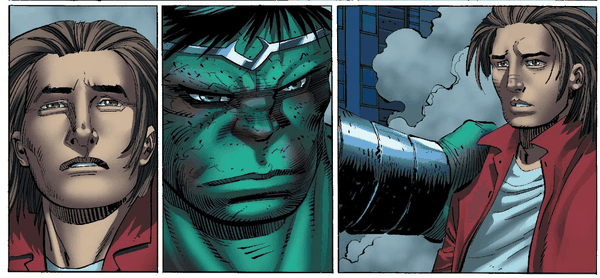
In this descent into hell, Hulk must also confront his gamma "family." She-Hulk (Jennifer Walters) and Doc Samson try to interpose themselves, seeking a rational mediation that is, however, swept away by the Worldbreaker's determination. Jennifer is neutralized with a brutality that underscores how Hulk is no longer playing by the rules of a "cousin brawl," while Samson helplessly witnesses the failure of his psychological analysis in the face of a rage that has transcended clinical trauma. Rick Jones remains the only human link, the emotional anchor who tries to speak to Bruce's heart amidst the clang of falling Stark armors.
The symbolic culmination of this military occupation is the transformation of Madison Square Garden into a brutal gladiatorial arena. Hulk doesn't just want to defeat his tormentors: he wants them to experience the humiliation of Sakaar firsthand. Equipped with obedience discs, the Illuminati are forced to fight before a screaming crowd of civilians who, paradoxically, side with Hulk. This inversion of roles is handled with superb narrative cynicism, where the symbols of American heroism become pawns in bloody entertainment, echoing the moral fall of the Roman Empire.
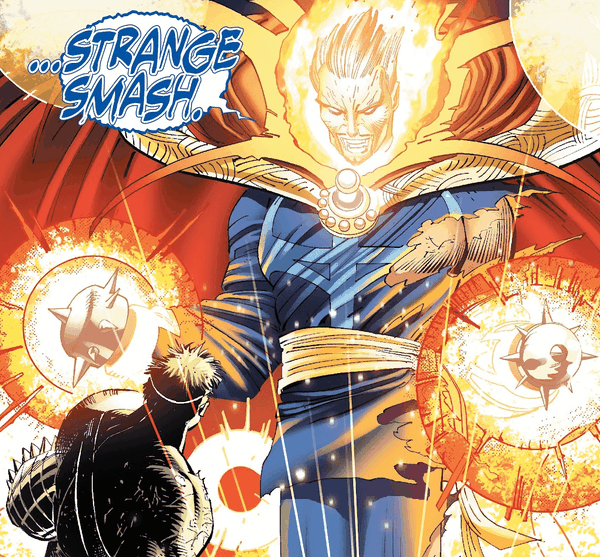
One of the most visually disturbing and technically ambitious moments of the five main issues is the clash with Doctor Strange. Aware that his standard magic cannot scratch Hulk's will, Stephen Strange makes the ultimate forbidden sacrifice by drinking the essence of Zom, a demonic entity of pure destruction. Strange's transformation is an expressionistic nightmare: his arms become monstrous clawed appendages and his spirit is corrupted by a fury that rivals that of the Jade Giant.
This battle is not a tactical duel, but a collapse of mystical reality that is reflected in matter. Seeing Strange, the symbol of control and wisdom, reduced to a demonic beast spewing black flames is the definitive proof of the Illuminati's failure. Hulk, however, triumphs not thanks to a magic trick, but because of his nature as a "fait accompli": his rage is more real and solid than any demonic construct. The defeat of Strange-Zom marks the end of all metaphysical hope for Earth, leaving only brute force as the only language remaining.
In the end, he is the Worldbreaker
The pulsating heart of the work lies in the specular dualism between Hulk and Sentry, a sequence that transcends a simple physical confrontation to become a collision of ontological concepts. Robert Reynolds is not just Stark's ultimate weapon, but Banner's distorting mirror: if Hulk is the rage seeking justice, Sentry is absolute power paralyzed by the terror of his own dark side, the Void. When Sentry finally decides to enter the fray, the clash takes on the proportions of a natural disaster that redefines the superhero genre, shifting the axis of conflict from an urban brawl to a constant energy release that threatens to vaporize Manhattan.
The final confrontation is a battle of atomic attrition that Pak manages with impressive dramatic density. Sentry unleashes the power "of a million suns" while Hulk channels the gamma pressure of the Worldbreaker, creating a visual paradox where golden light and radioactive green merge into a blinding white. The clash returns both to human form, but the true resolution occurs when Bruce, furious at the internal betrayal of the Warbound Miek, threatens to destroy the tectonic plate itself. It is here that Tony Stark's laser satellite system intervenes, a technological coup de grâce necessary to stop a Banner now transfigured into the World Destroyer. This catharsis continues through the introduction of Skaar, Hulk's son born from the lava of Sakaar, which transforms the saga into a multi-generational family tragedy where the passing of the torch is stained with blood and radiation, projecting the echo of the Worldbreaker's rage on a cosmic scale through the figure of his brother Hiro-Kala.

The interaction between John Romita Jr. and Klaus Janson manages the page with the precision of an Immersive Sim's Level Design, where every architectural element of the panel is functional to the physics of the clash. Romita Jr. never wastes space, using his characteristic grid to communicate a sense of oppression and gravity that few other artists can master. The management of the Gutter as a compensation chamber between one impact and another dictates a reading rhythm that skillfully alternates narrative Decompression with explosions of pure kinetic energy, making each Splash Page not a pin-up, but a frozen instant of brutal effectiveness.
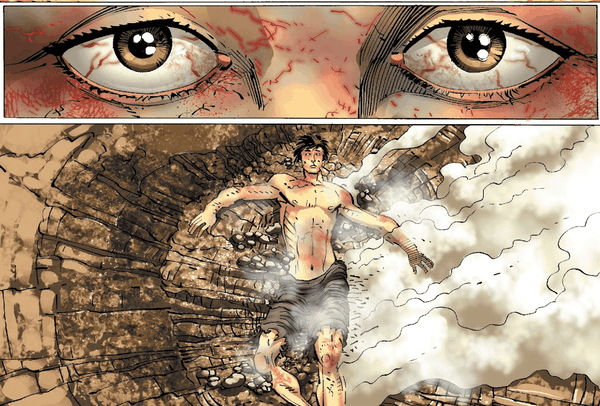
The strength of Romita Jr.'s line is enhanced by Klaus Janson's inking, which adds a rough and dirty texture that modern digital often risks flattening. There's an almost real heaviness in the way Hulk grabs his opponents or in the way New York debris flies across the page. The color grading by Christina Strain leans towards warm, saturated tones, transforming the metropolis into a furnace of dust and gamma radiation, where Sentry's sunlight and Hulk's radioactive glow clash with the same fluidity of movement as the most refined action titles. It's visual storytelling that doesn't just illustrate the plot, but builds it through the volumetric bodies, making Hulk an architectural presence that literally dominates the horizon of every panel.
What remains of this personal war?
Analyzing the work as an industrial asset, World War Hulk is a classic for its ability to generate systemic ramifications that fueled the Marvel title roster for over a decade. Pak didn't just write a crossover, but laid the groundwork for a true expanded gamma mythology, leading to the creation of Red Hulk (Thaddeus Ross) and the complex Fall of the Hulks saga. The work survives the background noise of weekly releases because it doesn't seek the consolatory consensus of fans, but the radical rupture of the status quo, offering a definitive gateway to understanding the true nature of the monster.
The editorial value also lies in the sustainability of the event model: World War Hulk does not require the reader to have encyclopedic prior knowledge, but rewards them with a narrative coherence that closes perfectly in the final issue. It is an essay on the sustainability of authorial vision within a crossover, where technology serves art without ever overpowering it. The Panini Pocket volume, in this sense, represents the ideal format to rediscover a piece of editorial history that still burns with the intensity of a supernova, confirming that rage, when channeled by a creative team in a state of grace, can transform into an immortal artistic architecture.
World War Hulk is not just the breaking point of a city, but the structural redefinition of an icon that transforms from a threat to a moral warning. Greg Pak architects a symphony of destruction where every clash becomes an ethical debate resolved by force, while Romita Jr.'s art gives the event an architectural might that transforms paper into concrete and dust. Through the specular clash with Sentry and the brutal gladiatorial regime of the Arena, the work elevates the Jade Giant to the supreme judge of the superhero community, closing the circle with the birth of Skaar. It is a brutal essay on the responsibility of absolute power, a blockbuster that leaves no room for ambiguity: definitive and essential for every collector, especially thanks to this new Panini Pocket format.
Similar articles