The Sinking City 2: Frogwares Changes Genre and Delivers
We played the demo. The survival horror works, Arkham is the right setting, and the systems interact better than in the first chapter. Open questions remain that only the finished game can answer.
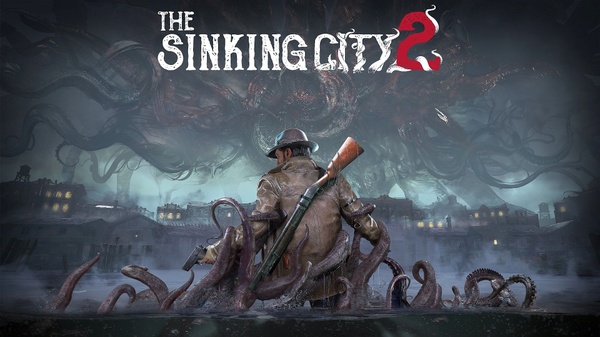


Frogwares built its reputation on Sherlock Holmes: years of third-person investigative games where the player gathered clues, linked them in logical sequences, and turned them into deductions. With The Devil's Daughter and then the more recent Chapter One, the studio had refined a precise narrative system, based on careful observation of the environment and the reasoned construction of conclusions. When in 2019 it decided to bring that same philosophy to the Lovecraftian universe with The Sinking City, the result was a game that worked well where the investigative roots held their weight, and faltered where it ventured into less familiar territory, combat system included. The atmospheric promise was solid, the execution perhaps a tad more irregular.
Gallery
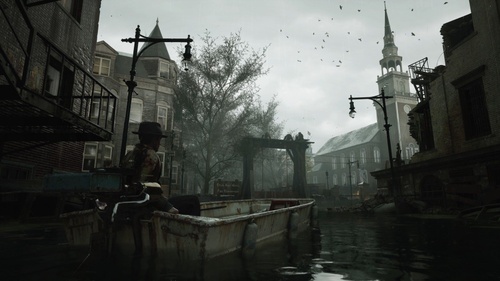
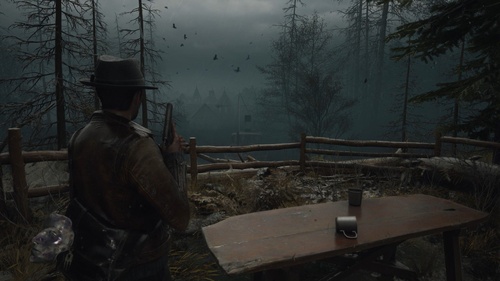
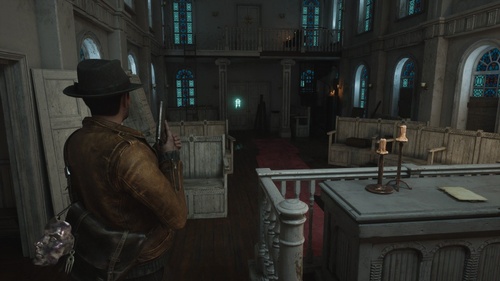
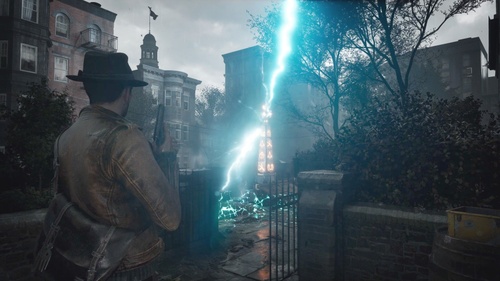
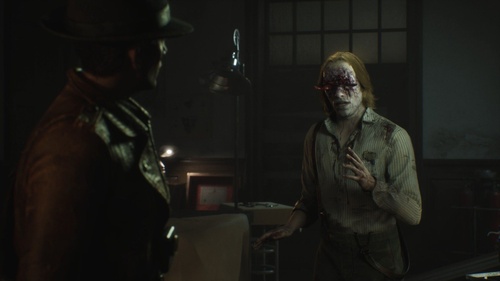
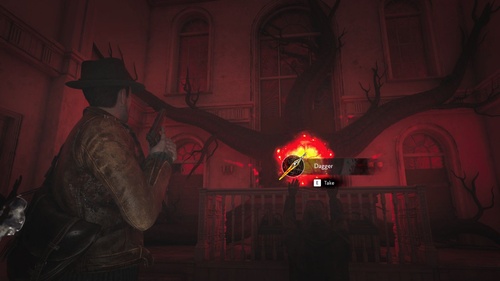
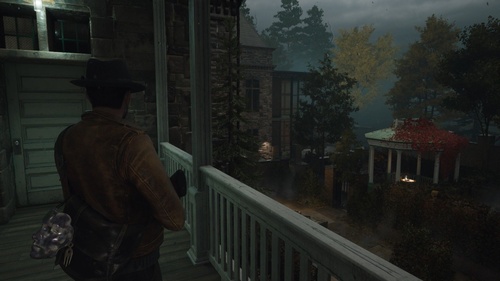
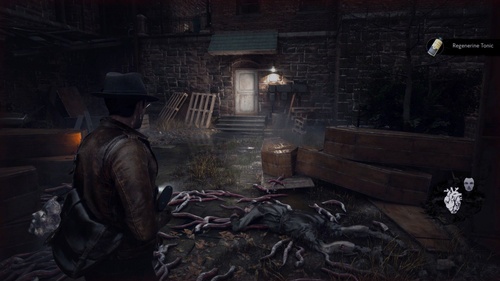
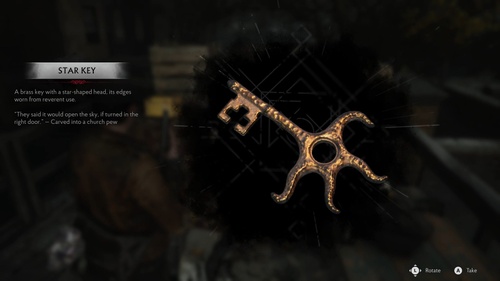
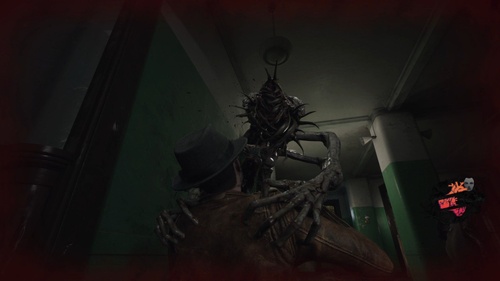
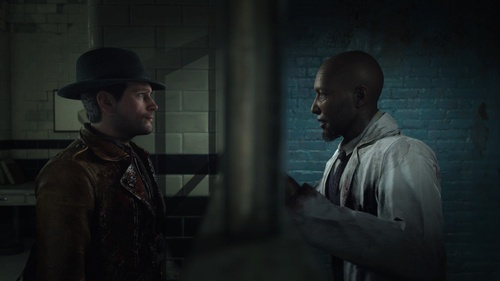
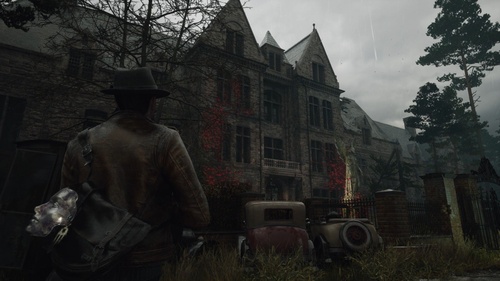
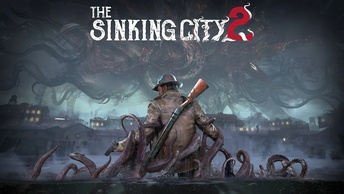
The Sinking City 2, today, abandons Oakmont, abandons Charles Reed, and abandons the investigative structure as its primary engine. It transfers all its experience into a declared survival horror, complete with a new city, a new protagonist, and a completely inverted hierarchy of systems compared to 2019.
The question worth asking is not whether this choice is courageous, because it undoubtedly is, but whether it is consistent and to what extent the game gains something by losing something else in this transition (which we can't wait to see in the review).
Two Cities, Two Protagonists, One Mythology: What Are the Origins of The Sinking City?
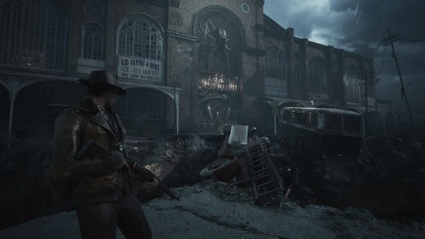
The demo provided by the developers includes two distinct scenarios, a church and a hospital, both disturbing enough to immediately convey what kind of game The Sinking City 2 is. The following analysis starts from this direct experience.
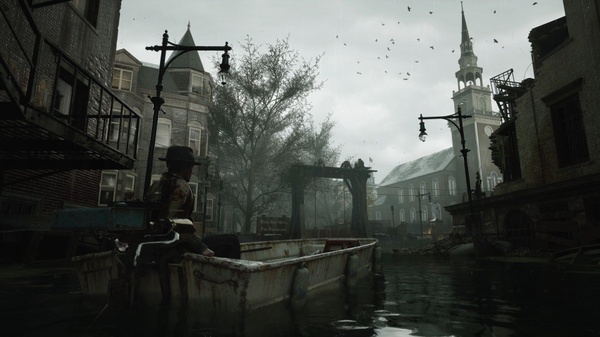
The term "sequel" applied to The Sinking City 2 requires a calibration that promotional communications tend not to make. It is not a direct narrative continuation: we don't know what happened to Charles Reed, Oakmont is not mentioned in any of the played materials, and the events of the first chapter do not emerge in any of the documents or dialogues encountered. The two games share Lovecraftian mythology and the idea of a supernatural that manifests through forbidden rituals and creatures beyond all logic, a relationship of continuity of imagery that allows those who have never touched the first chapter to enter without disadvantage.
The most interesting connection between the two games comes from the documents scattered throughout the environments, many of them, and constructed with an unexpected variety of registers: personal accounts, historiographical excerpts, traces of already compromised minds. Their main function is by no means decorative: they contribute to building a layered Arkham, with roots that go back centuries, and those who played the first chapter will find familiar names and institutions relocated to an older and darker context. Redemption Church, for example, is not new to those who remember Oakmont: it was already present in the first chapter as a cult that worshipped Shub-Niggurath, and finding it here with a history that long precedes the events of the series is the kind of silent connection that Frogwares offers without emphasis. Arkham, after all, is the city of Miskatonic University, the institution that runs through all of Lovecraft's narrative as a center of erudition that challenges what humanity should know: setting the sequel here means accepting a confrontation with precise expectations and an already consolidated geography of the imagination.
The two played scenarios return environments with their own internal logic, sometimes brutal. In the hospital, some doors do not open with conventional keys: the system requires using human faces recovered from the surrounding environments, a mechanic that condenses into a single object the horror of the setting and the need to explore every corner before proceeding. It is not an environmental puzzle in the traditional sense of the term: it is a declaration of intent on how much Frogwares wants the player to feel uncomfortable doing the simplest things. The church, on the other hand, introduces characters with their own secrets and agendas, exactly as game director Alexander Gresko promises when he speaks of gray morality as an identifying trait of the story. Rafferty is compromised from the start, the involuntary cause of his own crisis, and this personal implication is already felt in these two environments: unlike Reed, who observed Oakmont with the distance of a professional, our new alter ego inhabits the horror instead of cataloging it.
The Weight of a Revolver: Gunplay, Inventory, and the Grammar of Survival
The genre change is first and foremost evident in the gameplay, and to understand how radical it is, one only needs to recall the structure of the first chapter. Investigation was the primary verb: gathering clues through occult vision, populating the Mind Palace, choosing between narrative solutions with divergent consequences. Combat existed but was secondary, often clumsy in execution, with awkward character movement that made encounters more of an obstacle to overcome than a conscious design component. In The Sinking City 2, this hierarchy explicitly reverses: combat, survival, and exploration take center stage, and the declared point of reference is no longer the Sherlock Holmes-style investigative adventure but classic survival horror. The DNA of Resident Evil and Silent Hill is recognizable in resource management, the pressure of encounters, and the exploration of environments that do not forgive distraction.
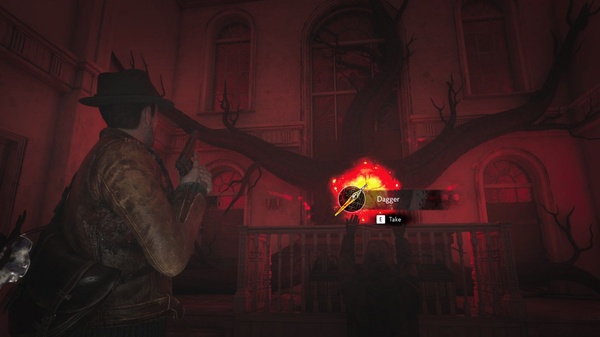
The gunplay works with an arsenal of period weapons: revolvers, shotguns, Thompsons, fists, and kicks. Encounters require reading enemy behavior and aiming at their weak points to take them down while consuming as little as possible, because every shot fired is a resource subtracted from the inventory. And this is where the systems begin to interact: finite inventory transforms every encounter into an economic decision, not just a tactical one. Carrying extra ammunition means sacrificing medical kits or items needed to unlock areas in a second pass. This pressure, however, is not fixed: by exploring carefully, it is possible to find items that expand available space, gradually shifting the balance between what can be carried and what must be left behind. Inventory management thus also becomes an axis of progression, parallel to combat but closely intertwined with it.
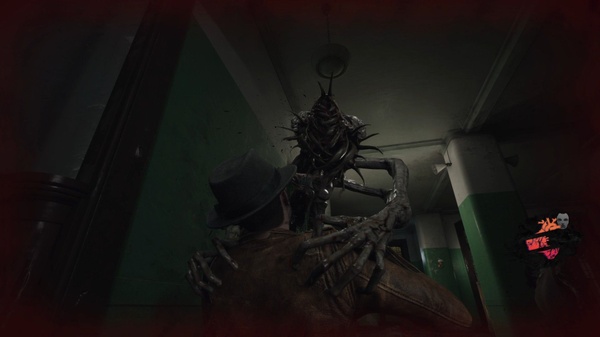
The chosen difficulty radically changes the balance of this economy. On easy difficulty, the game is generous, resources are accessible, and mistakes are forgivable. On hard difficulty, enemies have more health, consume alarming amounts of ammunition, and some can respawn after being defeated: this transforms every already explored area into a risk to be re-evaluated, making backtracking, which the semi-open world structure actively encourages, an operation that requires taking into account what is encountered, not just what is sought.
Character progression unfolds on multiple levels. Dream Essence, crystals scattered throughout the environments, enhance Rafferty's abilities and are obtained by careful exploration, often guided by the environmental narrative itself. In parallel, there is a talent system based on runes, organized into increasing rarity levels: from basic ones, like Chitinbound which reduces damage taken from monsters and aberrations, to intermediate and advanced talents that more substantially modify the approach to combat and survival. Equipping the right runes is not an aesthetic choice: it concretely changes which situations one is able to face and which are more sensible to avoid, building a playstyle that develops over time instead of being defined at the beginning.
The optional investigative layer fits into this framework as a third development path: the environment is littered with objects and traces that tell what happened in each place, and those who choose to stop and read them gain concrete upgrades, access to otherwise precluded areas, and narrative variants. Those who prefer to ignore them are not blocked, which represents a clear break from the Mind Palace of the first chapter. The systemic doubt that remains is whether these progression paths are legible enough to coexist: when managing inventory, monitoring health, and keeping an eye on enemies that can respawn, stopping to gather clues requires a mental availability that the game itself, with its constant pressure, might make difficult to maintain.
What a Detective Cannot Do: Structural Differences Between 2019 and 2026
The survival horror that The Sinking City 2 wants to inhabit is not the same as five years ago. The Silent Hill 2 remake has redefined what it means to bring psychological horror into a contemporary engine, Resident Evil 4 Remake has shown that frantic pace and survival tension can coexist without one sacrificing the other, Alan Wake 2 has pushed the boundary between narrative and gameplay in a direction few expected. These are titles with budgets, technology, and development teams of a different scale than Frogwares, and it would be dishonest to ignore that. The comparison is not about quality: it's about the proposition. What TSC2 can offer that these titles do not is a specificity of setting and tone that the canonical Lovecraft of Arkham guarantees in a way that is difficult to replicate: not horror as spectacle, not the monster as a boss fight, but the perception of a world built on incomprehensible rules that precede and survive the player. It's an ambitious promise, and the demo suggests that Frogwares is taking it seriously. Where the title exposes itself to comparison, however, is on the level of technical execution and combat refinement, terrains on which the aforementioned studios have raised a bar that a medium-sized studio structurally struggles to reach.
Then there's an issue concerning those who have followed Frogwares for a longer time. The audience that played the Sherlock Holmes titles and the first Sinking City has built a precise expectation of the studio: deduction, layered narrative, the intellectual pleasure of gathering scattered pieces and seeing them compose something coherent. Frogwares is asking that audience to follow it into territory where these satisfactions do not disappear but become secondary, available to those who seek them and invisible to those who do not. It is not a betrayal, but it is a renegotiation of the pact with the player, and renegotiations of this type always come at a cost. The risk is not that the game will be worse: it's that it will be perceived as less "theirs" by those who had learned to recognize that voice. The choice to keep the investigative level optional seems to respond precisely to this concern, a gesture of continuity offered to those who do not want to lose the thread entirely. Whether this is enough to retain that part of the audience without diluting the coherence of the new design is, again, a question that only the finished game can answer.
The Sinking City 2: Frogwares Changes Genre and Delivers
What the demo delivers is a game that knows what it wants to be, which is by no means a given for a studio changing genre for the first time. The direction is clear, the systems interact with a coherence that the first chapter lacked, and the two scenarios played leave an impression that's hard to shake off, in the most literal sense of the term. Answers to the important questions are still missing: whether the combat will stand up to genre expectations over an entire campaign, whether the narrative will keep its promise of gray morality beyond the initial environments, whether the investigative system will find a way to make itself visible without interrupting the pace. More material and more time with the game are needed to express oneself with the necessary precision. For now, what Frogwares has shown is intriguing enough to justify the wait.
Similar articles