Nioh 3 - Tips and Tricks for Beginners
Nioh 3 Guide: Essential Tips and Tricks to Survive the Yokai


The best word to summarize Nioh 3 is “massive.”
It’s massive in the mechanics it offers, in the diversification of environments – which feature interesting verticality – and in the content offered to the player.
And this abundance could pose a challenge for newcomers to the series, who, attracted by the demo released a few days ago, might decide to dive into the world of Nioh 3 in search of Yokai only to clash with the technicalities typical of the saga.
That’s why, after listing the 5 things you should know before playing Nioh 3, today I want to share a series of tips and tricks from my almost 70 hours on the game, a good ten of which were spent cursing.
Pay attention to area levels

Let’s start with the basics.
Unlike the first two chapters of the saga, the world of Nioh 3 is divided into a series of open maps split into areas; each with a recommended level for exploration.
My advice is to never trust the recommended level too much because it will help you with normal enemies but won’t be enough to face any bosses or superior Yokai.
The difference in difficulty levels is quite palpable in Nioh 3, you can venture into a mission slicing Yokai around without any problem, only to get stuck in front of the “final boss” who has a significantly higher level.
Fortunately, if you have difficulty facing a certain enemy, you can dedicate yourself to side missions or repeat some main story missions, in order to level up and perhaps recover more powerful equipment.
Learn to use gestures
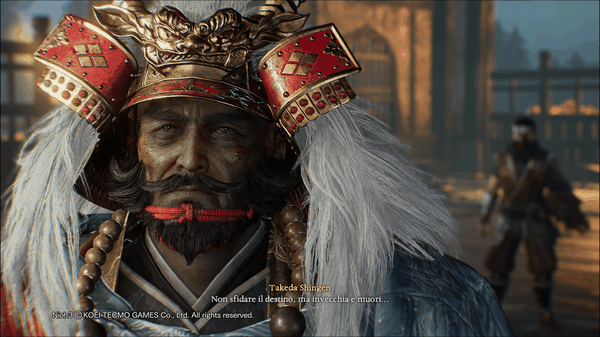
Accessing the gesture menu is one of the things you’ll learn in the first few minutes of the game and then forget. However, during the adventure, a gesture used at the right moment could save you on more than one occasion, helping you avoid unnecessary confrontations.
Around the map, you’ll find Yokai called Nurikabe, which have the appearance of a door or gate; you’ll recognize them by the gray aura surrounding them and the red eyes that will scrutinize you once you approach.
Since they are tough opponents, my advice is to avoid confrontation by making the right gesture to the Nurikabe. To understand which gesture to make, you’ll need to analyze the surrounding environment where clues will be hidden.
In other instances, however, by opening a chest you might encounter Mujina; Yokai similar to badgers that can take on your appearance and fight you.
Again, it’s possible to avoid the fight by making the correct gesture, otherwise, prepare to fight.
Training and abilities
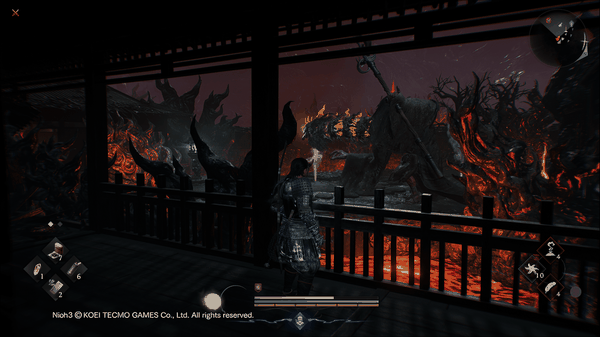
Nioh 3 has simplified many things compared to Nioh 2, however, it maintains the enormous quantity of abilities and labyrinthine menus.
I know the idea of spending time navigating through the various menu items doesn’t appeal to you much, but it’s fundamental to know where everything is.
Once you’ve done that, you’ll notice that the ability tree is enormous, offering dozens of abilities for both samurai and ninja modes, as well as for the individual weapons connected to them.
However, initially you can only unlock a limited number of abilities, while for the others, more powerful and fun, you’ll have to complete the various training sessions connected to the Samurai and Ninja styles.
Another type of ability is connected to Titles – something that literally escaped me for the first 15/16 hours of gameplay.
During the adventure, a message will appear on the screen indicating that your reputation has increased. Do not ignore it.
Reputation points are connected to different types of titles; each linked to a specific mechanic that allows you to improve gameplay mechanics and elements that can make your life much simpler.
Blessings and friendly Yokai

Not everything you find around wants to kill you; there are also many Yokai ready to help you, blessings to accept, and moments of relaxation that will give you various bonuses.
Among the various friendly Yokai scattered across the map are the Scampuss, Kodama, and Chijiko.
Kodama are lost Yokai and are usually hidden, so you’ll have to find a way to reach them and show them the way home.
Helping Kodama will increase the number of elixirs we can replenish at shrines and will allow us to access Kodama blessings which will increase the probability of finding elixirs, their effectiveness, and other statistics related to this item.
Other benevolent Yokai are the Chijiko, which look like floating balls.
These should be hit with a bow or other ranged weapons, which will make them come to us looking for pets. Once petted, they will offer items or equipment as a sign of friendship.
During your escapades, you might hear meows, a sign that there’s a Scampuss around. These are friendly Yokai in the form of a cat that has had a few too many meals. Once tracked down, the Scampuss will ask us to follow it and will lead us to places where chests, merchants, or special items are found.
But benevolent Yokai are not the only things on the map that will give us bonuses.

Around the various areas, it’s possible to find the statues of the 6 Jizo, who, once prayed to, will release merit points that can be spent to receive their blessing at the various shrines.
Furthermore, keep an eye out for areas preceding the various bosses; usually hidden behind some door are hot springs. Bathing in a hot spring allows you to recover full health and eliminate status ailments without using any items.
Level up carefully

Nioh 3 has a level-up system based on possessed Amrita, which can be used to improve a series of characteristics such as Constitution, Heart, Stamina, Strength, Skill, Dexterity, and Magic.
Increasing one of these characteristics improves a whole series of statistics, both generally and specifically for the two combat styles, and impacts specific types of weapons.
While the vast majority of people aim to improve “constitution,” “stamina,” and “strength” – yes, I know you will – my advice is to not underestimate characteristics like “skill” and “magic,” which, once they reach a certain level, will give you great satisfaction.
Don’t be afraid to experiment, in Nioh 3 you can reset all levels to their initial state at any time and reorganize your Amrita as you see fit, which will allow you to try different builds and configurations.
Fight responsibly

Since when it comes to raw gameplay, Nioh 3 is truly massive, here are a series of tips dedicated to the combat phases.
The first big tip is to learn to make the best use of the two combat styles. These are not exclusive of each other, but complementary. Try as many combinations as possible between the two styles to find those that best suit your taste.
When playing with the samurai style, managing “Ki” can become quite challenging.
The game will tell you to press R1 when you are surrounded by blue lights, however, standing there watching the blue lights while a three-headed demon is throwing everything at you is not so simple.
That’s why my advice is to keep an eye on the “Ki” bar. When you attack, it will turn red, then yellow as it “recharges.” Press R1 when the yellow bar reaches its maximum and you will recover the lost stamina.
Keep your weight under control. Among the many statistics related to your character, weight is what should interest you most. Having your weight below 70% is the true golden rule of Nioh 3 because a weight above this percentage will make it much more difficult to dodge, parry, run, and recover “Ki.”
It is also fundamental to learn to use ranged weapons correctly.
These are very useful when you need to clear an enemy base; you just need to shoot the various enemies in the head from a distance to eliminate them in one shot.
Furthermore, firearms are a real wildcard against most bosses. A well-aimed shot from a blunderbuss or rifle can even remove a quarter of the bosses’ Ki.

Another useful tip for approaching various bosses is to have items with you that can inflict elemental attacks. This is very important because in Nioh 3, enemies that have two elemental status ailments automatically fall into confusion, thus providing a good time window to attack them.
The advice here is to have an weapon that deals elemental attacks and a series of talismans that allow you to inflict others.
When attack is not enough, parrying and dodging become fundamental.
Aside from the “burst break” that blocks charged attacks from various enemies, a well-timed parry can save you from defeat, while dodging can help you escape the grabs of various bosses – many of which can easily lead to a K.O.
So, learn to use these two functions right away.
The last tip is to spend the first few hours of the game having fun with any weapon you find.
Nioh 3 maintains the saga’s tradition of a decidedly generous looting system, and this translates into dozens and dozens of equipment and weapons lying around.
Try everything without looking at the values of the various weapons. An axe or a hammer will be more powerful than a katana or spear, but they are also much slower and harder to manage, just as a bow is faster than a blunderbuss, but inflicts less damage.
Use everything you get your hands on, decide which types of weapons suit your playstyle, and then build your builds around the various weapons.
The rest of the items you can give to the Kodama as a sacrifice in exchange for useful and rare items.
Ready to play Nioh 3?

If you enjoyed the Nioh 3 demo, you will surely like the full game, which is much more extensive than the demo offered by Team Ninja.
Nioh 3 promises to be a true revolution for the franchise and also attempts the arduous move of proposing an evolution of the soulslike genre, by improving the shortcomings present in Elden Ring.
Nioh 3 will arrive on February 6th on PC (Steam) and PlayStation 5.
The game’s launch will, however, be anticipated by our review, which will arrive on February 4th, and by our preview that we published a few days ago.
In the meantime, I remind you that you can download the demo made available by Team Ninja for free.
Similar articles