Bacurau – The Dystopian Western from Brazil Arrives in 2K
The astounding, never-before-seen original work by the director of "Aquarius"
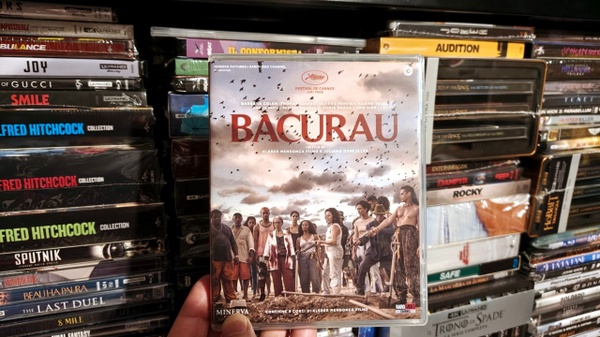


It's not easy to categorize Bacurau. The film directed by Kleber Mendonça Filho (the same director as Aquarius) alongside Juliano Dornelles blends elements that on paper would seem incompatible: western, thriller, science fiction, action, and horror coexist in a work that defies definition.
Presented at the Cannes Film Festival where it won the Jury Prize ex aequo in 2019, the film transports the viewer to the near future and a small community in the Brazilian hinterland suddenly threatened by an external force intent on erasing it.
When the Village Becomes a Fortress
The film avoids choosing a single direction. It shifts from western to dystopia, from horror to political satire, building an unpredictable narrative that finds its balance in the community's cohesion. The protagonist village thus becomes the symbol of marginalized realities forced to defend themselves against larger, more aggressive interests.
Mendonça Filho and Dornelles take the necessary time to introduce Bacurau before putting it under siege. It's a choice that expands the narrative but makes the explosion of violence that overwhelms the village in the second half more impactful.

The cast is further enriched by Sônia Braga and the late Udo Kier, protagonists of a work that continues to stand out as one of the most original proposals to emerge from Brazilian cinema in recent years.
Shot digitally at native 3.4K resolution (Arri Alexa Mini) and final 4K master. The CG edition has an image format of 2.39:1 (1920 x 1080/24p), AVC/MPEG-4 encoding on a BD-50 dual layer disc. The material presents a vaguely digital texture, with non-existent or very fine grain, maintaining overall solidity and excellent prominence of elements even in the background and during night transitions. This is the case, for example, with the panoramas immediately after the funeral ritual, where it remains difficult to perceive banding limits in the color gradations.

The international success of Aquarius by Mendonça Filho must have contributed to the release of this work, completely new to Italy, which, like (too) many other indie productions, slips into oblivion each year. A film that, like many, is without dubbing and can be viewed with subtitles, Dolby Digital 2.0 (224 kbps) or with the superior DTS-HD Master Audio 5.1 (16 bit). The latter is capable of good dynamics and involvement between dialogues, music, echoes, and front-to-back transitions, marking the pace of surreal moments like the transit of the "flying saucer."
Extras include the film's trailer and 4 unreleased short films exploring the visionary art of Mendonça Filho.
Similar articles