What Does Neon Genesis Evangelion Have to Say in 2026?
Neon Genesis Evangelion explored the fears and anxieties of young Japanese people in the 90s, but does it still have something to say in 2026?
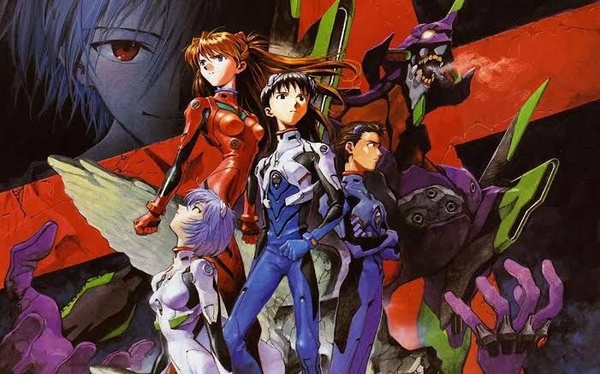


About a month ago, while browsing the Netflix catalog for something to watch, I stumbled upon Neon Genesis Evangelion. For those who have just woken up from a coma lasting more than 30 years, it's a cult anime from the 90s that, despite always carrying the reputation of being a complex product due to the themes it addresses and especially how it addresses them, managed to mark entire generations of teenagers who learned to see themselves in Shinji, Asuka, Rei, or Misato.
My first contact with Neon Genesis Evangelion was when I was 15/16 years old, and even though I didn't understand much of what was happening to the various characters, a few points were clear to me: Gendo was a bad person, Shinji deserved a slap, the animations were scary, and the soundtrack was a bomb.
A few years later, Evangelion and I reconnected; I had recently arrived in Poland and was looking for something familiar to watch in the evening after work.
And episode after episode, I noticed that Evangelion was not complex at all; in fact, it was very direct in what it wanted to tell. We, as teenagers at the time, simply didn't have the social, cultural, and especially emotional tools to understand what was happening.
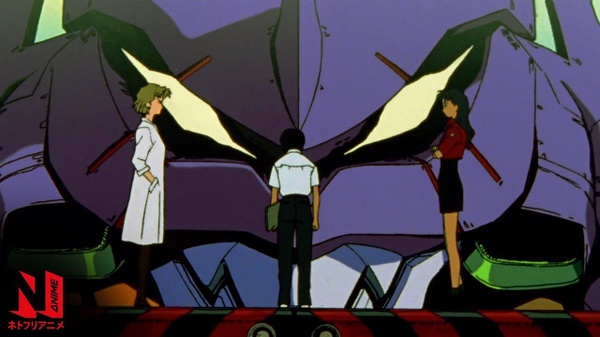
So, when I found Evangelion in front of me a month ago, I decided to dive back into that world and do a third rewatch of the original '95 series and The End Of Evangelion movie.
And armed with a broader cultural and emotional background than 8 years ago, once I reached the end of this journey, with Asuka and Shinji still fighting and exchanging harsh words, I couldn't help but notice that not only is Evangelion very clear in what it wants to convey—almost didactic, I'd say—but in choosing the themes to touch upon, it also offered a perfect portrait of Japanese society at the time and the state of mind of an entire generation of adolescents and young adults who had no way to express their fears.
However, whether history is always cyclical, or because we are most likely still experiencing the aftermath of a crisis of values born in the 90s, which Japan, as usual, only anticipated, many of Neon Genesis Evangelion's themes are still highly relevant today.
So I asked myself: What can Neon Genesis Evangelion tell us about modern society?
Japan in Disarray: The Historical Context of Neon Genesis Evangelion
To answer this question, it is necessary to go back to 1995, the year Neon Genesis Evangelion was released.
The post-war period saw Japan experience unprecedented growth in history; the country went from being predominantly rural to one of the global technological and industrial centers, which allowed it to become the second-largest economy globally.
The fall of the Berlin Wall and the consequent end of history theorized by sociologist Fukuyama strengthened relations between Japan and the West, which allowed anime to reach the United States and many European countries, becoming true instruments of soft power for the Tokyo government. At the same time, however, this shift towards hard and raw capitalism led to a weakening of social collectivism, already severely affected by the great migration from the countryside to the cities, in favor of the most unbridled individualism that effectively widened social distances in the country.
Between the late 80s and 90s, Japan also had to contend with a series of events that severely tested the country's founding values.
The economy experienced a sharp slowdown due to the bursting of the real estate bubble, which had first inflated property and land prices, only to see them collapse when the Bank of Japan was forced to raise interest rates. This led to a collapse of the yen and the Japanese economy: banks froze credit lines, and companies moved in two directions: initiating large layoffs and halting youth hirings.

This historical moment, which the Japanese call Ushinawareta Junon, or the lost decade, later becoming Ushinawareta Nijunen, meaning the lost two decades, marks the end of the social contract on which the country had been based for the past decades.
The idea of a secure job as a reward for a youth spent studying and respecting one's superiors gave way to precariousness, unemployment, and declining wages.
And in the face of this, an entire generation of young Japanese people was literally lost and unable to find their place in the world.
To the questions and problems of young people, Japanese society and politics found themselves without answers, also because they were busy dealing with the many scandals that had emerged and seriously undermined the credibility of institutions that had seemed untouchable for centuries.
A series of investigations related to corruption and ties with the Yakuza led to the resignations of various prominent government members, including Prime Minister Takeshita.
The absence of answers and the collapse of those certainties on which Japanese society had been founded created fertile ground for new social and cultural movements, including some that ended up becoming true cults, which Japanese sociology at a certain point defined as Shinshukyo, or new religions, in which young Japanese people sought meaning in their existence.
Among these cults, the most famous is AUM Shinrikyo, the one behind the infamous Sarin attack on the Tokyo subway, which attracted young people in various ways.
There was Shukke, meaning the abandonment of families, the use of drugs, conspiracy theories, and fanaticism that led to the rediscovery of Nostradamus's predictions, the mystification of spiritual concepts intrinsic to Japanese culture: for example, AUM manipulated the concept of Pua, or the transfer of consciousness, explaining to its followers that the only way to save a person whose soul was accumulating too much negative karma was to kill that person.
But among the many ways to attract young people were also science and Pop culture, two phenomena that were very popular among Japanese students.
AUM and other cults made extensive use of pseudoscientific concepts to give themselves an air of authority and tell the ultimate tall tale to young people.
Concepts like “astral energy” or “soul resonance frequency” became part of everyday conversation and were conveyed not only through the speeches of various leaders and informational booklets but also in OVAs and animated short films that usually depicted the leader in question as a kind of messiah saving the world from evil and various conspiracies.
This propaganda machine then spoke especially to young men, who not only had to contend with an economic and values crisis but also a crisis of social relations.
For years in Japanese society, the role of men was unwritten but codified: men had to study during adolescence with the goal of becoming a salaryman, starting a family, and supporting that family.
This masculine tradition of society meant that men were the economic pillar of society, while women were responsible for taking care of the home and children—and sometimes even their husbands—so much so that they were described as good wives and wise mothers.
This balance began to crack in the 80s, when social and cultural relations between Japan and the West grew stronger, but it was maintained thanks to the economic prosperity guaranteed by the salarymen.
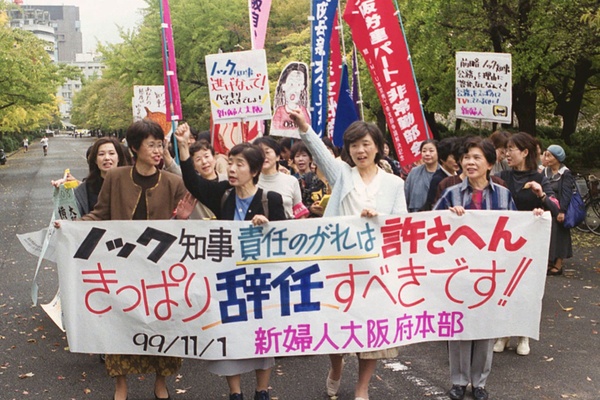
However, when the economic crisis and subsequent unemployment effectively took economic power out of the hands of men, spaces opened up for feminist movements that questioned traditional gender roles.
Thus, many Japanese women demanded greater economic independence, rejected arranged marriages, and sought another role in the family balance.
Men were no longer forgiven and justified for those attitudes typical of their fathers and grandfathers, and above all, the vision that the good wife and wise mother should also be the savior of men collapsed.
Thus, the last certainty in which young Japanese men could take refuge also fell.
They were alone, in a world heading towards its end, and saw every pillar to cling to crumble. Society gave them old and outdated answers but at the same time asked them to fix things.
Neon Genesis Evangelion Arrives
Now, if you've been good at connecting all the dots, you'll have noticed that everything I've written is present, line by line, in Neon Genesis Evangelion; which was born not only as an expression of Hideaki Anno's malaise but also as Studio Gainax's response to the state of Japanese society.
I won't dwell on the topic of Evangelion and Anno's depression, as it's a topic that many have already written about, and certainly in a better way than I could.
What I want to focus on are the ambitions with which Neon Genesis Evangelion arrived in Japanese society: namely, on the one hand, to directly or indirectly narrate the fears and anxieties of young Japanese people, but also to do so by changing the typical narrative methods of anime, adding greater stratification than in the past.
But let's take it one step at a time, as there's a lot to cover.
Evangelion fits into the mecha anime family, a simplification that will have already raised the blood pressure of some die-hard fans, but it's necessary.
The mecha genre has always depicted Japanese society, idealizing young men ready for any heroic sacrifice to save the earth from any evil.
And a first point of reference must be Go Nagai and his Mazinger, where Kabuto is a young man full of courage and the robot in question is more an extension of the pilot's body than something scientific.
Mazinger is a celebration of heroism, and it's very clear that on one side there are the good guys and on the other the bad guys.
Then comes Yoshiyuki Tomino with Gundam, and the matter becomes even more interesting.
The giant robots become instruments of war, stripping away any heroic narrative. And the war in which they are used is a man-against-man conflict where front-line soldiers and civilians are the primary victims; so much so that one of the most significant scenes is that of a mother trying to escape the conflict zone and dying, hit by a bullet casing ejected from a Mobile Suit.
And this man-against-man war has clear consequences for Amuro, who sees nothing heroic in his actions; in fact, he is deeply traumatized and repeatedly questions the goodness of what he is doing.
With Neon Genesis Evangelion, Anno takes the trauma and contradictions already hinted at in Gundam to more extreme levels.
The Evas are no longer just robots, but something more visceral. They have a soul, they decide who to be piloted by, and the cockpit gives way to an amniotic fluid that almost cradles the pilot.
It's an upheaval that follows that of Japanese society.

The technology that had brought so much prosperity was initially controlled and governed, but in Evangelion, that same technology was limited and, above all, fallible, so much so that when it is no longer under human control, EVA 01 goes berserk and commits unspeakable acts for human beings.
Shinji pays the consequences of this upheaval, a young adolescent raised in a world that is only a distant memory of what previous generations knew, and he is asked to save it and fix it.
There is nothing heroic in the actions of Shinji, Asuka, and Rei. The same adults who left them a world destroyed by the Second Impact now ask them to patch things up, without even listening to the concerns and fears of these young people.
Neon Genesis Evangelion as a Mirror of That Society
It is the social contract that fails. Not only do young people not have access to the prosperity of previous generations, but they also have to deal with the inadequacy of adults. What keeps them going is the desire to show something to someone.
Compared to the other characters mentioned earlier, Shinji reacts realistically to the events of Evangelion.
His actions, both lucid and driven by strong emotions, cause him a mental breakdown that makes him run away; however, when he returns to NERV, he continues to pilot the EVA, perpetuating a cycle of trauma and false heroism.
A few years earlier, Japanese society would have massacred such an anti-heroic character, but not the society of the 90s. Shinji acted as a megaphone for that society.
Japan was flooded with young Shinjis who felt betrayed and abandoned by society.
Politics gives wrong answers, parents are immersed in work and don't have time to listen to their children, who decide to withdraw into themselves for fear of confrontation with what's out there, which, digging deeper, is nothing more than the hedgehog's dilemma that forms the philosophical basis for Neon Genesis Evangelion.

On the other hand, there were millions of young Asukas who no longer accepted the role that mothers and grandmothers had covered for years. And this meant that these Shinjis and Asukas could not communicate with each other.
Young Japanese women wanted to show their worth, and while for them this meant entering the ranks of salarymen, for Asuka it meant piloting EVA 2 and showing that she was equal to, if not superior to, Shinji.
Another woman who represents this social transformation is Misato, who shows how women can also put aside romantic relationships to prioritize career and work. And this is visible in how Misato lives: she doesn't have time to clean her house, eats ready-made meals, and doesn't disdain a daily drink. In short, not an idealized woman, but rather a career woman.
And earlier I spoke of the cults in Japan that brainwashed young minds using religious and scientific concepts; exactly as Seele does.
It constantly refers to something sacred like the Dead Sea Scrolls, and the 3rd Impact, to be achieved with a mix of sacrifice and technology, is for Seele the only way to perfect humanity by eliminating individual pain and suffering.
In a sense, Seele's goal is a return to the social collectivism that Japan of the 80s and 90s had lost in favor of capitalist individualism.
What Does Evangelion Tell Us Today?
It's impossible not to notice how many of the problems recounted more than 30 years ago in Neon Genesis Evangelion are still highly relevant today; with the only difference being that in '95 they were limited to Japan, and today they can be observed globally.
Shinji is still among us. He is all those young people who have been handed a system in freefall and asked to fix it.
He is those young people who were deceived with the promise that studying would guarantee them a good job, only to find themselves facing precariousness.
Today, Neon Genesis Evangelion doesn't speak to us of futurism or giant robots, but rather of the difficulty of communication between people and the growing misunderstanding between them, and this focus on something so human makes it a timeless work.
Today, social isolation has grown for many different reasons.

Gen Z is the first generation to experience social relationships worse than the previous one. According to The Harris Poll, 51% of young people feel lonely, and this also affects relationships, with reports from around the world indicating that almost 1 in 2 young people have never had a romantic relationship.
And what about women, who for the first time in decades find themselves having to fight again for rights acquired years ago, as well as dealing with new waves of sexism that bring to social media those attitudes and jokes that once remained confined to bar tables.
Society continues to provide inadequate answers to the problems of new generations. They live with a perpetual imposter syndrome caused by the constant assertion that “today's youth are worthless,” and thus, like modern Asukas, they find themselves in a constant race for approval, which is reflected on social media and offers a totally mystified view of others; consequently fueling insecurities, fears, and inadequacy.
In '95, Evangelion established itself as a cultural phenomenon because for the first time it allowed young people to shout that they had problems, and this means that it has never remained a work anchored to the past; on the contrary, over the years it has received more and more reinterpretations.
This is because, as I said before, its themes are, unfortunately, still relevant today, and this means that Shinji, Asuka, Rei, and Misato are more current characters than ever.
The social chains are the same as before, the generational pact has been broken again, and uncertainty about the future and fear of others make us shy towards those who are experiencing the exact same fears.
The greatness of Evangelion in 2026 is that it continues not to seek a simple solution to these problems. Evangelion reminds us that there are no heroes who will come to save the situation.
Living can hurt.
Relating to others involves the risk of being rejected, misunderstood, or betrayed. Yet it is confrontation, differences, and even conflict with those different from us that define where the individual ends and the rest of the world begins.
A world without friction between people, without an AT Field, is a fake world, devoid of authentic emotions and growth.
So it's up to us every day to decide to wear our imperfections and vulnerabilities and show them to others, and thus decide to truly exist.
Similar articles