Between History and Legend: The Montauk Project and the Dark Roots of Stranger Things
With the series officially concluded, let's discover what inspired Eleven's (mis)adventures, straddling reality and conspiracy.



Stranger Things has ended, and as always at the end of a long journey, a deep sense of nostalgia prevails for those characters we probably won't see on screen again, but who will continue to live in our imagination. For years, the Duffer Brothers' creation has accompanied us to Hawkins and the Upside Down, delivering unforgettable characters and incredible plot twists, even in this final season, though not without its imperfections. In this special, we've decided to take you on a journey to discover the Montauk Project, which inspired the very genesis of the series and is immersed in that limbo between reality and conspiracy.
When Matt and Ross Duffer first presented their project, the title wasn't what we know today. It was actually called Montauk, after the town on the eastern tip of Long Island, New York, the setting for one of the most fascinating conspiracy theories in post-war American culture. The fiction here doesn't arise from nothing but from an unpredictable cocktail of verifiable historical truths, government experiments declassified only after many years, dubious testimonies, and that particular paranoia that permeated American society since the Cold War.
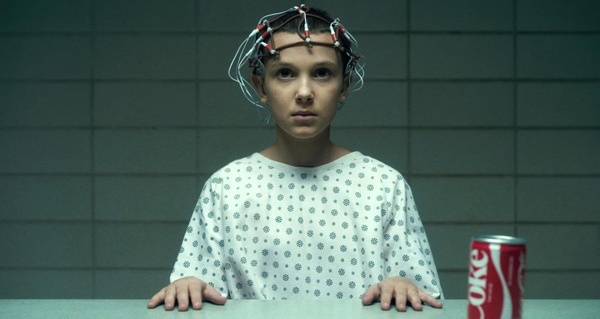
Stranger Things: true things and dubious things
Before delving into the mists of the Montauk Project, it's necessary to establish that the so-called MKUltra Project did indeed exist. It's not just a conspiracy theory, but rather a documented and partially declassified CIA program, operational between 1953 and 1973 under the supervision of scientist Sidney Gottlieb, a figure who would become the unstated inspiration for Dr. Martin Brenner in Stranger Things, played by Matthew Modine with that particular combination of ambiguous paternalism and scientific cynicism characterizing the character.
The stated goal of MKUltra was to develop mind control techniques usable in the interrogation of enemy agents during the Cold War, at a time when the USA and the Soviet Union confronted each other not only militarily but also on the level of mental intelligence. The CIA feared that the Russians had developed advanced brainwashing methodologies and responded with research devoid of ethical scruples that would be unthinkable today, at least officially.
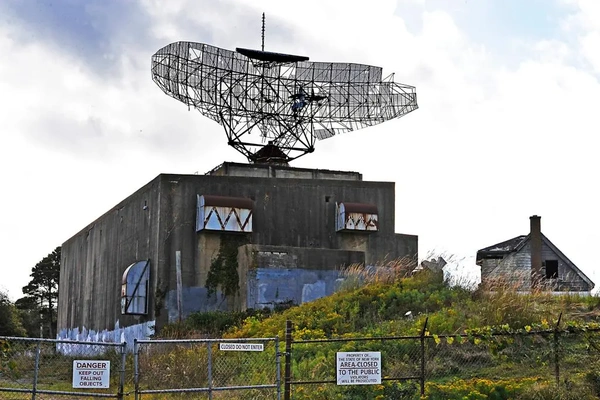
Hundreds of experiments were conducted on unwitting subjects, from psychiatric patients to prisoners, from university students to low-ranking military personnel. Methodologies included forced administration of LSD and other hallucinogenic substances, prolonged sensory deprivation, electroshock, hypnosis, radiation. Particular attention was paid to lysergic acid, a substance Gottlieb considered potentially revolutionary for breaking psychological resistance and making subjects completely malleable.
The minds behind and in front of the project
When the program gradually came to light in the 1970s, mainly thanks to the parliamentary investigations of the Church Committee and revelations from the New York Times, a devastating picture emerged: shattered lives, suicides, permanent trauma. And above all, an enormous amount of documentation deliberately destroyed in 1973 by CIA director Richard Helms, in a desperate attempt to erase evidence before investigations could access it. Of the approximately 150 subprojects of MKUltra, only a fraction left documentary traces, making it impossible to reconstruct the exact extent of the horrors committed.
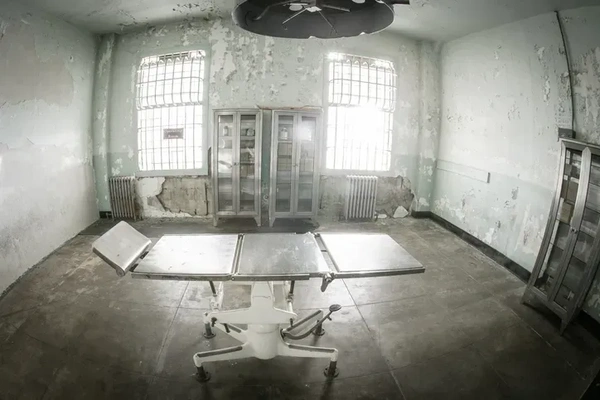
It is from these historically verified, but largely unknown, events that the experiments on Eleven and the other very young patients in Stranger Things originate. The series takes the basic structure of MKUltra and amplifies it through the sci-fi element, transforming mind control into telekinesis worthy of X-Men films, hallucinations into interdimensional portals, and much more. But the psychological violence and the use of children as guinea pigs have roots in documented reality.
Everything is said to have originated from the Philadelphia Experiment, a legend according to which in 1943 the USS Eldridge became invisible and teleported, causing devastating effects on the crew – some may already be aware of this from the eponymous films inspired by the event. Despite official denials from the US Navy, the story gained strength in the 1980s, with hypotheses that secret experiments on the human psyche took place at Camp Hero: mind control, psychic enhancement, time travel, and the opening of dimensional portals. A central figure in the narrative was Duncan Cameron, capable of materializing objects with his mind, an element that would directly influence the imagery of Stranger Things and the character of Eleven.
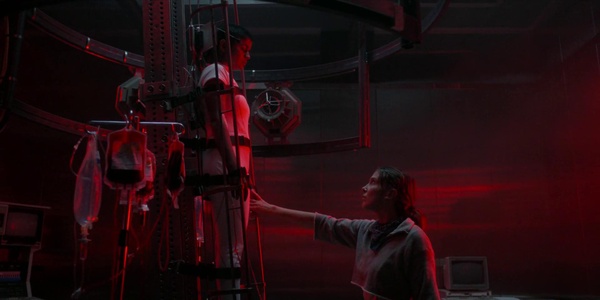
And we all know how this iconic girl, who grew into a woman from the child she was, has influenced the imagination of the general public and contemporary seriality. To think that there are potentially true sources behind her inspiration is chilling, but then again, we will probably never know the truth, even if someone – quoting another cornerstone of television science fiction – might always say that "the truth is out there," you just have to believe it. Here you can find the review of the finale.
Similar articles