The Mandalorian & Grogu – Review: Favreau Brings Star Wars Magic Back to the Big Screen
The Mandalorian & Grogu brings Din Djarin and Grogu to the big screen with action, emotion, and a memorable villain. The review: 8/10.
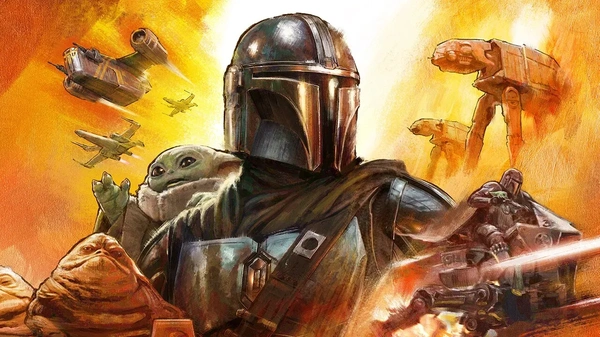


With The Mandalorian & Grogu, the universe of The Mandalorian finally makes the big cinematic leap, transforming one of the most beloved series of recent years into a true big-screen event. After seasons capable of captivating both long-time Star Wars fans and a new generation of viewers, this new chapter succeeds in the most difficult undertaking: expanding the scope of the saga without losing that intimate soul that made the journey of Din Djarin and Grogu special.
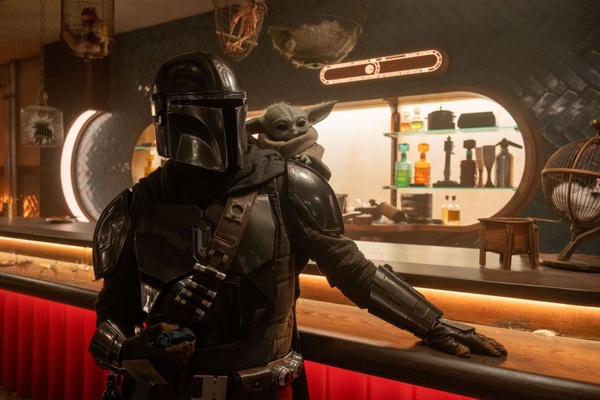
The TV series had already built a rich universe of characters, cultures, and conflicts, bringing the franchise back to a more "space western" atmosphere, made of forgotten planets, bounties, battles, and surprisingly deep human bonds. This film gathers all the good things that had been sown in previous episodes and evolves them into something more ambitious, more spectacular, and decidedly more cinematic.
Even those who have only superficially followed the series can still orient themselves thanks to an intelligent and never intrusive introduction that recaps the fundamental events without slowing down the pace. But it is those who have lived every episode of The Mandalorian that will immediately perceive how this film represents a natural evolution of the protagonists' emotional journey.
Trama: una missione più grande del previsto, una galassia sull'orlo del caos
Without entering spoiler territory, The Mandalorian & Grogu builds a much broader and more layered story than what was seen in the TV series, immediately giving the feeling that this time the stakes are enormously higher. Din Djarin is not simply involved in a new isolated mission, but is dragged into a much larger conflict.
The Mandalorian continues to operate as an independent warrior and hunter accustomed to living far from major institutions, but events will progressively lead him to confront a threat that directly involves the fragile stability of the New Republic. In a historical period still marked by the fall of the Empire, the galaxy appears far from peaceful, with new factions emerging in the shadows, old conflicts resurfacing, and danger slowly growing in increasingly uncontrollable territories.
Within this scenario, Din Djarin will find himself involved in an extremely delicate mission that will lead him to cross new planets, confront mercenaries, criminals, armies, and mysterious characters linked to a much larger plan than it initially seems. And alongside him, of course, Grogu's growth journey continues, now increasingly central not only from an emotional but also a narrative point of view.
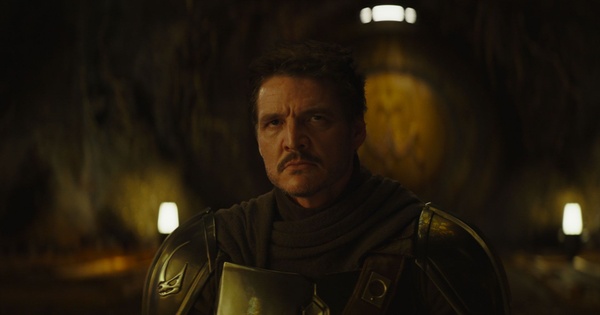
One of the most successful elements of the film is precisely how the story continuously manages to blend spectacle and character development. The action sequences are never mere fillers but become an integral part of the evolution of the protagonists' journey. Every choice, every alliance, and every clash contributes to increasing the weight of the mission and the sense of constant danger.
Narratively, the film greatly expands the sense of adventure and danger. Each mission leads the protagonists towards increasingly extreme scenarios, hostile planets, spectacular chases, and battles of progressively larger dimensions. The Mandalorian will indeed face continuous, increasingly intense and epic clashes, which will test not only his combat skills but also his ability to trust others and the very bond with Grogu.
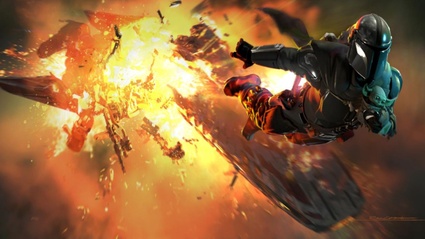
The action sequences become progressively more spectacular as the story advances, yet they never lose the emotional weight behind each fight. It's not just about big explosions or choreographed battles: every clash has precise narrative consequences and contributes to the characters' growth.
Great credit also goes to the main villain, probably one of the most successful antagonists of the modern Star Wars era. The character is built with great care, immediately appearing charismatic, extremely intelligent, and above all credible as a real threat. He doesn't just rely on brute force but uses strategy, stage presence, and psychological control to continuously put the Mandalorian in difficulty.
While maintaining the adventurous soul typical of Star Wars, this story takes on more mature, epic, and cinematic tones, giving the feeling of being faced with a real turning point for the narrative future of the universe created by George Lucas.
Il cast: Pedro Pascal e Grogu al top ma Sigourney Weaver è la grande sorpresa
Leading the film, we naturally find Pedro Pascal as Din Djarin, the Mandalorian who over the years has become one of the most iconic characters in the entire modern saga. Even in this new chapter, Pascal continues to convey enormous charisma and stage presence, managing to give emotional depth to the character even behind the iconic beskar helmet.
Alongside him, of course, returns Grogu, who has now become a global symbol of the series and the true emotional heart of the entire production. The dynamic between the two continues to represent the soul of the story, maintaining that perfect balance between action, irony, and more tender moments that made The Mandalorian famous.
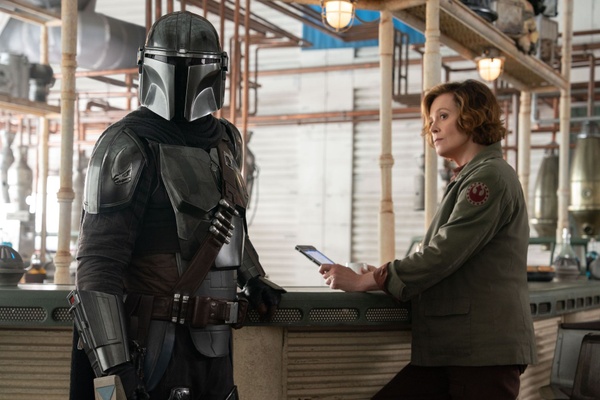
The arrival of Sigourney Weaver into the Star Wars universe undoubtedly represents one of Lucasfilm's most significant coups for this new cinematic chapter. In the role of Colonel Ward, the character is positioned as a fundamental figure linked to the New Republic, a strong, authoritative, and intelligent woman who perfectly understands how, in a galaxy still fragile and full of new threats, it is now essential to collaborate even with warriors and figures outside the classic institutional schemes, such as the Mandalorians.
Weaver's stage presence immediately raises the film's level, giving the character great charisma and narrative weight from her very first appearance.
Furthermore, the cast also features Jeremy Allen White, chosen to play Rotta the Hutt, a character destined to play an important role in the new story. The return of the Hutt family to the Star Wars narrative universe adds further charm and curiosity to the film, especially considering the historical weight this criminal organization has always had in the saga.
La regia di Jon Favreau: spettacolo ed emozione senza mai perdere l'anima
Behind The Mandalorian & Grogu, the hand of Jon Favreau is constantly felt, having become a fundamental figure not only for the success of The Mandalorian but for the entire modern rebirth of Star Wars. Favreau doesn't simply direct a spectacular blockbuster but above all deeply understands what has always made this saga special in the eyes of the public.
His direction constantly focuses on adventure, the sense of discovery, and the pure emotion of the galactic journey, bringing back to the screen that "cinematic event" feeling that many fans had been looking for for years. Every scene seems built with the aim of letting the Star Wars universe breathe, alternating gigantic and spectacular moments with much more intimate and personal ones, without ever creating narrative imbalances.
Favreau also demonstrates an extraordinary ability to manage the film's pace. The action scenes are imposing, continuous, and visually incredible, but they never become pure chaos. Every fight, every chase, and every battle possesses a clear cinematic identity, always being legible, engaging, and perfectly integrated into the narrative.
But it is above all in the relationship between Din Djarin and Grogu that the director's full sensitivity emerges. Favreau once again manages to transform small gestures, glances, and silences into emotionally powerful moments, keeping alive that human heart that made the original series unique. And precisely thanks to this attention to the characters, even the most spectacular sequences never lose emotional weight.
It is clearly perceived how the director wanted to use the transition to cinema to greatly expand the narrative and technical scale of the project, without betraying the identity built in the TV series. The result is a film that finally appears grand, epic, and cinematic in every aspect, but which still manages to preserve that pure soul that had captivated millions of viewers.
With The Mandalorian & Grogu, Jon Favreau definitively confirms himself as one of the most important authors in the current Star Wars universe, capable of respecting the past, understanding the present, and above all building the future of the saga with enormous passion and creative intelligence.
Effetti speciali e azione: il blockbuster visivo che i fan meritavano
From a technical point of view, The Mandalorian & Grogu is simply impressive. The direction continuously manages to balance spectacle and readability, avoiding the visual chaos that often penalizes many modern blockbusters.
The action sequences are numerous and intelligently distributed throughout the film. Space chases, hand-to-hand combat, large-scale battles, and moments of pure tension are staged with truly high visual quality. Every fight has weight, rhythm, and a strong visual identity.
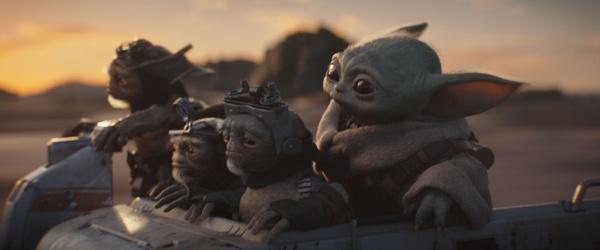
The work on special effects also deserves enormous praise: creatures, planets, starships, and environments continuously manage to convey that sense of wonder typical of the saga, but with all the modern technology available.
And then there's Grogu.
Every single time he enters the scene, the film completely shifts gears. He simultaneously manages to entertain, move, lighten the tension, and literally steal the viewer's attention. But the most interesting thing is that the character finally continues to grow both narratively and personally, where the relationship with Din Djarin becomes much deeper and more unique. Grogu is no longer just the adorable mascot of the series but an increasingly decisive and important presence within the Star Wars universe.
Colonna sonora: nuovi temi che affiancano le sonorità iconiche della serie
Musically, the film does an extraordinary job. The iconic sounds introduced in the series are maintained and enhanced, but this time the soundtrack dares much more, introducing surprisingly effective new musical themes.
The music manages to transition from epic and solemn moments to more melancholic or adventurous passages with extreme naturalness. Some new compositions accompany certain scenes so perfectly that they remain immediately imprinted even after viewing.
It's a soundtrack that doesn't just live on nostalgia but truly seeks to give a new sonic identity to this specific chapter of the saga.
Score
Editorial team
The Mandalorian & Grogu – Review: Favreau Brings Star Wars Magic Back to the Big Screen
The Mandalorian & Grogu is exactly the kind of film many fans have been hoping to see for years: spectacular, emotional, entertaining, and capable of respecting the past without being imprisoned by it.
The film manages to expand the narrative universe of the series while keeping intact the emotional core that had made millions of viewers fall in love. The action is continuous, the technical department is excellent, and Grogu is once again confirmed as one of the most iconic and irresistible characters created by Star Wars in recent decades.
But above all, this film manages to rekindle that magic of galactic adventure that seemed to have been lost in recent years. And that is probably its greatest success.
Well done, Favreau, this is the way!
Similar articles