Solasta 2: D&D Rules Purity Meets Unreal Engine 5 Power - Early Access Review
We tested Tactical Adventures' new chapter: a return to origins that looks to the future of the genre


There's a precise moment in the history of CRPGs when the purity of mathematical calculation met cinematic narration, and that moment was 1998 with the advent of the Infinity Engine. In that magical year, the video game medium sought to give form to the dreams of tabletop gaming through milestones like Baldur's Gate or Fallout, creating an aesthetic that became canon for entire generations of dreamers. Today, in 2026, Tactical Adventures attempts the inverse operation: to bring the genre back to its "mechanical essence" and transparency after the long shadow of Baldur's Gate 3 distorted the public's perception towards the total blockbuster.
We must be honest: Larian has set a quality and production standard that is difficult to match in its reference genre, a paradigm that has made every other project a "poor" relative in the eyes of newcomers. If the Belgian studio focused on the allure of visual detail and extreme environmental interaction, Solasta II stands as a manifesto of resistance for those who prefer an impeccable SRD Adaptation to the pure aesthetics of cinematic staging.
When we talk about SRD (System Reference Document), we mean the beating heart of Dungeons & Dragons' open-source rules: Tactical Adventures uses it as an untouchable skeleton, ensuring that every digital dice roll replicates the unpredictability of the tabletop game. The qualitative leap compared to the first chapter is clear, a courageous evolution that elevates the franchise to a mature and conscious creature. So how can the architecture of Solasta II transform the cold mathematics of the manual into an epic of survival capable of challenging the dominant aesthetic?
Neokos and Shadwyn's Legacy: A Familiar Epic in a Mana-less World
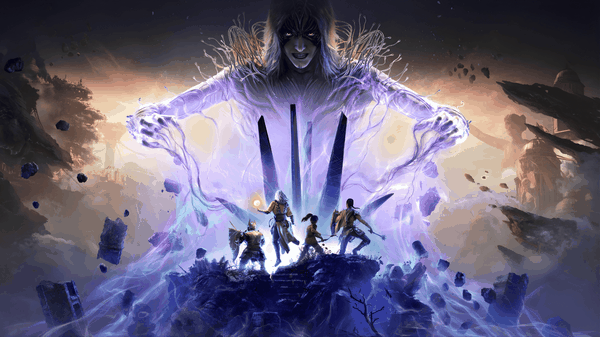
Tactical Adventures' technical soul merges with the world of Neokos, which is not the usual lush fantasy land but a continent wounded by a magical cataclysm that has transformed into a terminal ecosystem. In this dying land, magic is no longer an ethereal gift but a mineral resource extracted and contested with the ferocity we would reserve for crude oil in a cyberpunk dystopia. The world's energy lines are drained, and the survival of nations depends on controlling rare mana deposits, turning every spell into a political as well as tactical choice. The narrative ignites right here, with the return of the four protagonists, adopted siblings called back from forced exile for their parent's funeral: a narrative pretext that serves to unveil a network of forgotten pacts and silent deities.
In this scenario, the shadow of Shadwyn looms, an entity that is not the classic operetta villain, but rather the catalyst of an ancestral conflict aimed at resetting the metaphysical laws of Neokos. The most fitting parallel that comes to mind is with Jack Kirby's Eternals: just like the celestial beings created by Kirby, the four siblings are strangers in a homeland that doesn't recognize them, endowed with a power that borders on the divine but paralyzed by centuries of resentment. During the incursions tested in every corner of this world, we discovered an unsuspected depth in the side missions, often hidden behind environmental events such as the discovery of ruins accessible only during nighttime low tide: fragments of narration that reward curious exploration over forced marching towards the primary objective.
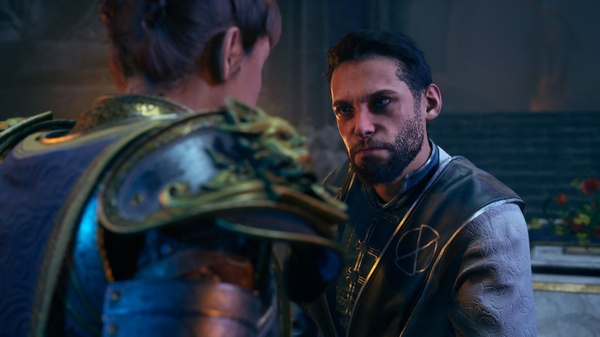
The promised endgame is not a simple punitive boss-fight, but the resolution of unsustainable moral fractures that are closely linked to the methodology of approaching dungeons, where level design becomes a tangible adversary. Progressing means developing a technical mastery that transforms the player into a "surgeon" of the battlefield: each room must be read as a structural blueprint.
An unstable ceiling is not decoration, but an opportunity to bury an overly resistant enemy, just as a light source becomes a logistical resource for managing attack roll bonuses. This progression guarantees replayability that goes beyond numbers, as knowledge of the system counts more than the level on the character sheet.
Gameplay and Classes: The Art of Tactical Warfare According to D&D 2024 Rules
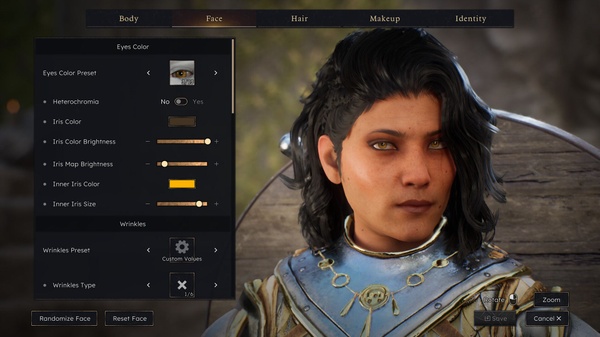
The structure of a world cannot stand without solid mechanics, and the gameplay loop manifests as a constant feedback of precision, starting with rigorous character creation. As we built our party, we evaluated the impact of the new 2024 ruleset's weapon masteries: properties like Topple or Push allow the warrior to become a true field controller. In this early access phase, our experience transformed into a true tactical experimentation that embraces both hero development and how they interact with Neokos' complex world map.
We tested the Mana Painter Sorcerer, a subclass that shines for narrative coherence thanks to its ability to drain magic from the environment to empower spells. Its main strength is its very high offensive potential, which conveys a feeling of omnipotence, but its structural flaw is its extreme physical fragility, which punishes every positioning error. At the opposite pole, the Star Child offers electrifying gameplay for those who love risk management: the advantage is access to unique celestial powers, while the criticality lies in an instability of resources that can leave the party exposed at the most inopportune moments. For the front line, the Aether Warden Fighter redefines geometric mobility with its post-attack teleport, proving extremely satisfying to play despite the steep learning curve. Conversely, the Commander Fighter proved to be the pillar of coordination: an absolute asset for group support, albeit with the limitation of a reduced offensive protagonism.
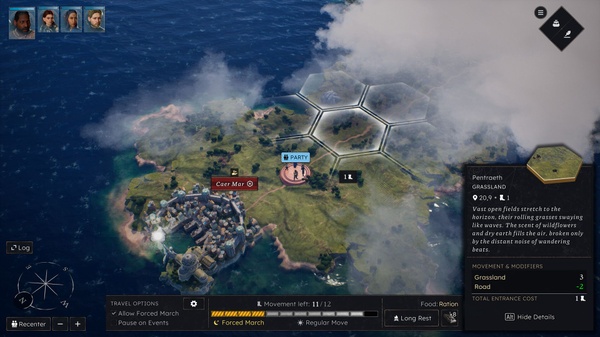
This mechanical experimentation extends to the Interactive World Map, which in Solasta II is not a simple connector but a true logistics simulator. The great strength of the system is its ability to generate authentic tension: moving the party's pawn costs rations, time, and rest management, returning that sense of friction typical of great tabletop adventures. The system shows an evident flaw in its excessive passivity: for long stretches, one merely observes a line being drawn on the screen, interrupted by repetitive text messages. There is still a lack of true emergent interactivity that makes the journey as engaging as combat, sometimes transforming the exploration phase into bureaucratic micro-management. The pleasure of playing this component lies entirely in the secret points of interest: finding a hidden den or a forgotten ruin justifies the moments of boredom and makes the journey a necessary survival experiment, albeit one that could be improved in its dynamism.
Unreal Engine 5 and Roadmap: The Future of Solasta II Between Bugs and Ambitions
This mechanical splendor must, however, contend with hardware reality, where Unreal Engine 5 delivers superb environmental scenarios with lighting that is functional to strategy, dynamically projecting shadows that define the concealment area for rogues. Unfortunately, we encountered noticeable frame rate drops during the destruction of complex elements, a sign that environmental physics still needs optimization. Tactical Adventures is following Larian's gestation method, publishing an Early Access limited to Chapter 1 and Level 4 to calibrate the ruleset's mathematics on the critical mass of users.
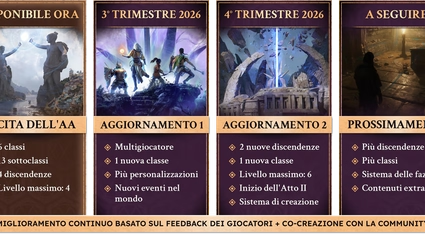
The official Roadmap indicates Four-player Co-op Multiplayer as the next major milestone by the end of 2026, a vital feature that was only added at the last minute in the first chapter. The feeling is that of an open construction site: the ambition to implement multiplayer in such a demanding engine as UE5 is a calculated risk that could elevate the title to a new genre standard. The unknown of the Dungeon Maker remains: postponing the editor until after the 1.0 launch is a risk for a community that thrives on creation. Long-term success will depend on the speed with which technical opacities are resolved and the team's ability to correct the expressiveness of the models, currently the production's true Achilles' heel. The general impression is of a product that, despite the uncertainties of early access, possesses an ironclad authorial vision that accepts no compromises on substance.
Solasta 2: D&D Rules Purity Meets Unreal Engine 5 Power - Early Access Review
Solasta II today is a gigantic open construction site overflowing with incredible promises. It's not yet the finished product, and it shows, but for those who live and breathe turn-based strategy, it's already an amazing experience worth every penny of the ticket. The official roadmap is clear: Multiplayer will only arrive towards the end of 2026, and the absence of the Dungeon Maker at launch is a tough pill to swallow for those of us who love creating our own stories. But, guys, the potential to become the new tactical benchmark in the industry is there and it's huge. We just hope that Tactical Adventures manages to refine those somewhat rigid models and optimize Unreal Engine 5 before the fateful 1.0 launch. What we expect from the future is a finally active crafting system and chapters that maintain the density of this first act.
Similar articles