Fallout 76 Blackwoods: The Bigfoot Hunt and Bethesda's New Era - Special
From the ashes of 2018 to the depths of 2026: how Bethesda tries to make Appalachia a better world


To understand the current trajectory of Fallout 76, it is essential to retrace its troubled path. When it debuted in 2018, the title presented itself as an empty shell, a desolate wasteland not only due to the nuclear holocaust, but to a chronic absence of interaction. The radical decision not to include human NPCs transformed Appalachia into a spectral stage, where narration was entrusted exclusively to dusty terminals and holotapes of deceased survivors. It was an experiment that sought to force an extreme environmental narrative, but the result was an oppressive sense of loneliness that deprived players of a real purpose or a sense of belonging to the world, leading to one of the coldest receptions in Bethesda's history.
The rebirth officially began with the Wastelanders expansion, which not only populated the woods, but reintegrated the original role-playing DNA through opposing factions and a branching dialogue system. In subsequent years, we have witnessed constant but predominantly horizontal growth: new slices of territory like Skyline Valley and the Ohio areas in Burning Springs have expanded the physical boundaries, risking, however, to exacerbate the problem of a facade architecture: grand in its layout, but lacking real specific weight. Many contents have remained episodic, without a lasting impact. With update number 66, significantly titled The Blackwoods, Bethesda finally decides to stop looking at the periphery and focus on the beating heart of the system. The declared goal for 2026 is to make Appalachia a "denser" place, where every existing activity is enriched with new levels of challenge, finally responding to the historical criticism of excessive superficiality in modern open worlds.
"Uninvited Guests" arrive: beware of surprises!
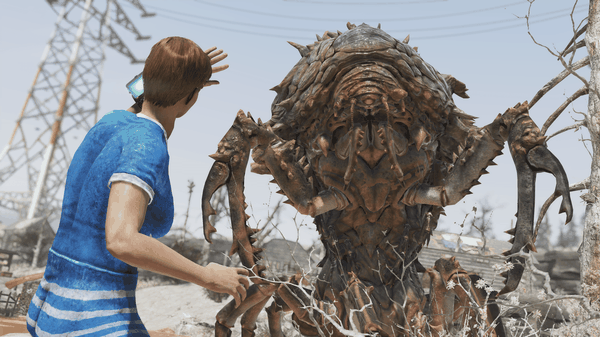
The most interesting novelty, and perhaps the most disruptive from a tactical point of view, is the Uninvited Guests (or Party Crasher) mechanic. Most of the details on this system emerged during a closed-door live demonstration session organized by Bethesda, where lead developers Bill LaCoste and Jon Rush illustrated how the game is shifting towards dynamic risk management. Until now, game veterans had transformed Public Events into a mechanical and risk-free routine: ultra-efficient "Bloodied" builds, strategic rooftop perches, and millimeter-precise knowledge of spawn points made every encounter predictable, depriving it of that original post-apocalyptic sense of danger. Risk had become a mathematical calculation devoid of pathos, a mere ammunition disposal operation to obtain caps.
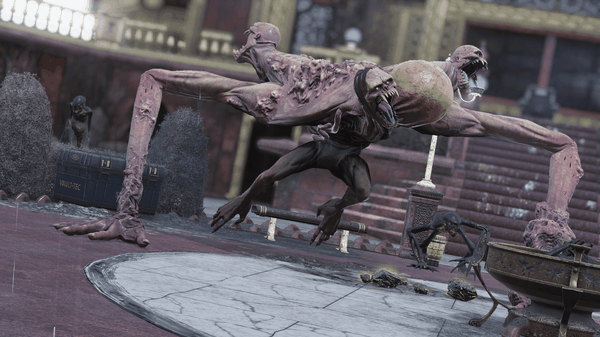
Now, the system introduces an element of calculated chaos: with a 33% probability, the conclusion of an event no longer coincides with victory, but with the beginning of a "surprise survival" phase due to the appearance of an unexpected legendary enemy. During the closed-door event, it was clarified that these bosses will be context-bound: for example, after the Guided Meditation event, players might find themselves face to face with a Colossal Wendigo, while Bigfoot will have a much broader activation list. Imagine the scene: the main boss is down, players begin to put away their weapons, and suddenly the ground shakes under the furious charge of a Deathclaw Matriarch that pounces on the already weary group. This addition serves to disrupt "static gameplay", forcing users to remain vigilant and manage resources sparingly even after the final whistle. Bethesda promises sophisticated dynamic balancing: the system analyzes the party's offensive potential in real time to prevent level 1000 "demons" from pulverizing the guest in a few seconds, while ensuring a brutal but fair challenge even for newcomers, transforming each session into a unique and much less "scripted" experience.
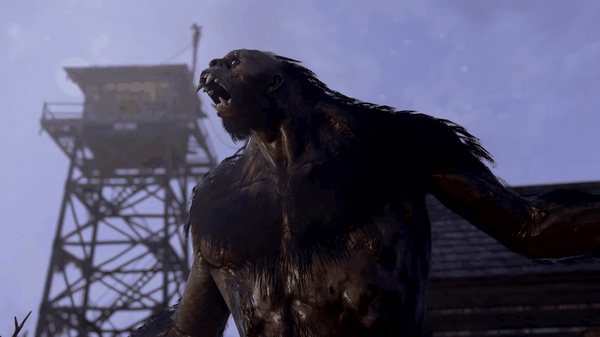
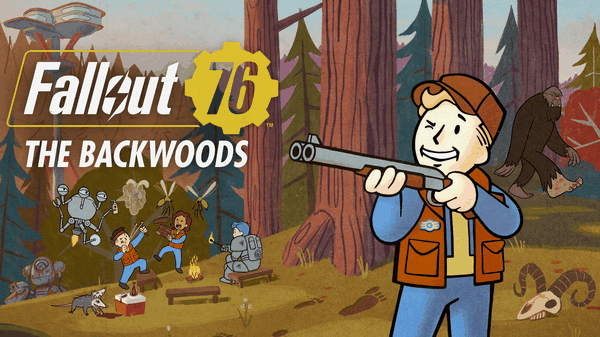
The absolute protagonist of The Blackwoods is the legendary Bigfoot. This is not just a new polygonal model inspired by North American folklore, but the first enemy officially classified as a 4-star legendary. Bigfoot has been designed to be an environmental test of strength: it towers over players like a redwood and doesn't just strike with its enormous club, but uses constant offensive pressure by throwing giant ticks at parties. This mechanic is fundamental because it prevents players from remaining static in an elevated position, forcing them into continuous movement and frantic management of small enemies while trying to take down the colossus.
The true systemic implication, however, lies in the loot. Defeating a Bigfoot grants access to the highly anticipated 4-star legendary modifications, an addition that raises the bar for "min-maxing" to unprecedented levels. For years, players have optimized their equipment based on three parameters; the introduction of the fourth star completely reopens the hunt for the "god roll", encouraging veterans to explore the forests of Appalachia again. This move is not just a gift to collectors, but an intelligent way to give new purpose to hundreds of hours of farming, linking character progression to encounters that now require real cooperation between specialists.
The architectural revolution of CAMPs: many changes on the horizon
There is no Fallout without construction, and Appalachia has become the definitive construction site over the years. Bill LaCoste confirmed that the CAMP system is undergoing a radical transformation to finally remove the frustrating creative "stakes" of the past. Placement rules have been heavily relaxed, introducing much more permissive object collisions: this means being able to overlap decorations and architectural elements to create dense and realistic environments, without encountering the constant error messages of the original system. The ability to build structures that seem to defy gravity now paves the way for bases suspended over dizzying abysses or shelters precariously anchored to rock walls, radically transforming the map's skyline.
The underlying goal is to allow players to interact with the world more viscerally, choosing panoramas and peaks previously considered "out of reach" or technically unusable. This new freedom has not only aesthetic but also social value: with the introduction of CAMP Titles, one's home becomes a true digital business card. These titles are signs of prestige and technical competence to be proudly displayed, encouraging a kind of "architectural tourism" that rewards ingenuity and the ability to integrate one's visions into the most inaccessible places. It's no longer just about where you place your stash box, but how you manage to dominate the surrounding environment through post-nuclear engineering.
Another fundamental piece of news, often overlooked compared to giant monsters, is the arrival of native versions for Xbox Series X|S and PS5 during 2026. After years spent playing in backward compatibility mode, this transition promises to break down the main technical friction points. Bethesda aims for rock-solid frame rates and a resolution that finally enhances the new environmental assets, but the real revolution concerns instant loading times, essential for a game that relies on fast travel and entering interiors (like Vaults or dungeons) as its daily bread.
In parallel, The Blackwoods update introduces a deep revision of the Pip-Boy interface, making it leaner, more complete, and incredibly more responsive in navigation. Armor management has also been revised: pieces now weigh less when worn and take up less space in the stash box, a quality of life (QoL) change that players had been clamoring for for years. These technical interventions are the necessary foundation to support the new "density" of the world: without a fluid engine and a snappy interface, every content addition would risk turning into a nightmare of slowdowns and bugs.

Fallout 76 Blackwoods: The Bigfoot Hunt and Bethesda's New Era - Special
The Blackwoods update would represent the definitive proof that Bethesda has finally understood that quantity cannot beat quality. Focusing on content density and the structural unpredictability of encounters could be the only viable path to keep an ecosystem with eight years of history alive. The transition to native code on consoles and the introduction of Bigfoot would act as signals of a maturity finally reached: Fallout 76 would therefore be completing that process of refining what, deep down, it should always have been.
Similar articles