Digital Dragons 2026 - Dread Days, welcome to the Soviet-punk nightmare of Gorod-01
Dread Days, a dystopian journey to Gorod-01 amidst mutant spiders and totalitarian regimes: Daniel from Titanite Games reveals the secrets and ambitions of his new sci-fi "Soviet-punk" game.
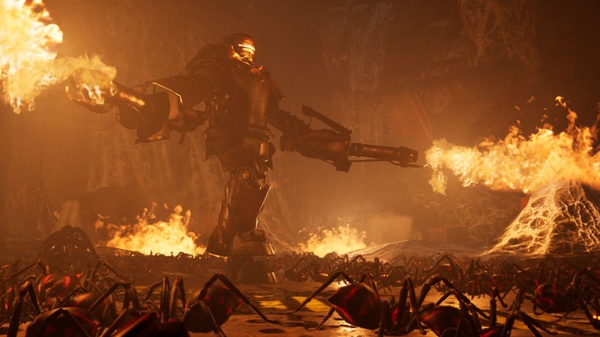


There are stories in the world of video games that move silently, far from the blinding spotlights of global mega-events, but which carry a charge of passion and creative vision that is nothing short of disruptive. During our last reconnaissance mission, hunting for talent and unusual projects at Digital Dragons, we stumbled upon Titanite Games, a Polish studio based in Krakow that is shaping a damn interesting creature: Dread Days.
At the helm of the project is Daniel, a true veteran of the Polish video game industry. Someone who has chewed dirt and pixels since 2012, moving from casual adventures to co-founding One More Level (yes, the studio behind the award-winning Ghostrunner). We sat down for a chat with him to understand what lies behind this new, ambitious sci-fi gamble. And, trust us, the answers were anything but trivial.
From casual origins to Ghostrunner: the road to Titanite
D: Hello Daniel. Let's start from the beginning. Titanite Games is just the latest chapter in a career that has seen you in the industry for quite some time. Before we dive into the present, tell us a bit about where you come from and what your journey has been.
Daniel: Hello Domenico. Yes, this is my current step. I am a passionate game designer and producer, I have been producing games since 2012. I started by founding my own small studio here in Krakow, working on a very specific genre: casual adventures based on hidden objects and puzzles. It's a huge niche, mostly made up of a female audience who love investigative stories with a touch of mystery. Very linear games, designed for relaxation. Then, in 2014, we founded One More Level. There we made a fundamental agreement with Techland, and from that partnership, God's Trigger was born. Once that experience concluded, I created Titanite Games, and that's where I am today.
D: And today on the table is Dread Days. Given your history, I can't help but ask: you were one of the minds behind Ghostrunner...
Daniel: Well, not exactly "behind". I was on the team. The true mind behind Ghostrunner is Radosław Ratusznik. I respect him immensely, he's a friend, and I think Radek has an incredibly focused mind. He knows exactly how to calibrate a challenge and, at the same time, how to reward the player for their efforts. I'll just tell you that I platinumed Ghostrunner on my PlayStation account, so I know what I'm talking about! But yes, Radek is one of the long-time friends with whom I co-founded the company.
Gorod-01: a dark "Soviet-punk" dystopia
D: How much of your past experience has flowed into Dread Days? But above all, explain to us: what kind of game will we find ourselves facing?
Daniel: Dread Days is the game I've always wanted to make, the project of my life. We started prototyping it between 2020 and 2021, and we had to change course several times because we were looking for something truly unique. At the time, I was inspired by A Plague Tale, the game with the rat infestation. I asked myself: "What if those creatures could also walk on walls?"
D: The inspiration from A Plague Tale is something that is immediately noticeable. The game exudes exactly that kind of claustrophobic and tense vibe.
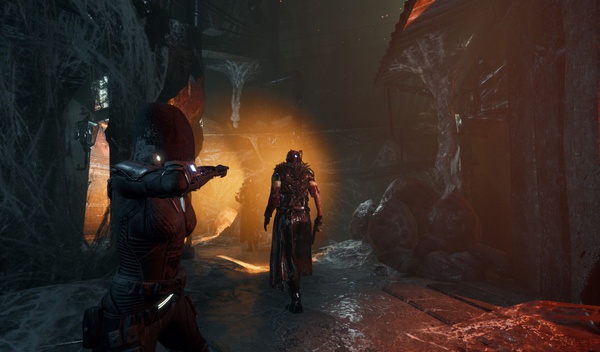
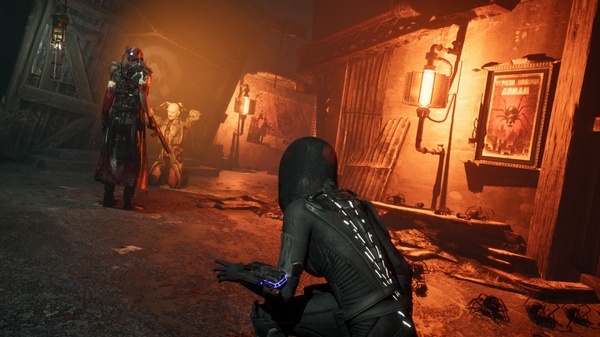
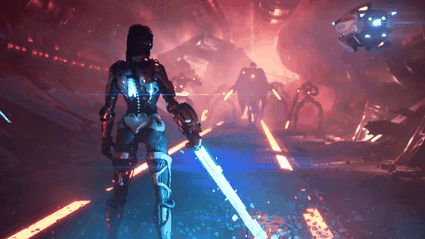
Daniel: Exactly! We started with that idea and evolved it. My wife is Ukrainian, so my heart beats a bit to the East; I strongly wanted the game to reflect a very precise aesthetic and genre, a kind of "Soviet-punk". The game is set in Gorod-01 (City 1), a gigantic megalopolis born after governments, in a desperate attempt to stop global warming, literally darkened the skies. This disrupted the ecosystem: some species became extinct, others mutated. Without natural predators, spiders multiplied excessively, becoming a real plague.
Our protagonist, Mira, is a web runner, an engineer who tries to keep the city's infrastructure from falling apart. She will find herself caught between this deadly infestation and the totalitarian regime that controls the city, in an attempt to find the only person who knows how to stop the plague and bring back, at least in part, the sunlight.
Geoengineering and social critique: the cure worse than the disease
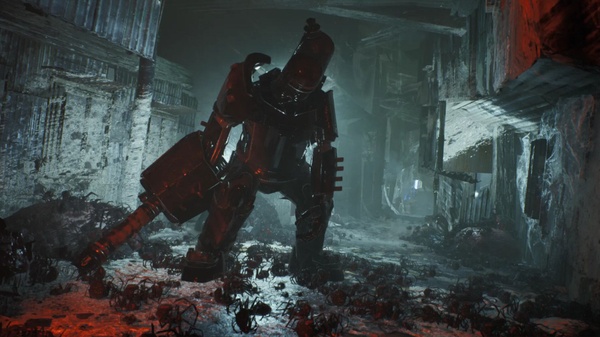
D: You touch on an interesting point. This global darkening reminds me so much of the Simpsons episode where Mr. Burns covers the sun with a giant parabolic dish. There it was funny, here things are definitely worse. But is this narrative choice just a pretext for the lore, or is there a streak of social critique towards our present underneath?
Daniel: Look, the idea of spreading sulfur into the upper atmosphere to mitigate solar heat by shielding its rays is a real geoengineering technology, and I know that scientific tests have already been carried out in some parts of the world. To be completely honest, I am quite skeptical when it comes to global warming in the way it is propagated. With this game, I wanted to express a feeling of mine: the impression that governments are definitely exaggerating, pushing things beyond the limit. Our story shows exactly what risks happening when you decide to go too far. Literally.
D: As in: when you exaggerate to remedy a problem, the remedy risks being infinitely worse than the evil itself.
Daniel: Exactly. Things can go downhill and go very wrong in a second.
Surviving in the Polish market: investments and metrics
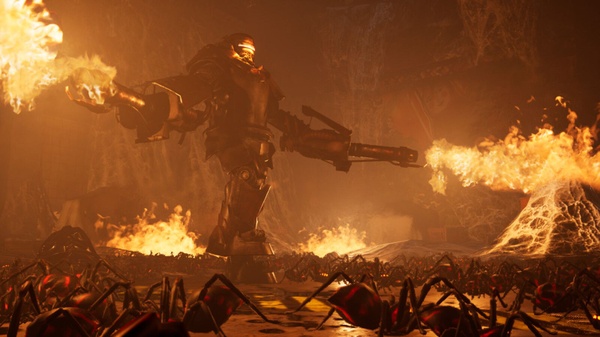
D: You know the Polish market like the back of your hand. It's an immense but also frighteningly saturated landscape. Dread Days, looking at it, doesn't seem like the classic indie product made out of passion: it has significant narrative ambition, solid gameplay, and a visual department that catches the eye. How difficult is it today to start a project of this magnitude in Poland? What are the biggest pitfalls for a medium-sized studio?
Daniel: To answer you, I have to take a small step back. We were lucky because in 2020 we closed an excellent round of investments that guaranteed us the necessary resources to start the project with extreme seriousness. The problem is that the industry changed radically between mid and late 2022. Today, and this is my very personal opinion, it has become very difficult to obtain funding for projects of this magnitude because the level of risk perceived by investors is very high. They want ready-made communities, they want metrics, they want mathematical certainty that their investment is secure. That's why we are now locked into development, but soon we will shift the focus to communication to make the game known. By the way, you at Gamesurf are absolutely the first journalistic outlet with whom we are talking about Dread Days, and that makes me really proud.
D: We're good at scouting! But tell me, if a young indie developer came to you today asking for advice, what would you tell them?
Daniel: I would tell them to forget about graphics and focus solely and exclusively on gameplay. You have to find pure fun, test it immediately, and see if it works. I always think of a game like Overcooked: on paper, it's a game where you have to cook dishes, it doesn't sound like the most fun thing in the world, right? Yet, when you pick it up, the gameplay loop is so tight, the split-screen is so frantic, and the split-second decisions you have to make cooperating with friends create a formula that is pure gold. If you have that core of fun, you have a solid foundation. Then you can build everything else around it, graphics included.
The strength of an agile team and the Dread Days roadmap
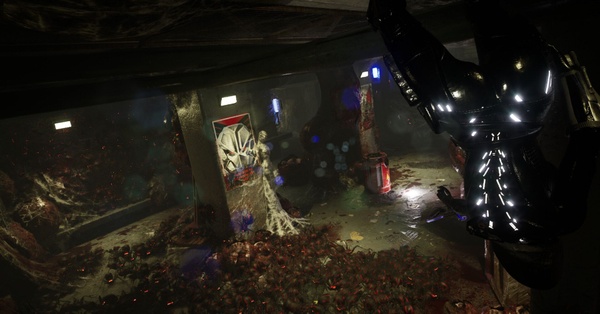
D: In terms of staff, how many people do you have at Titanite Games to support such a structure?
Daniel: Our core team is made up of about 15 people. We are a medium-sized studio, which allows us to remain agile: we talk every day, if we need to change course we do it in an instant, and everyone feels like an active part of the creative process. Obviously, to achieve the quality level you see in Dread Days, we collaborate a lot with freelancers and external outsourcing studios for specific departments such as sound design, soundtrack, voice acting, or 3D asset refinement. Managing a studio of 50 or more people is a completely different job, which often stifles creativity. This way we manage to maintain excellence while remaining sustainable.
D: Million-dollar question: when can we get our hands on it? Is there already a launch window or a roadmap?
Daniel: The short-term goal is to release a playable demo or start a public playtest phase by the end of this year, roughly towards the end of the third or fourth quarter, precisely to get immediate community feedback. Much will depend on how the final months of development proceed and if we find the ideal publisher to support us on the marketing and global distribution front. We have no intention of rushing things: we have spent years bringing this world and these mechanics to life, and we want it to be as polished as we imagined it when it comes out.
D: Daniel, it's been a real pleasure. Dread Days officially enters our radar, and we will continue to follow you very closely. Good luck!
Daniel: Thank you very much for the space, Domenico, and thanks to all Gamesurf readers for their interest. Greetings to all!
Similar articles
Digital Dragons 2026 - Riley Russell, from PlayStation VP to Head of Kojima Productions
Digital Dragons 2026 - ES Digital and the search for talent around the world
Digital Dragons 2026 - CD Projekt Red Explains the Importance of Game Documentation