Philips Evnia 27M2N3800A 4K – Dual-Soul Monitor Review
Refresh rate up to 320 Hz, ready-to-use gaming presets, and extensive physical adjustments
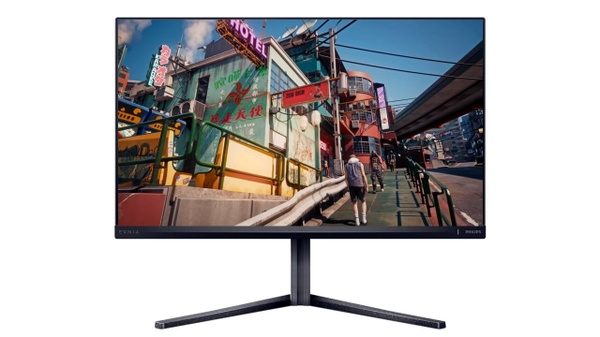


The Philips Evnia 27M2N3800A is a monitor that aims to change the perception of an entire category, redefining what can be expected from an accessible gaming display in 2026.
The promise is simple and ambitious: a 4K 16:9 27” inch 160 Hz panel, alongside an alternative Full HD 320 Hz mode. A combination that until recently would have required a much higher investment, but today comes at a rather contained price. The surprise is that, at least in this case, the concept of a “dual-mode” monitor doesn't seem like a forced compromise.
Assembly and Terminals
Included in the box are the power cable, HDMI, and DP. The inverted “V” base slots into the stand, which in turn is anchored to the square-shaped plate that attaches with disarming simplicity to the back of the unit. This operation takes only a few minutes to be ready for use. The monitor's structure is almost entirely made of robust plastic.
A large white LED on the bottom right (with 4 intensity levels) indicates operation. With the monitor in front, you can easily access the setup control button on the right side, but it's definitely more convenient to install the “Precision Center” app to access all the services offered via software.
PHILIPS Evnia 3000 27M2N3800A/00 GAMING MONITOR
Design and Ergonomics: Simple but Complete
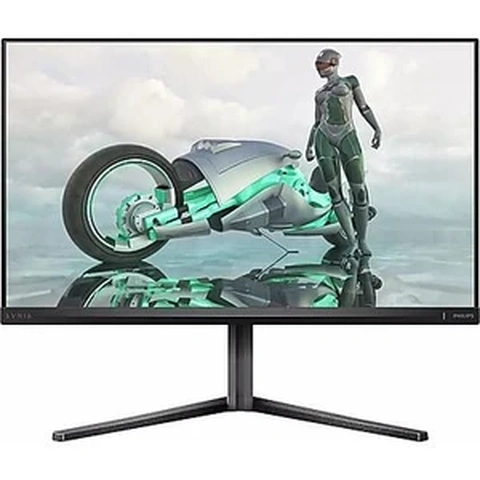
The build quality is clearly oriented towards cost-saving, yet the ergonomics are surprisingly complete with height adjustment (0-130 mm), pivot ±90°, ample tilt and swivel. This makes it suitable for multi-purpose setups.
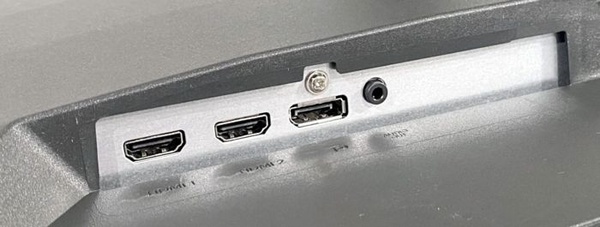
For connectivity, Philips also cut the superfluous to keep the price low: 2x HDMI 2.1, 1x DisplayPort 1.4, audio jack. USB, USB-C, and KVM are absent. This is a clear limitation for those looking for a complete hub, but consistent with the gaming target. The integrated speakers are present and useful for quick monitoring, but not suitable for continuous use due to their obvious dynamic limitations.
Dual-mode: From Hybrid Solution to Concrete Advantage
Historically, dual-mode monitors have always left some doubts. The idea of having dual resolution and dual refresh rate on the same panel is fascinating, but often in practice, it translates into an inferior experience compared to separate monitors.
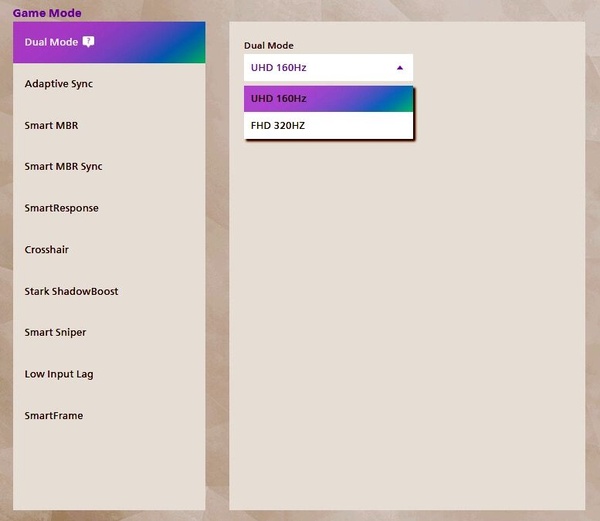
The Philips Evnia 27M2N3800A changes this perspective. It doesn't completely eliminate compromises, but it makes them much less relevant thanks to an extremely competitive price. The ability to quickly switch from UHD 160 Hz to 1080p 320 Hz allows the monitor to adapt to completely different scenarios, namely: cinematic and single-player experiences in 4K, competitive gaming with very high fluidity. It's a flexible approach that really works, especially since it doesn't require choosing upfront what kind of player you want to be.
Visual Quality: 4K at 27” Remains a Certainty
The 27” inch IPS panel with a native resolution of 3840 x 2160 pixels, 10-bit (8 + FRC type), offers a density of 163 PPI, one of the ideal points for those seeking the maximum balance between size and definition. The result is no less noticeable: very sharp text, clean interfaces, extremely fine details in games.
The panel's traditional RGB structure contributes to a superior rendition compared to some alternative solutions, especially in readability. This makes the monitor particularly suitable not only for gaming but also for work, writing, and browsing.
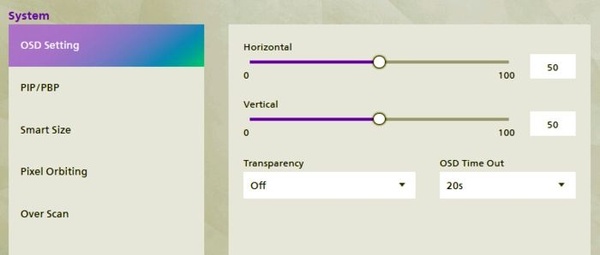
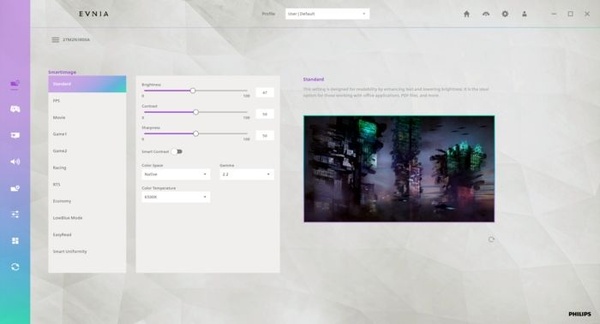
The matte display treatment appears calibrated: it reduces reflections without introducing that grainy film that often penalizes budget panels. This is a smart choice that improves daily usability without sacrificing perceived quality. Available presets: Standard, FPS, Movie, Game 1, Game 2, Racing, FTS, Economy, Blue Mode, Easy Read, Smart Uniformity. Note that enabling Adaptive Sync no longer allows adjusting the brightness level.
Brightness and Rendition: An IPS That Stands Out
Among the most successful aspects of the monitor is its brightness. In real tests, it exceeds 380 nits in SDR, a value higher than expected for this range. This translates into vivid, contrasted (within the IPS technology's capabilities) images, perfectly legible even in bright environments.
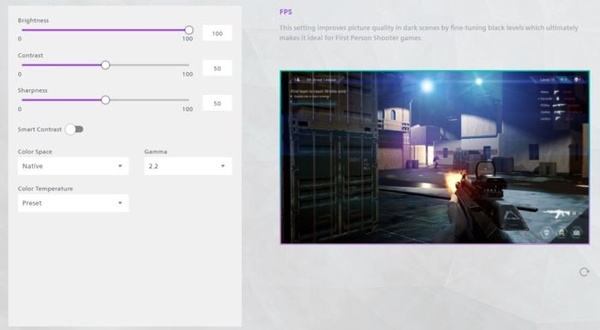
In games with daytime settings or open scenarios, the monitor offers a remarkable visual impact. It's one of those cases where LCD can still compete with more advanced technologies, precisely because of its ability to maintain high brightness across the entire surface. As with technologies outside the OLED realm, the depth of blacks is directly proportional to ambient lighting: when immersed in darkness, the panel's light limits the sense of three-dimensionality.
HDR: Limited Performance but Smartly Managed
The DisplayHDR 400 certification indicates it's at the basic level of HDR. And the monitor's behavior reflects this exactly. No local dimming, not excellent contrast, limited HDR impact. Nevertheless, Philips doesn't try to force it. The monitor manages HDR consistently, without introducing artifacts or inconsistent results.

Some presets like Movie offer good color accuracy, with contained deltaE values. In practice, it's a monitor that performs better by treating HDR as an accessory function, rather than a central element.
Calibration and Colors: Concrete Room for Improvement
Out of the box, the color rendition is decent. However, with some manual intervention, the panel improves significantly. Through targeted adjustments, very good results can be achieved: 98-99% sRGB color space coverage, around 80% in DCI-P3, and DeltaE that can approach 2.
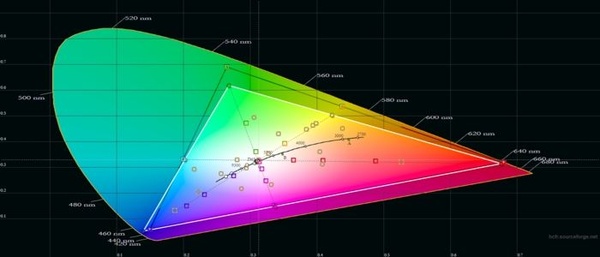
This means that the monitor can also be used for semi-pro activities. However, it should be remembered that performance remains limited if superior color gamut coverage is needed, especially for photo and video editing.
Gaming: Two Souls, One Identity
It's in gaming that the Philips Evnia shows its true nature. In 4K at 160 Hz mode, the monitor offers a high-level visual experience. Modern games appear detailed, rich, and immersive. Titles like Cyberpunk 2077 or The Last of Us benefit enormously from the high resolution.
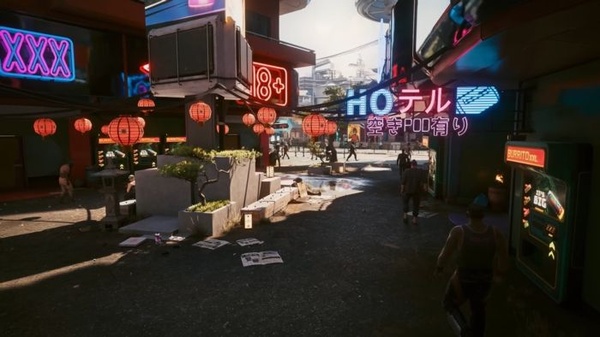
The bottleneck, of course, remains the hardware: not all GPUs support high frame rates at 4K resolution. But even with graphical compromises or technologies like DLSS, the result remains convincing. Switching to 1080p at 320 Hz mode, the monitor completely changes its face. Here the goal is pure speed, with extremely fluid movements, further responsiveness in controls, and a competitive advantage in online games. In tests with titles like Counter-Strike 2 and Battlefield, the difference is evident. Gameplay is more immediate and precise. In this sense, the declared response time of up to 0.5 ms MPRT translates into solid performance. We are not at OLED levels, but ghosting is contained, overshoot is manageable, and input lag is low. Adaptive Sync further improves the experience, eliminating tearing and stuttering.
Contrast, Uniformity, and Viewing Angles
If there's a weak point, it's contrast. Tests showed values even lower than typical IPS standards, with results in some cases dropping below 500:1. This translates into shallow blacks, backlight bleed, and limited detail in dark scenes. In games with nocturnal or very dark settings, the limitation is evident, just as in bright scenes the unit fully recovers, offering a much more convincing visual picture.

The panel offers decent uniformity, with some variations that are rarely visible in daily use. Viewing angles are wide, as expected from an IPS, although optimal quality is maintained within approximately 170° real. Not a monitor designed for absolute precision work, but more than adequate for most uses.
The offering allows the monitor to perform well for different uses, including excellent text readability, brightness, and color accuracy (post-calibration). Not a professional solution, but that's not what this panel is intended for.

Price and Conclusions
With a current price around 280€, this Evnia is significantly cheaper than its direct competitors and has an extra gear: the 320 Hz mode, which has no equivalents in the same range. Of course, the contrast is not top-notch, HDR is limited, and the construction is economical, but it remains a balanced proposition: high-quality 4K at an accessible price, a truly useful competitive mode, solid gaming performance, good versatility between entertainment and productivity. Of course, you need the right hardware to get the most out of it.
Similar articles