Why is Verity more successful than Digger?
Verity managed to beat Digger, a result few predicted, because we always underestimate the reach of thrillers with female protagonists.



It wasn't a good weekend for the international box office, as none of the new big releases proved truly attractive. In this battle of the underdogs - in which, surprisingly, the domestic box office has been driven for over a week by the excellent performance of the documentary Naza - the winner, albeit by a narrow margin, is Michael Showalter's Verity. The credit, it must be said, lies mainly in how Digger underperformed even compared to the most pessimistic forecasts for Alejandro González Iñárritu's film, grossing just 8 million dollars in the United States and just over half a million in Italy. Verity, on the other hand, had a solid start domestically (32 million euros) and still surpassed Warner Bros.'s competitor, taking in more than 600,000 euros in Italy.
Gallery


Verity isn't a good film, but it works
Let's clear up any misunderstandings. Verity is not an excellent film, nor even a good one: it hovers closer to the watchable than the enjoyable, but all in all, it delivers a not-wasted evening in front of the big screen. Among the adaptations seen so far on the big screen from the vast output of prolific best-selling author Colleen Hoover - a romance specialist who hybridizes with thriller - it is probably the best, also thanks to the commitment of its co-star and producer Anne Hathaway, who put a lot of effort into promoting and making the film, cleverly softening some very reactionary components of the original source. Indeed, what is irritating about Verity is precisely how much it wastes the enormous basic potential that the project boasts, starting with the story. Colleen Hoover is not a particularly refined writer in terms of style and rhythm, but she has an undeniable instinct as a storyteller, capable of pulling unexpected twists out of a hat that make the plots intriguing at least in their premises.
These are thrillers that look to the cornerstones of the nineties and the psychosexual genre, where the thrill is fueled by the tension between extramarital erotic fantasy and the certainty of the domesticity of one's marriage, usually tested by the thrill of an adventure. Contrary to what its bombastic name and sometimes very explicit content might suggest, it is a genre that tends to be strongly conservative and reactionary: the man who cheats on his wife will have to deal with an obsessive, crazy lover, effectively being punished for his transgression (see, for example, Fatal Attraction). In its heyday, it was a genre written and directed by men, in which female sexual desire was consistently portrayed as alien. The great insight the publishing world has had in recent years has been to launch female authors who embrace these stories and their reactionary component, but develop them from a female and "dark" perspective: women, wives, and mothers dealing with sinister, manipulative men, young lovers punished for having undermined a marriage precisely by the discovery that the crazy one, this time, is him, who perhaps manage to get back on their feet thanks to an unprecedented alliance with the betrayed wife (see the success of One of the Family).
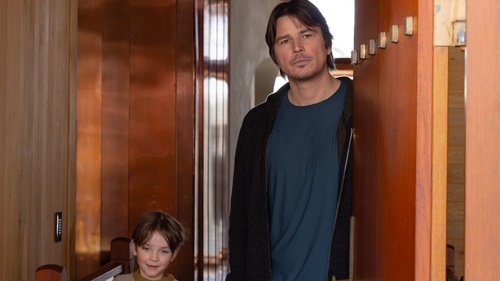
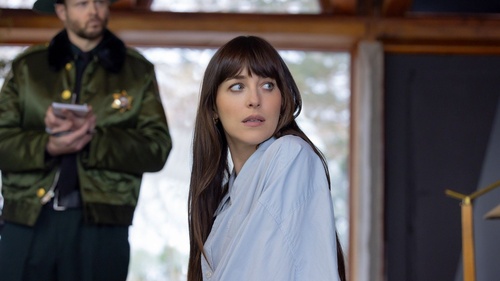
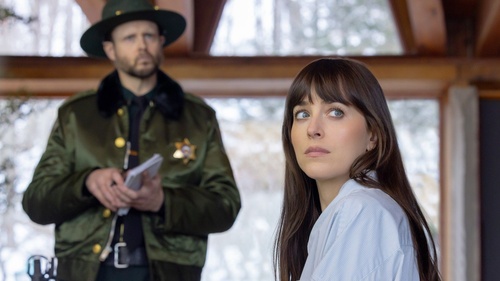
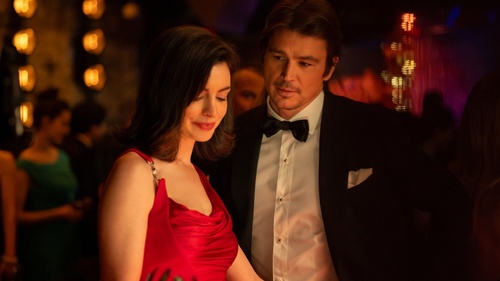
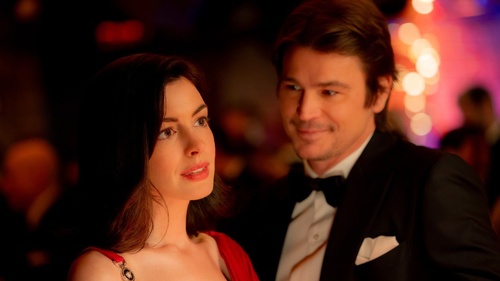
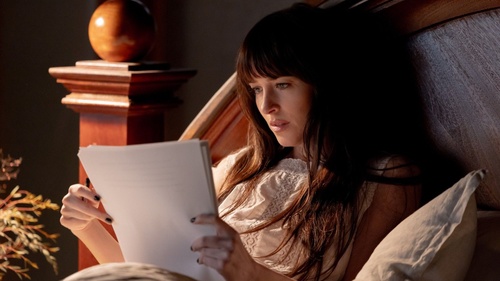
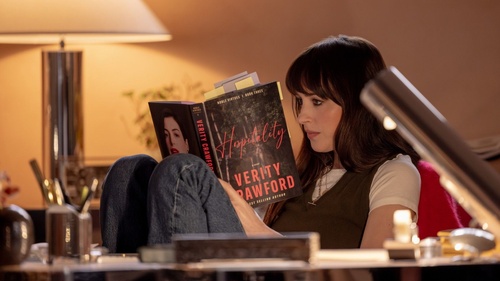
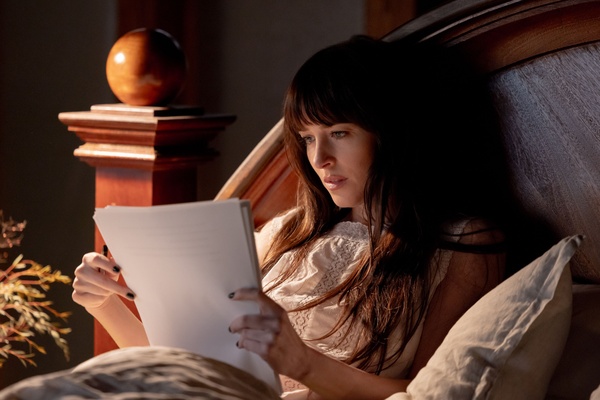
With Verity, Hoover knows she can play with the reader's expectations in managing her love triangle: there's Anne Hathaway, a successful wife, mother, and writer who becomes paralyzed after a car accident, alongside her faithful husband (a revived Josh Hartnett) who hires a single, depressed, grieving, and unsuccessful writer played by Dakota Johnson to live in their lavish Vermont home surrounded by greenery and ghostwrite the missing books in the paralyzed woman's novel series. Having already seen or read other works by the author, the viewer is immediately suspicious of Hartnett's character, while the characteristic flashback at the heart of all Hoover's works tells how he met his wife, who left a mysterious autobiography that the protagonist accidentally discovers on a USB stick in her study.
The fate of films like Verity lies entirely in its plot twists
Dakota Johnson is the right face for this type of film, perhaps even more credible than Sydney Sweeney in the role of the young woman whose life took a sinister turn even before becoming involved in a marriage with many secrets. Anne Hathaway, in the role of the dangerous femme fatale, has a lot of fun and this time is quite believable, unlike other "dark" projects like Mother Mary, in which she failed to shake off her eternal aura of a young Disney woman with big sparkling eyes.
Despite a truly successful start - with a twist that leaves both the audience and the protagonists stunned - the film, however, eventually loses its grip and credibility.
Ultimately, the fates of films like Verity all hinge on their ability to make the plot twists, turns, and revelations about the protagonists work or not. Rarely are these realistic twists, mind you: explain the plots of these kinds of films aloud to a friend, and they will invariably sound like ridiculous nonsense. It all comes down to the ability of those who write them, direct them, and act in them to deliver the result, to keep the viewer engrossed without letting them leave the story due to its implausibility. With his sloppy and truly awkward direction in the crucial hot scenes, Michael Showalter proves to be neither a Paul Verhoeven in Basic Instinct nor a Roman Polanski in The Ghost Writer, but rather a little less than an honest craftsman, far from being able to pull off the scene where Hathaway, overcome by passion, bites the wooden headboard of the bed so hard that she leaves teeth marks.
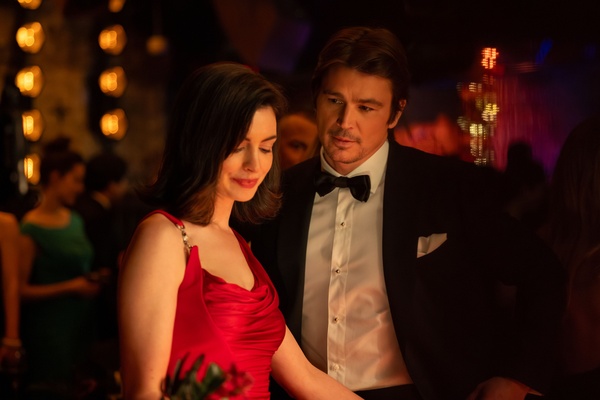
Once again, in short, we find ourselves facing a product that exists more thanks to the goodwill of the actresses and producers who believed in the project - Hathaway follows the example of Blake Lively with It Ends with Us - We Are the Ones to Say Goodbye - than to Hollywood's ability to put together a truly well-crafted operation, to accept the risk and spend big names, elevating the project to more than a placeholder in theaters to then successfully launch on streaming platforms. The technical quality of the film is such that, indeed, it resembles old TV movies or new direct-to-streaming titles.
Yet Verity, like its predecessors, is proving more than capable of repaying its initial investment, at a time that is also very difficult for films aimed at a mature audience and in the mid-range in terms of budget.
At the risk of falling into a stereotype, there's more than a feeling of déjà-vu in pointing out how once again, when a (initially privileged, but certainly not exclusively) female audience is involved, the aim is always to do the bare minimum, condemning films like Verity to be merely passable when, by taking a few more risks and paying a little more attention, they could be surprisingly positive. Who knows how many more films adapted from Hoover's novels, cobbled together in this way but still capable of becoming decent successes, we will have to see to prove this theory.
Score
Editorial team

Why is Verity more successful than Digger?
At the risk of falling into a stereotype, there's more than a feeling of déjà-vu in pointing out how once again, when a (initially privileged, but certainly not exclusively) female audience is involved, the aim is always to do the bare minimum, condemning films like Verity to be merely passable when, by taking a few more risks and paying a little more attention, they could be surprisingly positive. Who knows how many more films adapted from Hoover's novels, cobbled together in this way but still capable of becoming decent successes, we will have to see to prove this theory.
Similar articles