Emmanuelle: the erotic remake is short on passion
Fifty years after the first adaptation, the new version of the novel plays on a sense of anticipation but fails to find the right interpretation. On Prime Video.


There is something paradoxical in the fact that a director capable of creating one of the most claustrophobically urgent films of recent years, Happening (2021), which earned her – perhaps a little generously – the Golden Lion at Venice and which made the female body the involuntary stage of an ideological conflict, chose to tackle such a potentially controversial remake.
Emmanuelle was a great cult film of 1970s erotic cinema, starring an irresistible Sylvia Kristel and a story that was well-established for its time and society, despite its contradictions. The task for Audrey Diwan was therefore risky in attempting to update its dynamics in the post-#MeToo era, exactly fifty years after the original and with all due precautions. At times, the screenplay, co-written by the director herself with her colleague Rebecca Zlotowski, seems to raise interesting questions but then fails to resolve them, with the eroticism itself much more timid than expected.
Gallery
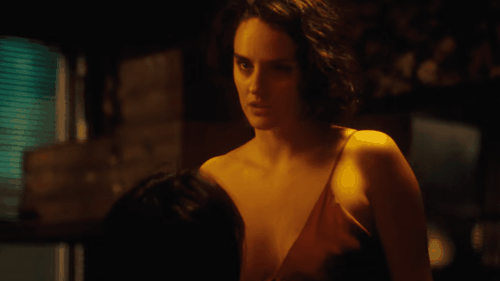
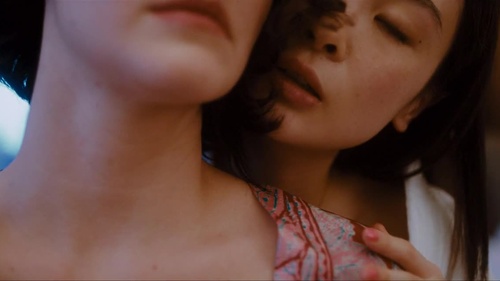
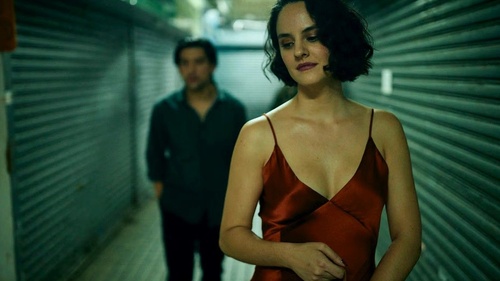
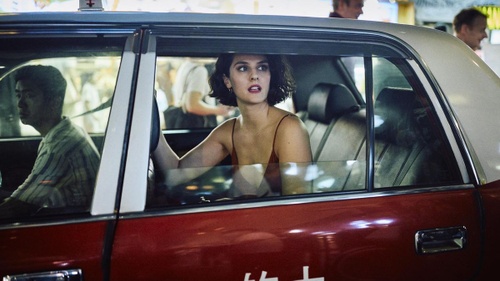
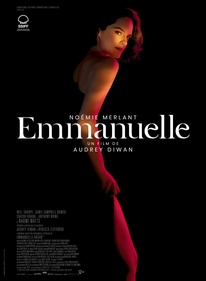
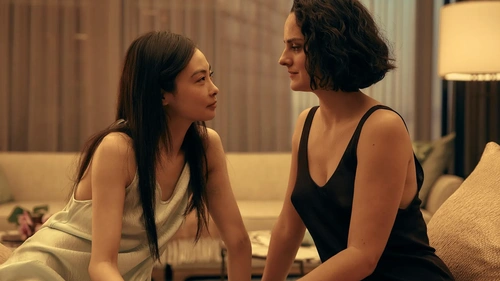

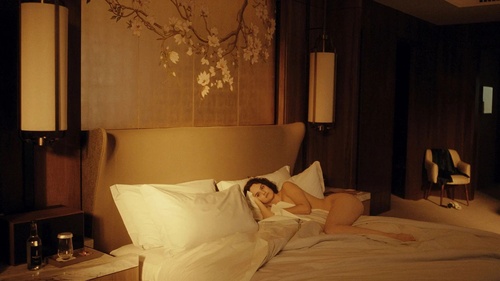
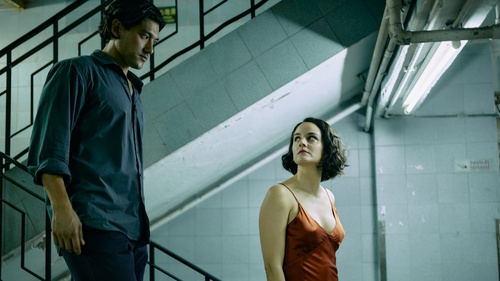
Emmanuelle's Places and Ways
The source material, as mentioned, was very cumbersome, with the character born in Emmanuelle Arsan's novel published in 1965. There is a substantial change of setting: we remain in the Far East, but we are no longer in Thailand but rather in a cosmopolitan Hong Kong, with practically the only location being that luxury hotel where the protagonist hunts for her potential prey and a long-desired "pleasure."
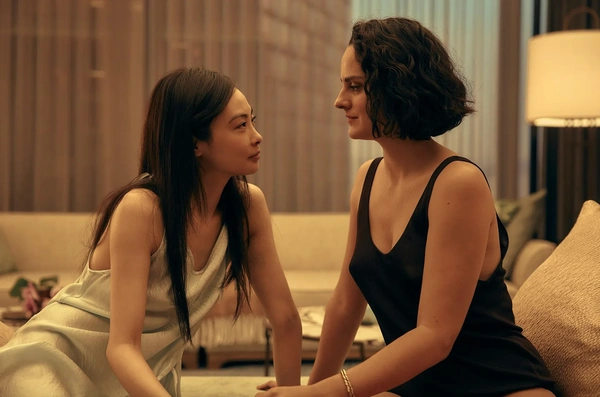
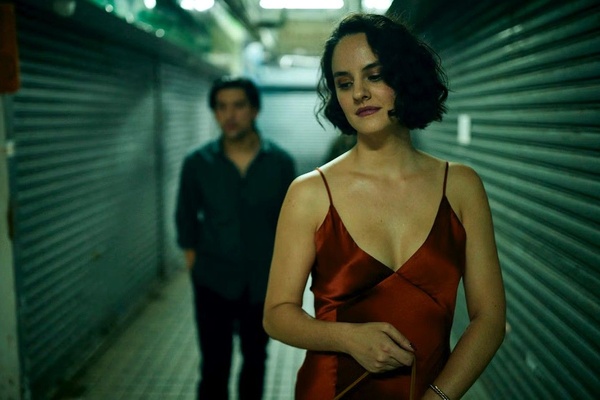
Our protagonist in this new version is a manager who travels the world inspecting luxury hotels for a major company in the sector. She has the face of an icy Noémie Merlant, elsewhere a talented actress but here evidently unsuited for a role that would have required greater involvement and which she herself seems to have regretted. She will have to evaluate the local hotel managed by Margot (a very wasted Naomi Watts), and within those endless corridors and floors, amidst sheets and neon light, she engages in a series of sensual encounters with men and women, until her attention is captured by Kei, a mysterious man – a very anonymous Will Sharpe – who, for reasons only revealed in the finale, refuses to succumb to her charm.
Slow Cooking
From the prologue on the plane that will take Emmanuelle to her destination, it is clear that sex here is the result of gratuitous logic, with physical relationships, sequences of sapphic autoeroticism with the Zelda of a much more sensual Chacha Huang, and that epilogue that descends into an unintentionally ridiculous grotesque, effectively opening the doors to instant end credits.
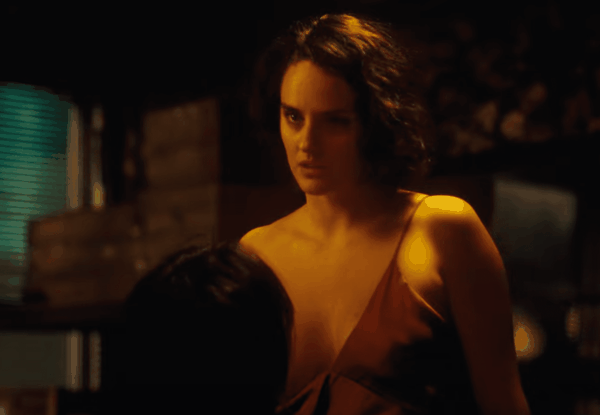
And then that sense of perpetual anticipation, where for much of the viewing, much seems about to happen only to be limited to very brief flashes or interminable silences: Emmanuelle is not a film about experienced eros, but about sought and never found eros, about absence as an existential metaphor of questionable taste. A theoretical choice incapable of engaging, with the torpor of this overly ethereal female figure being transmitted to the viewer. Hong Kong becomes an absent context, despite Laurent Tangy's splendid cinematography, a metropolis that seems specifically built to manifest contemporary solitude.
A solitude that, it must be said, persists for the almost, unnecessarily prolonged, two hours that characterize this new adaptation, of which we can safely say there was no need at all, as confirmed by its box office flop and the potential risk that an otherwise interesting director has already burned herself behind the fall of a myth.
Gallery
Score
Editorial team

Emmanuelle: the erotic remake is short on passion
A film about a woman searching for a desire she cannot find, a perfect metaphor for an adaptation that gets lost in its own exhibited vacuities. The eroticism ranges from unnecessarily glossy moments to others that descend into the grotesque-demented, and the protagonist Noémie Merlant herself fails to find the right register to interpret an iconic character. Emmanuelle, a new adaptation of the novel arriving exactly half a century after the cult classic with Sylvia Kristel, is a visually polished but substantially empty film, populated by uninteresting characters and lacking the necessary passion that the plot should have guaranteed, trapped by a more verbose and spoken approach, playing on an unsustainable sense of anticipation, rather than the actual and necessary fire of passion. And above all, in an era where the internet has removed all modesty and imagination, does a pseudo softcore cinema of this type still make sense?
Similar articles