Warhammer 40,000: Boltgun 2 Review: There's Never Enough War
Auroch Digital returns to the 41st millennium with two protagonists, new worlds to purify, and a devastating arsenal. Will it be enough to surpass the first chapter?


Anyone who has observed a Warhammer 40,000 game table at least once will probably have noticed a curious thing: a handful of miniatures, some scenic elements, and an unspecified number of dice are enough to transform an innocent afternoon among friends into an interplanetary war. On one side, the Space Marines, with armor so bulky they make a tank look like an economical means of transport; on the other, demonic creatures and monstrosities of Chaos that seem to have come out of a laboratory where no one ever bothered to respect safety regulations (forgive me if I thought of the Monster Factory).
The charm of the universe created by Games Workshop also stems from this ability to make the absurd credible, mixing science fiction, religious fanaticism, and violence so exaggerated it borders on the grotesque. And if on the table you have to rely on dice to determine a warrior's fate, in video games the situation changes radically, especially when someone decides to put a loaded Bolter into the player's hands.
Auroch Digital understood this in 2023 with the first Warhammer 40,000: Boltgun, a fusion of the forty-first millennium and the style of shooters that made DOOM and Quake famous. Three years later, it returns with a multiplatform sequel, bringing with it a question less trivial than it might seem: once you've found the right way to exterminate heretics, how do you make the second campaign just as fun?
Gallery
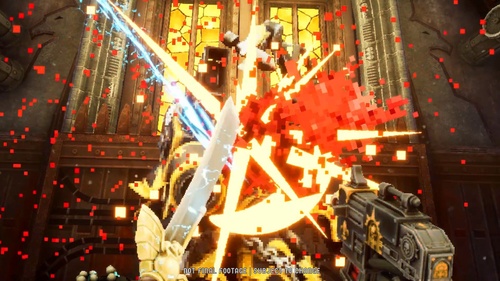
For the Emperor, of course!
If there's one thing Warhammer 40,000 has never had difficulty communicating, it's its particular conception of "diplomacy." In the Imperium of Man, when someone shows suspicious devotion to the Chaos gods, organizing a peaceful confrontation rarely represents the preferred solution. Boltgun 2 picks up from the events of its predecessor and immediately makes its intentions clear: an imperial fleet gets into trouble because of Vashtorr the Arkifane, and the response can only be a new purification expedition, this time across very different worlds.
Don't expect a particularly intricate story, however. Few cutscenes and a handful of information hold the game's missions together, without always giving the feeling of progressing towards a true cinematic narrative development. This might be fine for those primarily seeking an old-school shooter, but a slightly more polished framework would, in our opinion, have given greater meaning to certain campaign deviations. At least the Servo-skull contributes to making the journey more enjoyable, an irreverent presence that lightens the solemnity of a universe where almost everyone takes war tremendously seriously with its interventions.
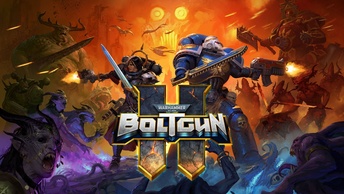
The player can choose from the beginning between Malum Caedo, a veteran Ultramarine already the protagonist of the first episode, and Nyra Veyrath, a Battle Sister of the Adepta Sororitas. Two loyalists of the Emperor who would hardly discuss things over a cup of tea, but who confront heresy with different tools. Malum possesses the resilience of a walking tank and prefers brute force, while Nyra relies on speed, offensive slides, and an arsenal more inclined to set everything on fire. They do not form a narrative pair, and there is no cooperative campaign: the choice primarily concerns the fighting style.
The structure also offers alternative paths between missions. They don't change the fate of the Imperium nor transform the story into a branching adventure, but they allow visiting different environments in subsequent playthroughs (something fans will surely appreciate). A first run without too many worries and on normal difficulty takes around eight hours, with time variations clearly linked to difficulty and exploration. Replaying it with the other character means recovering levels excluded from the first choice and facing the same dangers with different tools. A good reason to return to the field, even if the real test remains what happens once the trigger is pulled.
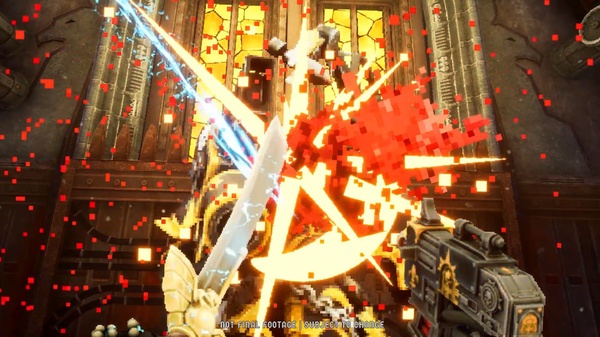
Two ways to spread the faith (without ever asking)
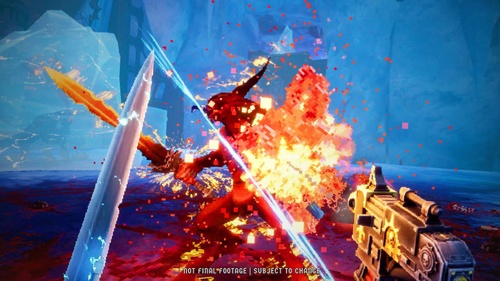
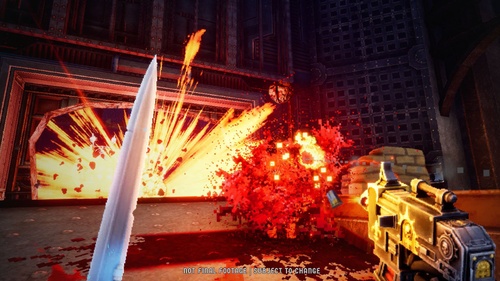
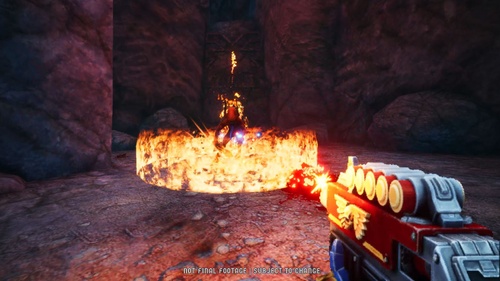
So-called boomer shooters have always had a quality that many modern shooters seem to have forgotten: they allow very little time for introductions. Weapons, enemies, and space to move are enough to start, provided the relationship between these three elements is carefully constructed. Boltgun 2 retains the speed of its predecessor and, above all, that almost physical sensation that comes from seeing a bullet transform an opponent into a collection of pixels and unsavory remains.
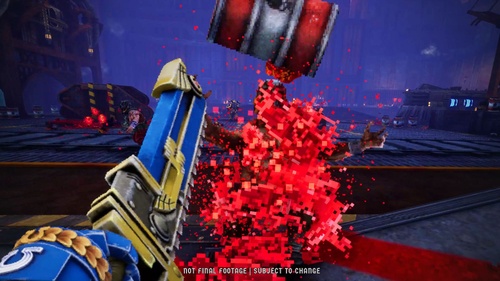
With Malum, combat encourages advancing without too much ceremony. The charge breaks through enemy lines, the chainsword saws the target as if we were Leatherface, and the shotgun takes care of everything that had the bad idea of staying too close to us. Nyra, on the other hand, requires a slightly different rhythm. She can slide through weaker groups of enemies, reposition, and prepare a bomb to detonate at the opportune moment. The flamethrower, meanwhile, finds its raison d'être when an entire mass of opponents decides to show up simultaneously. Applied to a crowded arena, these differences tell more than any comparison between cold statistics composed of numbers that aren't even that exciting.
The arsenal reserved for the two protagonists is not identical, and some combinations are inevitably more successful than others. Indeed, both charge and slide remain rather violent ways to get through someone, while the ability to choose different equipment does not automatically guarantee that every situation requires an original approach. The presence of two characters adds variety and replayability, but it doesn't drastically revolutionize the formula.
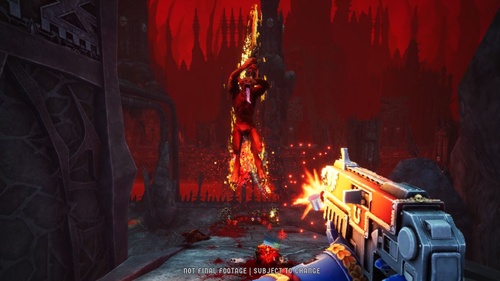
The bestiary, meanwhile, has been enriched with forces linked to the four Chaos gods. There are creatures that attack up close, others that flood the screen with bullets, and opponents so resilient they absorb unreasonable amounts of ammunition. In the best moments, this variety forces you to quickly choose who to eliminate, which weapon to retrieve, and where to find space to keep moving. The risk comes when the arena confuses difficulty and crowding, increasing the number of enemies without asking the player for truly new decisions, other than to shoot wildly while trying to survive. The satisfaction of using a loaded Bolter remains, but it's not always enough to maintain the same freshness after several missions.
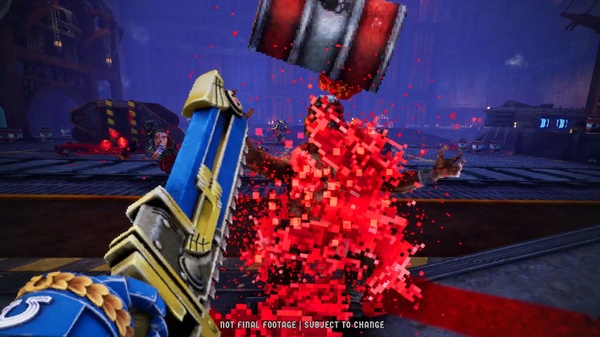
When the scenery decides to participate
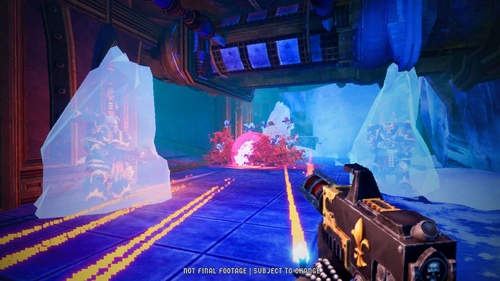
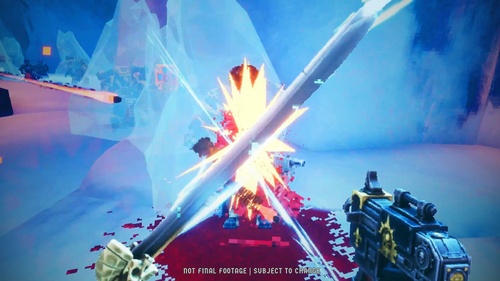
One of the most interesting innovations in Boltgun 2 concerns how Auroch Digital decided to utilize environments during combat, making scenarios more than just a simple ground on which to pile up corpses. Take, for example, one of the icy installations the player will traverse: why waste an entire magazine against a particularly resilient enemy when it's possible to destroy the surface beneath their feet and let the blades of a gigantic industrial fan finish the job? Elsewhere, the destruction of particular structures can weaken demonic creatures, while environmental hazards and installations can be exploited to eliminate opponents without necessarily resorting to brute force. These are clever ideas that add a tactical component to an otherwise very direct combat system, encouraging the player to look around before emptying yet another magazine.
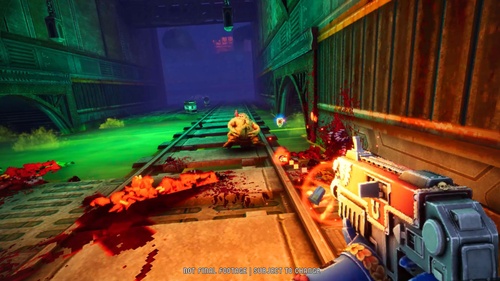
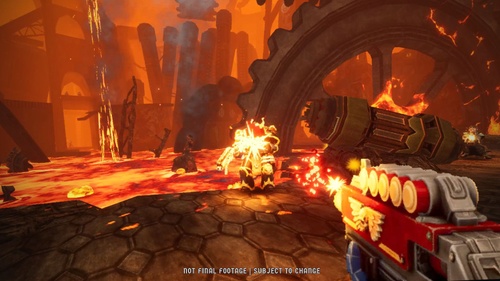
This greater attention to scenarios is accompanied by a campaign that is decidedly more varied than in the past, capable of alternating infested jungles, trenches, industrial complexes, and frozen installations, each with characteristics that can influence the course of missions. The inevitable purification phases continue to require the elimination of entire hordes before allowing access to the next area, but there is also room for different objectives, structures to sabotage, and sections developed more vertically. The result is an adventure that tries to break the monotony of constantly moving from one arena to another, though without succeeding on every occasion. Some missions, in fact, still end up relying on finding objects necessary to unlock the path (remember DOOM's colored keys?!), re-proposing situations quite familiar to those who had already faced the first chapter. The variety of environments therefore represents a clear step forward, even if not all the ideas introduced manage to impact the pace of the experience with the same effectiveness.
Fortunately, Auroch Digital also seems to have understood how frustrating it can be to survive an army of demons only to spend several minutes trying to figure out where to go. Those who played the first Boltgun will probably remember those situations where, once the entire area was cleared, the problem became locating the right corridor or a door missed during the battle. The sequel tries to remedy this with a consultable map and an optional guide that indicates the direction of the objective, while still leaving room for secondary paths and secrets to discover. A particularly welcome solution, because it allows more time for action without taking away satisfaction from those who prefer to explore every corner of the scenario. After all, after facing the worst creatures of Chaos, it would be rather humiliating to be defeated by a problem of orientation.
However, some perplexity remains regarding the balancing of encounters, especially when deciding to tackle the campaign at higher difficulty levels. The game offers four settings and several accessibility options, including those that allow reducing some visual effects or activating invulnerability, thus offering good freedom of choice. The problem rather concerns the readability of some particularly crowded situations, where damage can accumulate so rapidly as to leave very little time to react.
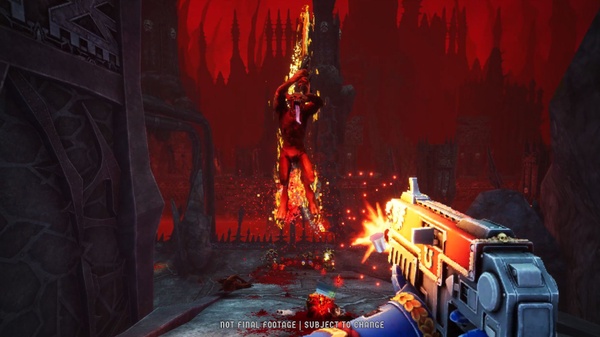
Miniatures, pixels, and the sound of a Bolter
If there's one area where Boltgun 2 seems to have very few doubts, it's its visual identity. The two-dimensional sprites inserted into three-dimensional scenarios evoke the feel of 90s FPS games, but it's primarily the proportions and colors of the Warhammer miniatures that give character to the spectacle. The armor looks even heavier, the demons flaunt unsavory anatomies, and bodies disintegrate into pixel explosions that leave little room for ambiguity.
Attention to detail also extends to the small gestures of enemies: a taunting movement or a grotesque animation can give personality to creatures destined to remain alive for only a few seconds. It's the kind of detail that doesn't change the gameplay but makes a universe built on excess more convincing. The variety of worlds also helps to enhance this aesthetic, preventing the entire adventure from feeling set in the same industrial corridor.
The sound completes the work. The weight of footsteps, the snap of the chainsword, and the roar of weapons communicate a power that graphics alone would struggle to convey. Rahul Kohli returns to voice Malum Caedo, while Alanah Pearce lends her voice to Nyra. Much of their personality emerges through the invocations and taunts that the player can activate during combat, rather than in the brief cutscenes. The soundtrack adequately accompanies the action and includes a contribution from Mick Gordon for the final confrontation with Vashtorr, without this meaning attributing all the music to him.
Warhammer 40,000: Boltgun 2 retains what made its predecessor enjoyable: high-impact weapons, rapid movement, and the feeling of possessing the power needed to face an entire Legion of Chaos. The two protagonists, alternative paths, and more interactive environments represent concrete additions, capable of offering variety without distorting the original project.
However, a lingering question remains, one that accompanies many sequels built on the philosophy of "let's make it even bigger and louder." How many real novelties are needed for an already successful formula to continue to surprise? Boltgun 2 responds primarily by increasing possibilities and content, but it doesn't always manage to give new meaning to every encounter. For those who simply asked for another purification campaign, the result has all the makings of being entertaining. Those who hoped for a more marked evolution might, however, rediscover familiar habits too soon.
After all, in the Warhammer universe, a war rarely ends with someone willing to lay down their arms. Auroch Digital seems to have adopted the same principle: as long as there are heretics to eliminate, there will always be a Bolter ready to resolve the issue. It would be interesting, next time, to discover what might happen when even shooting is no longer enough.
Score
Editorial team
Warhammer 40,000: Boltgun 2 Review: There's Never Enough War
Warhammer 40,000: Boltgun 2 successfully preserves the brutal charm of its predecessor, enriching it with two protagonists, more varied environments, and new interaction possibilities during combat. The weapon feel and artistic identity remain its strengths, while an essential narrative structure, some repetitions, and not always convincing balancing limit the evolution of the formula. An entertaining and recognizable sequel that satisfies those who wanted more Boltgun without always offering something truly new.
Similar articles