Tales of Eternia Remastered — Review: A Great 2000 JRPG Respected and Finally Accessible
Bandai Namco and TOSE bring one of the most beloved chapters of the Tales of saga to PS5 and PC, with 60fps, remastered graphics, toggleable random encounters, path indicators, and Battle Retry.
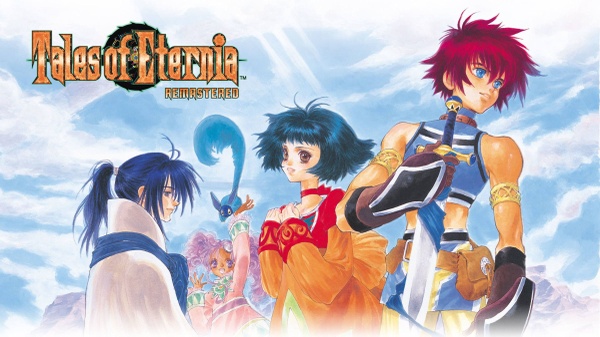


Originally released in Japan in 2000 and in the West in 2001, Tales of Eternia represents one of the most appreciated episodes of Namco's famous series of Japanese role-playing games. Originally developed by Wolf Team, the title helped consolidate the identity of a franchise capable of distinguishing itself through dynamic combat, carefully characterized characters, and stories that focus on human relationships.
At the time, the game carved out an important space in the JRPG landscape thanks to its adventurous structure, real-time combat system, and a narrative universe built around two profoundly different worlds. Elements that, even today, allow Eternia to be recognized as a production with a well-defined personality.
Gallery
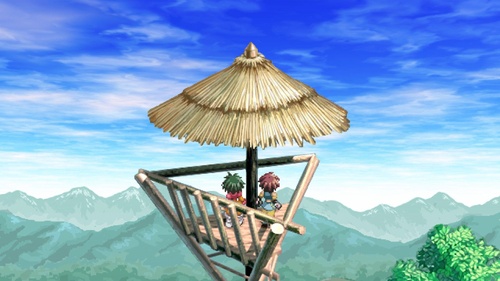
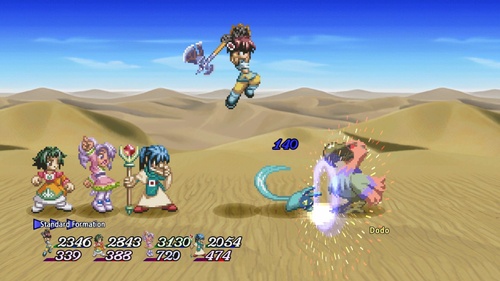
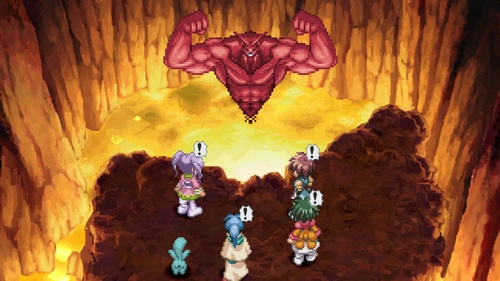
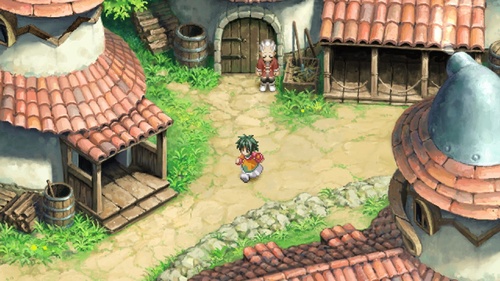
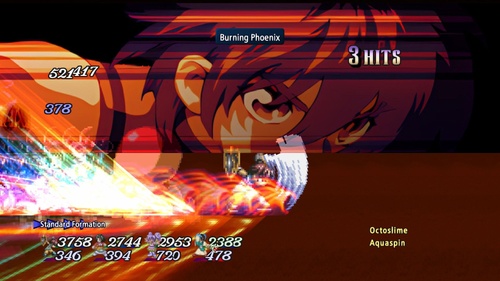
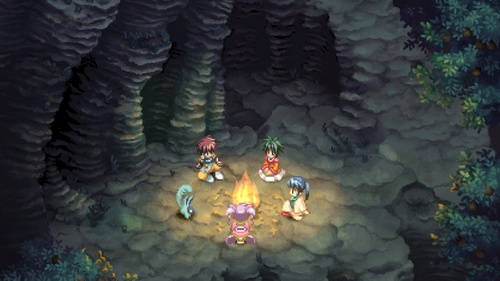
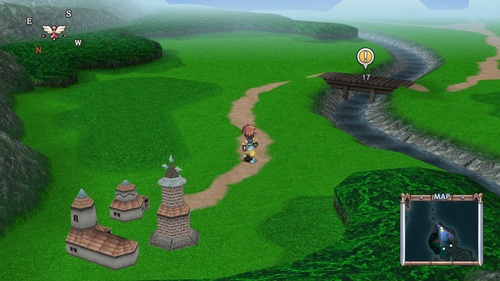
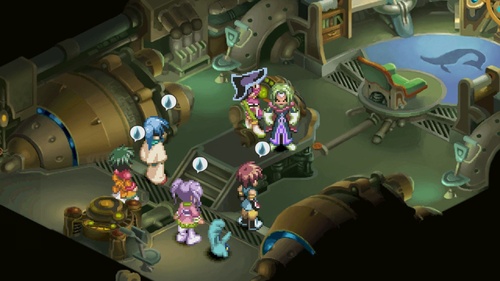
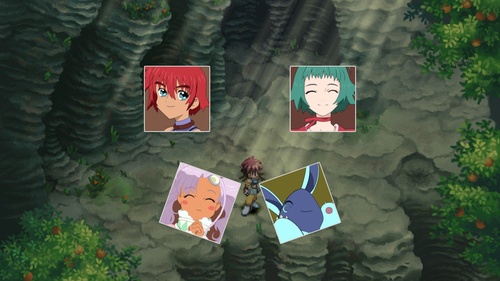
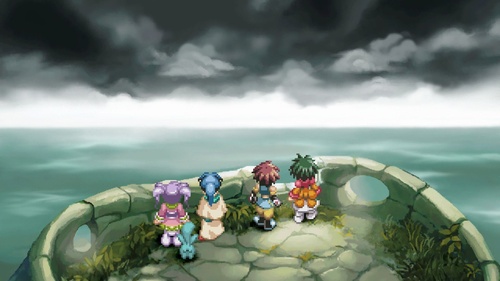
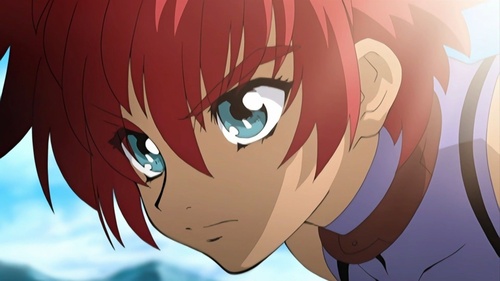
More than twenty-five years after its debut, Bandai Namco brings this adventure back to modern platforms with Tales of Eternia Remastered, a version created by TOSE that preserves the original structure, intervening on visual rendering, sound effects, and especially on quality of life. We are not facing a remake that rewrites the foundations of the experience, but a remaster that aims to make a historical adventure more accessible, without distorting its main characteristics.
The ability to alternate between the original and remastered presentation is one of the most interesting additions, but it is above all the work done on the gameplay mechanics that makes the difference. Indicators for orientation, control of random encounters, new combat options, and numerous simplifications allow you to face the journey with a fluidity unthinkable in the original version.
The result is a JRPG that retains the charm of its era, but tries to eliminate most of the friction that today might discourage those who have never had the opportunity to try it.
Inferia, Celestia, and the Grand Fall — two worlds, one common destiny
The story of Tales of Eternia takes shape in a universe divided between Inferia and Celestia, two distinct worlds, characterized by different cultures, societies, and ways of life. Their balance, already marked by misunderstandings and divisions, is challenged by the arrival of a mysterious girl who will radically change the destiny of the protagonists.
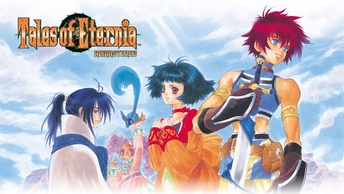
Our journey begins in the village of Rasheans, where we meet Reid Hershel, a young hunter with a straightforward character and impulsive nature, and Farah Oersted, his childhood friend, endowed with a strong sense of justice and always ready to intervene when someone needs help.
Their lives take an unexpected turn when they meet Meredy, a girl from Celestia who speaks an unknown language. To understand her and discover her origins, the two rely on Keele Zeibel, a young scholar particularly interested in scientific research and the phenomena that govern the world.
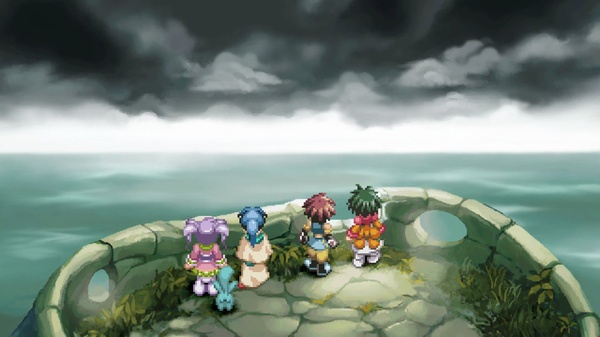
What initially seems like an unusual encounter soon turns into a much larger mission. The protagonists discover that a catastrophe called the Grand Fall, also known as the Great Impact, threatens to cause a collision between Inferia and Celestia, endangering the very existence of the two worlds.
To prevent the disaster, the group will have to embark on a long journey in search of the Greater Craymels, powerful entities linked to the elements and fundamental to understanding the events that are disrupting their universe.
The story works especially well thanks to the contrast between its characters. Reid is pragmatic and not prone to intellectual complications, Farah represents the most altruistic and determined component of the group, while Keele approaches events through rationality and knowledge. Meredy, on the other hand, forms the link between two realities that struggle to understand each other, progressively becoming a central figure in the narrative's evolution.
The journey is not limited to a succession of places to visit and enemies to defeat. The confrontation between Inferia and Celestia allows for addressing themes such as prejudice, cultural differences, the fear of the unknown, and the consequences of divisions built by human beings.
While retaining some typical traits of JRPGs of its generation, including lighthearted situations, dramatic moments, and dialogues that deepen the relationships between the protagonists, Tales of Eternia manages to build an engaging adventure, supported by a group of characters who grow alongside the events.
The narrative follows rhythms that reflect its era, but its core remains effective. The threat looming over the two worlds provides a concrete motivation for exploration, while the relationships between the protagonists prevent the story from becoming a simple race against time.
The real-time ALMBAS still fun and immediate today
The heart of the experience remains the Aggressive Linear Motion Battle System, the real-time combat system that characterizes the game and distinguishes it from many traditional turn-based RPGs.
During battles, characters move on a two-dimensional plane, directly confronting opponents through physical attacks, special techniques, and magical abilities. The system requires learning to manage distances, identify openings in enemy defenses, and chain moves to build effective offensive sequences.
Reid represents the main reference for those who prefer a close-quarters combat style, but the group offers different possibilities through the abilities of its members. The choice of techniques, team composition, and management of AI-controlled characters progressively become important, especially in more challenging encounters.
The system retains good immediacy and, even today, manages to offer fun battles. The action component gives the clashes a rhythm that blends well with the game's progression, while the ability to chain arts allows for experimenting with different approaches.
The remastered version does not revolutionize this structure but significantly intervenes on the overall experience, making it easier to tackle the adventure without sacrificing the original structure.
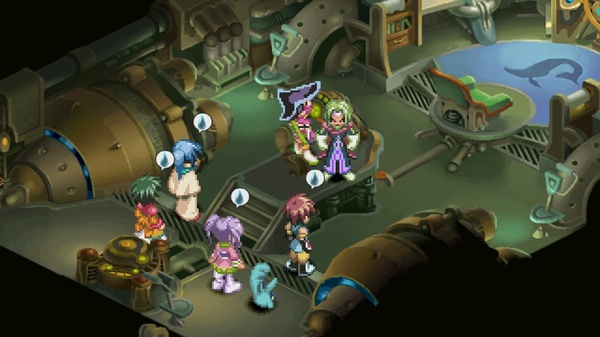
Remastered novelties: QoL, Battle Retry, Boost, and encounter control
The first addition worth noting is the ability to choose between remastered and original graphics modes. The switch can be made through the settings, allowing for a direct comparison between the updated and historical presentations.
A similar solution is provided for sound effects, thanks to a dedicated option that allows alternating between original and remastered sound. These two possibilities represent added value for those who already know the game, but also a useful tool to understand the work done on the new edition.
On the navigation front, the introduction of destination indicators is one of the most important changes. The original required more attention in identifying the destination, relying more on exploration and information gathered during dialogues. In the remastered, however, the indicators help to understand where to proceed, reducing situations where one risks wandering without a precise direction.
This intervention makes the adventure smoother and helps reduce unnecessary backtracking. Movements between already visited areas do not completely disappear, but become less dispersive thanks to clearer indications and a more modern management of game time.
Another important novelty concerns random encounters, which can now be deactivated through dedicated settings. This is a function that significantly changes the relationship with exploration: those who want to focus on the story can traverse certain areas without being continuously interrupted, while those who wish to accumulate experience can reactivate encounters at any time.
It is a freedom that allows for better managing the pace of the adventure, preventing random encounters from becoming an obstacle to progression. Naturally, deactivating combat also means giving up the relative rewards, so it will be necessary to pay attention to the team's level when facing particularly challenging enemies.
The remastered also introduces the Boost function, through which it is possible to intervene on some aspects of progression and encounter frequency. The new options allow for better adapting the experience to one's needs, reducing the time required to tackle the more repetitive phases.
To these are added Quick Recovery, which facilitates team recovery, and Battle Retry, which allows you to retry a battle after a defeat without necessarily having to retrace long stretches of the adventure.
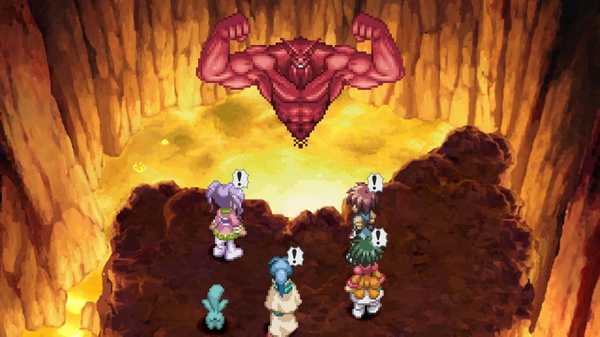
These are seemingly simple additions, but particularly useful when facing bosses capable of challenging the group. In a role-playing game with an extensive structure, being able to quickly resume a combat represents a concrete advantage, especially when one wishes to experiment with different strategies.
Even minigames benefit from targeted intervention: the ability to skip them or retry certain challenges makes some secondary activities less frustrating, preventing individual sections from excessively slowing down the overall pace.
Other conveniences are also present, such as the high-speed mode during automatic combat, useful for quickly overcoming less challenging encounters, and options to automate message display during events and conversations.
The remastered also introduces a Skit Player, through which it is possible to rewatch numerous optional conversations already encountered. Skits are an important component of characterization and allow for deepening their relationships outside of the main events. Having the ability to retrieve them is therefore a welcome addition, especially for those who wish to get to know the group better.
On the difficulty front, new options are available for those seeking a greater challenge. Extreme mode is selectable from the start, while Unknown mode unlocks after completing the game, offering further incentive for those who wish to return to explore Eternia.
Overall, the novelties do not change the nature of the game, but intervene on numerous small aspects that, when combined, produce a tangible improvement. The ability to choose when to fight, skip some activities, speed up automatic encounters, and quickly retry battles makes the experience more respectful of the player's time.
This is precisely the main merit of the remaster: it does not try to transform Tales of Eternia into a modern RPG through invasive modifications, but identifies the points where the original experience could be cumbersome and tries to make them more manageable.
Technical sector: 60fps and remastered graphics, with some imperfections in the backgrounds
From a technical point of view, Tales of Eternia Remastered retains the two-dimensional setting of the original, intervening on the graphic presentation to adapt it to contemporary screens and platforms.
The environments maintain the typical structure of JRPGs of the era, with stylized characters, two-dimensional scenarios, and backgrounds that accompany exploration. The remastering work allows for greater cleanliness in the overall presentation, making the game more enjoyable on modern displays.
One of the most interesting aspects is the ability to switch between remastered and original graphics. This is not just a nostalgic feature: the direct comparison allows you to appreciate the differences in the rendering of visual elements and choose the mode best suited to your preferences.
The result, however, is not uniform in every situation. Some elements clearly benefit from the update, while certain pre-rendered backgrounds may appear less convincing compared to the rest of the presentation.
The problem emerges especially when backgrounds are compared with foreground elements. In some circumstances, the rework fails to completely eliminate the flatness of the images, making the distance between the original artistic techniques and contemporary visual expectations perceptible.
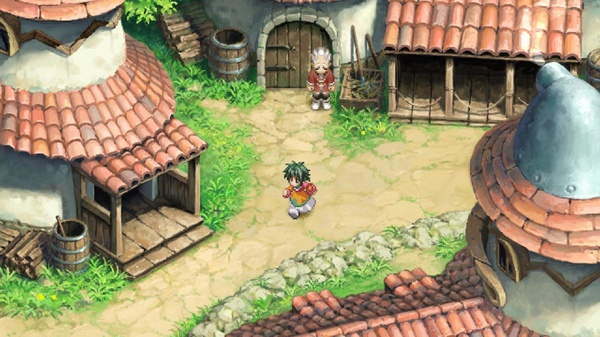
We are not facing an intervention that radically transforms the graphics sector, nor would it be correct to expect it from a remaster of this type. The work primarily aims to preserve the game's visual identity, making it more usable on modern platforms.
Another positive element concerns fluidity. The game runs at 60 fps, a particularly important feature during combat, where the speed of animations and the chaining of techniques directly contribute to the feeling of control.
The increased fluidity makes battles more enjoyable to face and enhances a combat system that bases much of its charm on the speed of actions.
Overall, the technical sector adequately performs its task. The remaster does not aim to impress with elaborate graphic effects or a complete reconstruction of environments, but offers an update respectful of the original artistic direction, with some imperfections in the backgrounds that prevent the work from being impeccable.
Sound sector: historical soundtrack, updated effects, and Italian text
The sound sector retains an important role in the adventure's identity, accompanying exploration, dialogues, and combat with a soundtrack that helps define the different atmospheres of the journey.
The music alternates between lighter moments, adventurous passages, and episodes with a more dramatic tone, following the evolution of the story and its protagonists. Battles, in particular, benefit from an accompaniment that supports the rhythm of the clashes without detracting from the action.
Also in this case, the ability to alternate remastered and original sound effects represents one of the most appreciated features of the new edition. Those who have already played the title can recover some of the sensations related to the historical version, while new players can choose the updated presentation.
It is important to distinguish this function from voice selection: the game allows you to choose between Japanese and English voice acting, while the texts are available in Italian.
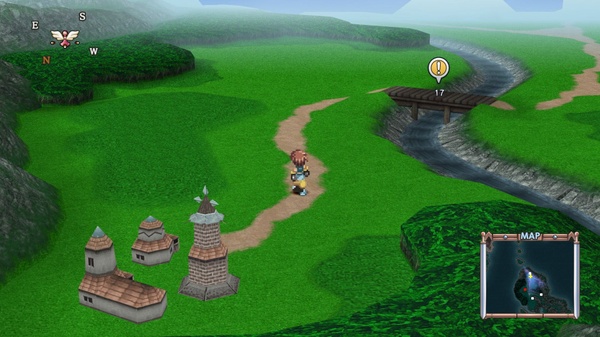
The Italian localization therefore allows you to follow the story, understand the dialogues, and deepen the relationships between the protagonists without necessarily knowing other languages. The narrative sequences can thus be appreciated even by those approaching the series for the first time.
The absence of Italian voice acting is not a surprise for a production of this type, but it is correct to point out that the voices are not performed in our language. The presence of Japanese and English options, however, allows you to choose the version most congenial to your tastes.
The overall result is positive. The ability to alternate sound effects, along with voice selection, offers appreciable flexibility and allows for customizing the experience without sacrificing the original's sound identity.
Score
Editorial team
Tales of Eternia Remastered — Review: A Great 2000 JRPG Respected and Finally Accessible
Tales of Eternia Remastered is a classic that respects its identity and is enhanced by improvements that make the experience significantly smoother. The combat system is still fun, the story retains its charm, and the general quality of life interventions demonstrate how little it takes, if you work in the right direction, to enhance a great JRPG.
For those who already know the game, this edition is a good opportunity to return to explore Inferia and Celestia with more modern tools. For those who have never tried it, however, it is an opportunity to catch up on one of the most representative chapters of the saga.
Similar articles