Star Wars Zero Company Review: XCOM Meets the Clone Wars
Bit Reactor brings tactical strategy to the Clone Wars with excellent combat, a story capable of living on the fringes of the saga, and a company that grows far more than the enemies called to stop it.


Star Wars has built much of its mythology around Jedi, Sith, and figures destined to change the course of the galaxy. This is natural: they are the most recognizable elements of the saga and also the most immediate to turn into protagonists. Precisely for this reason, however, whenever Star Wars decides to move away from that comfort zone, it often manages to find more interesting perspectives.
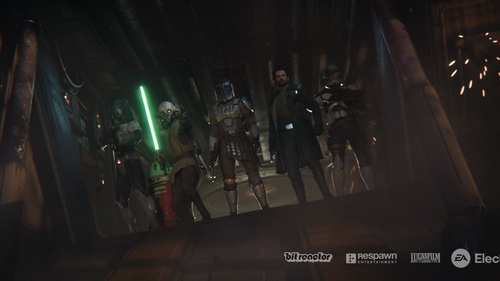
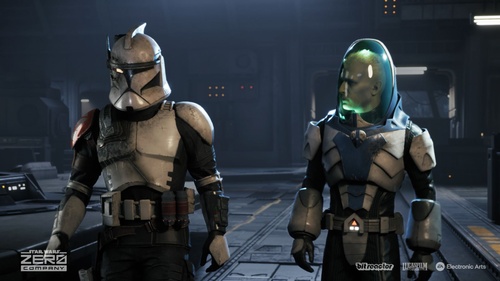
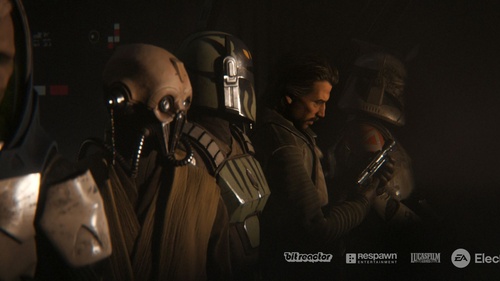
Zero Company starts exactly here. The Clone Wars are not told through the great generals or decisive battles, but through mercenaries, ex-soldiers, criminals, and disillusioned clones engaged in what Bit Reactor calls «the war beneath the war»: sabotage, intelligence, and operations that neither side can openly confront.
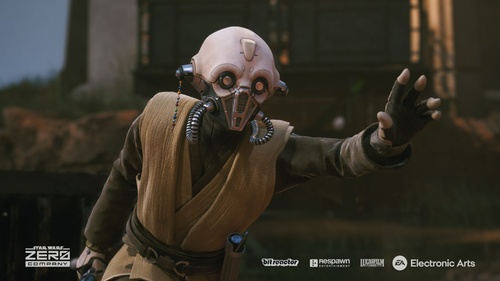
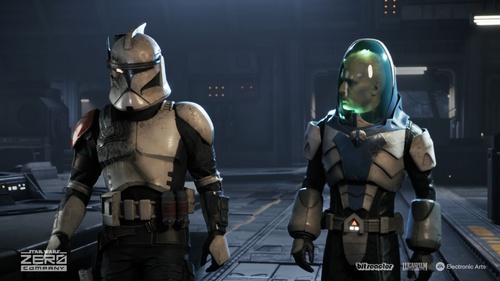
Leading the company is Hawks, a former officer of the Republic's clone army, flanked by characters who, in other circumstances, might have found themselves on opposing fronts. The Force is present, but it doesn't dominate the narrative, while the Infinite Spiral offers the game a conflict autonomous enough not to rely solely on references and already known characters.
Zero Company thus tries to prove that Star Wars can work even without constantly relying on its most famous heroes. But does it really manage to make a war fought by those who normally remain out of frame interesting?
Gallery


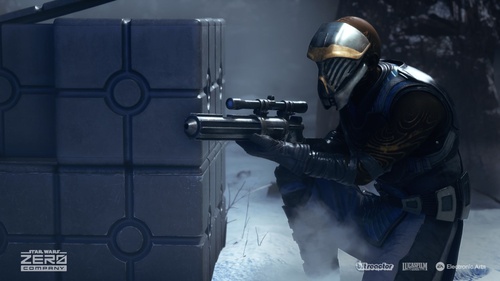


A Minor Story Only for Those Who View War from Above
Hawks' past immediately adds more weight to a premise that, on paper, might seem rather traditional. Before becoming a mercenary, he commanded the 100th Clone Company under the orders of Jedi General Pong Krell, one of the most controversial characters during the Clone Wars, remembered primarily for his contempt for clones and the consequences of the Umbara campaign. After being blamed for an operation that ended in tragedy, Hawks loses command and reputation, distancing himself from the Republic. Zero Company also arises from this disillusionment, from someone who has already discovered how little a single individual can matter in a war of that magnitude.
The new company initially works for money, until a series of assignments leads them to the trail of the Infinite Spiral. The cult led by Kundri Fathom collaborates with the Separatists and spreads the Shadow Plague, a plague capable of altering those who survive the contagion and transforming its followers into more resilient and fanatically devoted fighters. From there, the investigation begins to broaden: occupied planets, undercover operations, old scores still open between team members. What seemed like a peripheral problem progressively intertwines with the final months of the Clone Wars.
The narrative holds up primarily because it never tries to convince us that Hawks and his men are suddenly more important than the main characters of the Star Wars saga or the events we already know.
Comparison with other stories from the same universe comes almost naturally. Zero Company doesn't possess the political force of Andor nor does it reach the tragedy of some of the best arcs of The Clone Wars, but it shares something with those productions that interests us much more than the mere presence of known characters: the ability to observe Star Wars from the level of ordinary people.
Kundri Fathom is probably where this construction is least convincing. The Infinite Spiral works because it allows the campaign to have its own antagonist, without constantly drawing from existing mythology, but Fathom remains less developed than the characters she is supposed to challenge. She has enough presence to sustain the conflict, but not enough to truly leave a mark like the saga's best antagonists. Some twists in the latter part are also consumed too quickly and give the impression that the game is rushing to its conclusion precisely when it needed a few more hours to let what it built settle.
The duration, in this sense, is adequate but not abundant. Zero Company is not a strategic game designed to generate potentially infinite procedural campaigns, but rather a linear adventure of about thirty to forty hours, supplemented by optional assignments, operations, and personal stories. The reference of about thirty hours includes most of the companions' arcs without pursuing every available activity, while a more methodical approach can significantly extend the playtime. There are no alternative endings capable of truly rewriting the story, so a second campaign primarily finds value in higher difficulties, different squad compositions, and strategic choices left behind during the first playthrough.
On the Field, Zero Company Finally Finds Its Identity
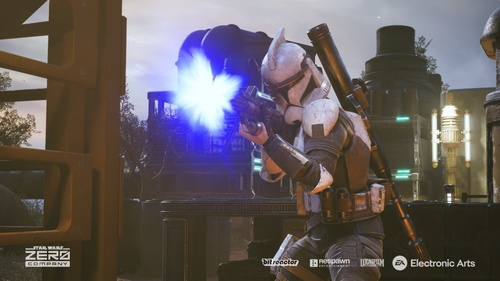
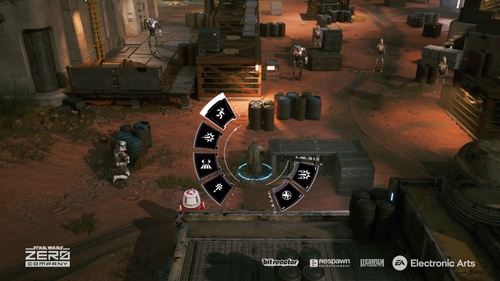
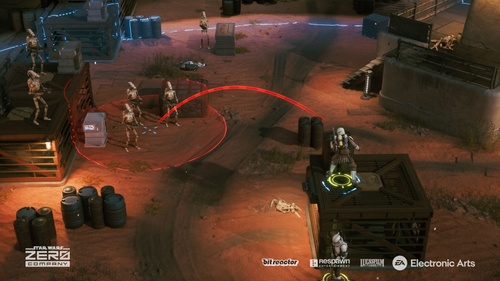
If the general setup immediately recalls XCOM, it's on the field that Zero Company begins to distance itself from Firaxis's model. The foundations are the same: we find the classic turn-based grid, accompanied by cover, hit percentages, and a squad where every mistake can have permanent consequences. The difference lies in the number of possibilities Bit Reactor concentrates within each single turn.
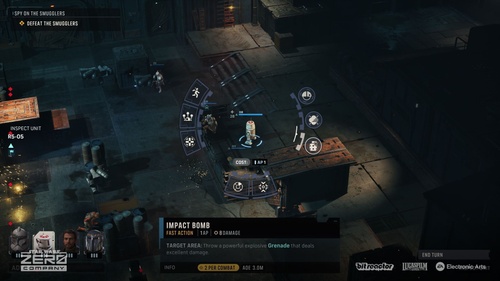
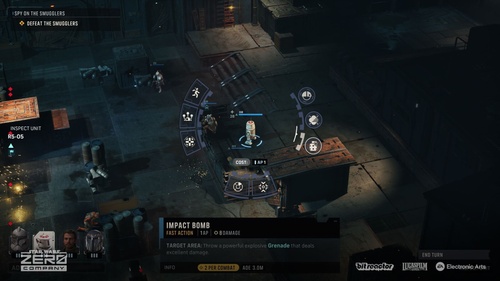
Each operative normally has three action points to distribute among movement, attacks, abilities, and items. Not all weapons require the same action cost, and this significantly changes how you build your turn: a blaster leaves room to move and intervene again, while heavier weapons require sacrificing part of the turn in exchange for greater power. The system is simple enough to understand even for those who know Star Wars but not tactical games. Of course, after a few hours, it's necessary to tickle the "little gray cells" to compose more elaborate actions, otherwise, premature defeat will occur before completing the mission.
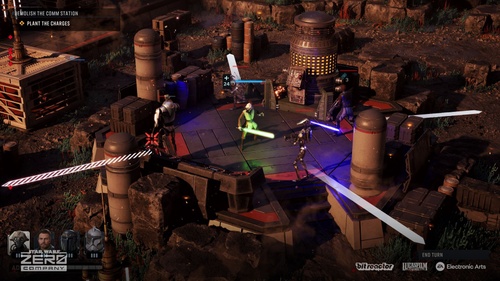
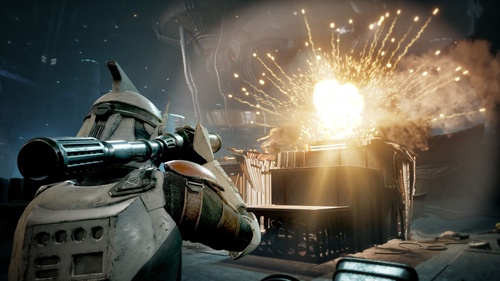
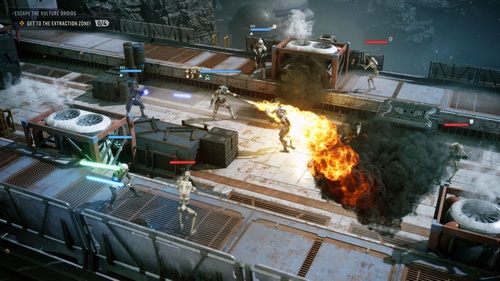
This is where we had the most fun. A sniper can occupy a catwalk and set up the field in sentry mode, while a companion pushes an opponent into their line of fire. The Force allows you to throw someone off a height (yes, we can use a Jedi apprentice!), a melee fighter can send them against an explosive element, and jetpacks allow you to ignore some traditional paths to quickly reach a dominant position. Then there are assists, with a second operative who can contribute to the attack when certain conditions are met. When every domino piece falls into place, Zero Company gives that satisfaction typical of the best tactical games: the pleasure doesn't simply come from eliminating an enemy, but from building the perfect turn without too many hitches.
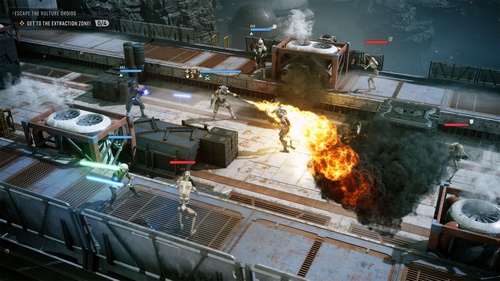
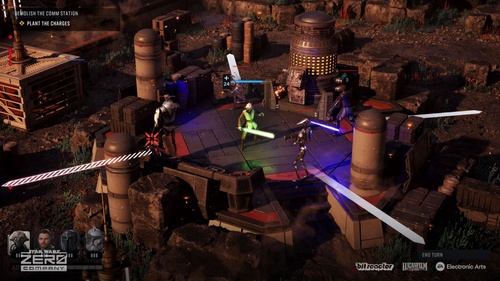
The scenarios also contribute a lot. Cover, catwalks, elevation changes, destructible elements, and different access points allow for continuous modification of the conflict's geometry. The reference to XCOM remains evident, including that particular frustration of seeing an apparently simple shot fail, but Zero Company tends to be more physical and more spectacular. The Force, jetpacks, and some personal abilities are not animations applied over a pre-existing structure: they actually change where allies and enemies can be, and consequently, how we read the map.
Progression amplifies this freedom. In the first part, specializations maintain rather recognizable roles, while around the middle of the campaign comes the possibility of combining two on the same operative. This is when squad building becomes much more interesting. Talents, weapon modifications, grenades, stims, and personal abilities allow for the creation of hybrid characters and extremely effective concatenations. Even astromechs can transform from simple supports into small platforms capable of sabotaging, protecting, or bombarding the battlefield.
And it is precisely here that the most obvious flaw appears. Zero Company becomes more fun to play while progressively becoming less difficult to overcome. A squad with double specializations, adequate equipment, and some well-studied synergies can overcome many encounters on normal difficulty almost without suffering consequences. It's not because the system has stopped offering possibilities; rather, the opposite happens: the game continues to give us tools without always managing to build adversaries capable of forcing us to fully exploit them.
For those who regularly play turn-based strategy games, starting directly on Hard at least partially solves the problem. Positioning matters again, a mistake costs more, and it becomes necessary to use assists, cover, and equipment instead of relying on the most powerful combinations. Normal difficulty, however, remains a good entry point for those who know Star Wars more than XCOM, because it allows them to learn the rules without turning every inaccuracy into a difficult-to-recover punishment.
These are problems that do not question the combat system, which remains the best part of Zero Company. The limitation is almost the opposite: Bit Reactor has built enough possibilities to make us wish for enemies and situations capable of putting them under greater pressure. When the game does, planning a turn, moving an opponent to the right spot, and closing a sequence without giving them a chance to react is extremely satisfying. When it stops doing so, that same depth risks becoming simple numerical superiority disguised as strategy.
The Den Works, But Could Have Told So Much More
After a mission, you return to the Den, the Zero Company's base on the Kafrene Ring. The tactical view gives way to third-person, and we can finally walk among the operatives just brought home, talk to them, heal the wounded, modify equipment, and prepare for what comes next. It's a good choice, as it avoids reducing everything to a sequence of menus and gives the company at least the feeling of inhabiting a common space.
It's a shame that space remains much poorer than it could have been. In modern XCOM games, building the base was part of the progression almost as much as improving soldiers: you excavated new sectors, decided which rooms to build, invested resources and time, and after many hours, just looking at the structure showed how much the organization had grown. Zero Company retains some of those functions, but not the same satisfaction in building them. Infirmary, recruitment, black market, and upgrades do their job, but without truly giving the impression that the Den is changing along with the company.
The lack is felt even more because the characters are one of the reasons it's worth coming back here between missions. It would have been natural to be able to intervene in their personal spaces, perhaps bringing items recovered during their respective missions, memories of the past, or simple gifts into their rooms. There was no need to turn Zero Company into a furniture simulator, but linking these elements to the growth of Bonds would have given concrete form to the relationships the game constantly tries to build. Entering Trick or Tel-Rea's room and finding something we recovered together would have told that story better than another percentage increase hidden on a screen.
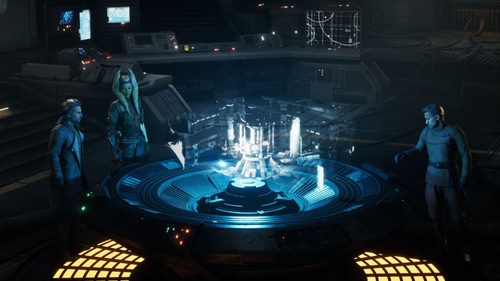
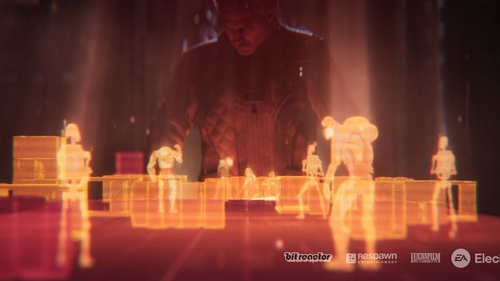
The actual strategic part, however, focuses on the holotable. The galaxy is divided into twelve Zones and includes over 150 planets, a number that should be interpreted correctly: we are not expecting as many battlefields. Many worlds host Operations, dilemmas, or opportunities that can be resolved without directly going into the field. Rewards range from credits to equipment, to Influence in different regions and Intel, the information needed to open new possibilities or sabotage the Infinite Spiral's plans.
It is in front of this map that Zero Company manages to put some pressure even without firing a shot. Intel is not enough to follow every lead, some opportunities expire, and undertaking a tactical mission advances the campaign by one Cycle. It can therefore happen that you have an operative's personal mission, a particularly interesting weapon, and an activity useful for slowing down the Spiral, knowing that choosing one might mean giving up the others.
This is probably where XCOM's legacy is most felt outside of battles. Strategy arises not only from what we do, but also from what we decide to leave behind. Bit Reactor, however, is much less strict than Firaxis. In XCOM, a series of injuries, bad investments, and neglected technologies could slowly turn a manageable campaign into an almost irrecoverable situation. Zero Company leaves much more room to correct course. It's more accessible, certainly, but also less capable of making us feel that a decision made five hours earlier could suddenly come back to haunt us.
Injuries and permanent death still prevent approaching everything lightly. A debilitated operative can stay in the Infirmary or return immediately to the field, accepting to expose them to greater risk. If permanent death is active, losing them means saying goodbye to specializations, equipment, and hours dedicated to their growth. Bonds also become more interesting in this perspective: frequently using certain characters together improves their relationship, assigns Focus points, and brings stat bonuses. Losing a veteran therefore means losing part of the combinations built around them.
The Den thus manages to connect one mission to the next well, but it remains primarily an efficient operational center when it could have become the home of Zero Company. Considering how much the game insists on the relationships between its members, seeing the rooms change, fill with objects, and retain traces of missions would have been more than an aesthetic whim. It would have made visible the growth of the group that, at the moment, remains mostly within numbers, bonuses, and screens.
Visually It's Star Wars, Even When the Code Stumbles
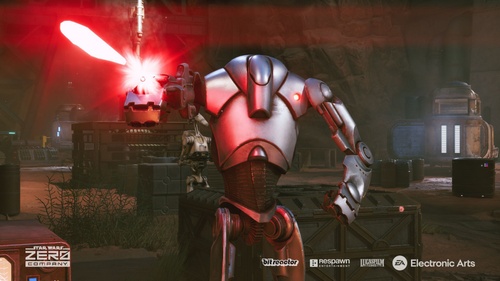
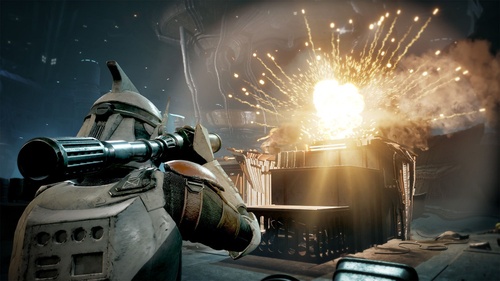
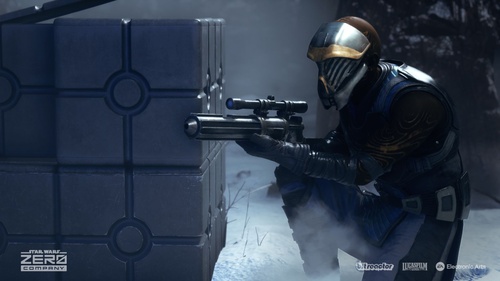
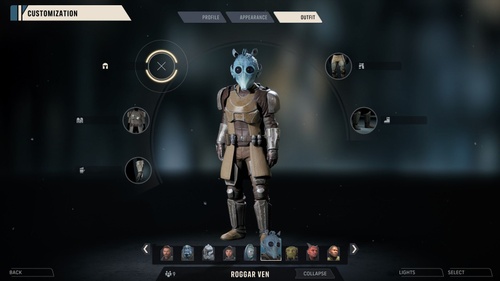
Visually, Zero Company doesn't try to reinvent Star Wars, and it probably does well. Uniforms, military architecture, interfaces, blasters, and environments immediately recall the language of the Clone Wars, while attack animations often seek a cinematic flair without turning every turn into a sequence to be passively observed. The result is recognizable at first glance, but above all, it remains legible when the field begins to fill with enemies, cover, and effects.
We played on PC with an RTX 4060 Ti 8 GB, 16 GB of RAM, and an ultrawide monitor in 21:9 format. This last point particularly suits the tactical structure: having more lateral space allows you to keep a larger portion of the scenario under control, better follow elevation changes, and more immediately read the unit disposition. Ultrawide support is native and did not force us to live with distorted interfaces or obvious cuts at the sides of the screen.
Overall, the game remains pleasant to look at and, above all, consistent with what it demands on the field. Where something falters is in the refinement. Textures and objects can appear with a slight delay during some transitions, while occasionally small freezes or inelegant camera behaviors occur. These issues have also been reported on significantly more powerful configurations, so not everything can be attributed to the limitations of the hardware used.
Music, blaster effects, and voice acting complete the picture better than any graphic filter. When a volley crosses a catwalk, a lightsaber deflects shots, and the camera lowers to follow the action, Zero Company manages to feel like Star Wars without losing the clarity necessary for a strategy game. Technically it's not impeccable, but artistically and audiovisually, it knows exactly which universe it needs to represent.
Score
Editorial team

Star Wars Zero Company Review: XCOM Meets the Clone Wars
Star Wars Zero Company proves that the Clone Wars still have much to tell, even leaving Jedi and great heroes on the sidelines. Bit Reactor builds a deep, accessible, and above all fun tactical game, where preparing your squad and chaining together the best actions provides continuous satisfaction. The balance loses its edge in the second half, and the Den deserved more depth, while some technical uncertainties remain visible. These are real limitations, but they don't erase one of the most convincing video game interpretations of Star Wars in recent years.
Similar articles