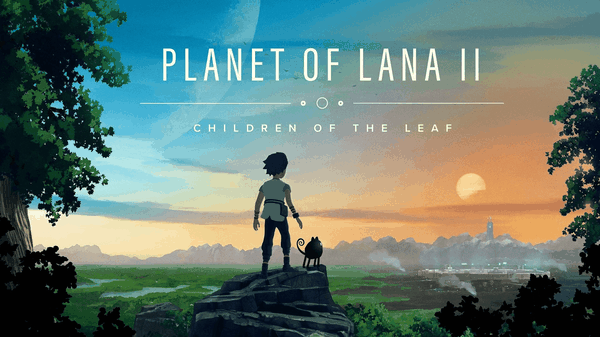
Planet Of Lana 2: Children of the Leaf. Review of a Nearly Perfect Sequel
Lana and Mui return in Planet Of Lana Children of the Leaf, an adventure that almost achieves perfection


In the Book of Ecclesiastes, from the Old Testament, the author, presumed to be Solomon, writes, "What has been will be again, what has been done will be done again; there is nothing new under the sun."
A concept that has been repeated in different ways by other authors over the centuries, then re-elaborated by various philosophers with the intent of emphasizing how human thought, and therefore also its creativity and ingenuity, is cyclical.
The consequence of this cyclicity is that the act of creation becomes a challenge against the impossible; what truly matters is no longer the invention of the 'new', but the perspective with which already used and replicated concepts are expressed.
And when Planet Of Lana arrived on the market in 2023, many praised how Wishfully had managed to re-elaborate a story told billions of times already – that of invasion and the search for loved ones – with a creative and identifiable force capable of making it stand out from the crowd.
That's why when Planet Of Lana 2: Children of the Leaf was presented during last year's Xbox Showcase in June, the expectations created around the development team were immediately very high.
The hope and wish, shared by both fans and critics, was that Planet Of Lana 2 would dare to do more, transforming that excellent starting point into a more complex, dynamic, and layered experience, capable of overcoming the simplicity limitations of its debut.
A challenge that, as Caparezza reminded us, makes 'the second album always the most difficult,' as the weight of expectations risks crushing the spontaneity of the debut.
And it was this hope that accompanied me during my journey into the world of Novo.
An adventure that made me discover more about the past of Lana, Mui, and the planet they inhabit, confirming Wishfully studio's commendable creative flair, but also leaving me with some doubts about what was done and what more could have been done.
Planet Of Lana 2, a plot of mysteries and twists
The first chapter of the saga concluded by leaving players with a trail of unresolved questions: what is Mui really? Who sent the machines? What civilization erected the stone ruins and what secret does the hermit's past hide?
Planet of Lana 2 answers some of these questions with the enigmatic style that is now the series' trademark, yet it acts like a shifting horizon: every door we open reveals new, immense enigmas about the history of Novo and its inhabitants.
The story picks up a few years later. Lana and Mui have managed to halt the advance of the machines, but their victory has brought ancient secrets to light. We discover that the Tailo are not alone; Novo is a mosaic of communities and centuries of migratory waves. Even the machines change their appearance: not simple invaders, but "guardians" whose protocol of care for humanity tragically short-circuited.
The journey restarts from the spaceship of the first game, the technological womb that brought life to Novo. Lana is accompanied by her niece (Ilo's daughter), but the way back to the Tailo village is abruptly interrupted: a strange mineral falls from the sky, releasing spores that plunge the child into a deep sleep.
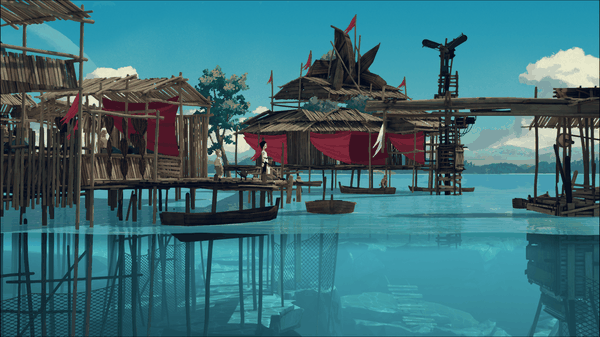
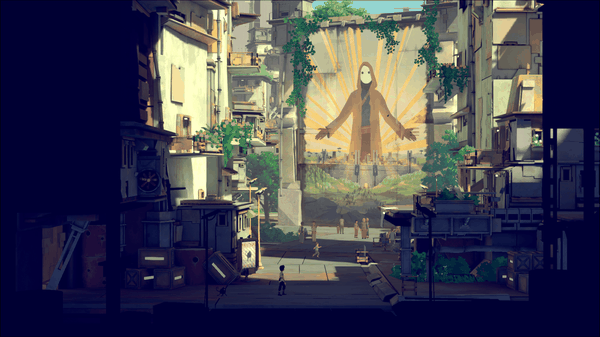
Here Planet Of Lana 2 reveals its broader scale: The Tailo are not the only community inhabiting Novo: there are the Wemari, who live in symbiosis with nature, rejecting machines, and the Dijinghala, who, under mysterious guidance, are building an advanced society based on the exploitation of machines. It is precisely the latter who "lost" the toxic mineral, in a mad attempt to build an ideal city in the mountains, oblivious to the fact that their ambition is becoming a poison for the entire planet.
In search of a cure, Lana and Mui embark on a new adventure that will lead them to solve a series of secrets surrounding Novo, only to discover that these are merely the gateway to much larger questions.
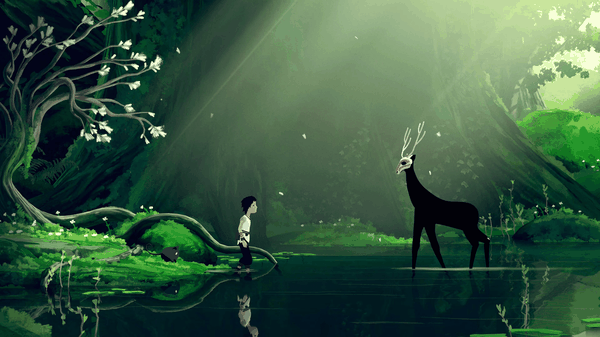
The gameplay of Planet Of Lana 2, a timeless video game
Just like its predecessor, Planet Of Lana 2 is a side-scrolling platformer with strong cinematic elements that relies on the cooperation between Lana and her travel companion Mui.
The game offers an evolution of the mechanics already seen in the first chapter, Lana is stronger and more agile, which adds greater dynamism to her movements, such as the introduction of the slide, resulting in increased interaction with the surrounding environment, albeit always limited to the title's linearity.
The relationship with Mui also offers new gameplay variations. In Planet Of Lana 2, Mui can "hypnotize" the creatures living on Novo to solve various puzzles and open new doors.
Furthermore, there are also a series of sections where we will play solely as Mui.
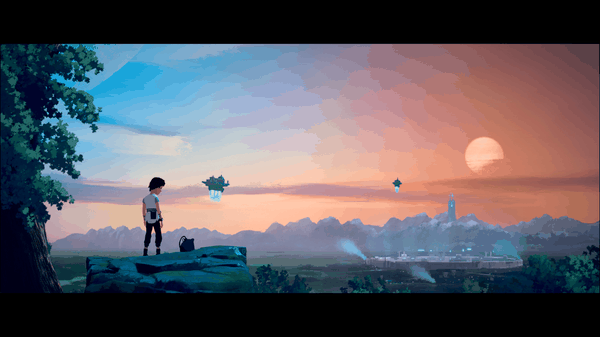
The gameplay is perhaps the true weak point of the game. Planet Of Lana 2 not only does not aim to rewrite the genre, but it doesn't even try to add the playful complexity that was missing in the first chapter.
The game is enjoyable and pleasant to play, however, controller in hand, it offers nothing different from a game system that, quoting the aforementioned book of Ecclesiastes, is nothing more than a rehash of what was already seen decades ago in the Oddworld saga, The Last Guardian, or the works of Playdead.
At the same time, Wishfully demonstrates its ability to manage this, offering puzzles, never too complicated, that focus entirely on design rather than gameplay mechanics, which works given the title's fairly generous longevity.
Also noteworthy is the presence of a series of secrets scattered throughout the various levels that provide an additional reason to get lost in the different environments, or to replay certain levels.
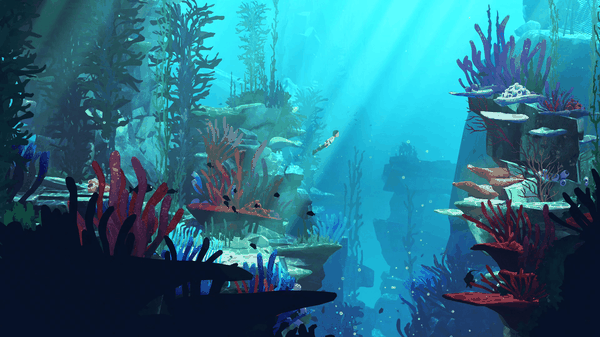
Not just Studio Ghibli and Star Wars. The technical department of Planet Of Lana 2
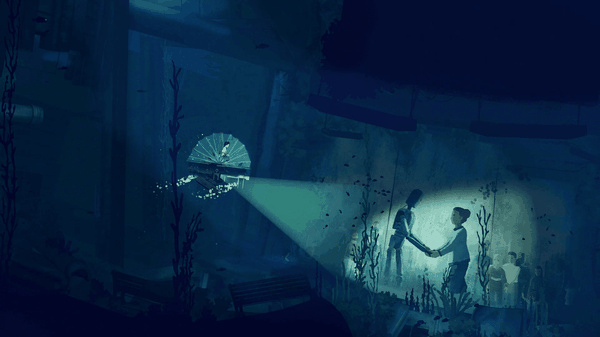
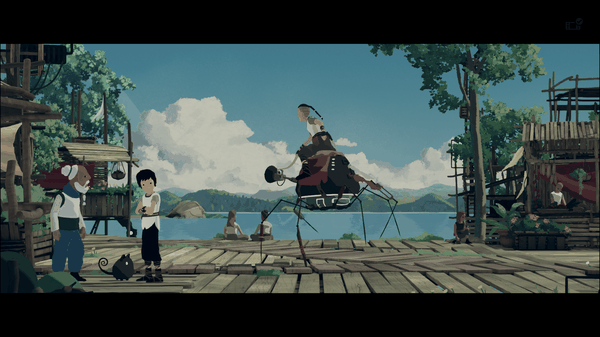
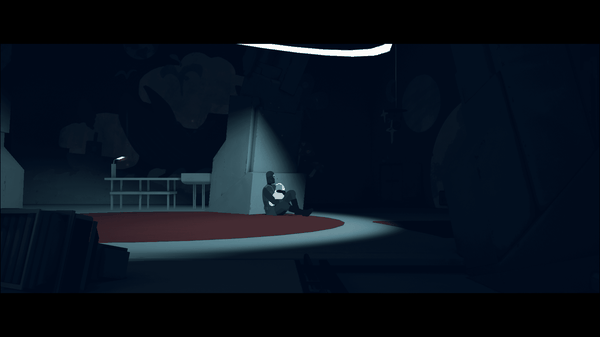
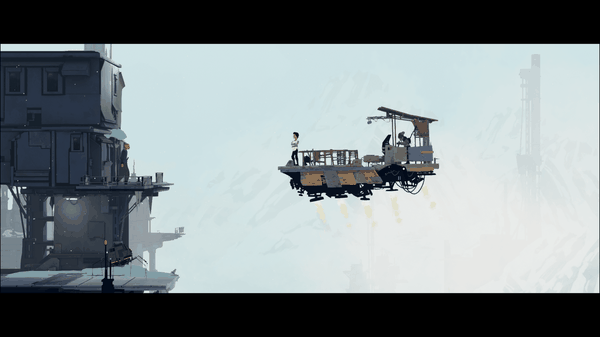
What Planet of Lana 2 excels at is its artistic presentation. Novo is a feast for the eyes and manages to shine in every setting: whether it's a forest, snowy mountains, a desert, or a futuristic spaceship, the chosen colors and the "hand-painted" technique offer a truly stunning result.
But the various biomes are not everything: as mentioned, in the second chapter of the saga we will meet other communities, and each of these presents unique architectural styles, color palettes, and details, which give each a strong visual and cultural identity.
The same care has been placed in the fluidity of the characters on screen, with movements crafted with the utmost attention to detail. It is also admirable the choice not to use static backgrounds: Wishfully has implemented a series of parallax layers that, moving at different speeds, give the illusion of a vast world.
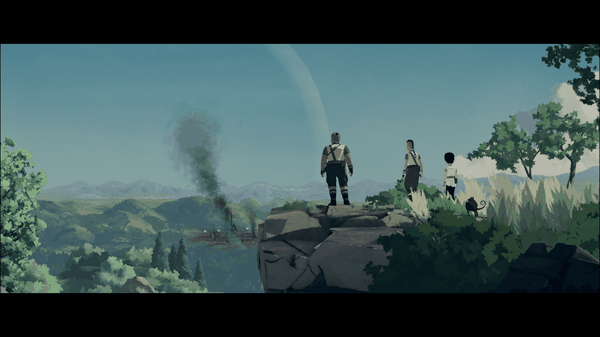
This sense of life is palpable when visiting the various settlements, where one can get lost observing the daily activities of the inhabitants: children playing, a sheep running towards its mother, a father fishing with his son, or a woman singing a lullaby.
While the inspiration from Studio Ghibli's works and the aesthetic of early Star Wars is evident, immersing oneself in the world created by Wishfully is like strolling through a museum of pop culture. There are elements that recall Midgar from Final Fantasy VII or the atmospheres of Horizon Zero Dawn and Forbidden West (especially in the characterization of the tribes), a touch of Stray, and many other references that will make you smile, almost risking to distract you from the game world.
Finally, one cannot fail to mention the return of Takeshi Furukawa to the soundtrack. Furukawa has succeeded in the arduous task of surpassing the excellent result of the first chapter, offering orchestral arrangements capable of accompanying and elevating every single moment of the adventure.
Planet Of Lana 2 is a game one step away from perfection
As soon as the credits of Planet of Lana 2 rolled, I felt like I wanted more. Not because what I had played wasn't enough, but because Wishfully Studios came surprisingly close to crafting a perfect experience, only to pull the handbrake right at the best moment.
It's a difficult feeling to explain: every moment of the game works great, yet it always seems to lack that "extra inch" to reach excellence. To give a practical example: the stealth sections and encounters are excellently written and conceived, but their number is truly scarce. Similarly, some environmental puzzles based on chains of events and innovative mechanics appear as flashes of genius that I would have liked to encounter much more often.
In parallel, the development team demonstrates a very strong artistic capacity and identity, which, however, risks being overshadowed by overly obvious cultural inspirations. This excess of referentiality to other works carries a concrete risk: that the player gets lost in the game of citations, ending up ignoring the excellent original work before their eyes (exactly as could happen with the many citations present in this review).
It's complicated to explain why, ultimately, Planet of Lana 2 is a work that excels in many aspects. Just a little more courage and risk would have been enough to definitively elevate it to the pantheon of video games.
Score
Editorial team
Planet Of Lana 2: Children of the Leaf. Review of a Nearly Perfect Sequel
Planet Of Lana 2: Children of the Leaf is a work of extraordinary beauty that confirms Wishfully's ability to create extraordinary and enchanting worlds.
Children Of the Leaf represents a demonstration of the studio's maturity, showcasing its strengths – a superlative narrative and an artistic department that rivals productions with higher budgets – and atoning for its past mistakes by improving the gameplay mechanics that had caused some raised eyebrows in the first chapter.
There remains an excessive fundamental referentiality, both artistically and in gameplay, which is pleasant at first but becomes cloying in the final hours of the game. The game would certainly have benefited from a touch more arrogance from the developers.
Planet of Lana 2 is a title that almost touches perfection, yet fails to do so due to excessive caution. The title shows grandiose ideas but only offers a taste of them; and the worst part is that it does so with full awareness of the enormous capabilities at its disposal.
Similar articles