Mortal Shell 2 Cancels Stamina: A Truly Electric Beta, Giving Us High Hopes for the Game - Preview
Cold Symmetry's open beta accelerates combat and shifts the weight of the rules, but the true test will be the balance between player freedom, enemy aggression, and technical stability.
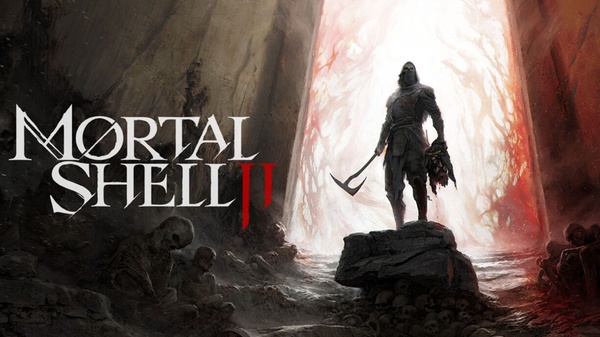


In 2020, Mortal Shell was the small soulslike that shouldn't have stood out. It arrived in an already crowded genre, with limited resources, an obscure identity, and an initial Epic Games Store exclusive that certainly didn't help immediate widespread adoption. Yet, it managed to carve out a precise niche thanks to a single, strong idea: not choosing a class, but rather donning a corpse. The shells were dead bodies to inhabit, each with its own mechanical inclination, while hardening allowed players to stiffen for an instant, transforming the character into an almost invulnerable statue in the midst of action.
It was a simple, readable, memorable gimmick, strong enough to give personality to an imperfect but recognizable game, capable of engaging with the Souls series without merely copying its surface. Five years later, Cold Symmetry returns with Mortal Shell 2 and chooses the least cautious path possible: not just refining the formula, but amputating one of the genre's most deeply rooted dogmas. Stamina is gone.
This point is not secondary, because in a soulslike, the fatigue bar doesn't just measure how much you can run, hit, or dodge: it's the invisible leash that disciplines the player's instinct, forcing them to count blows, to breathe between attacks, to understand when to press on and when to retreat. Removing it means changing the physics of the rules, not just adjusting a parameter, and the open beta released on Steam primarily serves to measure the consequences of this choice.
What the Mortal Shell 2 Beta Truly Offers
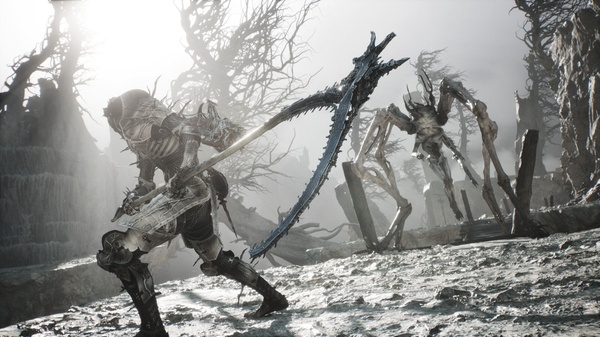
The Mortal Shell 2 beta covers the prologue and an initial portion of the open world. It's not a huge taste, but it's extensive enough to hint at the project's direction: players traverse an early part of the adventure, face a mini-boss, the Wandering Shepherd, and reach the confrontation with Magdalena, the Lady of the Woods. The protagonist is the Herald, sent to retrieve stolen Ovas on behalf of the Mether, within a narrative framework that is more evoked than explained.
The structure remains faithful to the central idea of the first chapter: how one fights depends on the shell worn, i.e., the body of the dead warrior taken possession of. In the beta, two are encountered: Harros functions as an introductory vassal during the prologue, while Tiel represents the actually usable shell in the subsequent portion. In the full game, there will be nine shells, with a partial return of the original cast and some absences that will need to be evaluated in the context of the final progression.
This detail is not secondary, because Mortal Shell has never used classes as a simple statistical category. The shell is simultaneously body, build, and narrative fragment: it changes how blows are taken, the relationship with risk, mobility, and the very perception of combat. In the beta, the transition from Harros to Tiel primarily serves to show how much the sequel wants to shift the character's identity towards a more aggressive and less defensive logic. Harros remains the bridge to the past, the memory of a more constrained and cautious Mortal Shell; Tiel, on the other hand, seems designed to better inhabit this new speed, with a more fragile body but one more consistent with the rhythm imposed by the absence of stamina.
A Compact Map, But Still to Be Deciphered
The world is the first element to strike, but also the first on which judgment should be suspended. Cold Symmetry speaks of a compact and interconnected open world, built around narrow paths, lateral deviations, and over sixty dungeons; on paper, it's an interesting promise, especially at a time when many open worlds still seem to measure their ambition in square kilometers rather than density. The beta, however, shows a limited and visually very consistent portion, perhaps even too much so: leaden grays, muddy browns, damp ruins, faded vegetation. The atmosphere works, but readability is not always impeccable, because at times the palette tends to blend enemies and backgrounds, reducing the clarity of combat.
The map seems built more to envelop than to open up. It doesn't give the impression of a traditional open world, made of vast expanses and question marks scattered everywhere, but of a territory folded in on itself, traversed by shortcuts, elevation changes, lateral passages, and spaces that promise to reconnect later. This is a potentially correct direction for Mortal Shell 2, because a game founded on stolen bodies, false deities, and corrupted matter would not gain much from a dispersive geography. The problem will be to understand if this compactness will truly produce discovery, or if it will end up translating into a sequence of corridors disguised as openness.
This is not a condemnation, but a risk to keep in mind. A gloomy area can be effective for an hour, but it can become tiring if that visual grammar remains dominant for tens of hours. The same applies to the exploration structure: purifying lighthouses, extracting Ovas, and pursuing objectives distributed across the scenario gives the beta a clear rhythm, but hints at a possible checklist drift. This is a friction to observe carefully, because discovery in a soulslike works when the world seems to resist the player, not when it merely organizes their errands.
Without Stamina, the Weight of the Rules Changes
The heart of the beta, however, is combat, and it is here that Mortal Shell 2 shows its most interesting face. Without stamina, the character can sprint, dodge, and chain attacks without being forced to stop to catch their breath; the rhythm becomes more nervous, more aggressive, closer to a dance of positioning than to the punitive patience of classic Souls games. You no longer play by counting every remaining energy point, but by reading space, distance, and the useful window to re-engage the opponent.
It's an important transformation, especially when compared to the first Mortal Shell, which was heavy, rough, often deliberately constrained. The sequel seems to seek a different physicality, more reactive, less tied to fatigue management, and a significant part of players' initial impressions converge precisely on this point: Mortal Shell 2 moves better than the first, and the difference is immediately felt. The character responds with more elasticity, animations better communicate the impact of attacks, and defensive options open up a wider range compared to simply waiting for the right moment to harden.
Hardening, in fact, does not disappear, but remains an identity component within a more articulated defensive grammar. Alongside petrification, guarding and parrying find their place, with the latter built according to a high-risk, high-reward logic, and defense is no longer a single gesture, but a more flexible system of responses. This is a sensible choice, because a game without stamina cannot simply give more offensive freedom: it must also multiply the ways in which that freedom is controlled, interrupted, or punished.
The arsenal also expands. In addition to melee weapons, the beta introduces ranged tools such as a portable cannon and a burst crossbow, a solution that brings the game closer to a sensibility already explored by other action RPGs contaminated by gunplay. The risk, in these cases, is always that of distorting melee combat, but in the beta, firearms seem more like a tactical extension than a shortcut: they serve to break the rhythm, open a window, manage distance, without canceling the duel, at least for now.
More caution is warranted, however, for the possible health recovery system linked to aggression, described by some impressions as close to the spirit of Bloodborne's rally. It's an idea consistent with the new direction of combat, as it would push the player to re-enter danger instead of retreating, but it's also a point to be verified directly in the full game or in a more stable build. For now, it remains an interesting signal, not a design certainty on which to build a judgment.
Boss Fights Are the Real Stress Test
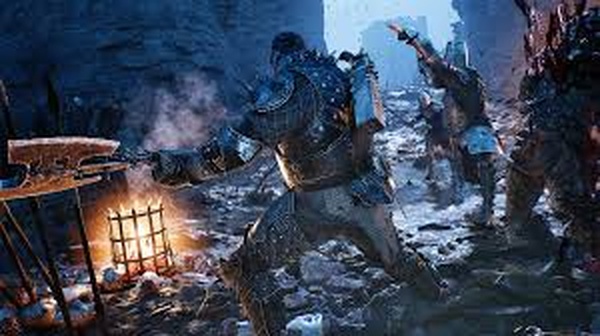
The cost, if anything, risks being paid by the bosses. When such an important physical limit is removed from the player, enemies must find other tools to remain threatening, and the beta seems to respond by increasing aggression, pressure, and the ability to cover distance. So far, nothing wrong: it's the natural way to prevent the absence of stamina from becoming an unlimited license to dodge. The doubt arises when some attacks seem to close space with such rapidity that the pattern becomes less clear to read, because in that case, combat risks sliding from understanding to nervous reaction, and from nervous reaction to compulsive mashing of the dodge button.
The Wandering Shepherd serves as the first serious test because it forces players to understand that the new rhythm does not forgive passivity. It's not enough to wait for an opening as in a more classic duel: you need to manage distance, rotation, pressure, and offensive re-engagement, accepting that defense is now distributed among multiple tools. Magdalena, on the other hand, better represents the structural problem of the beta, because she tests the readability of the arena, the clarity of animations, and the player's ability to distinguish between correct aggression and excessive pursuit. When a boss fight works, the absence of stamina frees up combat; when it works less well, it risks transforming every mistake into a sequence of instinctive dodges.
This is the most delicate point of the beta, not solid enough to become a rejection, but too evident to be ignored. Mortal Shell 2 can work without stamina only if the bosses are rethought around this new freedom; if, instead, the response is simply to make them faster, more aggressive, and more insistent, the system could lose that punitive clarity that makes a good action RPG readable even when it's severe. The difference is subtle but decisive: a severe boss forces you to learn, a confused boss forces you to survive the noise.
Technical Aspects Remain an Open Verification
On the technical front, caution is advised. The beta weighs 55 GB, a robust size for a public test, and the studio has already stated that it is working on bugs and refinements based on received feedback; elements that confirm the provisional nature of the code and make it unserious to turn the current experience into a definitive verdict on performance.
At the moment, a measured benchmark is primarily missing. A current average configuration, such as an RTX 4060 with SSD and a 21:9 ultrawide monitor, would be a natural reference for evaluating Mortal Shell 2 on PC, but without reliable data on frame rate, stability, latencies, and wide format support, any numerical judgment would be arbitrary. Better not to invent it.
The issue, however, is central, because stamina-less combat, based on close-range dodges, parries, and constant pressure, lives or dies on frame stability. In such a reactive system, a stutter at the wrong moment is not just a technical flaw: it becomes a reading error imposed on the player. If the enemy animation loses clarity, if frame pacing becomes irregular, or if input doesn't remain clean, the entire system risks cracking. Not because the game needs to be spectacular, but because it needs to be reliable.
This is the same reason why the artistic direction will need to be evaluated alongside readability. Mortal Shell 2 can afford to be dirty, gloomy, muddy, and hostile, but it cannot afford to be confusing. The beta already shows a clear visual identity, yet leaves the most important question open: will that gloominess be varied enough to sustain the entire adventure, or will it end up flattening the scenery, enemies, and action readability?
Mortal Shell 2 Cancels Stamina: A Truly Electric Beta, Giving Us High Hopes for the Game - Preview
Mortal Shell 2 did the riskiest thing it could: it removed one of the genre's most recognizable brakes to pursue freer, faster, more aggressive action. It's a courageous choice because it doesn't just increase the speed of the first chapter, but redefines its core, and the beta suggests that the gamble can pay off. Movement is more fluid, defensive options have more character, weapons deliver a good sense of impact, and the absence of stamina truly produces a different kind of combat, not just an easier one.
However, substantial doubts remain. The compact open world is a promise yet to be verified, the objective structure risks turning exploration into a sequence of tasks, the visual palette could become monotonous over the long run, and, above all, the balance between player freedom and boss aggression remains the true unresolved issue.
Similar articles