Dragonkin: The Banished - Review of Eko Software's New ARPG on Xbox Series X
Beyond Diablo's Shadow: How the Ancestral Grid Redefines Genre Boundaries
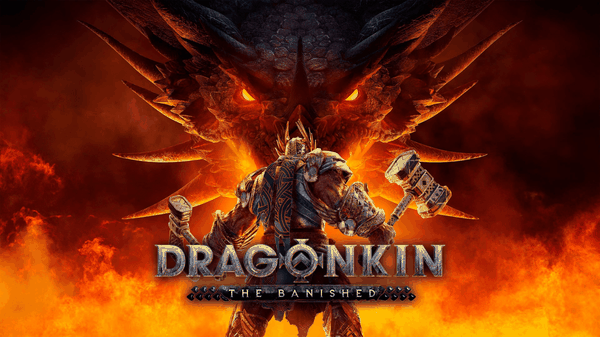


The landscape of isometric Action RPGs today resembles an ecosystem dominated by a few, enormous predators that have established strict rules since the mid-nineties. Titles like Diablo IV and Path of Exile have carved such deep grooves that it's almost impossible for independent productions to find a space that isn't mere imitation.
Yet, Dragonkin: The Banished enters this market with surprising structural awareness, preferring mechanical experimentation over budget ostentation. Eko Software doesn't try to compete on visual grandiosity, but instead focuses entirely on rewriting progression systems. It's an approach reminiscent of the golden age of "mid-tier" productions, where the absence of unlimited resources forced developers to invent new game grammars.
It remains to be seen whether this focus on internal logic is enough to sustain an experience that must necessarily contend with the extreme fluidity of the genre's top titles.
Dragonkin: An Interesting Story with Excellent Ideas
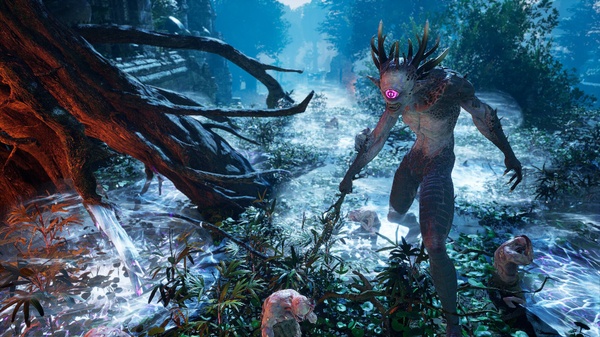
The vision underpinning the entire structure of Dragonkin: The Banished is rooted in a millennial conflict that defines not only the atmosphere but the player's very objective. The myth of the Eternal and the fall of the Drachilles, beings of light transformed into monsters after their exile to the abyss of Draamundis, provides the basis for the corruption system that threatens to devour the world. In this scenario, the player assumes the role of a new recruit of the Dragon Hunters, an elite corps born for a brutal and definitive task: to track down the dragon lords who have escaped from the depths to seal once and for all the breaches connecting the land to the abyss. The ultimate goal is a surgical extermination and territorial reclamation operation, where every reconnaissance mission serves to weaken the defenses of the great reptiles and eradicate the plague infesting regions like the Jaxara swamps.
Dragonkin: The Banished

This mission of salvation is not limited to the battlefield but finds its fullest expression in the reconstruction of Montescail. The city hub is not a simple pause menu, but materially represents the rebirth of civilization under the player's blows. Upgrading the city means giving survivors a home and transforming a makeshift refuge into an impregnable fortress capable of sustaining the war effort. The urban meta-progression is a brilliant design element, as the development of Montescail is shared among all characters on the account, facilitating the growth of secondary heroes. However, there is a deliberate contrast between community progress and individual progress, given that the enhancement of one's Wormling (the familiar, to be precise) and specific armors remain tied to the current hero.
This difference in pace creates an obstacle for those who like to manage multiple characters, as each new hunter requires an individual climb to obtain the necessary draconic equipment. This balance recalls the strategic management of the refuge already seen in classics like Darkest Dungeon, where base security is the only defense against external horror.
Harder Than Tetris but Very Rewarding: How Does Dragonkin's Gameplay Work?
The true heart of innovation lies in the Ancestral Grid, a system that replaces traditional skill trees with a grid requiring an almost engineering approach. The player doesn't just select powers, but must interpret the grammar of keywords. Each fragment possesses specific labels like Active, Core, or Aura that determine its spatial compatibility.
A legendary fragment placed without respecting this semantic compatibility becomes an inert node, transforming optimization into a logical puzzle where the resonance between pieces is more important than their individual rarity. This depth extends to the Wormling, which ceases to be a simple mascot to become the catalyst for builds. The choice of the dragon's element (Fire, Ice, Lightning, or Poison) must resonate with the hunter's grid: an Oracle based on electricity reaches its full potential only when the Wormling activates vulnerability procs or reduces ability cooldowns with the same keyword.
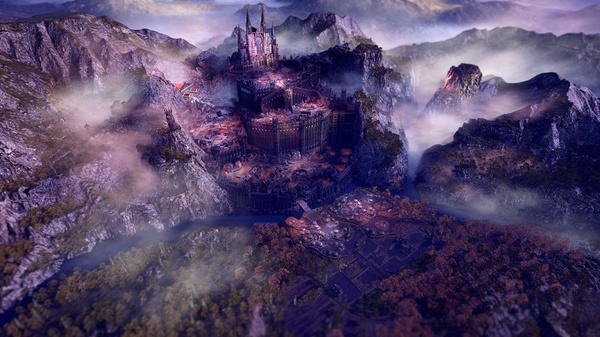
The pace of gameplay is controlled by portals to move from one place to another and culminates in the Chaos Hunts system. This is the true endgame loop, where the player customizes expeditions by choosing biomes, challenging bosses like the Toxic Lord, and reward types. Here the game evolves into a form of strategic target farming: specific biomes like the Plains become essential for gathering the materials needed to forge draconic armors, the most powerful sets in the game that require constant crafting effort. Item collection doesn't focus on exaggerated quantity, but on the search for specific modifiers, making the endgame an exercise in mathematical precision supported by the integrated damage tracker to verify the effectiveness of every minor variation in the grid.
The experience gains further depth in cooperative mode, both local and online for up to 4 players. The stability of the code on Xbox Series X allows for fluid management of group synergies, where the grids of different hunters can integrate to unleash devastating elemental combos. Although the difficulty scales noticeably with the increase in participants, the system maintains surprising readability even in the most crowded situations.
The game feel changes radically based on the chosen class, moving from the physical brutality of the Barbarian to the tactical management of the Oracle's lightning, while the Knight and Tracker offer defensive solidity and support through summons like raptors. This variety, combined with the complexity of the Chaos Hunts, guarantees longevity that goes well beyond the main campaign.
How Does It Perform on Xbox Series X?
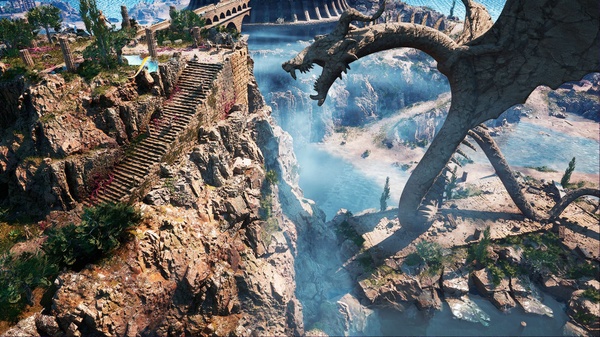
From an aesthetic standpoint, the use of Unreal Engine 5 ensures a modern and clean visual rendering, with scenarios ranging from corrupted swamps to snowy peaks with good chromatic variety. The Italian localization, present in both the interface and subtitles, allows for precise tracking of plot nuances and technical grid descriptions without any language barrier.
However, the level design shows a rather linear structure, where maps often configure as corridors that guide the player towards the objective without allowing much room for exploratory deviation. It's a functional choice that allows for a stable framerate and fluid camera management even in the most crowded situations, but it might be limiting for those who enjoy getting lost in the game world. The Xbox Series X version performs admirably, offering reduced loading times and immediate command response with both the classic and more modern movement schemes.
A crucial element that emerged during group sessions concerns communication between players, which is not only important but essential for the success of more advanced missions. Coordinating ability activation to trigger elemental synergies requires a constant exchange of information, making the use of voice chats or external messaging systems a tactical necessity rather than a secondary option.
Score
Editorial team
Dragonkin: The Banished - Review of Eko Software's New ARPG on Xbox Series X
Dragonkin: The Banished isn't the title that rewrites the genre's boundaries, but it represents a valuable exception in a market often lacking courage. The Ancestral Grid is a triumph of systemic design that transforms character growth into a cerebral and gratifying activity, capable of giving new meaning to the word "customization" through the grammar of keywords. Despite some structural limitations related to map linearity and an aesthetic that doesn't shine with originality, the solidity of its internal logic makes it an experience worthy of attention. It's a game that rewards understanding rules and tactical patience, offering an honest challenge that moves away from the allure of the mass market to focus on the purity of mechanics and the depth of the bond with one's Wormling.
Similar articles