Hot Wheels Infinite Rush Preview
We visited Milestone to discover the new world of Hot Wheels
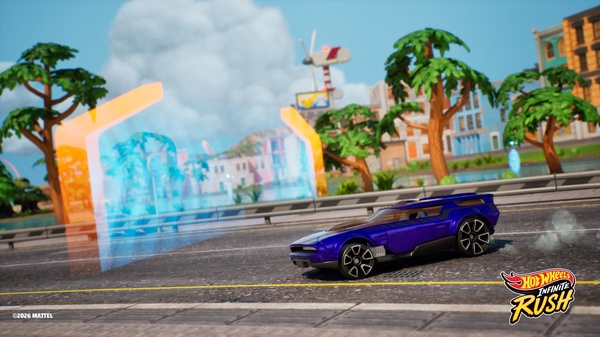


The partnership between Milestone and Hot Wheels is now well-established. The Milanese development studio has previously created the highly acclaimed Hot Wheels Unleashed and its sequel, Turbocharged. In both of the aforementioned titles, the developers at Milestone crafted their own wild and spectacular interpretation of Hot Wheels' modular tracks, featuring insane, intricate, and unpredictable races. The new installment, Hot Wheels Infinite Rush, however, aims to take Milestone's arcade racing series to a new level. The game was announced just a few days ago during the Summer Game Fest (scheduled for release on September 24), but in recent days, we had the opportunity to try it behind closed doors with Domenico Celenza, the series' Game Director.
Hot Wheels Infinite Rush: A World of Plastic
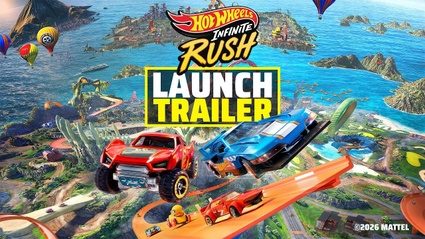
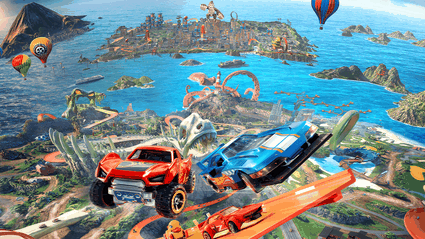
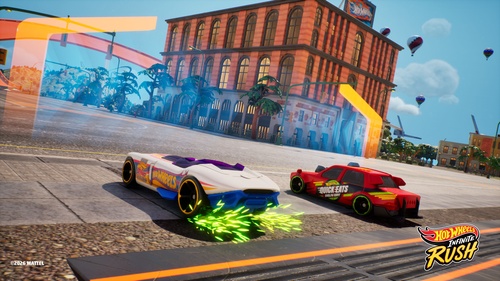
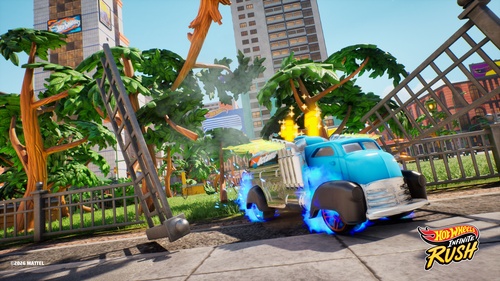
No more single tracks, then: Hot Wheels Infinite Rush embraces a new structure, a "miniature" open world divided into four islands that host the map's thematic macro-areas. The starting point for the new format is the closest thing to the Hot Wheels world: the worlds children imagine when playing with cars, with their obstacles and surrounding elements. The goal is to push the player towards exploring the world built for them with a series of accessory activities beyond classic races: Infinite Rush's world is alive, with its traffic, challenges, hidden events, and objects that can be knocked down and destroyed (they even make a beautiful plastic sound!). All game environments have undergone a "Hot Wheels style" pass, leading Milestone to apply their studies on materials, original (or revisited) playsets, and, of course, vehicles within the game.
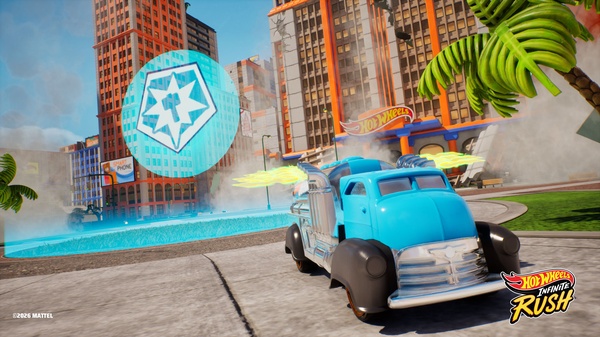
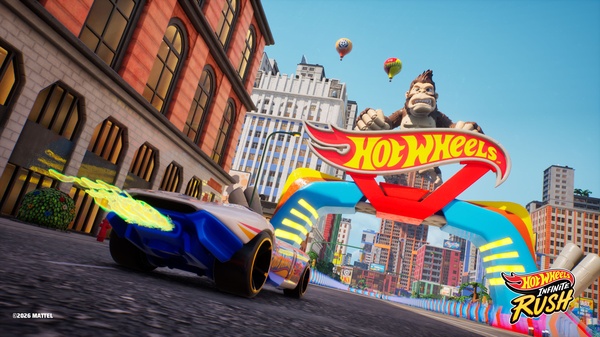
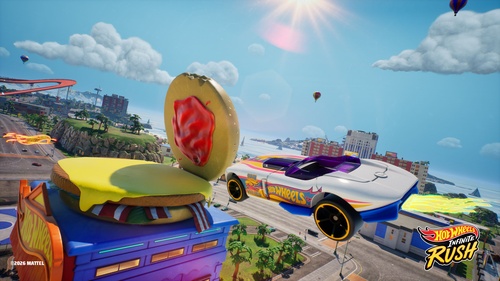
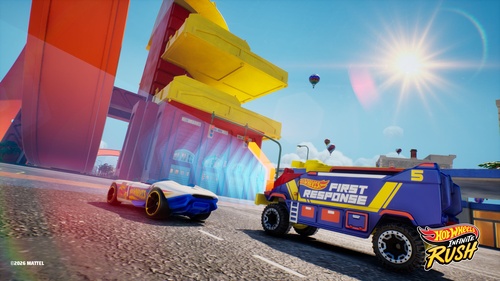
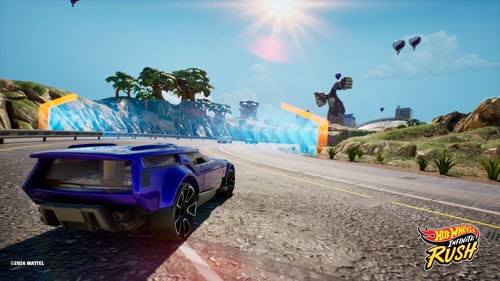
The world of Hot Wheels Infinite Rush is composed of four islands, each with distinct peculiarities, styles, and settings. Wheelswood is the most urban environment, with Milestone referencing Downtown Manhattan or San Francisco, but also the most "classic" with its skyscrapers and elevated roads. Tentacle Bay is flatter, without skyscrapers, but characterized by a lot of natural environment and more greenery, with a rocky area and even an archaeological park. Gearville, on the other hand, is the desert area, between an industrial port and its canyons, where giant scorpions spew venom! Drifty Temple is the island inspired by the East, balancing the pastel colors of nature with the neon lights of venues and cars, which will find hairpin turns worthy of their suspensions here. And there's even a giant dragon: each area is characterized by a large set piece, a significantly sized themed element that functions both as a distinguishing feature and a visual reference during gameplay. Exploring Wheelswood, for example, it's impossible not to notice the mechanical King Kong towering atop the Empire State Building, while in Tentacle Bay, a gigantic dinosaur skeleton awaits you.
Hot Wheels Infinite Rush: Toy Cars for Every Taste
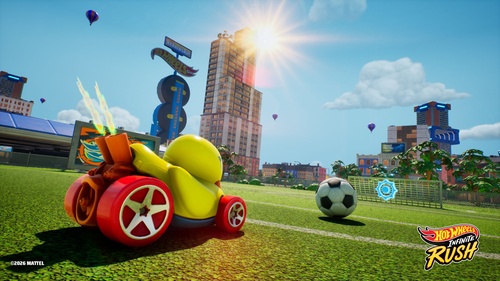
Variety, however, will not only come from the environmental diversity of the four islands (not all immediately accessible), but also from the activities encountered while moving through the streets of Hot Wheels Infinite Rush. During the transition between events, there will always be something to do, indicated by the various icons scattered on the mini-map that encourage exploration and experimentation by starting without loading screens. We'll find Challenges, classic races against a leaderboard's best time, or Daredevils, extemporaneous challenges against other racers we encounter, who will wager their car to add a bit more spice to the competition. Or even Stuntman events, where you're required to destroy as many environmental elements as possible (taking advantage of the new introduction of environmental destructibility), photo challenges, and other more classic activities. The more competitive aspect is also present, with events that mark career progression, from classic Time Attacks to more unconventional races with specific objectives, such as checkpoints without a predefined path or targets to hit.
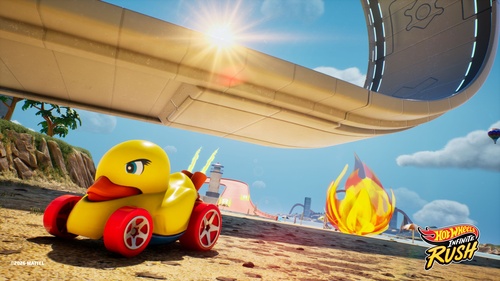
Given the variety of scenarios and challenges, Milestone decided that a single vehicle category wouldn't suffice and therefore planned four, each with its own peculiarities and driving characteristics. Speeders are similar to F1 cars, specialized in extreme straight-line speed, but less performant in corner drifting. Drifters, on the other hand, are perfect for winding tracks, capable of maintaining speed through curves and shaving seconds off the more technical parts of the tracks. If you prefer brute force, there are Titans, massive cars that rely on a powerful and long-lasting booster, but also on considerable bulk. The quartet is rounded out by the Versatiles, the most balanced models. The differences between the four categories mean they can only race among themselves, in competitions and on tracks designed for their specific characteristics. During normal free roaming, we can also instantly switch between our favorite model in each category by simply pressing a button on the controller.
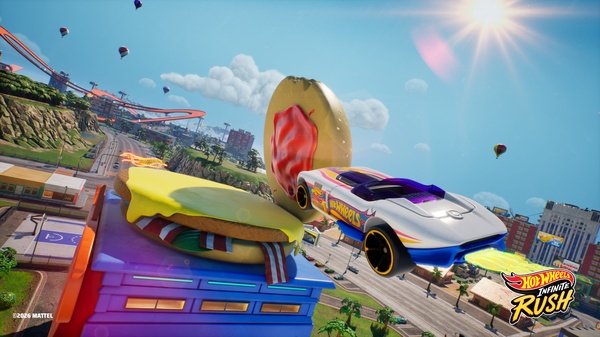
And speaking of cars, there will be over 150 available models, almost equally divided among the four categories, which unlock throughout all phases of the game, from free roaming to challenges. To collect them all, therefore, you'll need to explore and tackle every corner of the Infinite Rush world. And don't miss the Mystery Shop, a vehicle that offers exclusive models to intercept by following the din emanating from its pumped-up speakers. Furthermore, each vehicle can be upgraded by assigning up to a maximum of four Perks, thus improving its performance and adapting it to your style. There will also be the possibility to customize your vehicles in various ways, with great attention paid to the tires, a true obsession for collectors of the originals. The launch date, September 24, is quite crowded, but from what we've heard, seen, and played, Hot Wheels Infinite Rush has a well-defined personality and knows its target audience well: all excellent premises.
Gallery
Similar articles