Twixt – Coppola's More Restless Cinematic Side in 2K
The great director crafts a narrative suspended between reality and the dream dimension, permeated by the weight of memory
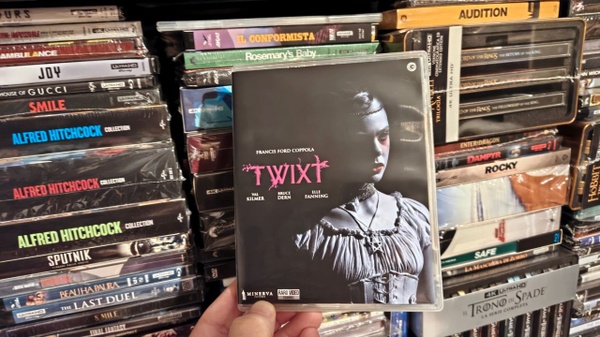


Twixt stems from the freedom Francis Ford Coppola gained after his long detachment from Hollywood. It's a small, personal, and deliberately unconventional film that uses horror as a starting point to tell something much more intimate.
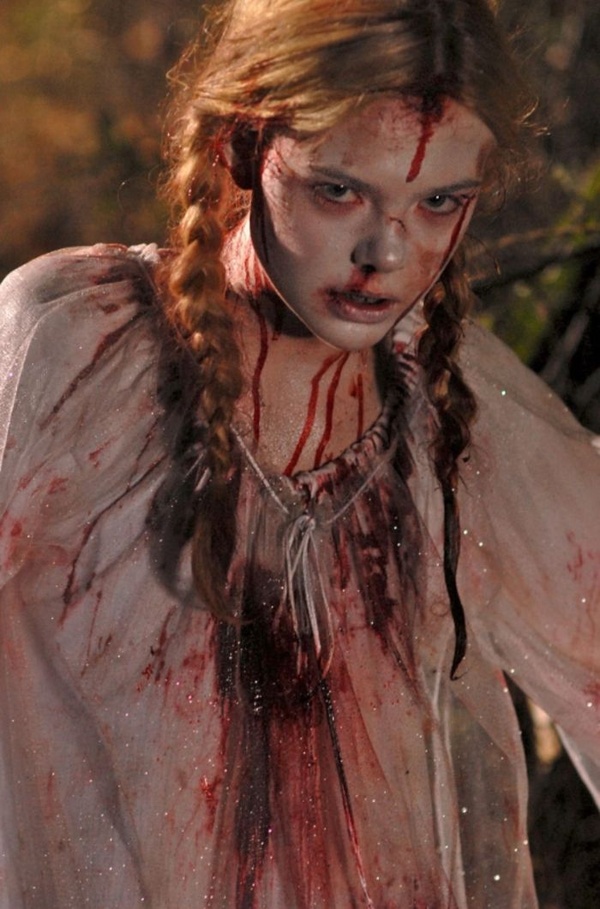
At its center is Hall Baltimore, a writer in crisis portrayed by a convincing Val Kilmer. He arrives in an apparently insignificant town and becomes embroiled in a mystery related to the death of a girl. However, the story takes an increasingly dreamlike turn, leading to an encounter with none other than Edgar Allan Poe.
Inside Coppola's Dream
Coppola thus constructs a narrative suspended between reality and the dream dimension, permeated by the weight of memory. The mystery primarily becomes a tool to confront Baltimore's pain and his sense of guilt over the loss of his daughter. In this aspect, Twixt takes on an openly autobiographical character: the story originates from a personal dream experience of the director and recalls a tragedy experienced by his family.
The idea is interesting but the execution is not always up to par. The digital effects often appear poor, and some visual solutions have an evident artificiality. The pacing also proceeds in fits and starts, slowing down precisely when it should maintain high tension.
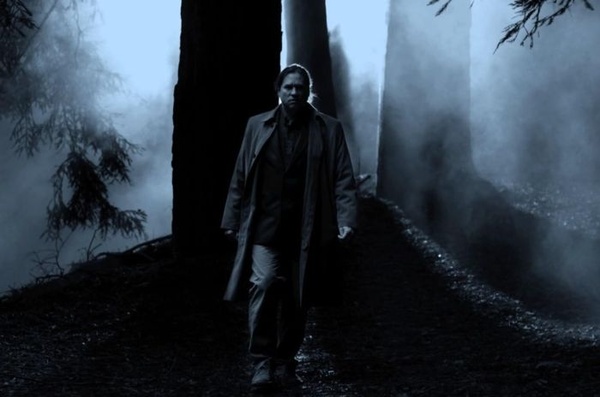
Nevertheless, it remains a curious and personal experiment, far from traditional horror models. Twixt is not among Coppola's most successful films, but it possesses that creative freedom that makes even an imperfect work interesting. The version presented is the integral cut of approximately 88 minutes, but a comparison with an unspecified “Director's cut” of 80 minutes would have been interesting.
Digitally shot at native 2K resolution (Sony HDW-F900), original image format “Univisium” 2.00:1 (1920 x 1080/24p), AVC/MPEG-4 encoding on a single-layer BD-25. The visual presentation conveys a constant digital feel, decent black depth, and cinematographic limitations that impact the overall rendering, especially in long transitions with low light. There is some background noise, while in some passages, there's a sensation of noise reduction filter interventions. The desaturations of the dream sequence contrast with the rest of the world surrounding the writer.
Interesting multichannel audio with the original track DTS-HD Master Audio 5.1 (16 bit), but there's also Dolby Digital 2.0 (224 kbps). There is no Italian dubbing, but there are excellent subtitles. The only extra is the trailer.
Similar articles