The Ten Commandments – Cecil B. DeMille's Epic in 4K
6K negative scan and 150 hours of production for an excellent technical rendition, at least for the images
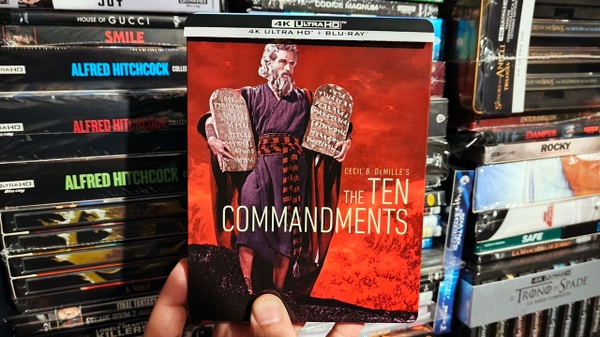


When it comes to great Hollywood cinema, The Ten Commandments by Cecil B. DeMille remains one of the most powerful examples of how epic can become total and all-encompassing spectacle. The 1956 work, long and monumental, is rooted in the tradition of the classic colossal film, transforming the story of Moses into a visual fresco of almost mythical scope.
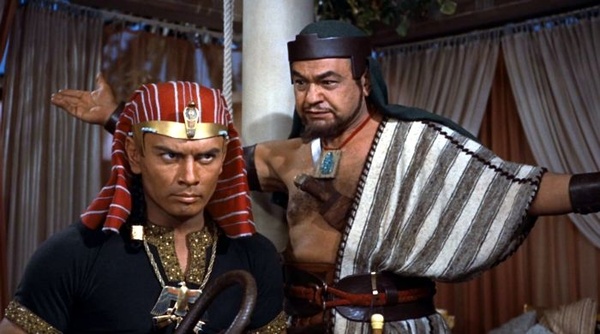
At the center of the story is the man destined to lead the Jewish people out of slavery: Moses, played by Charlton Heston with an intensity that spans the entire film, from his privileged role in the Egyptian court to the awareness of the mission entrusted to him by God. Opposite him is Yul Brynner's Rameses, who embodies arrogance, jealousy, and a power incapable of accepting change. The tension between the two is not only political or religious but deeply personal, and it supports the entire narrative structure.
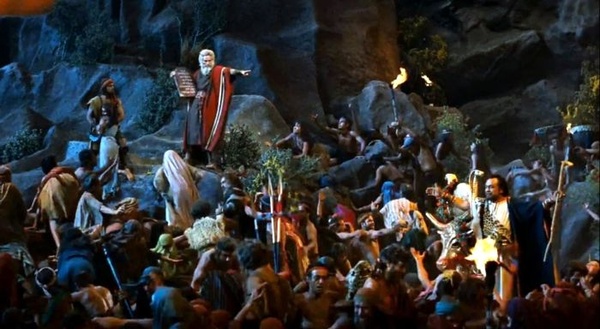
Although imbued with solemnity and, at times, an emphatic tone that may seem excessive today, the film still impresses with its visual ambition. Partially shot in Egypt, built with gigantic sets and a use of spectacle typical of analog cinema, it features sequences that have entered history: the construction of the city of Sethi, the plague that darkens the country, the parting of the Red Sea.
DeMille didn't just make a film; he created a cinematic event designed to amaze and celebrate. The Ten Commandments thus remains a work that, beyond its excesses, continues to embody the very idea of absolute epic.
Dual Film Version, Theatrical and "Roadshow"
Sumptuous 3-disc steelbook edition, 1.78:1 aspect ratio, 4K version with 6K scan, as per the official Paramount press release. “Restoration carried out in 2010, new version in Dolby Vision capable of maximizing the beauty of the original VistaVision negative. This format used special cameras that ran 35mm film horizontally, distributing the image over 2 frames instead of just 1: the result was double the resolution of normal 35mm. The Studio also invested over 150 hours in new color correction and image cleaning work derived from the scan. The transition to Dolby Vision has further improved the film's appearance: blacks are deeper, while other interventions have helped to make some matte effects more uniform, to obtain the most vivid, stable, and impeccable image possible.”
Technically impeccable in terms of image quality, the 4K disc (3840 x 2160/23.97p), HEVC encoding on a triple-layer BD-100. This disc offers the theatrical version of the era, lasting 220 minutes. The 2 additional BD-50s offer in 2K, almost equally impeccable and at the best of AVC/MPEG-4 encoding possibilities, the “Roadshow” version of 231 minutes, with the addition of an overture at the beginning of the film, an intermission with an interval, and, as in this case, the director's introduction by Cecil B. DeMille.
For the Italian audio, we find the usual Dolby Digital 2.0 monophonic (224 kbps) on the theatrical version, extremely limited but at least with the voices of the original voice actors of the time, a step above the DTS-HD MA 2.0 on the 4K. The English DTS-HD MA 5.1 (24 bit) is superior, the only track capable of opening up to a first-rate soundscape despite the age of the production, encompassing music, effects, and direct-recorded dialogue on both versions.
No extras are present compared to the US edition; the important film commentary by Katherine Orrison, author of “Written in Stone: Making Cecil B. DeMille's Epic, The Ten Commandments,” which is knowledgeable, in-depth, engaging, and well worth listening to, has been lost.
Similar articles