Sleepy Hollow – Tim Burton's Horror in 4K
Emmanuel Lubezki's cinematography shines, but the Home Theater experience demands English audio
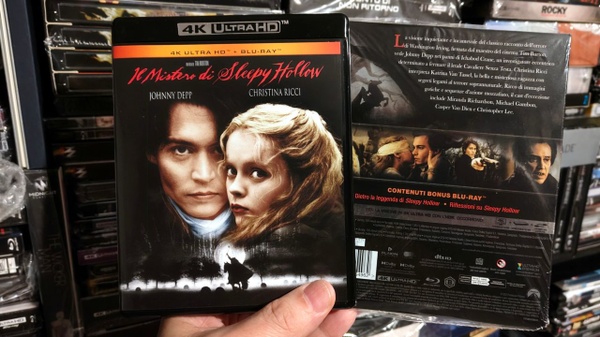


When Tim Burton arrived on the Sleepy Hollow project in 1999, he finally found his identity after several years of production uncertainties. The director called Tom Stoppard to refine the screenplay and give more depth to the relationship between Ichabod Crane and Katrina Van Tassel, transforming Washington Irving's tale into a fairy-tale gothic, very distant from the literary source. In fact, the film also marked the end of a difficult period for Burton, who had suffered several box office failures (the poor success of works like Ed Wood and Mars Attacks!) and inaugurated a new phase that would allow him to return to more ambitious works.
Here too, however, the story remains the weak point: Ichabod's investigation, here reinvented as a rationalist policeman sent to a village shrouded in mystery, gets lost in a plot too crowded with names, family ties, and conspiracies. The plot proceeds in fits and starts, the romantic relationship appears unnatural, and the mosaic of local deceptions is often confusing, leading to an ending that only partially clarifies the conspiratorial mechanisms.
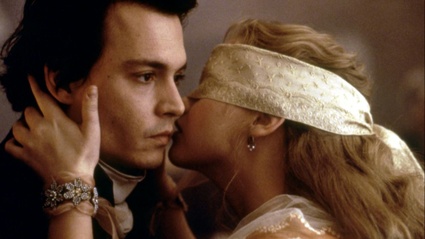
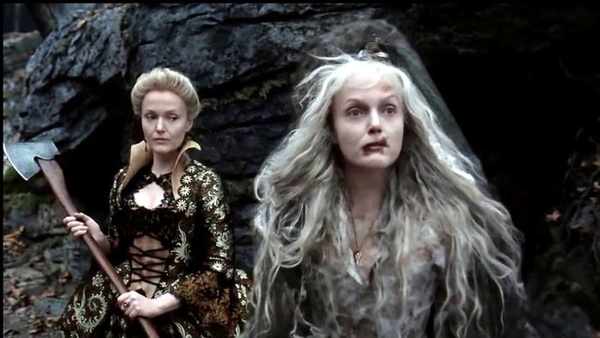
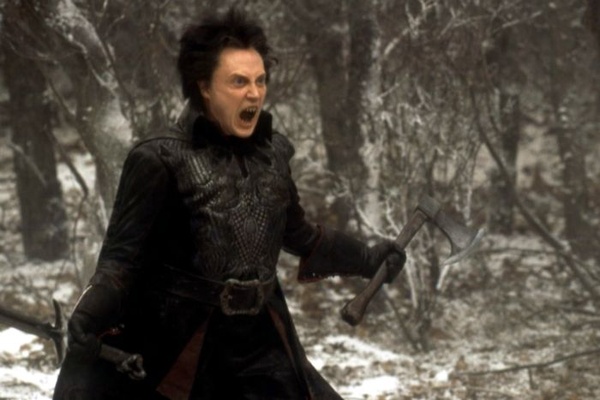
Fortunately, Sleepy Hollow works magnificently on a visual level, so much so that it has become a cult classic. Burton creates a dark and poetic world made of dense fogs, spectral woods, dilapidated mills, and disturbing childhood memories. The action sequences with the Headless Horseman are among the most inspired of his filmography, and the enchanted atmosphere of the village envelops the entire film. Johnny Depp offers an Ichabod who is nervous, ironically funny, and delightfully out of place, perfect within Burton's bestiary.
Less solid in its writing but irresistible in its staging, Sleepy Hollow is still today an exhilarating gothic journey: not a mystery to be deciphered, but rather a sensory experience guided by an author at the peak of his imagination.
A Leap Forward in Quality, But Only for Video
Shot on analog 35mm film with high light sensitivity negative (200 ASA), 4K scan and relative master used for the creation of this UHD edition, which does not fail to enhance the desaturated lights and colors brought to the screen by cinematographer Emmanuel Lubezki (Children of Men, Gravity, The Revenant). Original image format 1.85:1 (3840x2160/23.97p), HEVC encoding on a dual-layer BD-66. Grain is inevitable, part of the work's stylistic signature; compared to the 2K Blu-ray, one immediately notices greater stability, an emphasis on details in the background, and above all, color fidelity with desaturated elements and the different light dynamics. Thanks to Dolby Vision and the possibility offered by a digital chain that includes a native 10-bit panel. The picture is significantly more organic and closer to the intentions of the director and DOP.
Audio is offered at minimal levels, with Dolby Digital 2.0 (224 kbps) unable to support the exhilarating visual presentation, with a faint stereophony that only favors dialogue, ultimately making one miss the old DVD edition with DTS, which says a lot. To ignite the spectacle, it is mandatory to switch to the original DTS-HD Master Audio 5.1 (24 bit); only then can one immerse themselves in a narrative with exhilarating transitions, booming bass, dialogue that favors direct voices, and not least the music of Maestro Danny Elfman.
No extras on the 4K disc; on the BD-50 with the 2K version, there are a couple of old production focus features: "Behind the Legend" (30') with behind-the-scenes footage and contributions from cast and crew, exploring Burton on set; "Reflections on Sleepy Hollow" (11') on the genesis of the production. Italian subtitles. Cardboard slipcover.
Similar articles