Grand Theft Auto VI: Native Resolution and Upscaling Across All Versions
Some technical details on the most anticipated title
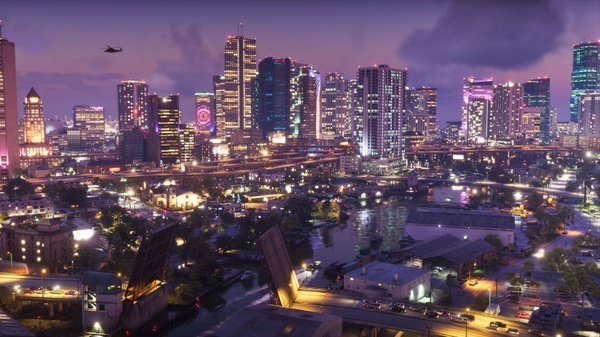


Grand Theft Auto VI represents the new technical pinnacle on consoles, and Rockstar Games had to make it run on hardware that is now six years old. The developer was forced to make some compromises, most notably 30 fps (far from rock-solid), but by squeezing every last drop of power from the consoles, they managed to achieve a stunning result. To reach 4K resolution, it was obviously necessary to apply upscaling, but what is the starting point?
GTA 6 Resolutions on PlayStation and Xbox
Rockstar Games was questioned on this point by Wccftech, who asked for clarification on how Rage Engine, GTA VI's engine, was employed. In its response, the developer specified the native resolution and upscaling method used for each version of the game. For PlayStation 5 and Xbox Series X|S, the same parameters were used: base resolution at 1440p, then increased to 4K via TAA. A native 4K interface is then applied to the resulting image.
TAA (Temporal Anti-Aliasing) is a proprietary technology by Rockstar Games that, among other things, serves to upscale (Rockstar uses an in-house upscaling tool, which should give an idea of how technologically advanced the studio is). The version for Xbox Series S, relying on less powerful hardware, instead has a native resolution of 720p, increased to 1080p.
There are two interesting aspects about the Series S version: the first is that Rockstar used FSR 4.1 for upscaling, an AMD technology that has only been available on Xbox for a few weeks. The second is that, despite the significant hardware limitations, GTA 6 does not forgo Ray Tracing global illumination. Finally, there is the PlayStation 5 Pro version, the best of all, which also starts from 1440p like the standard PS5, and is then upscaled to 4K: the difference is that Rockstar did not use its TAA for upscaling, but rather PSSR 2.
Similar articles