Divorce Italian Style – Germi's Most Vicious Satire in 4K
Restoration by Laboratorio L'immagine Ritrovata of Bologna for the great director's cult classic
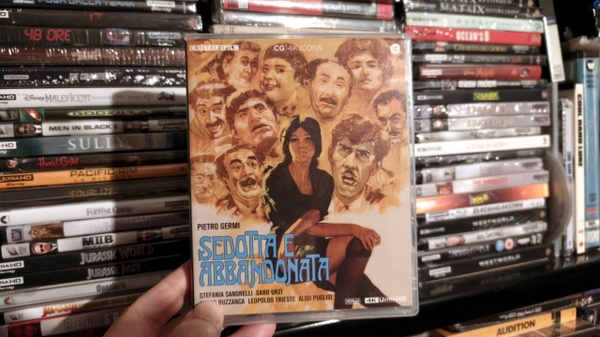


There are films that, with the passing of years, become even more uncomfortable because what they depicted as satire ends up resembling reality too closely. This is the case with Seduced and Abandoned, where Pietro Germi takes that part of society obsessed with honor, reputation, and the judgment of others, and progressively pushes it towards the grotesque.
At its center is Agnese Ascalone, a very young girl seduced by Peppino Califano, her sister Matilde's fiancé. When the pregnancy is discovered, the private matter immediately becomes a family affair. For Don Vincenzo Ascalone, what truly happened doesn't matter, but rather how the incident will appear in the eyes of the town.
Honor and Madness, Germi Strikes Hard
TOMAS MILIAN AUDITIONED FOR THE ROLE THAT WAS LATER GIVEN TO BUZZANCA
Saro Urzì constructs Don Vincenzo as a figure continually overwhelmed by events. To save the family name, the father demands that Peppino renounce Matilde and marry Agnese. But Peppino refuses, transforming the absurdity of the situation into something even more paradoxical: the man who seduced Agnese ends up considering himself the victim of the scandal.
From that moment, Germi plunges everything towards the tragicomic. The logic of honor even comes to justify the idea of murder, while Agnese is a prisoner of a system in which everyone decides for her. The satire thus becomes ferocious because the monstrosity does not belong to a single character, but to the rules that everyone accepts. Family, town, marriage, and reputation all fall into the same mechanism. And the more one laughs, the more discomfort grows. Seduced and Abandoned is a very dark comedy that exposes the absurdity of a society capable of sacrificing truth to save appearances.
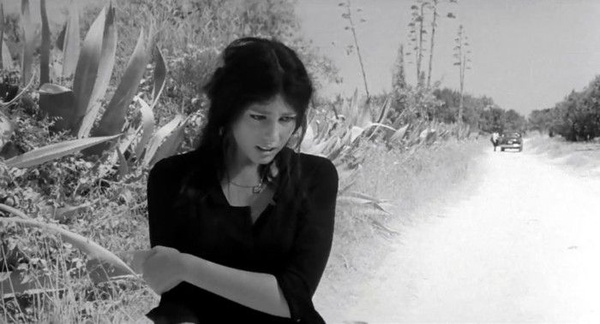
Restored in 4K in 2019 by Cineteca di Bologna, in collaboration with Cristaldifilm and with the support of the Ministry of Culture, at the L’Immagine Ritrovata laboratory. Black and white work on BD-66 (3840 x 2160/24p) which allows for a full appreciation of Aiace Parolin's cinematography. Original aspect ratio 1.85:1, deeper blacks than previous editions, rich detail even in the background, suggesting that the original film grain has been maximally preserved. Light is also favored, along with its dynamic compression, thanks to HDR-10. Dual audio tracks DTS-HD MA 2.0 (16 bit) and Dolby Digital 2.0 (224 kbps), where the first is usually preferred, capable of further highlighting dialogue, minor effects, and not least, Rustichelli's music.
No extras.
Similar articles