Nekromantik in Milan: Death and Love in the Underground Cult
A Milanese foray into cult and transgression, in the company of the director and the soundtrack composer
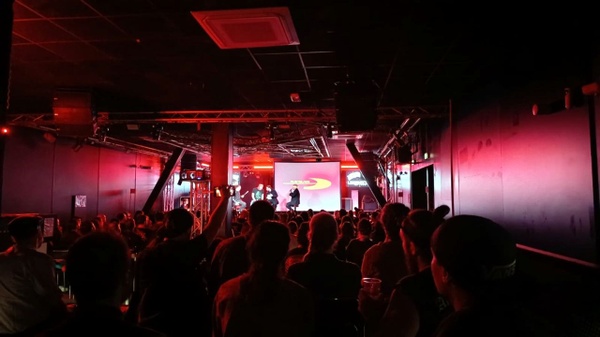


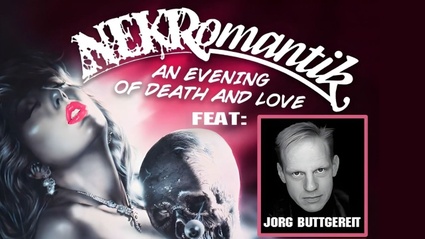
Remembering it today in a context like Milan's Legend Club also means understanding how much underground cinema continues to live outside official circuits, in places where cult status is still built physically, among audiences, creators, and tangible objects. This is exactly what happened on April 26, 2026, during "An Evening of Death and Love": not just a simple event, but a true collective ritual around the radical horror film Nekromantik and its universe.
Milan, a Sunday out of time
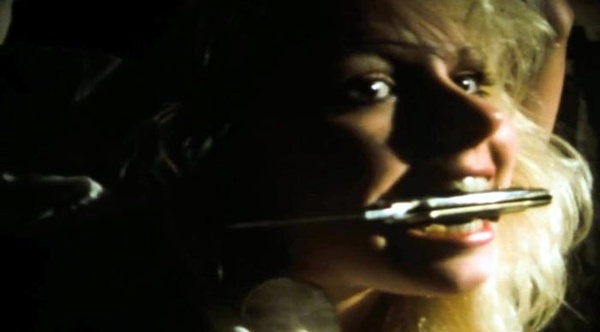
There's something profoundly coherent about seeing a film like Nekromantik presented today, in 2026, in an almost clandestine dimension, far from mainstream venues. Milan's Legend Club was transformed for a few hours into an outpost of extreme European cinema, bringing back to the center a work that, since its release in 1988, has made marginality its identity.
Jörg Buttgereit's film developed over 2 years, with virtually no budget, with non-professional actors and a raw aesthetic, becoming over time an icon of underground cinema.
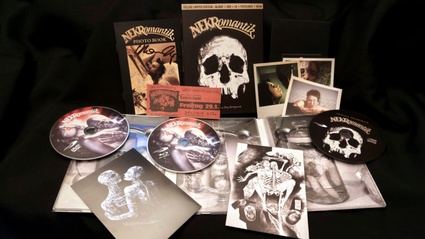
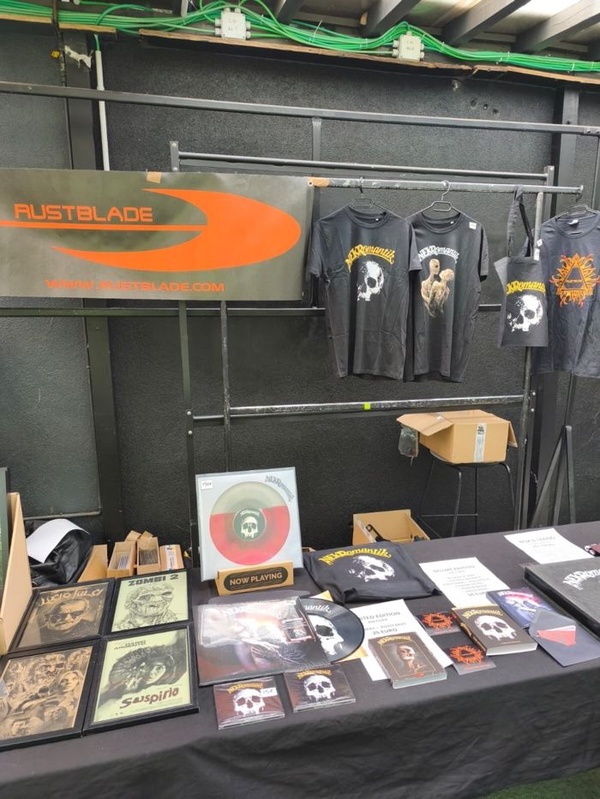
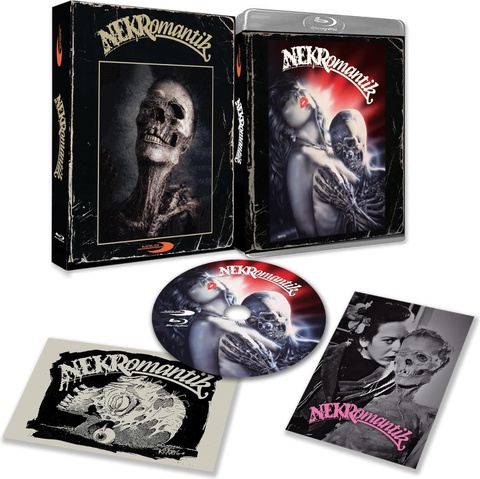
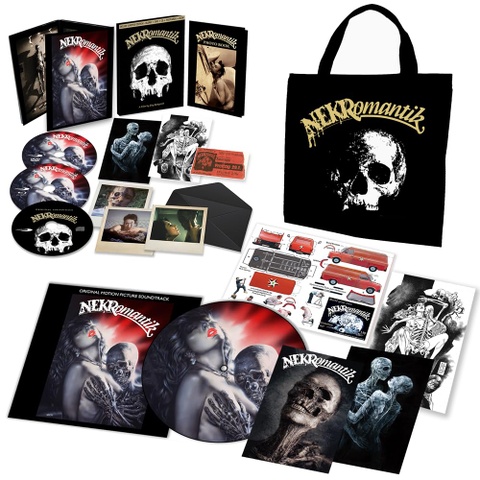
And it is precisely this "irregular" nature that keeps it alive today, capable of generating events like this, organized by the Italian publisher Rustblade, which brought the 2K Blu-ray and DVD version of the film to Italy for the first time. Multiple editions that also include the soundtrack and gadgets, up to the monumental ultra-limited "Wooden Box" with a run of only 25 copies!
The meeting with Buttgereit: memory and lucid provocation
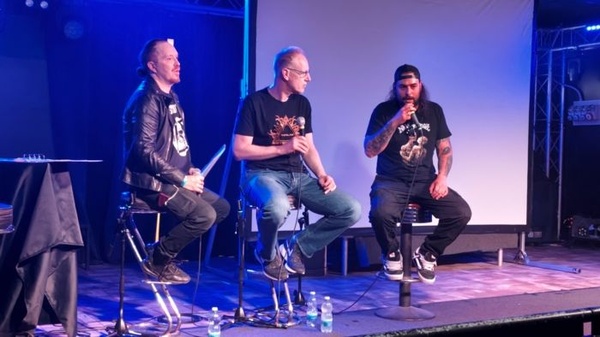
First session at 2 PM added after the sell-out for the 8 PM event, the latter with the presence of Nocturno director, Manlio Gomarasca, moderator of the meeting with the director. Two moments that opened with something that rarely happens in the Italian circuit: a direct dialogue with the director. Buttgereit is not only a cult author but a witness to an era when cinema was made against everything and everyone, without compromise.
In the discussion with the audience, the director traced the genesis of Nekromantik, a film born from an idea as simple as it was disturbing: to explore the link between eros and death, without filters or mediation. An intuition that, at the time, led him to clash head-on with censorship and public opinion, transforming the film into a forbidden object and, precisely for this reason, desired. Still banned today in territories like Iceland, Malaysia, Singapore, and New Zealand for "repugnant content".
It's not a minor detail: Nekromantik was initially distributed outside official channels, without going through classification systems. It circulated via pirated videocassettes, word-of-mouth, and later file sharing.
Yet, almost forty years later, the director appears surprisingly lucid in re-reading his work: not a gratuitous gesture, but an attempt to challenge the viewer, to force them to confront what is normally suppressed.
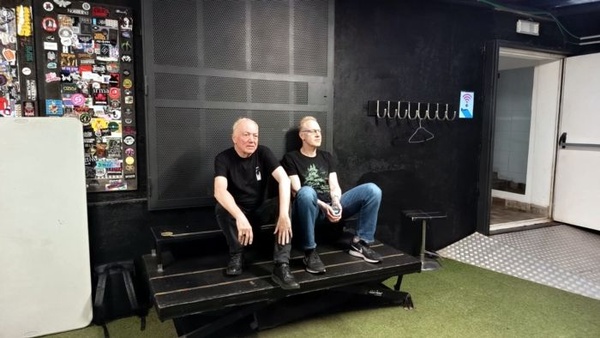
Hermann Kopp: when music becomes narrative material
If Nekromantik is a disturbing experience, it also owes it to its soundtrack. And it is here that the two Milanese meetings found one of their most intense moments.
The presence of Maestro Hermann Kopp was not just an accompaniment, but a true reactivation of the film through sound. The concert, lasting about thirty minutes, brought the main themes of the film back to life, demonstrating how much music is an integral part of its emotional structure.
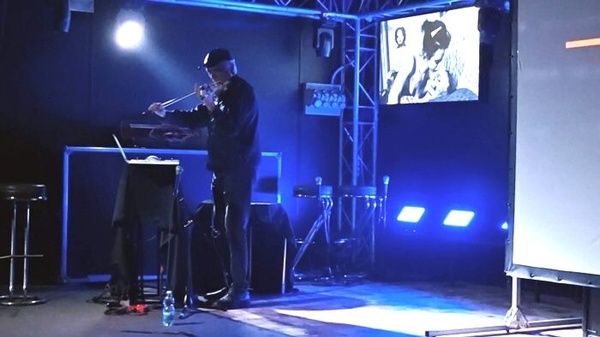
In the film, Kopp's compositions contribute to creating an alienating contrast: melodies that accompany images of extreme crudeness, amplifying the sense of dissonance. Live, this effect became even more evident. The audience was not simply watching a live performance, but a kind of sonic ritual that inevitably prepared them for the viewing of the film.
A work that remains irreducible
Re-watching Nekromantik today, outside a home setting, is a different experience. Not only because of the quality of the first Italian 2K Blu-ray edition, but because of the collective dimension of the viewing.
The film tells the story of Rob, an individual who works for a team responsible for removing corpses and develops a disturbing relationship with death, shared with his partner. But reducing Nekromantik to its plot means misunderstanding it completely.
It is a film that acts by accumulation of sensations, by images that oscillate between the grotesque and the poetic, between the repulsive and the melancholic. Its strength lies precisely in the impossibility of being normalized.
Shot with rudimentary 8mm means and homemade special effects, the film constructs an aesthetic that today we might call "anti-cinematic", but which in reality is profoundly consistent with its discourse: to show what cinema tends to hide.
It is no coincidence that, over time, it has also been re-evaluated by critics, becoming a point of reference for extreme cinema and for a certain idea of horror as a political language.
Rustblade and the value of the physical object
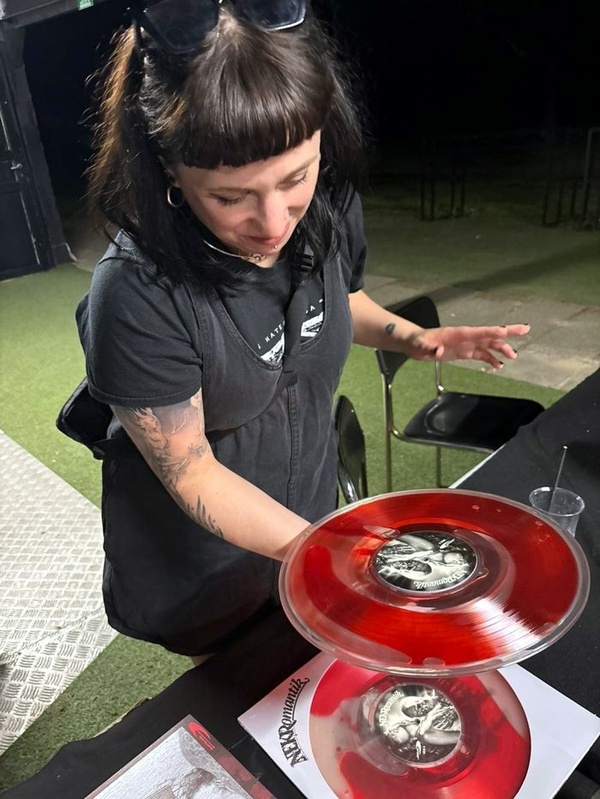
In an era dominated by streaming and the "liquid", Rustblade's operation takes on a particular meaning. Bringing Nekromantik to Italy in a new Home Video release is not just a commercial choice, but a cultural act. Underground cinema, more than others, needs physical support: curated editions, extra materials, packaging designed for collectors. More than a nostalgia operation, it is a form of resistance.
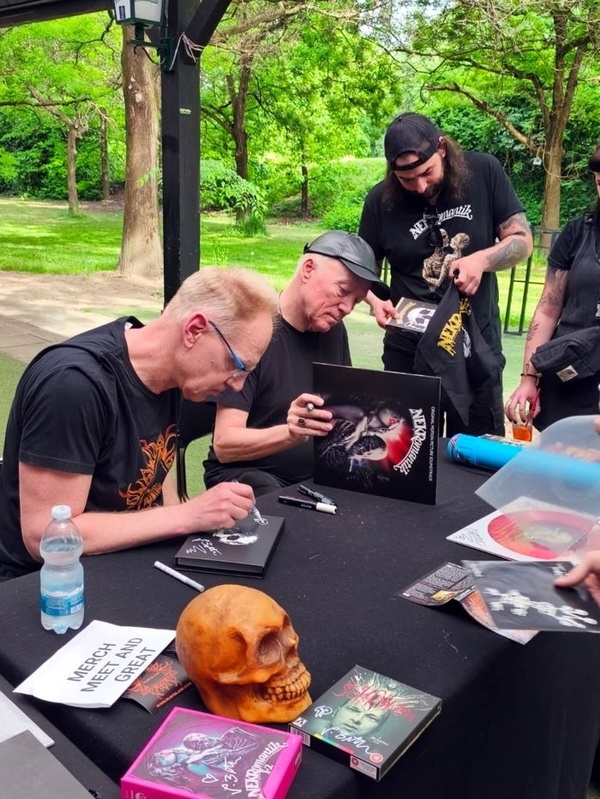
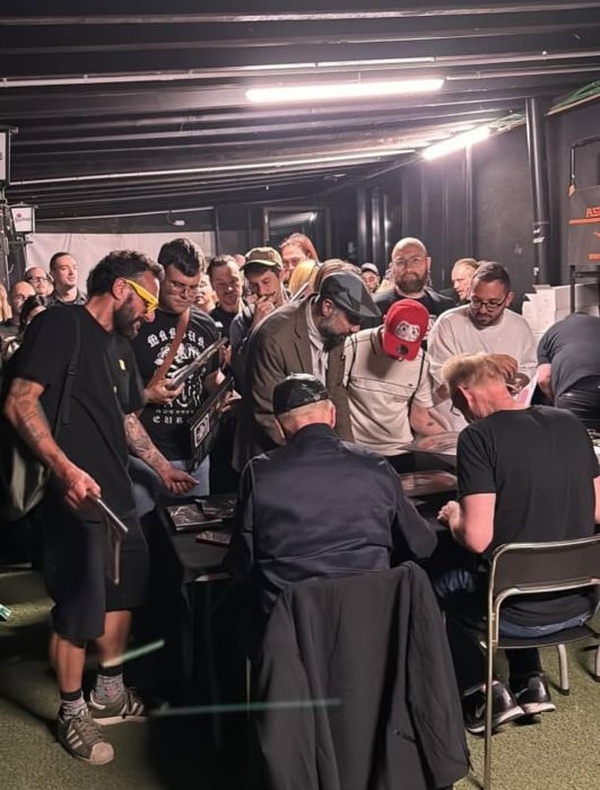
The signing session that concluded the evening clearly demonstrated this. It was not an accessory moment but a natural extension of the event: the audience meeting the creators, transforming an object into a memory and an indelible fragment of a lived experience.
Nokromantik - 2K Rustblade Edition with postcards
A community still alive
Perhaps the true meaning of events like this lies here. Not so much in the film, which now belongs to the history of cinema, but in the community that continues to form around it.
The audience present at the Legend Club was not random: passionate cinephiles and collectors of physical media, all united by an interest that goes beyond simple entertainment. It is an audience that seeks experiences, not just products.
And in this sense, Nekromantik continues to work because it remains an irreducible work, impossible to fully assimilate. It is not a film that you watch and forget: you go through it, it makes you uncomfortable, it forces you to take a stand.
Beyond the cult
Events like "An Evening of Death and Love" demonstrate that the concept of cult is not static. It doesn't just concern the past, but renews itself every time a work is recirculated, reinterpreted, shared.
Nekromantik - Deluxe Edition 100 numbered copies
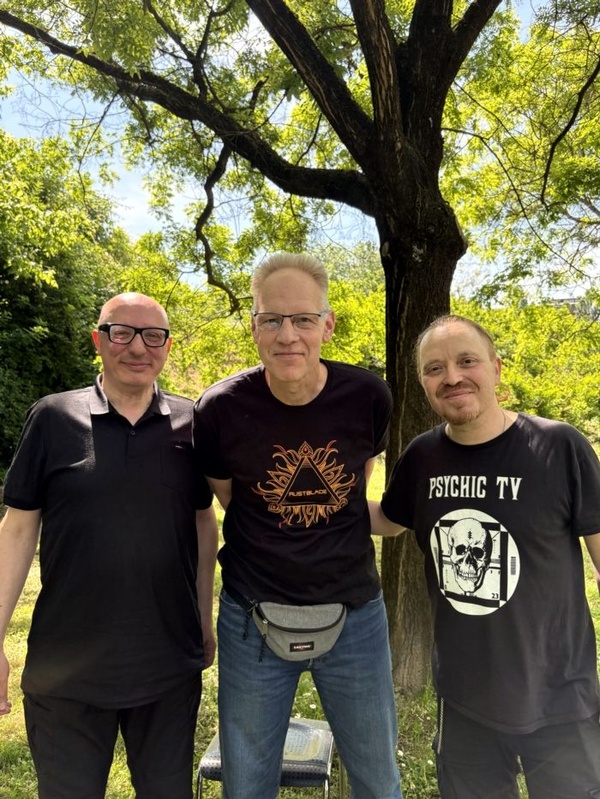
The presence of Buttgereit and Kopp in Milan was not just celebratory, but concrete proof that European underground cinema of the 80s is not an archaeological relic, but a language still capable of speaking to the present.
And perhaps this is the point: Nekromantik does not ask to be accepted, but to be watched. Even today. Especially today.
Similar articles