Explorers Still Exist: An Interview with Steve Boyes, Star of Werner Herzog's New Documentary
The star of the documentary Ghost Elephants recounts his search in the Angolan highlands, where a mysterious population of elephants might be hiding in the most remote forests.


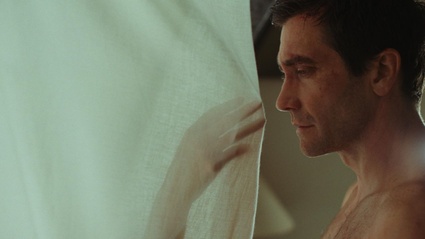
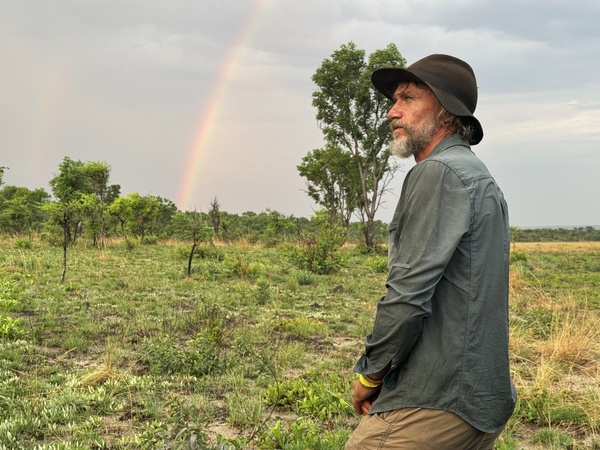
When he appears on webcam, his Indiana Jones hat still pulled low and with the air of someone ready to jump into a jeep and explore the savanna, Steve Boyes almost gives the impression of a character straight out of a movie. Instead, not only is he one of the most authoritative explorers and scientists active today, but he also has an impressive series of naturalistic discoveries to his name concerning the geography of our planet and the fauna that inhabits it.
It was probably destiny that his path would cross that of documentary filmmaker Werner Herzog, curious about everything and a narrator of very diverse places on the planet, who over the years has chronicled the internet as well as Antarctica, with the same unmistakable voice and the ability to look beyond the obvious. Ghost Elephants is indeed a documentary focused on an animal species that no human has ever seen: that of some gigantic pachyderms never before sighted that Boyes is convinced live in the most remote regions of Angola. To find them, technology is not enough: the help of master trackers is needed, indigenous trackers capable of following animals and understanding their psychology.
Ghost Elephants is therefore the search for a species so mysterious that its existence isn't even certain by an explorer who, over the years, has seen not only part of our planet's biodiversity disappear, but also the very indigenous culture he considers a heritage of his continent, and whose extinction will lead to consequences that are difficult to quantify and imagine.
Interview with Steve Boyes: Explorer, Scientist, and Friend of Werner Herzog
Why do we still need explorers and scientists like you in the 21st century?
I believe the 21st century is the most important century for exploration. I'm not talking about going to Mars; I'm talking about Earth. If we look at what we do in Ghost Elephants, for example, the DNA work, we see how much things have changed. Some of this technology even comes from the COVID pandemic. We use swabs developed for COVID, and we can swab the scat of any animal and get a full genome resolution. Something that only ten years ago, for the human genome, took years and two billion dollars, today costs a few hundred dollars and takes about three hours of on-site work.
My job is to work for future scientists by collecting samples in remote locations, learning from those samples: today our ability to do that is far more advanced than we could have imagined ten or twenty years ago. In Africa, when I focus on exploring the headwaters of the great African rivers, in the Indian Ocean watersheds (what we call the great backbone of Africa), we encounter extraordinary landscapes.
What have you been working on recently, besides elephants?
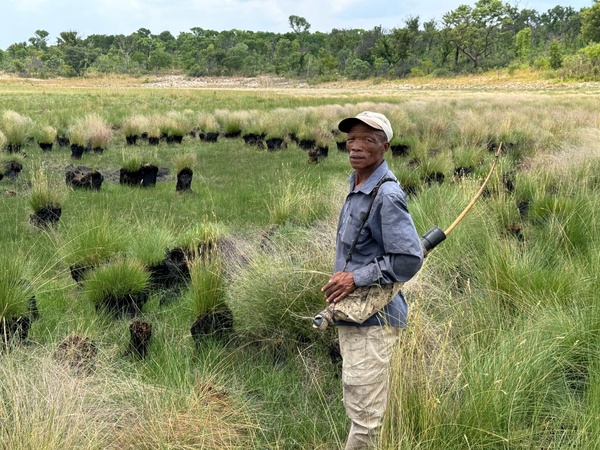
I've just returned from the source of the Nile in Rwanda. These are places where communities still live very close to indigenous language, culture, and tradition, deeply connected to those territories. For them, these places are sacred. In the last three years, for example, we have managed to document the true source of the Zambezi, rewriting history. The Zambezi is the wildest river in Africa: there you find the world's largest waterfalls, Victoria Falls. I also went to South Sudan, conducting aerial surveys with small fixed-wing aircraft equipped with AI cameras on the wings and physical counters that record animals as we fly over the areas. This is how we discovered the largest animal migration on the planet, which no one knew about: six million animals in the White Nile floodplains, never documented before. In the Angolan highlands, where the ghost elephants are found, we identified twenty-six acidic source lakes that had never been identified. We also discovered the second largest peatland ever recorded. Peatlands are these organic swamps that act like a sponge: they hold a lot of water and then release it into rivers, making them more resilient to climate change. We didn't know they existed before we went there. We also found a new peatland in Rwanda that models told us should be there, but which had never been documented. Now we have.
Being an explorer in the 21st century means this. And I'm not talking about Mars or the ocean depths that we haven't really explored yet: I'm talking about our backyard, soil samples taken in our home garden, the river flowing just beyond, the forest behind the house. We don't really know what's in there. And new technologies are revealing just that.
How did your meeting with Werner Herzog come about, and how did he become interested in your long search for the so-called “ghost elephants”?
We became friends simply by having dinner together and talking. At first, we weren't talking about ghost elephants: he was learning about the work I do. Then I started telling him about the search for this species. At that time, I often said: we had just received the first photographs from camera traps, those with motion and heat sensors. We had about one hundred and eighty traps installed and a hundred acoustic sensors listening for elephant sounds. For a long time, we detected nothing.
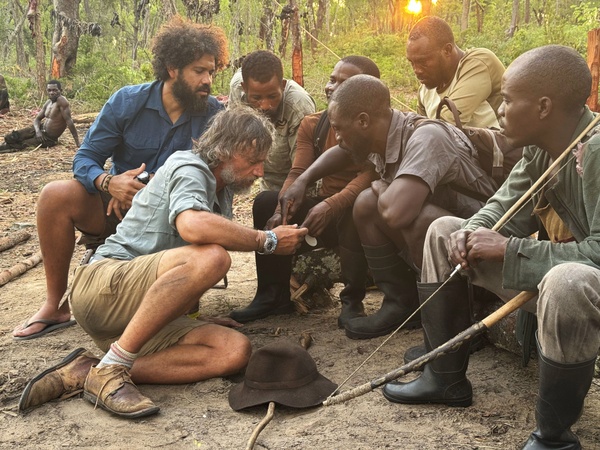
Then one day I was driving in Cape Town, and three photographs came through on my phone. I pulled over to the side of the road. They were black and white images that filled me with awe. That's when I told Werner: now we're going there and we're going to live in the valleys. In the meantime, I had started working with the master trackers, and Herzog was very interested in this expedition. I invited him to join us in Namibia while we prepared the master trackers to go to Angola. From that moment on, he was in the project.
He has an unwavering creative vision, an energy that lifts the entire team. It was an extraordinary experience to see the moment his interest transformed into narration. When that shift happened in Werner, it was a powerful moment for all of us. We carried that same energy into the next three or four months, during the intensive search for these elephants.
In the documentary, we see not only the loss of biodiversity but also the cultural erosion of indigenous knowledge. You are a strong advocate for the importance of this knowledge. Can you explain why it is so important?
In the film, you see an indigenous man playing the harp. In the end, we discover that he is the last true healer of the Ju/'hoansi people who practices the elephant dance, the trance dance you see in the film. He is trying to train the next generation, but he is elderly.
There are only three master trackers left among those who work with us, plus two others. In total, there are five. The Ju/'hoansi are about ten thousand people. They are among the first peoples to inhabit the Earth, our closest genetic connection to the origin of all modern humans. We are about to lose all of this.
For me, that is the birthplace of religion and spirituality, but also of science: of the analytical mind that observes its surroundings. In those leadership structures they still adopt today, you can see the power that Africa once had. It was a power that protected natural heritage as much as cultural heritage.
Today we see all of this marginalized. In the last hundred years, I have observed how these two things – natural heritage and cultural heritage – are precisely what we modern Africans are about to lose. What will happen next is unpredictable. For this reason, as much as possible, we must not limit ourselves to documenting these realities just to remember them: we must protect them so that they can continue to exist.
You are searching for a particular population of elephants. But, considering the loss of biodiversity we are experiencing, do you think someone might one day find themselves searching for the very last elephant?
In part, it's already happening. Rhinos are disappearing. We are looking for the last northern white rhinos, the last black rhinos between Angola and Botswana.
I don't think we will one day be looking for the last elephant. For that to happen, something catastrophic would have to occur to our society. In a hundred years, however, they will probably live in reserves and fenced areas. But the ghost elephants, if those forests remain intact, will continue to hide there. In the film, Werner says something: if we reached the point where only one elephant remained and that elephant died, it would be the end for us too. He is right: it would mean that something has gone terribly wrong in our world.
Similar articles