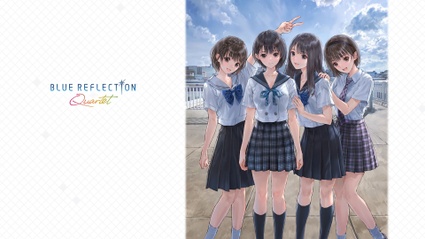
Blue Reflection Quartet, review: does the definitive collection enhance a cult series?
We tried Blue Reflection Quartet, the collection that brings together all chapters of the Gust saga: here are its pros, cons, and why it might be the best way to discover this JRPG series.


In recent years, Gust, a historic Koei Tecmo studio best known for the Atelier saga, has built a narrative universe with Blue Reflection that is decidedly different from its traditional productions. Rather than focusing on action, the series has always centered on emotions, personal growth, and character bonds, blending classic JRPG elements with a strong narrative component inspired by the "magical girl" genre.
Blue Reflection Quartet represents the definitive celebration of this journey, gathering in a single collection the first Blue Reflection, Blue Reflection: Ray, Blue Reflection: Sun and Blue Reflection: Second Light, enriched with numerous graphical and qualitative improvements, new content, and a rich archive dedicated to the series' lore. A package designed both for those approaching the saga for the first time and for fans eager to experience every piece of it without interruption.
Gallery
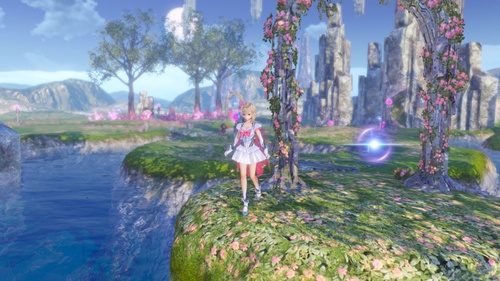
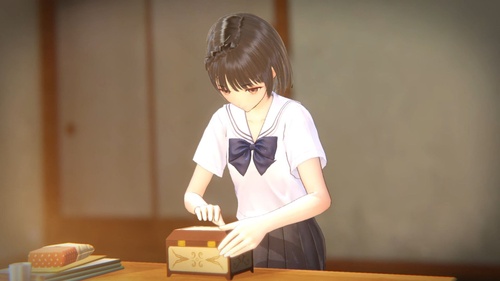
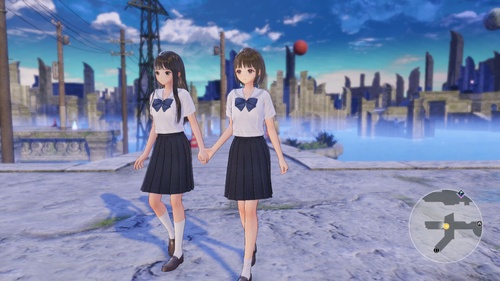

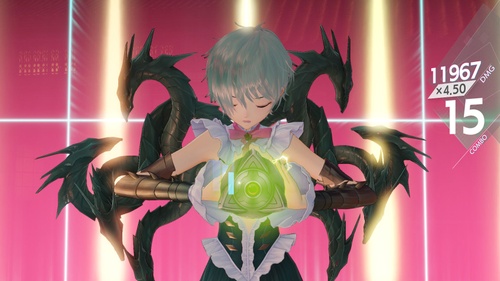

Blue Reflection Quartet: what the collection includes
One of the aspects that makes Blue Reflection Quartet so interesting is the way the four chapters build a single grand narrative. Although featuring different protagonists and seemingly independent events, each episode adds a fundamental piece to a universe that speaks of emotions, traumas, hopes, and personal growth. Don't expect a classic fantasy epic: the heart of the series is always represented by people and the feelings that bind them.
Blue Reflection
The first chapter introduces Hinako Shirai, a promising ballerina forced to abandon her dream after a serious knee injury. Her life radically changes when she meets the mysterious sisters Yuzu and Lime, who entrust her with the power to transform into a Reflector, a warrior capable of entering the Common, a dimension born from the deepest emotions of human beings.
From that moment, Hinako finds herself helping her schoolmates, confronting physical manifestations of fears, regrets, and sufferings that come to life as hostile creatures. The narrative proceeds at a deliberately slow pace, dedicating much space to the psychological development of the protagonists. More than saving the world, Hinako learns to accept her limits and find the strength to look forward, in an intimate story that centers on the value of empathy and mutual understanding.
Blue Reflection Ray
With Blue Reflection Ray, the perspective changes completely. The protagonists become Hiori Hirahara and Momo Tanabe, two girls destined to cross paths under very different circumstances. Both possess the powers of Reflectors, but approach their mission following opposing convictions.
The entire story revolves around the very meaning of human emotions and how they can be protected or, conversely, manipulated. The narrative takes on decidedly darker tones compared to the first episode, addressing themes such as guilt, loneliness, the desire to belong to someone, and the consequences of one's choices. While maintaining a strong emotional component, this chapter expands the series' mythology and introduces new elements destined to play an important role in subsequent episodes.
Blue Reflection Sun
Blue Reflection Sun takes the series' universe in yet another direction. The story is set in a future marked by the appearance of the mysterious Ash, enormous structures that have profoundly altered the world and forced humanity to coexist with a new and constant threat.
The protagonists find refuge in an academy built specifically to house girls with special powers, once again called to fight against creatures generated by the anomalies afflicting the planet. Behind this premise unfolds a story that alternates mystery, moments of daily life, and numerous questions about the origin of the Ash and the fate of humanity.
Compared to previous episodes, the narrative takes on a slightly broader scope, without, however, abandoning the series' stylistic signature. Here too, the focus remains on the relationships between the characters, the weight of the past, and the difficulty of facing a future full of uncertainties.
Blue Reflection: Second Light
The concluding chapter probably represents the highest point reached by Gust's writing. Ao Hoshizaki suddenly awakens in a school surrounded by an infinite sea along with other girls who, just like her, remember almost nothing of their past.
The only possibility of recovering their memory consists of exploring the enigmatic Heartscapes, worlds generated by the protagonists' memories, each characterized by profoundly different settings, symbolism, and atmospheres. Each new area visited allows them to discover fragments of their lives, slowly reconstructing the experiences that made them who they are.
The narrative alternates moments of lightness with decidedly more melancholic passages, addressing themes such as personal identity, the fear of change, the value of friendship, and the importance of accepting one's past. The writing successfully develops the entire cast convincingly, giving almost all protagonists significant space and making the ending the natural meeting point of all ideas developed throughout the saga.
What truly distinguishes Blue Reflection Quartet from many other JRPGs is the way it uses the “fantastic” as a metaphor for human feelings. Monsters, parallel dimensions, and the powers of the Reflectors never represent the true center of the narrative, but become tools through which to tell fears, insecurities, regrets, and hopes. It is a series that prefers to dwell on the growth of its characters rather than chasing continuous plot twists, building a coherent and surprisingly mature universe from an emotional point of view. Even with some inevitable qualitative differences between the four chapters, the entire collection manages to convey a strong narrative identity, transforming Blue Reflection into something much more personal than a simple JRPG with school atmospheres.
Gameplay - four chapters, four interpretations of the same formula
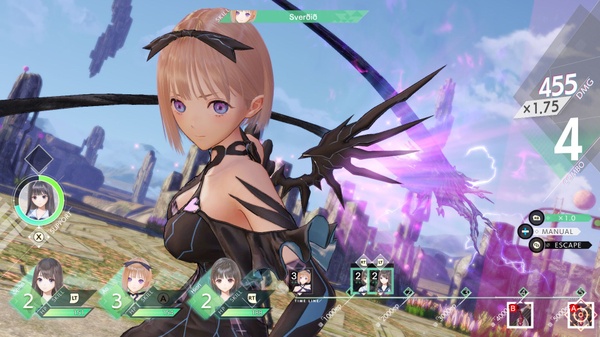
One of the greatest strengths of Blue Reflection Quartet is the ability to follow the evolution of the series also from a gameplay perspective. Each chapter retains the franchise's DNA, made up of turn-based combat, development of relationships between the protagonists, and exploration of worlds suspended between reality and fantasy, but introduces ideas and solutions that significantly modify its pace and depth.
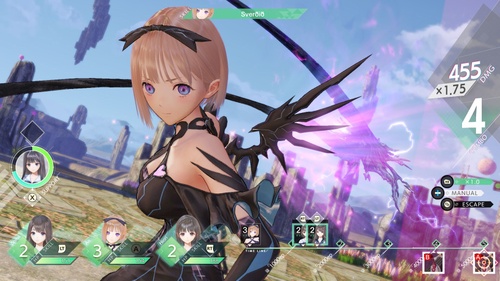
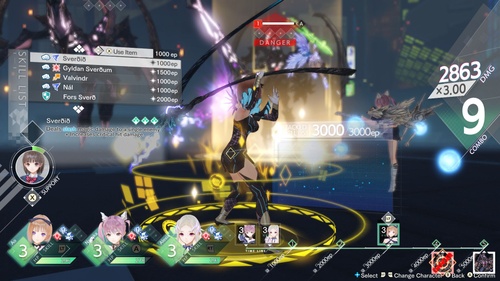
The journey begins with Blue Reflection, where the RPG component is closely intertwined with Hinako Shirai's daily life. Much of the adventure takes place within the school, a place that not only serves as a backdrop but represents the core of the entire progression. Talking with classmates, helping them overcome their difficulties, and strengthening personal relationships allows you to obtain new Fragments, passive abilities, and bonuses that directly influence battles. Exploration, on the other hand, focuses on the Common, a parallel dimension generated by human emotions, where enemies and bosses are faced using a particularly dynamic turn-based combat system. The protagonists accumulate Ether during clashes, gradually increasing their transformation level until they unlock increasingly powerful techniques, in a system that rewards offensive rhythm and combo management more than simple defense.
With Blue Reflection Ray, the gameplay takes on a different approach. Having originated as an interactive adaptation of the animated series, exploration gives more space to narration and the building of relationships between the new characters. The action sections are more linear and guided, but primarily serve to support a narrative that delves into the darker side of the Blue Reflection universe, centering on the conflict between Reflectors driven by profoundly different ideals. It is probably the least RPG-oriented chapter, but it plays an important role in providing narrative continuity to the entire collection.
The arrival of Blue Reflection Sun, however, represents a pleasant surprise. Originally conceived as a mobile experience, this episode has been completely redesigned to integrate with the rest of the collection. The result is an adventure that abandons the typical limitations of free-to-play in favor of a traditional JRPG structure, with free exploration, more balanced progression, and much more refined combat. The growth of the protagonists takes on greater importance thanks to a more articulated development system, while team management allows for experimenting with different combinations of offensive and support abilities.
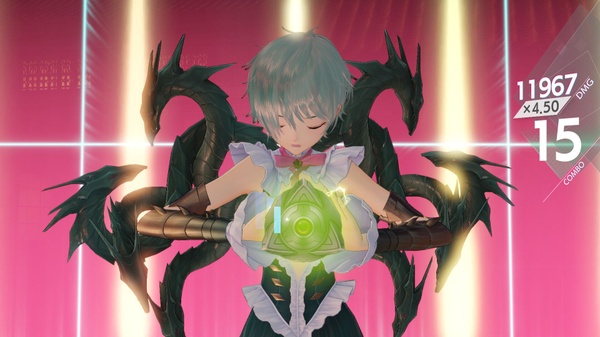
The pinnacle of the entire collection, however, remains Blue Reflection: Second Light, still today the most complete and best-constructed chapter of the series. Here Gust significantly expands every aspect of the gameplay. Explorable areas become vaster and richer in secrets, the acquisition of materials takes on a fundamental role thanks to a finally deep and useful crafting system, while the development of the school introduces new structures to build that grant permanent bonuses to the group. Every activity contributes to the growth of the protagonists, encouraging the player to dedicate themselves not only to the main story but also to the numerous side activities.
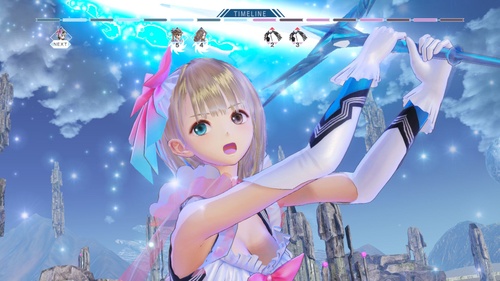
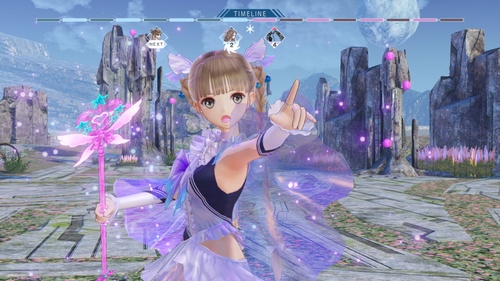
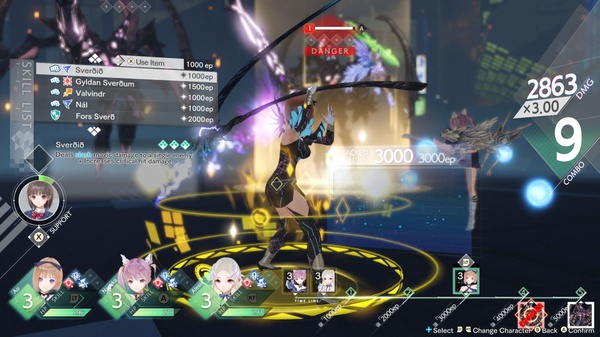
The combat system also reaches its maximum maturity here thanks to the Time Flow Battle System, an evolution of the system seen in the first chapter. Time continues to flow during clashes, making it essential to quickly choose the best abilities, interrupt enemy attacks, and exploit correct positioning on the timeline. Transformations, cooperative abilities, and special attacks integrate naturally into a system that manages to be spectacular without sacrificing strategy, offering the most satisfying battles of the entire saga.
The numerous optimizations introduced in this collection make the experience even more enjoyable. Improved loading times, though still present, automatic saving, a more responsive interface, greater overall fluidity, and various quality-of-life improvements allow even the older chapters to be played with significantly greater comfort compared to their original editions.
Overall, Blue Reflection Quartet clearly shows how Gust has refined its formula over the years. Each chapter retains its own personality and introduces distinctive elements, but all share the same philosophy: to build a JRPG where combat, character growth, and the development of emotional bonds always proceed hand in hand. It is gameplay that does not necessarily chase complexity or absolute innovation, but manages to engage precisely thanks to the perfect harmony between game mechanics and narrative.
Technical sector and graphical improvements
Despite belonging to different periods, the four games coexist surprisingly well within the collection. The older chapters inevitably show some limitations in animations and environment construction, but the remastering work done by Gust manages to enhance them without distorting their identity. On PlayStation 5, the experience benefits from constant fluidity, almost instant loading times, and a general polish that makes even the first episode enjoyable to play, now decidedly more pleasant than its original version.
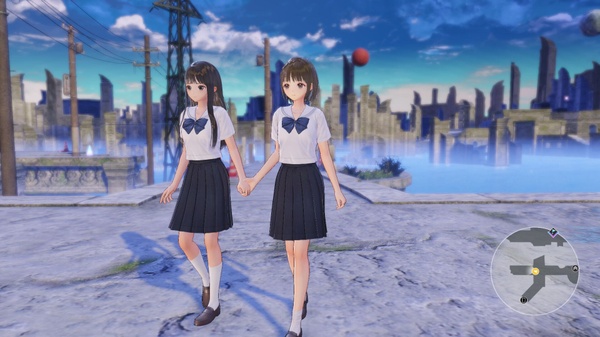
The true strength, however, continues to be the art direction. The dreamlike scenarios, delicate color palette, and character design maintain a charm all their own, contributing to creating a melancholic and almost fairy-tale atmosphere that distinguishes Blue Reflection from most modern JRPGs.
The sound department also remains excellent. The soundtrack sensitively accompanies both the most intimate moments and battles, while the Japanese voice acting lends credibility and emotional depth to the protagonists. The only real sour note, however, concerns the localization: once again, there is no Italian translation, with texts available exclusively in English and other major languages. A choice that continues to penalize the Italian audience, especially considering the strong narrative component of the series, where dialogues and emotional nuances represent the heart of the entire experience.
Score
Editorial team
Blue Reflection Quartet, review: does the definitive collection enhance a cult series?
Blue Reflection Quartet is the definitive collection of the series and a refined remaster that enhances the entire saga without betraying its identity, finally making it playable in a single edition. However, it remains an opportunity only partially seized due to the absence of Italian localization, a shortcoming that penalizes an experience heavily based on narration. It is not a JRPG for everyone, but those who can let themselves be carried away by its calm pace and the sensitivity with which it tells its characters' stories will find an adventure capable of standing out and earning a special place in the genre's landscape.
Similar articles