Predator vs. Spider-Man: Flesh and Steel in the Asphalt Jungle - Review
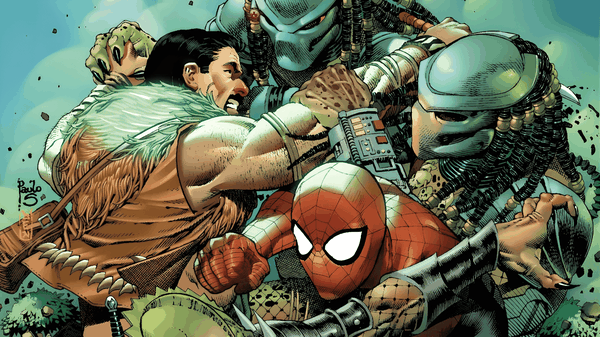


Imagine the electric, suffocating, and dangerous New York of Predator 2 mixed with the menacing shadows of a film like Seven: it's not just a change of scenery, but a signal that Marvel's editorial safe mode — that security protocol that usually prevents Spider-Man from "going off the rails" of family-friendly narration — has been deactivated. Just like in a video game where a Hardcore mode or Uncut content is unlocked, here the rev limiters have been removed, allowing the story's engine to run at a speed and with a violence that are usually censored to protect the brand's marketability. For decades, we readers have been accustomed to seeing Spider-Man protected by an invisible wall that kept overly gruesome stories at bay, acting as a filter that made danger perceived but never truly lethal. Predator vs. Spider-Man, however, acts like an earthquake that demolishes every barrier, eliminating any sense of tranquility and forcing the reader to confront a reality where the hero no longer has "God Mode" enabled.
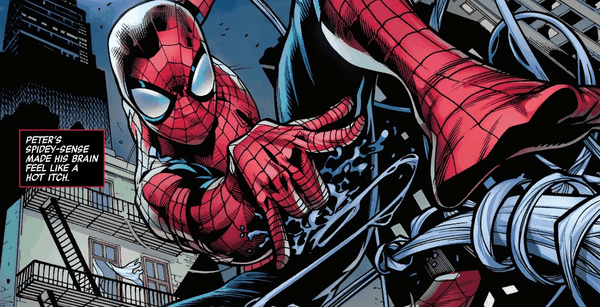
In this sense, the comparison with the previous Predator vs. Wolverine: Eternal Hunt helps us understand how the storytelling formula has changed. If in the challenge with Logan we saw two fighters born for war clashing as equals, here Benjamin Percy takes a different path. He brings us into a no-rules playground, similar to the atmosphere of The Boys, dwelling on a good and cheerful hero like Spider-Man in a situation of extreme danger. While Wolverine is a lone wolf who is at home among blood and claws, seeing Peter Parker — a boy who always tries to do the right thing without killing — face Skinner (a renegade and cruel Predator) makes everything much more unsettling. We are faced with a story that delves into the deepest fears of the metropolis, making us understand that no one is truly safe: even long-time friends like Mary Jane and J. Jonah Jameson risk becoming trophies hanging in a dark alley.
A Dark and Defenseless New York
The foundation of Percy's story is a simple but effective idea: to remove all modern conveniences through a systemic blackout during a scorching summer. This choice, which nods to John Carpenter's cinema, is not a mere embellishment but a precise directorial decision: the authors decide to strip the hero of all satellite or digital support to force him to get his hands dirty. Peter Parker and J. Jonah Jameson return to an analog management of the Daily Bugle, printing special editions by hand as the city burns, transforming information into an act of physical resistance.
Percy's direction shines when he decides to have the two protagonists cross paths with a staging worthy of an auteur thriller: we follow Peter infiltrating crime scenes disguised as a forensic technician, a tactical move that highlights his investigative side even before his athletic one. The clash with Skinner is not the usual superhero ballet: it's a tense hunt between a detective who sees too much and a ghost who skins his prey. In this context, the logical fracture between the myth and reality of this volume emerges: unlike the classic Yautja warrior — a hunter bound by a rigid code of honor who spares the weak and seeks only glory in confrontation with worthy prey — Skinner represents a malignant deviation from the system. He is a Predator without a clan or ethics, an "honorless" individual so despicable that he is detested by his own kind.
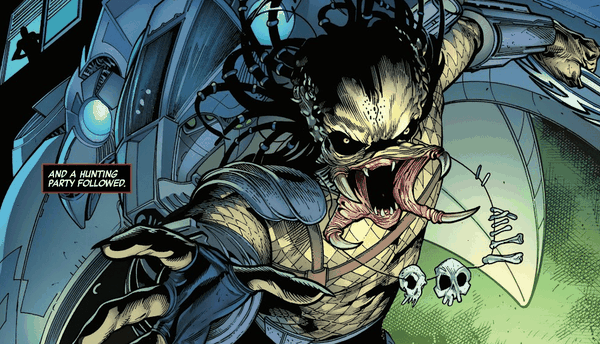
This lack of "rules of the game" transforms the crossover from a chivalrous duel into a spiral of depravity: Skinner does not seek honorable confrontation, but the macabre pleasure of mutilation, going so far as to wear the remains of victims as ritual masks. We see Spider-Man chasing a trail of bodies as this "butcher" moves in the shadows of the subway tunnels. Here the tension peaks with the scene of Mary Jane Watson trapped in a dark train car: the directorial choice to show the monster through a window, while wearing a victim's face, is pure cinematic horror. The authors choose not to have them clash head-on noisily right away: instead, they build an suffocating atmosphere of anticipation where every web is a desperate attempt to map an invisible predator who doesn't play by the rules, bringing the confrontation to a visceral dimension not seen in a Spider-Man title for years.
Marcelo Ferreira's Raw Style
The visual impact of this album is a vibrant tribute to the dirty, hyper-detailed, and stylized tones typical of '90s comics, with Marcelo Ferreira's line transforming New York into a sick, visceral, and pulsating organism. Violence here is never merely suggested or left off-panel: it is exposed with almost anatomical precision and a ferocity that fully justifies the Parental Advisory label. Ferreira is not afraid to use the language of horror cinema, inserting what we could call true "graphic jump scares" that hit the reader like a punch to the gut. We find gruesome panels with human trophies displayed on rooftops like macabre decorations and an alien killer who does not hesitate to wear the remains of his victims, pushing the Marvel visual system well beyond its usual standards, towards the extreme and unfiltered rawness that made series like Invincible or The Boys famous.
Ferreira, masterfully supported by the heavy, tension-laden shadows of Jay Leisten and the acidic, dense chromatic palette of Frank D'Armata, excels in choreographing the kinetic contrast between the two contenders. On one side we have the almost liquid, flexible, and desperate agility of Spider-Man, whose movements seem almost a frantic dance for survival; on the other, the brutal, angular, and unstoppable force of the Predator. The technical rendering is impressive: every tensed muscle fiber, every worn tear in the costume, and every splash of blood — which alternates human red with the fluorescent green of the Yautja — contributes to saturating the atmosphere with a constant sense of threat. Skinner's look is the culmination of this aesthetic of terror: stripped of the refined technology and ceremonial armor typical of warriors of his species, he appears as an asymmetrical and feral nightmare. He is a predator who has renounced the nobility of the hunt to become an urban legend monster, the perfect creature to dominate a Manhattan immersed in the deepest darkness.
The Meeting of Worlds: Kraven vs. the Predator
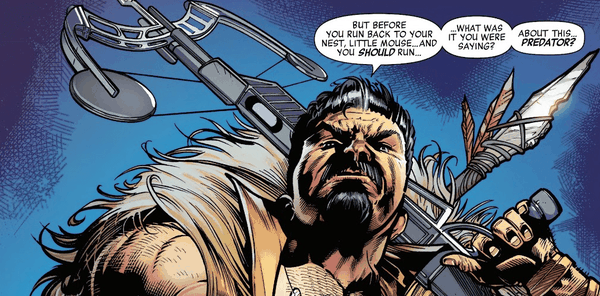
The most successful intuition of the story is the addition of Kraven the Hunter, a character who fits perfectly into this wild ecosystem. Kraven sees in the Predator not just an enemy, but the prey of a lifetime, the spatial trophy he had always dreamed of. While Spider-Man despairs to protect civilians, Kraven plays dirty: he sabotages power plants to ensure the city remains dark, transforming Manhattan into a gigantic, lawless arena for his final duel.
The final clash is a sequence of ferocious fighting, where Kraven manages to defeat Skinner in a triumph of violence. This act is so incredible that it attracts the attention of other aliens of the same species, who arrive to punish their treacherous kin: instead of attacking the man, they respect him by marking his forehead, recognizing in him a true hunter. The end of the story, however, does not bring peace: the monster's body ends up in the hands of Dr. Cornelius, the scientist who created Wolverine. This suggests that the encounter was not an isolated incident, but the beginning of a contagion that will lead to the total massacre of many other heroes in the already announced future chapter: Predator Kills the Marvel Universe.
If you love "dirty" action movies from the '80s and want to see a Peter Parker who doesn't get by with a simple joke, this volume is a must-buy. It's not the usual reassuring story from Marvel movies: here blood really stains the costume and dangers are unforgiving. If, however, you prefer classic, clean stories, stay away: in this New York, the Spider-Sense only serves to tell you how many seconds you have left before you become a galactic trophy.
Similar articles