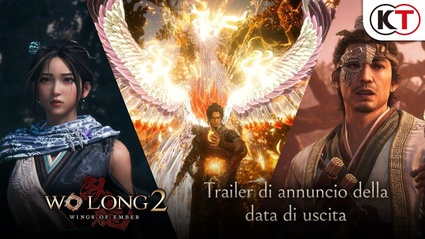
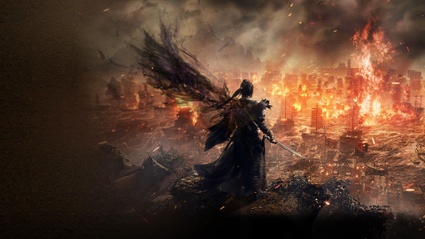
Wo Long 2: Wings of Ember, preview: Team NINJA changes pace
Insight Skills, more open battles, and increased verticality expand Fallen Dynasty's formula without sacrificing Deflect.


The first Wo Long: Fallen Dynasty had a rather curious problem: its best idea was so effective it risked devouring everything else. Team NINJA built a lightning-fast, readable, and immediately recognizable action RPG around Deflect, the parry that nullifies an attack at the right moment and turns the opponent's pressure into an offensive opportunity. It worked so well that, once the rhythm was internalized, many battles ended up asking for the same thing. Not which tool to use, but simply when to press the right button.
It was also one of the reasons why Wo Long managed to distinguish itself from Nioh. Less obsession with stances and the almost maniacal construction of combos, more attention to reading the opponent and an exchange of blows that in some ways resembled a martial duel where the winner was whoever anticipated the enemy's moveset.
Wo Long 2: Wings of Ember starts exactly there. It doesn't eliminate Deflect, nor does it try to downsize it. Instead, it builds other responses around it, physically expands the combat space, and transforms the old succession of missions into more open battlefields, where battle preparation should begin long before encountering the boss.
The question, then, isn't whether Team NINJA has added enough. They've added quite a lot. It's whether these new features will truly make Wo Long deeper or if they will simply add new systems around a formula that will continue to thrive primarily on deflections.
Deflect remains, but it shouldn't have to do everything alone anymore
Let's start with the system that characterized Fallen Dynasty. Spirit continues to replace traditional stamina management and maintains the dual function we appreciated in the first chapter: attacking and reacting correctly builds an advantage, while abusing more costly actions or succumbing to enemy pressure progressively leads to a state of vulnerability.
The difference is that now the same resource also powers Insight Skills. These are techniques designed to react to specific situations by spending spirit and introduce a more articulated risk-reward relationship compared to simply using deflection. The Insight Deflect, for example, allows you to respond to an offensive by slamming the opponent against a wall or another enemy. In a tight space or against multiple targets, this means not only avoiding a hit but transforming defense into a tool for field control.
Even more interesting is the Insight Aerial Skill, designed to counter Critical Blows delivered in the air. A correctly executed response violently brings the opponent back to the ground and inflicts Spirit damage, immediately creating an offensive opportunity.
It seems like a nuance, but it significantly changes the reasoning behind combat.
In the first Wo Long, the ability to master deflection progressively allowed players to manage an enormous number of situations. We didn't necessarily consider it a limitation, because that very simplicity made the system readable and rewarding. Wings of Ember, however, seems to want to build a second layer on top of that foundation: you can still respond as we've learned to do, but recognizing the situation and using the most appropriate tool should produce a better result.
It will be necessary to understand how truly essential this will be. This is probably one of the most important questions to carry through to the final version. If traditional Deflect remains sufficient in most situations, Insight Skills risk becoming a spectacular variant used primarily by more technical players. If, however, enemies and bosses are designed to truly reward different responses, the sequel might succeed in layering the formula without losing the clarity of the first chapter. And that's a far from secondary difference.
Wo Long begins to lift its feet off the ground
The other obvious evolution concerns movement. Team NINJA wants to make combat more three-dimensional by expanding both offensive possibilities and those available during exploration. The protagonist can run on walls, reach elevated points, squeeze through narrow passages, and move through the environment with much more freedom than the nameless soldier of Fallen Dynasty.
Some of the new Basic Actions clearly suggest the direction taken. Sprint Shadow Strike allows you to turn a sprint into an offensive action, while Aerial Breakfall expands the character's control possibilities when knocked back or airborne. These are not simply new animations inserted to make battles more spectacular: at least in intention, they serve to eliminate the rather clear separation that existed in the first chapter between ground movement and what happened above it.
Martial Arts continue to depend on the weapons used, but new techniques can be learned by finding specific Martial Skill Orbs. These also consume Spirit, confirming that the true combat economy continues to revolve around the same resource. More possibilities therefore also mean more ways to drain your own bar at the least opportune moment.
One of the qualities of the first Wo Long was the speed with which one came to understand the relationship between pressure, deflection, and Spirit. Team NINJA could add dozens of moves without necessarily improving that system. The challenge will be to ensure that Sprint Shadow Strike, aerial techniques, Martial Arts, and Insight Skills become parts of the same language, rather than a collection of possibilities that the player only uses because they are available.
On paper, however, the increased verticality seems particularly consistent with what the studio is trying to achieve. It doesn't just make the protagonist more mobile: it allows for the creation of enemies that attack from different heights and even transforms an aerial Critical Blow into an opportunity to regain control of the fight.
Combat doesn't necessarily have to become more complicated. It needs to become richer while maintaining the same readability. And that's a much harder balance to strike.
Changban is not just a bigger mission
The most important change, however, comes when you stop fighting and start observing what surrounds the protagonist. Fallen Dynasty was built through separate missions, with generally contained maps, shortcuts, flags, and secondary paths. A structure that worked well to maintain a high pace, but left little room for the idea of truly being in the midst of a great battle.
Wo Long 2 instead uses interconnected maps and much larger battlefields. Changban represents the first concrete example: not an open world in the traditional sense, but an area where fortifications, enemy bases, alternative paths, and more dangerous areas can be tackled with greater freedom. Morale also returns here, and it is perhaps the system that most needs this transformation.
In our review of the first chapter, we observed that, when playing for a long time, maintaining a Morale rank lower than the opponent's did not always produce a dramatic difference. The ability to move and read attacks often continued to have a greater weight. Flags therefore became important, but not always decisive. The sequel seems to want to correct precisely that gap between the declared importance of the system and its actually perceived importance.
By increasing Morale through combat, it becomes possible to tackle progressively more dangerous regions. But this time Morale doesn't work alone: the player can conquer strongholds, weaken the enemy deployment, recruit some enemy officers, and use what they have obtained to further modify the situation on the field. This is where the larger map begins to make sense.
We are not just exploring to find another flag or a hidden chest. At least on paper, we are preparing for the battle that awaits us later.
Before the battle, the territory must be won
Recruited officers can indeed be deployed directly on the map, assigning them to conquered bases. Each warrior possesses an affinity with one of the Five Phases already used by the series to organize statistics, magic, and character growth.
Assigning an officer to a structure that shares their same affinity activates the so-called Matching Slot bonus, granting additional benefits. This is one of the most interesting details to emerge so far because it connects systems that in the first chapter lived primarily around character building with the general situation of the battlefield. Fire, Water, Earth, Wood, and Metal no longer just serve to determine which characteristics or spells to enhance: they can also be part of territorial planning.
The result should create a fairly natural progression. You enter an area where Cao Cao's forces have a clear advantage, you increase Morale by fighting, you conquer positions, you recruit officers, and you assign them where they can be most effective. Every small success should make the decisive confrontation more manageable. The important word, however, is “should”.
On one hand, it's easy to see the system's potential. The battlefield would become a gigantic preparation for the boss fight, and what happens during exploration would have a recognizable consequence when it's time to face the enemy commander.
On the other hand, there's an equally obvious risk: transforming a good strategic idea into a checklist.
Conquering bases, recruiting officers, reaching secondary points, and increasing Morale works as long as each action actually changes something. If the player were to feel obligated to methodically clear every icon before proceeding, we would simply have replaced the flag hunting of the first chapter with a larger and more dispersive structure. This is perhaps the main doubt that Wo Long 2 will have to resolve.
Bigger doesn't automatically mean better
And this is precisely the point on which Wo Long 2: Wings of Ember leaves us most curious. It would have been easy to build a sequel by adding new weapons, new demons, some Martial Arts, and a new portion of the Three Kingdoms story. Team NINJA seems to have chosen instead to intervene on the two fundamental levels of the formula: how you fight and what happens before you fight.
Insight Skills try to add alternatives to a system where Deflect remains central. Vertical mobility opens new planes of combat. Battlefields transform Morale into a resource also linked to territorial conquest. Recruitable officers and affinities with the Five Phases finally try to connect character building with a form, yet to be verified, of military strategy.
These are more interesting changes than simple quantitative expansion. At the same time, precisely because we are talking about a preview, it is advisable to leave the most important questions open. How indispensable will Insight Skills be once Deflect is mastered again? Will the new movement possibilities produce truly three-dimensional combat or will they remain a spectacular variation? Will conquering the battlefield truly change the final confrontation or will it become an almost obligatory path of outposts to clear?
And above all: how much more complex can Wo Long become without losing the immediacy that was one of its strengths?
Wo Long 2: Wings of Ember, preview: Team NINJA changes pace
Three years ago, we praised Fallen Dynasty precisely because Team NINJA managed to take familiar ideas and make them more accessible without completely stripping away the challenge. Wings of Ember seems to want to take the opposite path: starting from that now understandable foundation and gradually adding new layers. For now, it's probably the most interesting direction the sequel could have chosen.
Similar articles