Remothered: Red Nun's Legacy Restarts from Its Fears - Preview
The new chapter recovers the vulnerability of Tormented Fathers, but changes the way of exploration with Retrocognition, hypnosis, and environmental manipulation.
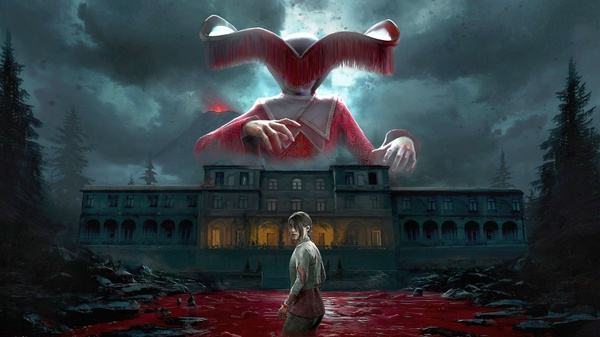


A huge house, few ways to defend oneself, and Richard Felton who could appear at any moment with his sickle. Remothered: Tormented Fathers built much of its tension on this apparent simplicity. Rosemary Reed entered Villa Felton looking for answers and quickly found herself measuring every movement, remembering where to hide and which rooms to cross without attracting unwanted attention. When the Red Nun then arrived, the feeling of having entered something much larger than the simple story of the Felton family finally began to take shape.
Gallery
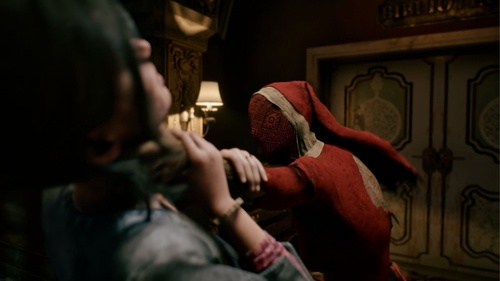
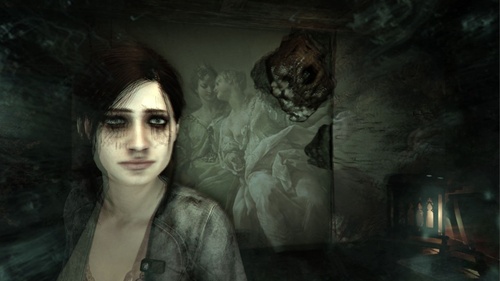
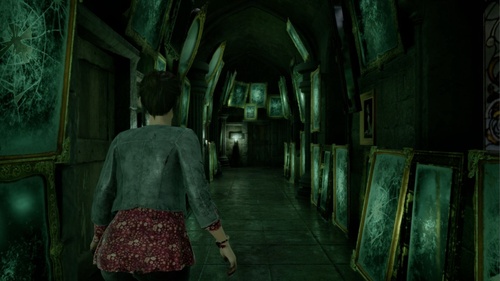
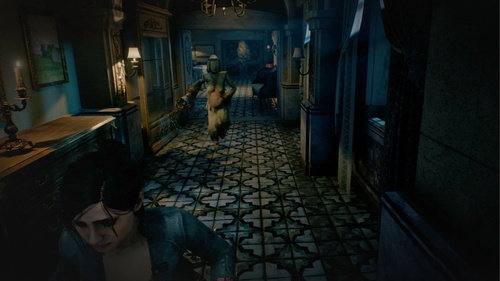
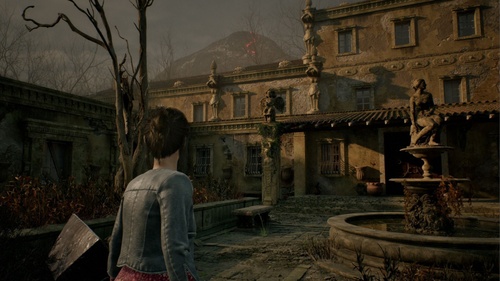
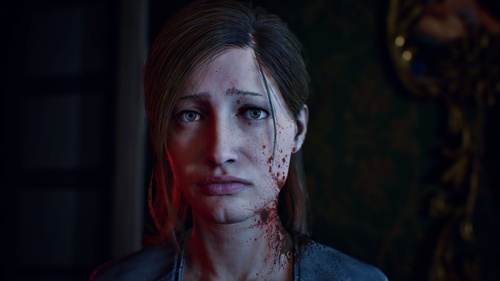
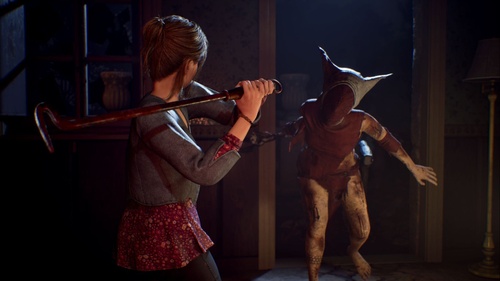
Broken Porcelain tried to expand almost everything. The Ashmann Inn offered more articulated environments, Jennifer had more ways to react, and the dangers represented by Andrea Massino and Stefano Ashmann were joined by Porcelain and, once again, the Red Nun. Remothered became bigger, more complex, and more ambitious, but not necessarily more effective in all its parts. The first chapter found strength precisely in the almost elementary relationship between exploration, vulnerability, and pursuit, while the sequel tried to layer that formula with more inconsistent results.
Six years later, Remothered: Red Nun's Legacy arrives with a rather interesting task: to understand what is truly worth preserving from the first two chapters and what, instead, needs to be rethought. This time the protagonist is Susan, a mother who travels to Sicily following a new lead on her daughter Agata's disappearance, but the thread that leads her to Villa Ashmann inevitably brings the Red Nun back to the center and a story that the series had not yet concluded.
For this reason, the new chapter is particularly interesting as the culmination of the journey begun with Tormented Fathers. Remothered continues to speak the language of survival horror games, made of environments to learn, escape routes to remember, and adversaries that are much better avoided than confronted head-on, but it also tries to add something to that grammar. Susan has new tools, exploration takes on a different weight, and the past directly influences how we interpret what surrounds us. The question, at this point, is not whether Remothered has changed, but how much of what made it recognizable it has managed to carry with it to this day.
A Mother, a Villa, and Something That Should Have Remained Buried
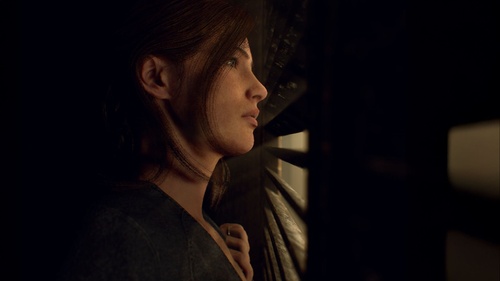
More than a year has passed since the disappearance of six girls in Sicily, and Susan has never stopped searching for her daughter Agata. A mysterious recording reopens a lead that seemed lost and takes her to an old Ashmann property on the slopes of Mount Etna. It is here that the new story begins to intertwine with that of the Red Nun and with the events experienced in previous chapters.
Stormind chose a protagonist external to the series' mythology precisely to allow the player to make this discovery alongside her. Susan does not know the Ashmanns' past and must reconstruct it by traversing their rooms, retrieving documents, and progressively learning to observe what happened through tools that go beyond simply finding a note left on a table.
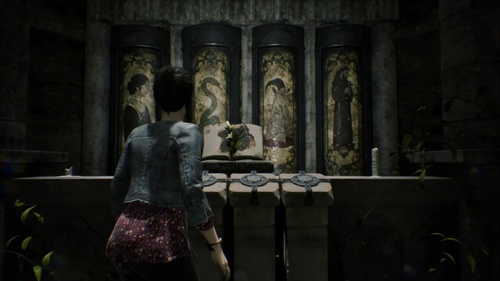
The Italian component, moreover, does not suddenly appear with this third chapter. Chris Darril had already explained during Tormented Fathers how the Red Nun herself was born partly from memories related to years spent in a Catholic Ursuline institute, among portraits of nuns, songs from the chapel, and religious iconography that, to a child's eyes, could take on anything but reassuring contours. That religious austerity returns today in Sicily with even greater weight, especially when exploration leads us to the Convent of the Dying Christ. The thing that convinced us most is indeed how Sicily finally seems to stop being just a geographical indication. Villa Ashmann is also born from the observation of a real abandoned dwelling encountered by game director Antonio Cutrona on his way to the studio, while for the interiors the team analyzed several real locations in an attempt to build credible environments before they were scenic.
And it shows. Decorated floors, puppets, furniture, photographs, and furnishings do not seem arranged merely to furnish the rooms, but contribute to giving them a history. The problem, of course, is finding the time to observe them. Red Nun's Legacy continues to ask us to be curious precisely while doing everything to convince us that stopping too long is a bad idea.
"Ten" Out of Ten Locations, Too Bad for the Not-So-Friendly Nuns
The puzzles we encountered in our test were not particularly elaborate. A groom's figurine must be retrieved and reunited with his wife's to obtain a key, while in the Convent of the Dying Christ, a sequence is reconstructed by interpreting a passage from Leviticus. Taken individually, these are readable and fairly traditional problems. The point is that Remothered rarely grants the tranquility needed to approach them as simple puzzles.
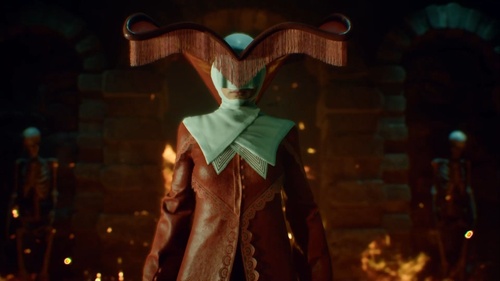
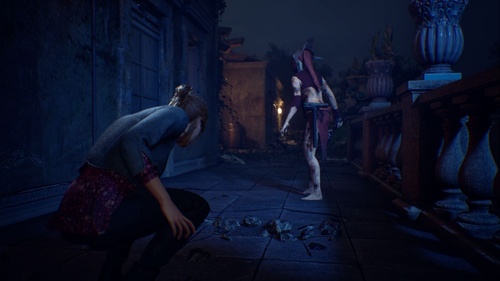
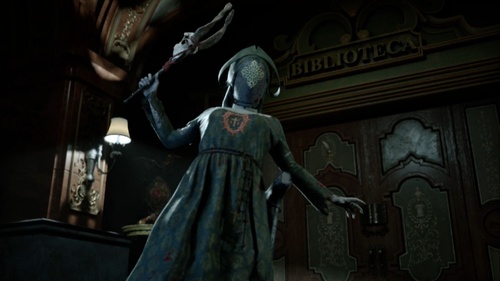
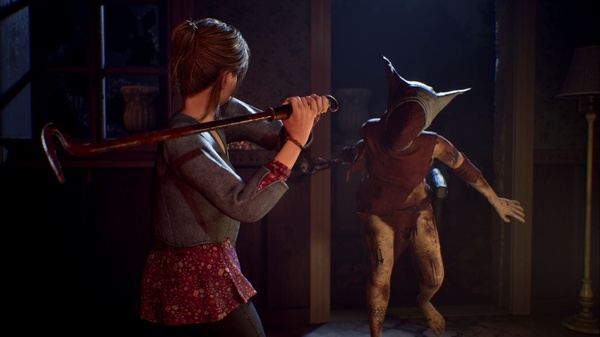
The Red Nuns continue to move through the same environments while Susan searches for objects, checks a room, or tries to figure out how to solve a puzzle. And this time they seemed decidedly disinclined to let us work in peace. During chases, their aggressiveness forced us to change course at the last moment multiple times, while stamina prevents turning every sighting into a thoughtless sprint to the other end of the map. Running means consuming a resource that might be needed a few seconds later, so knowing the spaces becomes as important as knowing where we need to go. Even hiding places have lost some of that psychological security we normally associate with a closed wardrobe or an apparently safe shelter. Entering one no longer automatically means suspending danger and waiting for everything to pass. You have to figure out if the Nun saw us, listen to her movements, and prepare for the possibility that the chosen spot isn't enough. This uncertainty works because it quickly breaks the automatisms that normally develop after a few chases.
However, pressure does not always produce tension. The environments are deliberately intricate, and during some escapes, we found ourselves losing our bearings more due to the layout of the spaces than the opponent's skill. It's a fine line: being forced to improvise an escape route is part of the fun, but going around the same corridor twice without understanding where the level design wants to lead us can become frustrating. This will be one of the most important balances to verify in the full game. Susan does, however, have a few more ways to react. Defensive items are not for winning a fight, but for surviving the next few seconds. A bladed weapon can interrupt a potentially fatal grab and briefly stun the opponent, leaving just enough time to resume the escape. This is exactly the kind of compromise we prefer to see in Remothered: being able to react without ever feeling like we've become the predator.
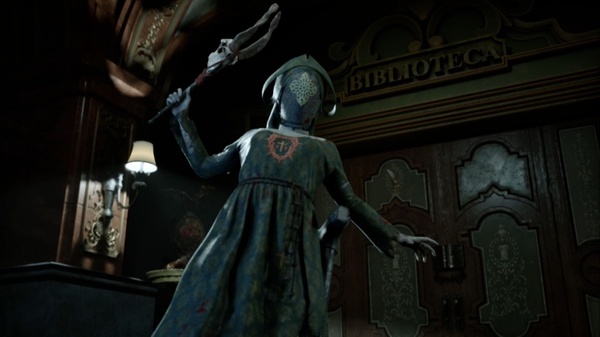
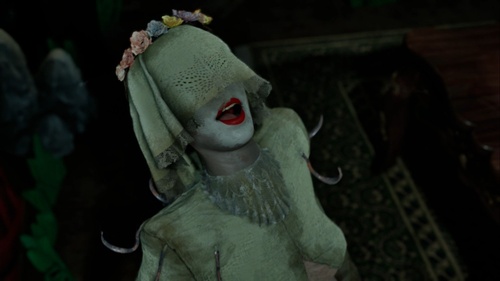
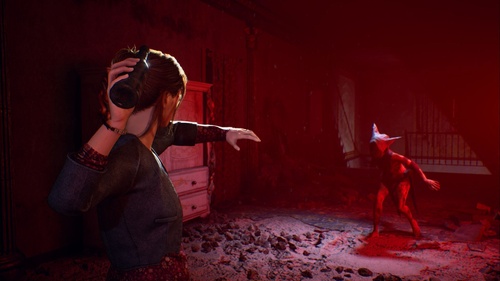
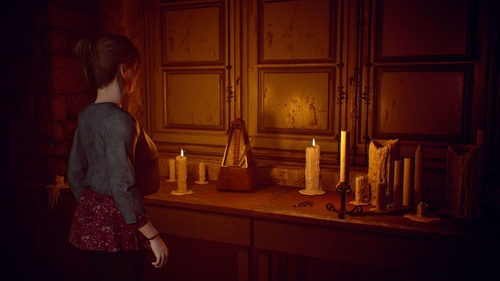
The limited inventory of three slots also makes every choice heavier than it seems. Carrying a defensive resource means giving up something else, although in the version we tested, the quantity of available items in some sections seemed almost too generous, reducing some of the risk that this system should produce. The rule works, but it will need a sufficiently strict resource economy to truly give it meaning. The mirrors have also changed function. They no longer simply represent that reassuring presence to which we associated recovery and progression, but enter into Susan's new psychic abilities system. It's one of many signs of how Red Nun's Legacy is trying to modify familiar elements without erasing them. And it's precisely when hypnosis comes into play that the third chapter truly begins to diverge from its predecessors. The metronome leads Susan into an altered state that changes how she can interpret what surrounds her. Retrocognition allows her to perceive conversations and memories associated with objects or photographs, bringing to light parts of the past that would otherwise remain invisible. During our test, the system is also used to reconstruct the relationship between Gloria Ashmann and Viola, a fellow sister encountered in the Convent of the Dying Christ.
Beyond Escapes and Puzzles, There's More!
But to consider it merely a narrative device would be reductive. Hypnosis, Retrocognition, and moth manipulation directly interact with the environments, allowing new paths to be opened, situations to be interpreted differently, and what we've discovered to be used to continue exploration. It's here that we felt the clearest distance from the first Remothered games.
Tormented Fathers primarily asked players to adapt to the space: to learn it, remember it, and use it to avoid those who were searching for us. Red Nun's Legacy adds the ability to modify its interpretation and, in some cases, its very structure. We are no longer just a presence trying to traverse the environment without being caught: we can intervene in it, while still remaining vulnerable to what inhabits it. This is an important difference because it prevents the investigative phases from simply becoming a pause between two chases. Even when Susan is trying to reconstruct a memory or understand an anomaly, the game continues to work on position, perception, and the possibility that something might interrupt her reasoning.
Naturally, this increased capacity for intervention carries a risk. The more Susan learns to manipulate her surroundings, the more Remothered will have to be careful to prevent that carefully built vulnerability from being progressively erased. The test we faced, for now, manages to keep the two in balance: it grants us new tools without ever making us feel truly safe. And this is probably the most interesting answer to the question we started with. Red Nun's Legacy doesn't seem to want to choose between Tormented Fathers and Broken Porcelain. From the first, it recovers the pressure, the need to know the environments, and that unpleasant feeling of always being one step behind whoever is looking for us. From the second, it retains the ambition to expand the formula, but tries to do so through systems that directly affect exploration instead of merely adding possibilities.
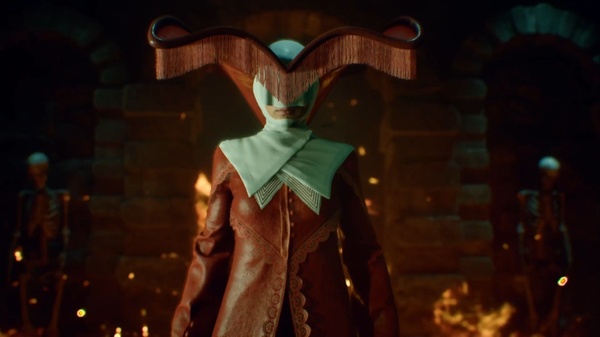
The result, at least from what we've played, is the Remothered that seemed most aware of what it wants to be. Some unknowns remain regarding the balance of resources, the readability of environments during escapes, and especially the Red Nuns' ability to continue surprising us after many hours. But hypnosis, Retrocognition, and environmental manipulation finally seem to introduce an evolution that starts from the series' foundations instead of fighting them. And considering how often in survival horror games the true terror arrives when you start to know too well what should scare you, that's by no means a secondary achievement.

Remothered: Red Nun's Legacy Restarts from Its Fears - Preview
Our test of Remothered: Red Nun's Legacy showed us a series more aware of its own qualities. Chases are genuinely dangerous again, while hypnosis, Retrocognition, and environmental manipulation make exploration more active than in the past. The balance of resources and the readability of some spaces still need to be evaluated, but Stormind's direction seems to build upon the foundations of Tormented Fathers to finally try and evolve them.
Similar articles