The Long Walk – If You Stop You Die: The Nightmare is Closer in 4K
Shot natively in 4.6K, native master for a UHD edition that knows how to entertain



Transforming Stephen King's The Long Walk into a film meant finding a balance between the novel's interior dimension and a story built almost entirely on movement. The result doesn't shy away from tension and, especially in the second half, makes every step weigh heavily on the characters and those observing them.
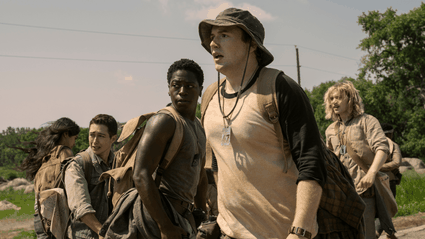
The film's strength largely comes from the relationship that develops among the participants in the walk: as the competition progresses, the bond between them takes on increasing importance. Fatigue shifts the dynamics, fear brings some of the young participants closer and pushes others away, while awareness of their fate makes every relationship more fragile and more intense. It is here that the film finds its emotional dimension.
When Every Step Becomes Personal
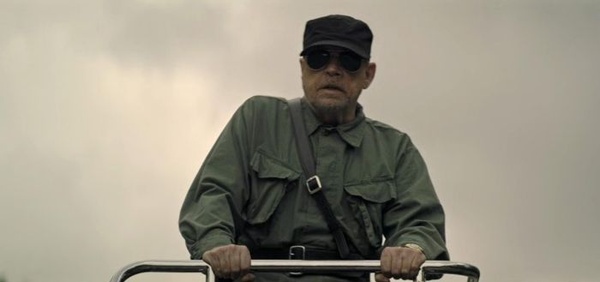
Some moments possess a particular harshness precisely because they come after building a connection with the protagonists. The deaths are not just stages of the competition, but mark the psychological evolution of those who continue to walk. Mark Hamill, on the other hand, chooses a deliberately extreme characterization, transforming the “Major” into an almost surreal presence, while the protagonist's past and relationship with his father add another layer to his obstinacy.
Where the film is less convincing is in Francis Lawrence's direction. The staging often tends to remain within conventional schemes and doesn't always manage to give ample visual form to the novel's epic scope. Some revelations also feel too obvious, but the tension is there, as is the emotion. The Long Walk doesn't always achieve the novel's power, but it transforms that walk into an increasingly painful human experience. Moreover, the (un)expected twist at the end is preferable to the alternative ending offered among the extras of this physical edition.
Last but not least, the comparison with The Hunger Games, also because behind both stories lies a society that transforms the death of young people into a competition organized by power. But Francis Lawrence's film makes a choice that takes it in an almost opposite direction. If in Katniss Everdeen's world the Hunger Games are primarily a gigantic media spectacle, here the walk unfolds in almost total indifference. The young people cross an almost empty country, encountering very few individuals on the roadside, while the audience gains a real weight only in the final stages.
The Hunger Games depicts a society that feeds on spectacle, while The Long Walk portrays a society that no longer even needs to pay attention to it. The system continues to function even without enthusiasm, because habituation has already done the necessary work. And when the crowd finally appears, its arrival takes on an even more unsettling meaning: we don't just discover who is witnessing the tragedy, but we realize that all along it has been us, the film's viewers, occupying that position.
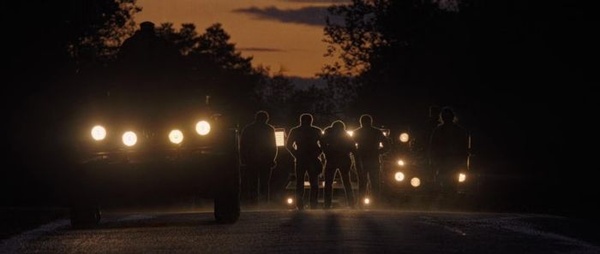
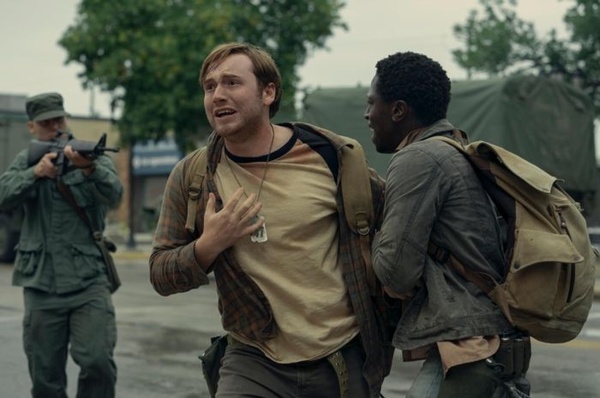
Digitally shot at native 4.6K resolution, final 4K master used for this UHD edition, image format 2.39:1 (3840 x 2160/23.97p), HEVC encoding on dual-layer BD-66. The level of detail is excellent and remains very precise even in the numerous moving shots, the protagonists' clothes show a well-defined texture, while the vegetation and elements in the background maintain remarkable richness.
Compared to the American edition with Dolby Vision, here only HDR-10 is present. Regardless of viewing with static metadata, there remains a sense of respect for the cinematography, with partially desaturated colors, between grays and beiges that contribute to the dystopian atmosphere. However, there are some moments that stand out more, especially in the orange and sepia-toned flashbacks, as well as a closer dynamic range of lights.
The edition offers an Italian and English DTS-HD Master Audio 5.1 (16 bit) track, enhancing the environment in which most of the film takes place. The surround channels reproduce the sounds of nature with good presence, including wind, heavy rain, and the characters' footsteps, contributing to a more immersive narrative. Clear and well-centered dialogue, just as the dynamics offer effective rendering in the most agitated moments. Two mirrored Dolby Digital 2.0 Italian and English tracks (224 kbps) are present.
The extras (on the BD-50 with the 2K version) include the alternative ending (8'), followed by Stephen King: A Tribute (5'), in which the actors discuss their relationship with the writer and his work. Reading of the scene between Cooper and David (3') with a curious split-screen comparison between Jonnson and Hoffman's reading of the scene and the sequence in its final version. Not to be missed is the making-of special (75'), divided into several parts, tracing the making and transformation of Stephen King's novel into a film. Italian subtitles.
Similar articles