The Filo del Ricatto 2K - When Anger Challenges the System
The work has the ability to confront the viewer with questions that remain open long after the credits roll
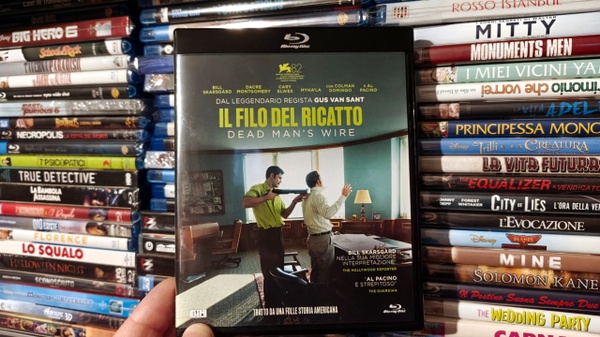


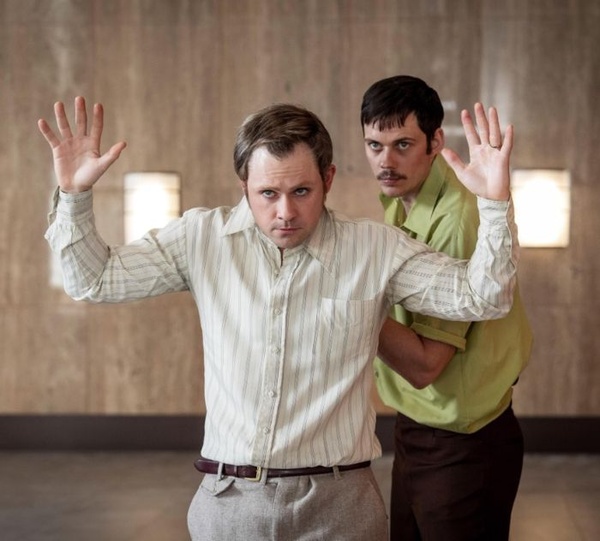
A man betrayed by a financial and real estate brokerage firm based in Indianapolis transforms his desperation into an extreme act, taking the president's son hostage and forcing him to follow after attaching a lethal device to his neck. This true story forms the basis of The Filo del Ricatto (The Thread of Blackmail), a thriller in which Gus Van Sant shows how a desperate protest can turn into a public trial under the eyes of the entire country.
Although set in the 1970s, the story seems to speak directly to the present. The protagonist played by Bill Skarsgård is not depicted as a simple criminal or a folk hero, but as the product of a system that allows for frustration and fuels the desire for revenge. The direction avoids easy moralizing and prefers to show how public opinion can transform a desperate act into a symbol capable of dividing the Great Country.
Bitter Portrait of Contemporary America
Van Sant chooses a narrative constructed through television images, surveillance footage, and typical news media language, making the media a central element of the story. The editing conveys the sense of an event followed in real time, while the soundtrack and excellent direction of the actors contribute to creating constant tension.
Some slowdowns in the central part and a few barely sketched characters prevent the film from achieving even more ambitious results, but The Filo del Ricatto retains its ability to confront the viewer with questions that remain open long after the credits roll. It is a work far beyond a simple news story, finding its greatest interest precisely in its ambiguity.
Rig hardware in great shape for the film's digital shooting at variable resolution 3.8K, 5.2K, 8.6K (DJI Inspire 2, Sony CineAlta Venice 2, Sony FX3) although the master's resolution remains unknown. Original image format 1.85:1 (1920 x 1080/24p), AVC/MPEG-4 encoding on BD-50 dual layer. Excellent video rendition, highlighting details even in the background and a richness of color that approaches Arnaud Potier's original cinematography.
Although dialogue-centric, the soundtrack offers several cult songs from the period such as Easy Livin' by Uriah Heep, We've Only Just Begun by The Carpenters, The Pusher by Steppenwolf, and certainly not least I've Seen All Good People by the British prog band Yes. DTS-HD MA 5.1 channel Italian and English (always 24 bit) with excellent rendition of dialogue, echoes, ambient sounds, and music. The original is preferable for the direct sound dialogue and the absence of adaptations.
No extras.
Similar articles